 Lynden Siding
 Why Decks Age Faster Around Deming
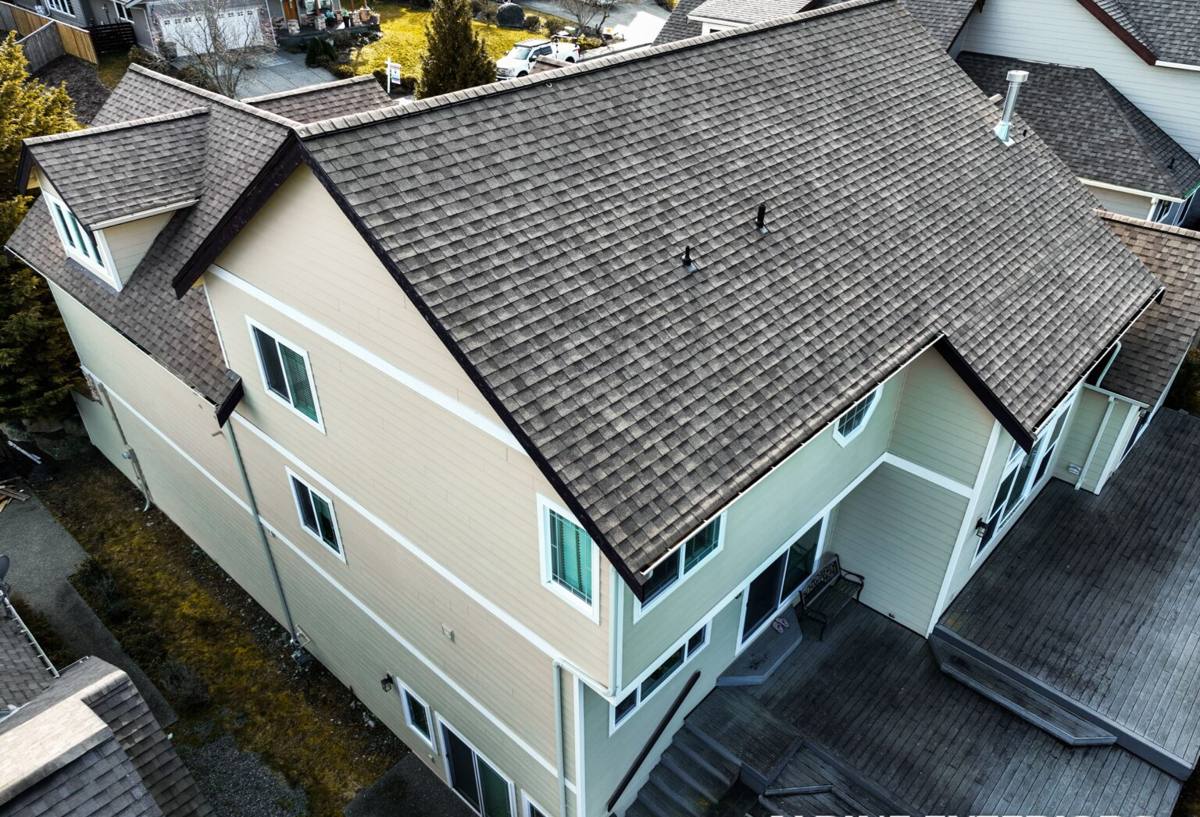
Deming sits inland along the Nooksack River corridor, in the wooded foothills east of Lynden and Bellingham — but "inland" doesn't mean sheltered from the weather. The marine-influenced climate that defines Whatcom County still reaches this far up the valley: damp air drifts in off Puget Sound, driving rain settles in for weeks at a stretch through fall and winter, and the heavy tree canopy that makes the area attractive also keeps decks shaded, cool, and slow to dry out between storms. That combination — lingering moisture, a long moss season, and limited direct sun on much of the day — is hard on any outdoor structure, and it's especially hard on a deck that's already approaching the end of its service life.
A deck built ten or twenty years ago was framed to a different standard than we build to today, especially around fastener corrosion resistance, ledger flashing, and joist protection. Add a few winters of standing water in low spots, moss taking hold on the boards, and slow rot working through joists and posts from the inside out, and what looks like a cosmetic problem on the surface is very often a structural one underneath — one that a pressure wash and a coat of stain won't fix.
Signs a Deming Deck Needs Replacement, Not Another Repair
Not every deck problem calls for a full replacement. But there's a point where patching boards or sistering a joist is just delaying the inevitable — and spending money that won't carry forward into the next fix. Here's what tells us a deck has crossed that line.
- Boards that feel soft, spongy, or spring back slowly when you step on them
- Gaps between boards that keep widening year over year
- The ledger board — where the deck attaches to the house — showing separation, staining, or soft wood
- Moss and algae that come back within days of cleaning, even after a good scrub
- Rust streaks bleeding from fasteners or metal connectors
- Posts that wobble, or a railing that flexes more than it should under normal use
- Stairs that bounce or feel unstable underfoot
- A screwdriver that sinks into framing members with light pressure — a reliable sign of rot
If you're seeing two or more of these, it's worth having someone look at the framing before spending more money on the surface. A deck that fails at the ledger or a support post isn't a minor repair — it's a safety issue.
What a Correct Deck Replacement Actually Involves
Full Tear-Out, Not a Resurface
A real replacement means removing the decking, railings, and — when the framing shows any sign of rot, undersizing, or improper attachment — the joists, beams, and posts underneath as well. Laying new boards over old, questionable framing just hides the problem and shortens the life of the new material. In a climate like ours, where moisture has usually already found its way into anything left in place, that shortcut tends to cost more in the long run than doing it right the first time. It also means we can't give you an honest quote without first opening things up enough to see what's actually holding the structure together.
Ledger Board and Water Management
The ledger board is the single most common failure point on a Pacific Northwest deck, because it's the one place where the structure meets the house and has to shed water without trapping it against the siding or rim joist. A correct install uses proper metal flashing that directs water out and away from the house framing, not just caulk or sealant relied on as the only barrier. Given how much rain moves through this area over a typical winter, and how long it takes anything shaded to dry back out, this single detail matters more here than almost anywhere else in the build.
Framing, Footings, and Post Bases
Joists and beams need to be sized for the actual span and load of your deck, not just matched to whatever was there before — older decks are frequently underbuilt by today's standard. Post bases should hold posts up off the concrete so end grain isn't sitting in standing water, and footings need to reach frost depth and bear on solid, undisturbed soil — something worth checking carefully on properties with the kind of variable, moisture-retentive soil common around river-valley lots. Hardware — joist hangers, structural screws, post connectors — should be rated for ground contact and exterior exposure throughout the build, not just at the connections that happen to be easy to see once the deck is finished.
Choosing Decking Material for Deming's Conditions
There's no single right answer here — it depends on your budget, how much upkeep you're willing to take on, and how the deck sits relative to shade and drainage. What we won't do is talk you into a product that fights the site conditions just because it's what we happen to have on the truck. Here's how the common options actually compare on a shaded, moisture-heavy property like the kind we see regularly in this area.
| Material | Moisture & Moss Resistance | Maintenance | Typical Lifespan | Relative Cost |
|---|---|---|---|---|
| Pressure-treated wood | Fair — needs sealing to perform well | Annual cleaning and re-sealing | 10–15 years | Lowest upfront |
| Cedar | Good natural resistance, but surface still needs care | Regular cleaning, periodic finish | 15–20 years with upkeep | Moderate |
| Composite (capped) | Very good — resists moisture absorption and staining | Occasional washing | 25–30 years | Higher upfront |
| PVC decking | Excellent — doesn't absorb water at all | Occasional washing | 25–30+ years | Highest upfront |
Beyond the decking surface itself, overall project cost is driven by the size and height of the deck, whether the old structure needs a full structural rebuild or just a surface swap, how complex the railing and stair layout is, and whether multiple levels or built-in features are part of the design. A straightforward single-level deck on solid existing footings will always cost less than a multi-level deck with a full tear-out to the posts — we'll walk you through exactly where your project falls once we've seen the site.
For heavily shaded lots where moss and green staining show up fast, we generally steer homeowners toward capped composite or PVC — not because wood is a bad product, but because a shaded deck under tree cover rarely gets enough sun and airflow to let a wood surface dry out and perform the way it's designed to. That's an honest trade-off conversation, not a sales pitch: composite and PVC cost more up front, and composite railing or fascia can still show wear at cut edges if they're not capped or finished correctly. If a wood deck fits your budget and you're willing to keep up the maintenance it needs, we'll build it right and tell you honestly what that maintenance schedule looks like.
Our Deck Replacement Process, Start to Finish
- On-site assessment. We look at the existing deck's framing, ledger connection, footings, and drainage — not just the surface — so the estimate reflects what's actually needed, not just what's visible.
- Design and material selection. We walk through decking, railing, and layout options based on your budget, the amount of sun the space gets, and how you actually use it.
- Permitting. Where the project requires a permit, we prepare and submit the paperwork and coordinate inspections so you don't have to chase it down yourself.
- Tear-out and disposal. The old deck comes out completely — decking, railing, and any framing that doesn't check out — and we haul away the debris.
- Framing. New ledger flashing, joists, beams, post bases, and footings go in to current code, sized for your deck's actual dimensions and load.
- Decking, railings, and stairs. Installed to manufacturer spec, with attention to fastening patterns and board gapping that account for our wet-to-dry seasonal swing.
- Final walkthrough. We go over the finished deck with you, including what maintenance — if any — the material you chose will need going forward.
Permits and Code Considerations in Whatcom County
Most full deck replacements in unincorporated Whatcom County require a building permit, particularly when the structure attaches to the house or sits above a certain height off grade. Requirements can also touch on setback from property lines and, depending on the parcel, proximity to critical areas like streams, wetlands, or steep slopes that show up on some properties in the river valley around Deming. Skipping the permit step might save time up front, but it creates real problems later — an unpermitted deck attachment is a common flag in a home inspection, and it can hold up a sale or trigger a costly retrofit down the road. We handle the permit process as part of the job so the deck is inspected and signed off correctly the first time.
Maintenance That Actually Matters After Replacement
Every decking material needs some level of upkeep — the differences are in how much and how often. Given how long moss season runs here, a little seasonal attention goes a long way toward protecting the investment you just made.
- Sweep debris and needles off the surface regularly, especially in areas under tree cover
- Rinse or wash the deck at least once or twice a year to keep moss and algae from establishing
- Keep gutters and downspouts near the deck clear so runoff isn't draining onto or under it
- Check the ledger flashing and any visible fasteners annually for early signs of corrosion or separation
- For wood decking, plan on re-sealing on the schedule the product calls for — skipping a cycle is usually when problems start
- Trim back vegetation that's shading the deck and keeping it damp longer than necessary
- Clear leaves and organic debris from between boards before they hold moisture against the wood
Why a Crew That Already Works in Deming Matters
A deck built to a generic spec sheet doesn't always hold up the way one built for the actual site does. Knowing how a shaded, river-valley lot around Deming behaves through a wet Whatcom County winter — where water tends to sit, how fast moss establishes on north-facing surfaces, what footing depth actually holds in the local soil — comes from having done the work here before, not from a manual. That local experience shows up in small decisions throughout the build: where we route drainage, how we detail the ledger flashing, and which material we'll actually recommend for a shaded backyard versus one that gets afternoon sun.
It also matters for permitting and inspection. A crew that's pulled permits in the county before knows what inspectors are looking for and what tends to cause delays, which keeps the project moving instead of stalling on paperwork partway through.
Get a Straight Answer on Your Deck
If your deck is showing its age — soft spots, moss that won't quit, a railing that doesn't feel as solid as it used to — it's worth having someone take an honest look before you decide between a repair and a full replacement. We'll tell you what we actually see, not just what's easiest to sell. Fill out the form below for a free, no-pressure estimate on your Deming deck replacement.