 Lynden Siding
 Siding Replacement in Bellingham, Done by a Crew That Works Whatcom County Every Week
Bellingham sits close enough to the water and the foothills that its homes take on a specific mix of weather stress: salt-laden air drifting off the bay, long stretches of driving rain through fall and winter, and a moss season that can run most of the year on shaded roofs and north-facing walls. Siding here doesn't just need to look good — it needs to survive damp cycling, resist the organic growth that thrives in our humidity, and hold its finish without constant homeowner upkeep. We're based in Lynden, a short drive up the valley, and Bellingham is part of our regular service area. That matters more than it sounds like it should, because siding failure patterns in this part of Whatcom County are consistent enough that a crew working here week after week starts recognizing them before they become expensive problems.
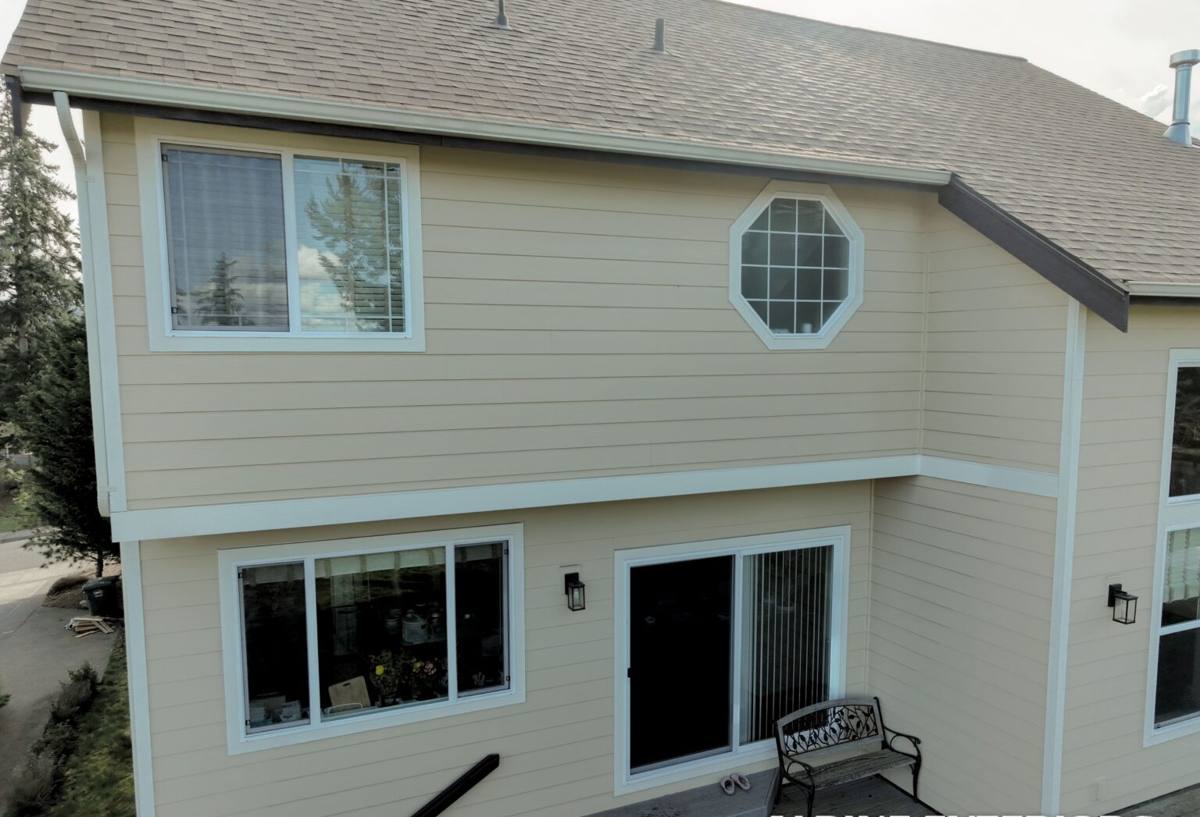
What Bellingham's Climate Actually Does to Siding
Three conditions do most of the damage to exterior cladding in this area, and they compound each other.
Salt Air and Moisture-Driven Corrosion
Proximity to Bellingham Bay means airborne salt reaches siding, fasteners, and trim on homes well inland from the immediate shoreline. Salt accelerates corrosion on exposed metal fasteners and flashing, and it can degrade certain coatings faster than manufacturers' standard testing accounts for. Products that rely on a surface-applied paint film — rather than a factory-cured finish engineered for coastal exposure — tend to chalk, fade, and lose adhesion sooner here than they would inland.
Driving Rain
Whatcom County doesn't just get rain — it gets wind-driven rain that hits walls at an angle, working its way into laps, seams, and butt joints that would stay dry in calmer weather. Any siding system with weak water-shedding detail at horizontal joints, or that relies on caulk as its primary defense rather than proper lapping and flashing, is going to take on moisture over time. That moisture doesn't just threaten the siding itself — it threatens the sheathing and framing behind it.
Extended Moss and Algae Season
Shaded elevations, tree cover, and the region's humidity give moss, algae, and mildew a long growing window on siding surfaces. Materials that absorb even small amounts of moisture into their surface give organic growth something to root into, which shows up as green-black staining that pressure washing only partially removes and that keeps coming back.
What a Correct Siding Replacement Involves
Replacing siding isn't just stripping old material and nailing up new panels. Done right, it's a sequence where each step protects the next.
- Tear-off and inspection: Removing the old siding down to the sheathing and checking for hidden water damage, soft framing, or prior repairs that were never done to code.
- Sheathing repair: Replacing any compromised OSB or plywood before anything new goes back on — covering rot with new siding just hides the problem.
- Water-resistive barrier: Installing a correctly lapped weather barrier (housewrap or equivalent) that sheds water downward and outward, with all seams and penetrations sealed.
- Flashing at every transition: Windows, doors, decks, roof-to-wall intersections, and any penetration need flashing detailed to direct water out, not into the wall assembly.
- Proper fastening and clearances: Fastener spacing, embedment, and ground/roof clearances installed to the manufacturer's specification — not shortcuts that void warranty coverage.
- Caulking and finish work: Sealant used to supplement good flashing detail, never to substitute for it.
Skipping any one of these steps is how a siding job looks fine for a year or two and then starts showing problems that trace straight back to the installation, not the material.
Why We Install Only James Hardie Fiber Cement
We standardized on James Hardie siding for every job we take on, including replacements in Bellingham, and we don't install vinyl, LP SmartSide, Cemplank, Allura, primed spruce, or cedar. That's a deliberate professional decision, not a sales pitch, and it's worth explaining honestly.
Vinyl is inexpensive and low-maintenance in mild climates, but it can become brittle in cold snaps, expand and contract more than fiber cement across our seasonal swings, and it's a combustible material — a real consideration given how often we see wildfire smoke and regional fire risk discussed in the Pacific Northwest now. Engineered wood products like LP SmartSide perform well when installation and maintenance are kept up perfectly, but they're wood-based, meaning any breach in the finish gives moisture a path into a material that can swell, delaminate, or rot — a real risk given how much rain this region sees. Primed spruce and cedar are traditional, attractive materials, but raw or lightly primed wood requires disciplined repainting and caulk maintenance to keep moisture out, and in a climate with our humidity and moss pressure, that maintenance window closes faster than most homeowners expect.
James Hardie fiber cement is non-combustible, dimensionally stable across wet-dry and hot-cold cycles, and comes with a factory-applied ColorPlus finish that's baked on rather than field-painted — which matters directly for the salt air and UV exposure common around Bellingham. Hardie's HZ5 product line is engineered specifically for climates with more moisture and freeze-thaw exposure, which fits Whatcom County's weather profile better than a one-size-fits-all product. It also carries a strong transferable limited warranty, which adds real value if the home changes hands.
Product Comparison at a Glance
| Material | Moisture Behavior | Combustibility | Coastal/Salt Air Durability | Maintenance Burden |
|---|---|---|---|---|
| James Hardie Fiber Cement | Dimensionally stable, engineered HZ5 line for wet climates | Non-combustible | Factory ColorPlus finish holds up well to salt and UV | Low — periodic washing, no repainting on ColorPlus cycle |
| Vinyl | Doesn't absorb moisture, but seams and laps can trap it | Combustible | Can fade and become brittle over time | Low, but limited to no repair options once damaged |
| LP SmartSide / Engineered Wood | Vulnerable if finish is breached; wood-based core | Combustible | Requires diligent sealing at all cut edges and joints | Moderate — finish inspection and touch-up needed regularly |
| Primed Spruce / Cedar | Absorbs moisture without consistent repainting | Combustible | Prone to moss/algae staining without upkeep | High — repainting and caulk maintenance on a recurring cycle |
Our Process for a Bellingham Siding Replacement
Every job follows the same sequence, adjusted for the specific house.
- On-site assessment: We walk the exterior, check for moisture intrusion, evaluate existing siding condition, and look at exposure — how much sun, shade, wind, and rain each wall actually takes.
- Written scope and product selection: We go over Hardie board profiles, colors, and trim options suited to the home's style and the specific exposure conditions of that elevation.
- Tear-off and sheathing repair: Old material comes off, sheathing gets inspected and repaired as needed before anything new goes up.
- Weather barrier and flashing installation: This is the step that determines whether the home stays dry for the next several decades — we don't rush it.
- Hardie installation to manufacturer spec: Correct fastening, clearances, and joint treatment, following James Hardie's published installation requirements to keep the warranty intact.
- Final walkthrough: We review the completed work with the homeowner before calling the job done.
Why Hiring a Crew That Already Works Bellingham Matters
A contractor who only occasionally works this far north doesn't necessarily know which elevations on a typical Bellingham lot take the worst wind-driven rain, or how much moss pressure to expect on a shaded north wall near tree cover. Working Whatcom County regularly means we've seen how these homes age under this specific climate, and we plan flashing details, product selection, and maintenance guidance around that — not around generic installation practices that assume a drier or milder climate. Being based in Lynden also means we're not a distant crew passing through; we're accessible for questions after the job is done, not just during it.
What to Check Before Hiring Anyone for This Job
- Are they licensed and insured in Washington State, and can they show proof without hesitation?
- Do they provide a written, itemized scope of work — not just a verbal estimate?
- Do they follow the manufacturer's published installation instructions closely enough to keep the product warranty valid?
- Do they inspect and repair sheathing before installing new siding, rather than covering existing damage?
- Can they explain their flashing and water-management approach in plain language, not just brand names?
- Do they have real, verifiable experience with fiber cement installation specifically, not just general siding work?
Cost Factors Homeowners Should Understand
Every Bellingham home is different, so we won't quote numbers that don't apply to your project — but the main cost drivers are consistent: total square footage, the amount of sheathing repair needed once old siding comes off, the complexity of the home's trim and architectural detail, the number of window and door transitions requiring flashing work, and the Hardie product line and finish chosen. Homes with existing moisture damage cost more to repair properly than homes caught before damage sets in, which is one more reason not to wait once siding starts showing signs of failure — cracking, staining that won't wash off, soft spots, or visible gaps at seams.
Signs Your Bellingham Home May Need Siding Replacement Soon
Watch for warping or buckling panels, paint that's peeling rather than just fading, persistent moss or algae staining that returns quickly after cleaning, soft or spongy spots when you press on the siding, and visible gaps or separation at seams and corners. Any of these, especially combined with rising energy bills or musty odors near exterior walls, is worth a professional look before it becomes a structural repair instead of a siding job.
If you're seeing any of these signs on a home in Bellingham, or you're simply ready to move to a siding material built for Whatcom County's weather, we'd be glad to take a look. Reach out for a free, no-pressure estimate using the form below — we'll walk the exterior, answer your questions honestly, and give you a clear picture of what the job actually involves.