 Lynden Siding
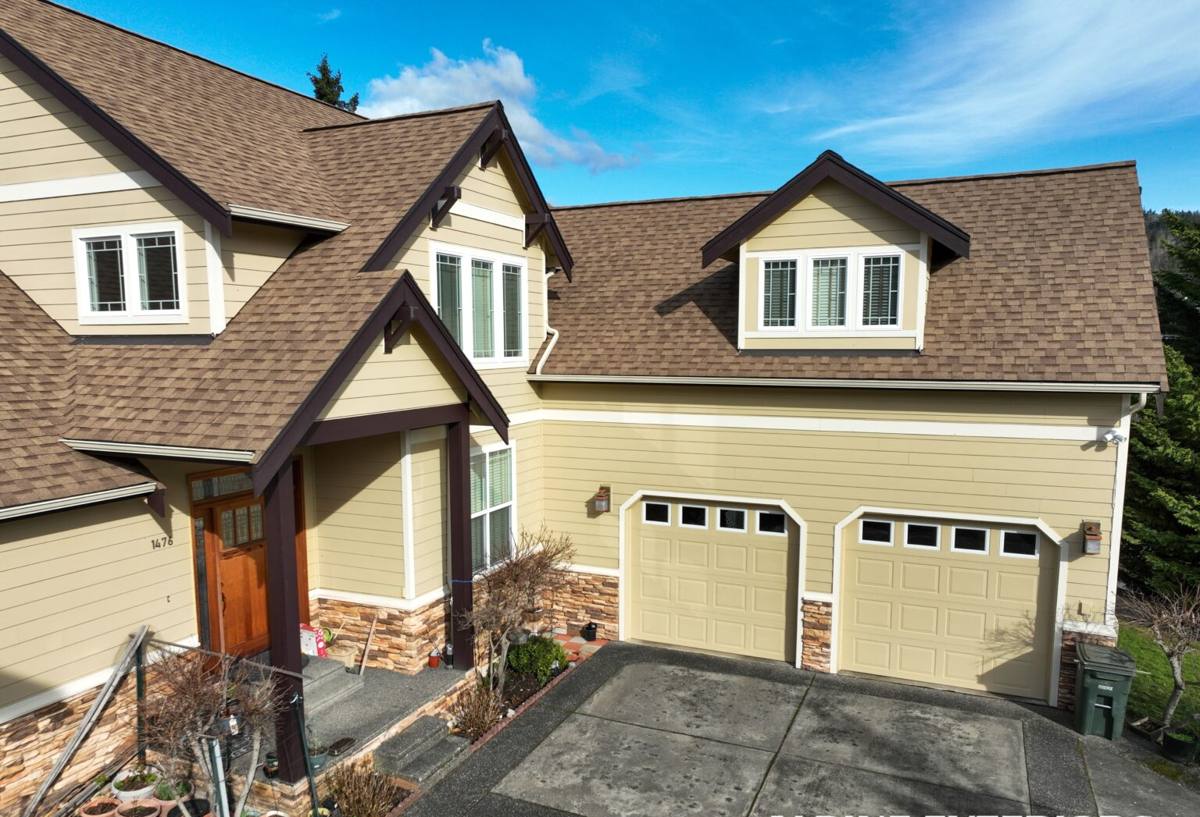
 Asphalt Shingle Roofing Built for Abbotsford's Weather
Abbotsford sits in the Fraser Valley just across the line from Whatcom County, and the roofs here take a beating that's easy to underestimate. Moist air moving in off the Strait carries salt that accelerates corrosion on fasteners and flashing. Long stretches of driving rain push water sideways into laps and valleys that a roof further inland would never have to deal with. And the mild, wet winters that make this region so green also make it one of the better moss incubators on the continent. A shingle roof that isn't built with all three of those factors in mind will show its age early — curling edges, granule loss, moss ridges along the north slope, and eventually leaks at the exact spots where the installer cut a corner.
We've installed and repaired asphalt shingle roofs on both sides of the border long enough to know which details matter here and which are just marketing. This page covers what a correct asphalt shingle roof looks like for an Abbotsford home, what our process involves, and why local experience changes the outcome.
What Abbotsford's Climate Actually Does to a Roof
Salt Air and Fastener Corrosion
Homes closer to the water or open valley exposure deal with airborne salt that speeds up rust on exposed nail heads, cheap flashing, and lower-grade metal drip edge. Once corrosion starts on a fastener, the seal around it weakens and that becomes a future leak point — long before the shingle itself has worn out.
Driving Rain and Wind-Driven Water
Rain here doesn't always fall straight down. Storms off the coast push water at an angle, which means anything less than a full underlayment system and properly lapped shingles will eventually let water track sideways under the surface layer, especially at eaves, valleys, and any roof-to-wall transition.
Moss Season
Shade, moisture, and mild temperatures give moss a long growing window in the Fraser Valley. Moss doesn't just look bad — it holds water against the shingle surface, lifts tabs as it grows, and works its way under the granule layer. Left unchecked for a couple of seasons, moss growth alone can cut years off a shingle roof's service life.
What a Correctly Installed Shingle Roof Involves
Asphalt shingle roofing looks simple from the ground, but most leaks trace back to a handful of installation shortcuts, not the shingles themselves. A correct install includes:
- A synthetic or felt underlayment installed with proper overlap, not just stapled down loosely
- Ice-and-water shield membrane at eaves, valleys, and any low-slope transitions where water lingers
- Corrosion-resistant flashing at every roof-to-wall intersection, chimney, and skylight — not caulk used as a substitute
- Correct nailing pattern and nail placement per the shingle manufacturer's specification, not just "close enough"
- Balanced intake and exhaust ventilation so the attic isn't trapping moisture under the deck
- Starter strip and ridge cap installed to spec, since these are the pieces most often rushed
None of this is exotic. It's just the difference between a roof that's installed to hold up and one that's installed to look finished on move-out day.
Choosing a Shingle for This Climate
Not every asphalt shingle product is a good match for a wet, moss-prone, salt-exposed roof. We generally steer Abbotsford homeowners toward algae-resistant, mid-to-upper-tier architectural shingles rather than basic 3-tab product, for the reasons below.
| Factor | Standard 3-Tab | Algae-Resistant Architectural |
|---|---|---|
| Moss/algae resistance | Minimal — bare granules attract growth faster | Copper-infused granules slow algae and moss colonization |
| Wind and rain performance | Lower wind rating, thinner laminate | Heavier laminate, better sealed lap in driving rain |
| Typical lifespan in this climate | Shorter — moss and moisture shorten it further | Longer, especially with proper ventilation |
| Upfront cost | Lowest | Moderate premium, generally worth it here |
| Warranty structure | Shorter, often prorated quickly | Longer manufacturer coverage, less aggressive proration |
Standard 3-tab shingles aren't a bad product everywhere — they just aren't the right trade-off for a roof that's going to sit under coastal moisture and moss pressure for the next two decades. We'll always give you the honest cost difference and let you decide what fits your budget and how long you plan to stay in the home.
Ventilation: The Detail That Prevents Moss and Rot at the Same Time
A poorly ventilated attic traps warm, moist air against the underside of the roof deck. In Abbotsford's climate, that trapped moisture does two things: it accelerates deck rot from the inside, and it keeps the shingle surface just damp enough, just long enough, for moss spores to take hold on the outside. Balanced ventilation — enough intake at the eaves and exhaust at the ridge — moves that moisture out before it becomes a problem. It's one of the least visible parts of a roofing job and one of the most important for a house in this region.
Flashing, Valleys, and Where Leaks Actually Start
When a shingle roof leaks, the shingles themselves are rarely the cause. The usual suspects are the transition points: valleys where two roof planes meet, step flashing along a chimney or dormer wall, and counter-flashing where a roof meets siding. In a climate with this much wind-driven rain, these details need to be layered correctly — flashing under the underlayment on the uphill side, over it on the downhill side — so water sheds outward at every step instead of finding a gap to work into. This is also where salt-air corrosion does the most damage over time, which is why we use corrosion-resistant metal rather than the cheapest flashing stock available.
Our Process, Start to Finish
- On-site inspection. We look at the existing roof, deck condition, ventilation setup, and any problem areas — moss buildup, soft spots, flashing condition — before quoting anything.
- Honest written estimate. You'll know the shingle product, underlayment system, and scope of work in writing, with no vague allowances.
- Tear-off and deck check. We remove the old roofing and inspect the deck itself, since a new shingle layer over a compromised deck is a short-term fix, not a real one.
- Underlayment, flashing, and shingle install done to manufacturer spec, with attention to the eaves, valleys, and penetrations that matter most in this climate.
- Ventilation check to confirm intake and exhaust are balanced for the attic space.
- Cleanup and walkthrough so you know exactly what was done and what to watch for going forward.
Maintenance That Actually Extends Roof Life Here
A shingle roof in this climate isn't maintenance-free, but the maintenance it needs is manageable if you stay ahead of it:
- Have moss physically removed rather than just treated — chemical treatment alone doesn't stop growth that's already lifted shingle tabs
- Keep gutters clear so water isn't backing up under the eave line during heavy rain
- Trim back overhanging branches that keep north-facing slopes shaded and damp
- Have flashing and sealant points checked every few years, especially around chimneys and skylights
- Address small leaks immediately — in a climate this wet, a small leak becomes deck rot faster than in drier regions
Why Working With a Crew That Already Knows Abbotsford Matters
Abbotsford and the surrounding Fraser Valley have their own permitting requirements, inspection expectations, and building conventions that differ from what you'd find further inland or south of the border. A crew that already works this area — including the logistics of moving crews and materials across the border — isn't learning those details on your job. That translates to fewer surprises, a more accurate estimate up front, and a roofing system that's actually specified for the moss, salt air, and driving rain your home deals with every winter, rather than a generic install pulled from a drier climate's playbook.
Repair or Replace?
Not every problem roof needs full replacement. Isolated flashing failures, a damaged section after a windstorm, or moss buildup on an otherwise sound roof can often be repaired. Full replacement makes more sense when granule loss is widespread, the deck has soft spots in multiple areas, or the shingles are past the point where patch repairs will hold. We'll give you a straight answer on which category your roof falls into rather than defaulting to the bigger job.
If you're dealing with moss buildup, a roof that's due for replacement, or just want an honest read on where your current shingles stand, we're glad to take a look. Request a free, no-pressure estimate using the form below and we'll walk the roof with Abbotsford's climate in mind, not a generic checklist.