 Lynden Siding
 Roofing Built for the Aldergrove Climate
Aldergrove sits close enough to the Salish Sea and the Fraser Valley weather patterns that its roofs take a different kind of beating than homes further inland. Homeowners here deal with three things working against their roof at the same time: salt-laden air moving in off the water, driving rain that comes in sideways during winter storms, and a moss season that can run eight months or longer under the region's cloud cover. None of these three problems is dramatic on its own. Together, over ten or fifteen years, they wear out a roof faster than the manufacturer's lifespan chart suggests.
We're based just south of the border in Whatcom County, and we've replaced roofs on both sides of the line for years. The building science doesn't change at the 49th parallel — the same wind-driven rain and moss pressure that affects a home in Lynden affects a home in Aldergrove. What changes is the paperwork, and we'll get to that below.
Salt Air
Salt exposure isn't as severe here as it is right on the coast, but it's real. Salt accelerates corrosion on exposed metal — nail heads, flashing, gutter fasteners, and any exposed screws on a metal roof. Left unaddressed, corroding fasteners are one of the more common causes of small leaks that show up years before anyone expects a "new" roof to leak.
Driving Rain
Wind-driven rain doesn't just fall on a roof, it pushes sideways and upward under shingle edges, around chimney flashing, and into any gap in the underlayment. A roofing system that would perform fine in a drier climate can fail here simply because it wasn't detailed for wind-driven moisture. This is one of the most common causes of hidden leaks we find in this area — the roof looks fine from the ground, but water has been working its way under a poorly lapped flashing detail for years.
Moss Season
Shaded, north-facing roof planes and anything under overhanging trees stay damp for months at a time. Moss doesn't just look bad — its root structure lifts shingle edges, holds moisture against the roof deck, and accelerates granule loss on asphalt shingles. A roof with heavy moss coverage is almost always aging faster than its neighbor with a clear roof, even if both were installed the same year.
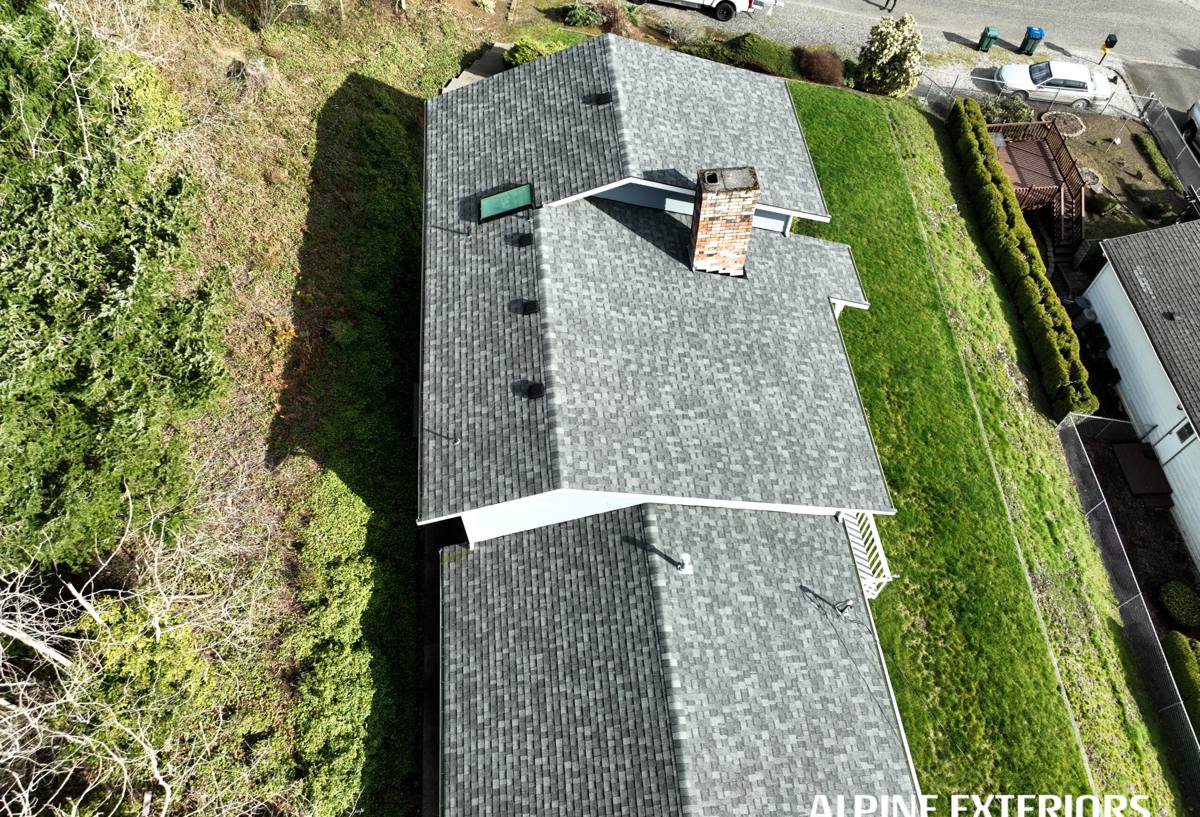
Signs an Aldergrove Roof Needs Replacement, Not Just Repair
Not every roof problem calls for a full replacement. But there's a point where patching becomes false economy. Watch for these signs:
- Granules collecting in gutters or at downspout outlets in noticeable amounts
- Shingles that are cupping, curling at the edges, or cracking when walked on
- Moss or algae streaking that returns within a season of cleaning
- Daylight visible through the roof deck from inside the attic
- Soft or spongy spots underfoot when walking the roof
- Multiple past repairs in different areas rather than one isolated issue
- A roof already past 20-25 years for asphalt shingle, or showing wear well before that age due to shade and moss exposure
If you're seeing two or more of these, it's worth having someone look at the whole roof rather than chasing individual leaks one at a time.
Choosing the Right Roofing System for This Climate
There's no single "best" roofing material for every home — it depends on your roof's slope, how much shade it gets, your budget, and how long you want to go before the next replacement. Here's how the common options compare for a climate like Aldergrove's:
| Material | Typical Lifespan Here | Moss Resistance | Maintenance | Approx. Cost Range |
|---|---|---|---|---|
| Asphalt composition shingle (standard) | 18-22 years | Low — needs periodic cleaning on shaded slopes | Moderate | Lowest of the three |
| Asphalt composition shingle (algae-resistant, copper-infused) | 20-25 years | Moderate — slows regrowth, doesn't eliminate it | Low-moderate | Slightly above standard |
| Standing seam metal | 40-50+ years | High — sheds moisture fast, little for moss to grip | Low | Highest upfront |
| Cedar shake | 20-30 years with upkeep | Low without regular treatment | High | Mid-to-high |
For homes with heavy shade or north-facing roof planes — common on lots with mature trees around Aldergrove — we often steer homeowners toward algae-resistant shingles or metal, specifically because standard asphalt shingle in constant shade is the combination most likely to bring you back to a moss problem within a few years. That's a maintenance and moisture-behavior trade-off we're upfront about, not a knock on asphalt shingle as a product — it's a solid, proven material for the right roof.
What a Correct Roof Replacement Actually Involves
A roof replacement is more than swapping old shingles for new ones. Done right, in this climate, it includes:
Full Tear-Off and Deck Inspection
We remove the old roofing down to the deck rather than layering over it. This is the only way to find rot, soft spots, or old water damage that's been hiding under the existing shingles — problems that are common on roofs that have carried moss and standing moisture for years.
Ice and Water Shield at Vulnerable Areas
Valleys, eaves, and areas around penetrations get a self-adhering waterproof membrane underneath the primary underlayment. In a wind-driven rain climate, this is what stops water that gets past the shingle layer from ever reaching the deck.
Proper Flashing at Every Penetration
Chimneys, vents, skylights, and roof-to-wall transitions are where the vast majority of leaks originate — far more often than the open field of the roof itself. Correct step flashing, counter-flashing, and sealed penetrations matter more here than almost anywhere else on the job.
Balanced Attic Ventilation
Intake at the eaves and exhaust at the ridge keep moist air moving out of the attic instead of condensing against the underside of the deck. Poor ventilation shortens shingle life from underneath, which is easy to miss since the damage isn't visible from the yard.
Moss-Conscious Details
Where zinc or copper strips make sense for a given roof, we'll discuss them — they release trace amounts of metal ions in the rain that discourage moss regrowth on the slopes below them, which is a genuinely useful tool on shaded roofs rather than a gimmick.
Our Process, Start to Finish
- Free on-site estimate — we walk the roof (or use a lift for steep or fragile roofs), check the attic, and measure for an accurate material quantity.
- Written proposal — a clear scope of work, material selection, and price, with no vague allowances hidden in the fine print.
- Scheduling — we plan around weather windows, which matters more here than in drier climates; we don't tear off a roof we can't dry in and cover the same day.
- Tear-off and deck repair — old material removed, deck inspected, any rot or damage repaired before anything new goes down.
- Installation — underlayment, ice and water shield, flashing, and the roofing material itself, installed to manufacturer specification so warranties stay valid.
- Site cleanup — magnetic sweep for nails, full debris haul-away, and a final walkthrough with you before we consider the job finished.
Cross-Border Considerations for Aldergrove Homeowners
We're a short drive from the border, and we understand the practical questions that come with hiring a contractor from the other side of it. Building permits for a roof replacement in Aldergrove go through Township of Langley, not a Washington jurisdiction, and requirements can differ from what applies on our side of the line — we'll walk you through what your project needs before work starts. Materials, equipment, and crew movement across the border are logistics we've already worked out on past jobs, so it's not something you need to manage yourself. What stays constant is the workmanship: the same flashing details, ventilation standards, and moss-resistant strategies we use on a Whatcom County roof apply directly to a roof in Aldergrove, because the climate driving those decisions is shared on both sides of the border.
Extending Your New Roof's Life: A Maintenance Checklist
A correctly installed roof still benefits from basic upkeep, especially in a moss-prone climate. A short annual routine goes a long way:
- Clear gutters and downspouts at least twice a year, more often under overhanging trees
- Trim back branches that shade the roof or drop debris onto it
- Have moss treated or gently removed before it establishes rather than after
- Check attic ventilation isn't blocked by insulation or stored items
- Walk the roofline visually after major windstorms for lifted or missing shingles
- Address small flashing or sealant issues promptly rather than waiting for a leak
Why Local Experience Matters
Roofing crews who don't regularly work this specific climate tend to under-detail for wind-driven rain and skip moss-conscious choices that don't come up as often in drier regions. We work Whatcom County and the Aldergrove area routinely, which means the details in this page aren't theoretical for us — they're the standard specification we build to on every roof, because it's what actually holds up here.
If your roof is showing its age or you're planning ahead rather than reacting to a leak, we're happy to take a look. Reach out for a free, no-pressure estimate using the form below — we'll walk the roof, answer your questions honestly, and give you a straightforward quote with no obligation.