 Lynden Siding
 Roof Repair for Abbotsford Homes, From Crews Who Already Work This Area
Abbotsford sits close enough to Lynden that our crews are often already on this side of the border for another job when a repair call comes in from a homeowner here. That matters more than it sounds like. A roof problem in the Fraser Valley isn't identical to one in a drier inland climate — the moisture load, the moss pressure, and the way wind pushes rain sideways off the Salish Sea all shape what actually fails first and how a repair needs to be done to hold up. We're not a national chain dispatching whoever's available. We're a siding and exterior crew based in Lynden that treats Abbotsford as part of our regular service area, not a special trip.
This page is about one thing: roof repair, done right, for this specific climate and this specific building stock. Not a full re-roof pitch, not a generic "we fix roofs" page. If your roof needs a repair — not a replacement — here's what that should actually involve.
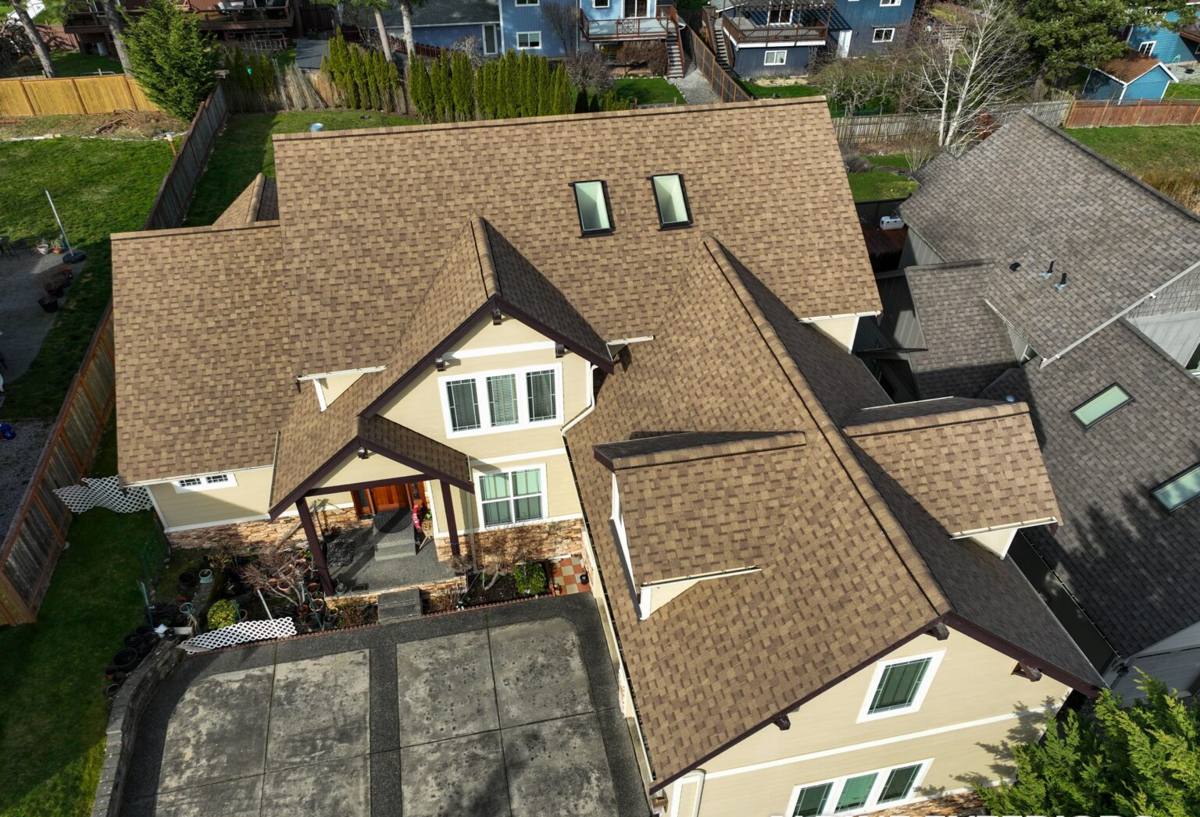
What the Local Climate Does to a Roof
Whatcom County and the Fraser Valley share the same weather system, and it's a rough one for roofs even though it rarely produces dramatic storms. The damage here is slow and cumulative, which is exactly why it gets ignored until it's expensive.
Moss and Organic Growth
Long, mild, wet stretches from fall through spring give moss and algae months at a time to establish themselves on north-facing slopes and anywhere shade keeps a roof from drying out between rains. Moss isn't just cosmetic. It holds moisture against the roofing material, lifts shingle edges as it grows, and works its way under flashing where it keeps that metal wet far longer than it should ever be. A roof that looks "old and mossy" from the ground is often structurally fine underneath — but the moss itself is actively shortening its remaining life if it's left alone.
Wind-Driven Rain and Flashing Failures
Rain here doesn't fall straight down as often as people assume. Storms moving through the valley push rain sideways against walls, into eave gaps, and up under shingle laps in a way that vertical-only waterproofing doesn't anticipate. Almost every leak we trace back to its source ends at a flashing detail — around a chimney, a skylight, a roof-to-wall transition, a vent pipe — rather than a failure in the field of the roof itself. Driving rain finds the one seam that isn't sealed correctly and exploits it for years before it shows up as a stain on a ceiling.
Salt Air and Persistent Moisture
Air moving up the Fraser Valley carries salt-laden moisture off the Strait of Georgia, and that moisture doesn't evaporate off a roof quickly in a climate that stays humid and overcast for long stretches of the year. That combination accelerates corrosion on exposed metal fasteners, flashing, and vents, and it keeps organic growth fed. It's a slower process than storm damage, but it's constant, and it's why roofing details that would be fine in a drier climate can underperform here.
Common Repair Calls We See in This Area
Most repair calls fall into a handful of categories. Recognizing which one you have helps set expectations before we ever get on the roof.
- Active leaks — usually traced to flashing, not the shingles or panels themselves
- Moss and debris buildup — holding moisture against the roof surface and shortening its life
- Wind-lifted or missing shingles — often from a storm event, sometimes from age making the seal strip brittle
- Damaged or corroded flashing — around chimneys, skylights, and wall transitions
- Sagging or soft spots — a sign of sheathing that's been wet longer than it should have been
- Gutter and eave issues — that push water back up under the roof edge instead of away from it
What a Correct Repair Actually Involves
A roof repair done properly isn't just patching the spot you can see from the ground. It's diagnosing why that spot failed, because if the cause isn't addressed the same repair fails again in a season or two.
- Inspect the whole roof, not just the reported leak location — water often travels before it shows up inside
- Trace the actual entry point, which is frequently several feet from where the stain or drip appears
- Check flashing, fasteners, and sealant condition around the failure, not just the roofing material
- Assess the decking underneath for soft spots or rot if moisture has been present for a while
- Match materials as closely as possible so the repair doesn't stand out or create a new weak seam
- Confirm drainage and airflow around the repair so the same conditions don't recreate the problem
Skipping any of these steps is how a homeowner ends up paying for the same repair twice.
Repair vs. Replacement — How We Help You Decide
Not every roof problem is a repair, and not every roof problem needs a full replacement either. Here's a general sense of how we think through it, though every roof gets its own honest assessment on site.
| Factor | Leans Toward Repair | Leans Toward Replacement |
|---|---|---|
| Age of roofing | Under roughly two-thirds of expected lifespan | Near or past expected lifespan for the material |
| Extent of damage | Localized to one section or detail | Multiple areas failing independently |
| Decking condition | Sound, dry, no soft spots | Soft, delaminated, or repeatedly wet |
| Moss/algae coverage | Surface-level, removable | Long-established, roofing degraded underneath |
| Leak history | First occurrence or isolated | Recurring leaks in different spots over time |
We'll tell you plainly if a repair is throwing money at a roof that's near the end of its service life — and we'll tell you just as plainly when a repair is the right call and a full roof isn't needed yet.
Our Process
We keep the repair process straightforward because homeowners dealing with an active leak don't need extra steps between them and a fix.
- Inspection and diagnosis — we look at the whole roof and identify the actual cause, not just the symptom
- Honest scope and estimate — you get a clear explanation of what's needed and why, before any work starts
- Repair work — matched materials, proper flashing details, and attention to how water actually moves across this roof
- Cleanup and check — debris cleared, and we walk you through what was done and what to watch going forward
We work on asphalt shingle, metal, and most common composite roofing systems found on homes in this area. If a repair calls for a material or detail outside our standard practice, we'll say so directly rather than force a fix that won't hold.
Why Hiring a Crew That Already Works Abbotsford Matters
A roof repair estimate from a crew unfamiliar with this specific climate can look reasonable on paper and still miss the point. Detailing that works fine in a drier region can underperform against Fraser Valley wind-driven rain. A crew that hasn't spent time on moss-heavy, humidity-soaked roofs may under-scope moss removal or skip drying-out time that this climate genuinely requires. Being local isn't a marketing line here — it changes what gets specified and how it's installed.
Working from Lynden also means we're not routing a crew across a metro area for a single repair call. We're already in the area regularly, which keeps response times reasonable and follow-up visits easy if you have a question after the work is done.
Simple Roof Maintenance Checklist for This Climate
Between repairs, a few habits go a long way in a climate like this:
- Clear moss and debris from north-facing and shaded slopes before it accumulates over a full wet season
- Keep gutters and downspouts clear so water isn't backing up under the roof edge
- Trim back branches that keep sections of roof shaded and slow to dry
- Have flashing around chimneys, skylights, and vents checked every couple of years, since that's where most leaks start
- Address small leaks early — a stain that seems minor now is cheaper to fix than the decking damage it causes later
Get a Straight Answer on Your Roof
If you're dealing with a leak, missing shingles, or a roof that's showing its age in Abbotsford, we're glad to come take a look. We'll give you an honest read on whether it's a repair or something bigger, with no pressure either way. Use the form below to request a free estimate and we'll get back to you to schedule a time.