 Lynden Siding
 Building Decks for Homes Around Wiser Lake
Wiser Lake sits in a quieter, tree-lined corner of Whatcom County just outside Lynden, and the homes around it face a different set of conditions than a deck going in on an open, sunny lot across town. Many properties here have mature tree cover, shaded north- or lake-facing exposures, and ground that stays damp well into the drier months. Add in the marine-influenced weather that moves through this part of Washington — driving rain off the Salish Sea, salt-laden air, and a moss season that can run half the year — and a deck built without those specifics in mind will show problems within a few seasons, not a few decades.
We build and repair decks for homeowners in and around Lynden regularly, and Wiser Lake properties are their own category. This page walks through what a deck around Wiser Lake actually needs, what a correct build looks like from the ground up, and how we approach the work so it holds up to this specific environment.
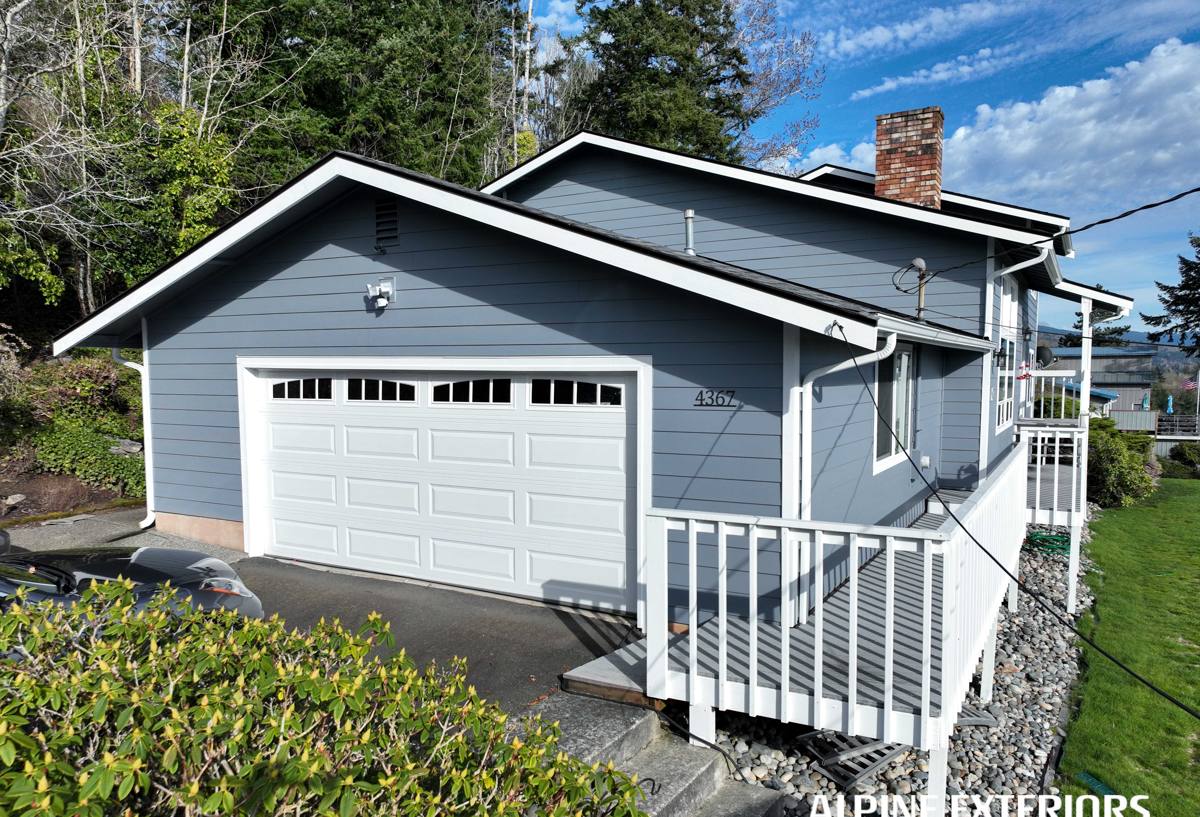
What Makes Wiser Lake Decks Different
It's not just rain totals. A few things stack up around a lake setting that a standard deck spec doesn't fully account for:
Constant Ambient Moisture
Being near open water means more overnight dew, more morning fog, and slower dry-out times than a lot even a mile inland. Wood and fasteners spend more hours per day wet, which accelerates rot at joints and corrosion at every metal connection point.
Shade and Tree Cover
Many Wiser Lake lots have significant tree canopy, which is part of the appeal of living out there — but shade plus moisture is exactly the recipe moss and algae need. Deck boards that never get a real drying window will grow moss in the grain long before the material itself fails.
Marine Air and Salt Exposure
Whatcom County's proximity to the Salish Sea means the air carries a low but steady level of salt, even well inland. Over years, that accelerates corrosion in cheaper fasteners, connectors, and railing hardware — the kind of slow damage that's invisible until a board lifts or a post connection fails.
Ground Conditions Near the Water
Soil around a lake tends to hold moisture longer and can be softer or more variable than soil on higher, drier ground. Footings need to be sized and set with that in mind, not just built to the minimum spec used on a dry inland lot.
Choosing Decking Material for a Lake Setting
There's no universally "best" decking material — there's the right material for this lot, this exposure, and this budget. For Wiser Lake homes, moisture and moss resistance usually matter more than they would on a sunny, open lot elsewhere in Lynden.
| Material | Upfront Cost | Moss/Moisture Resistance | Maintenance | Typical Lifespan |
|---|---|---|---|---|
| Pressure-treated pine | Lowest | Fair — needs sealing | Annual cleaning and re-sealing | 10–15 years |
| Cedar | Moderate | Good, naturally rot-resistant | Periodic oiling/staining | 15–20 years |
| Composite (e.g. Trex, TimberTech) | Higher | Very good | Occasional washing | 25–30+ years |
| PVC decking | Highest | Excellent | Rinse as needed | 30+ years |
Why We Lean Toward Composite in Shaded, Damp Spots
On a full-sun lot, wood can be a perfectly reasonable choice. On a shaded Wiser Lake lot where a deck might only see direct sun for a couple of hours a day, wood stays damp long enough that moss and mildew become a recurring maintenance chore rather than an occasional one. Composite and PVC boards don't feed mold the way wood grain does, which matters more here than it would on a drier, sunnier property. That said, composite isn't automatically the right call for every budget or every homeowner's preference — cedar, properly maintained, still performs well and plenty of homeowners prefer the look and feel of real wood underfoot.
Framing and Substructure: Where Lake-Area Decks Actually Fail
Almost every deck failure we're called out to fix around Lynden and the surrounding lake communities starts below the surface — the boards get blamed, but the framing was the actual problem.
Ledger Attachment
The ledger board — where the deck ties into the house — is the single most common failure point on any deck, and it's worse in a wet climate. Proper flashing that sheds water away from the house sheathing, rather than trapping it against the ledger, is non-negotiable. We won't attach a ledger without correct flashing, full stop.
Footings Sized for Wet Ground
Footings need to be set below frost depth and sized for the actual soil conditions on the lot, not a generic assumption. On softer or wetter ground near the lake, that sometimes means larger footings or additional support posts than a standard span table would suggest for a dry inland lot.
Joist Protection
Joist tape or an equivalent moisture barrier over the top of every joist keeps water from wicking into the wood through screw holes and cut ends — a small step that makes a real difference in a climate where the frame rarely gets a long, uninterrupted dry stretch.
Fasteners and Hardware Built for Humid, Salt-Influenced Air
Hardware is where a lot of decks quietly fail years after the boards were installed. In a marine-influenced climate like Whatcom County's, standard galvanized fasteners can corrode faster than homeowners expect, especially at joist hangers, post bases, and railing connections that stay damp longer than the open deck surface.
- Stainless steel or high-grade coated fasteners at every structural connection
- Corrosion-rated joist hangers and post bases, not generic galvanized hardware
- Hidden fastener systems on composite decking to reduce exposed metal on the walking surface
- Railing hardware rated for coastal or marine exposure, not interior-grade fittings
None of this is visible once the deck is finished, which is exactly why it's worth asking a contractor directly what hardware they're using before work starts.
Our Deck Building Process
The process is straightforward, and we walk every homeowner through it before a shovel goes in the ground:
- On-site visit — we look at the lot's sun exposure, tree cover, drainage, and how close the deck sits to the water, since all of that affects material and framing decisions.
- Design and material selection — we go over the tradeoffs in the table above based on your budget and how much upkeep you actually want to do.
- Permitting — Whatcom County and the City of Lynden both have permit requirements for new decks above certain heights or square footage, and lake-adjacent lots can carry additional setback considerations. We handle this rather than leaving it to the homeowner.
- Framing and footings — built to the ground conditions on your specific lot, not a generic minimum.
- Decking, railing, and finish work — installed with the fastener and hardware standards above.
- Final walkthrough — we go over basic care so the deck actually reaches the lifespan the material is rated for.
Living With a Deck in a Long Moss Season
Even the right materials and framing don't eliminate maintenance entirely — they reduce it. A few habits go a long way on a shaded, lake-adjacent deck:
Keep Water Moving
Gaps between boards and a slight slope away from the house need to stay clear of leaf litter and debris, especially under tree cover, or water will sit instead of draining.
Clean Before Moss Takes Hold
An annual wash — earlier in the season than you'd think necessary on a sunnier lot — keeps moss from establishing in the grain of wood decking or in board gaps.
Check Hardware Periodically
Railing connections and any exposed fasteners are worth a visual check once a year. Catching early corrosion is a five-minute fix; replacing a failed post connection isn't.
Why It Matters That We Already Work Wiser Lake
A deck built to a generic spec sheet will pass a basic inspection and still underperform on a shaded, damp lot near the water. Framing choices, fastener grade, and material selection all shift once you factor in the specific conditions around Wiser Lake — and a crew that already builds in this area isn't guessing at those adjustments, they're applying what they've already seen hold up and what hasn't. That includes knowing how Whatcom County and Lynden permitting works for lake-area lots, not learning it project by project.
Get a Straightforward Estimate
If you're planning a new deck or replacing one that's showing its age around Wiser Lake, we're glad to come take a look and give you a clear, no-pressure estimate — what your lot actually needs, what it will cost, and why. Use the form below to get started.