 Lynden Siding
 Board & Batten Around Wiser Lake: A Style That Has to Earn Its Keep
Board and batten has become one of the most requested siding profiles for homes near Wiser Lake, and it's easy to see why. The bold vertical lines read as modern farmhouse on a new build and as understated and classic on an older Whatcom County property. But out here, board and batten isn't just a look you choose off a mood board — it's a siding system that has to hold up against salt-tinged air drifting in off the Salish Sea, driving rain that comes in sideways for weeks at a stretch, and a moss season that seems to start earlier every year. A vertical siding profile that isn't detailed and installed correctly will show every one of those stresses faster than a standard horizontal lap job will.
This page is about that one job, done right, for homes in and around Wiser Lake: what the local climate actually does to board and batten siding, what a correct installation involves, how we approach the work, and why it matters that the crew on your roofline has already done this dozens of times in this specific area — not just somewhere else in the Pacific Northwest.
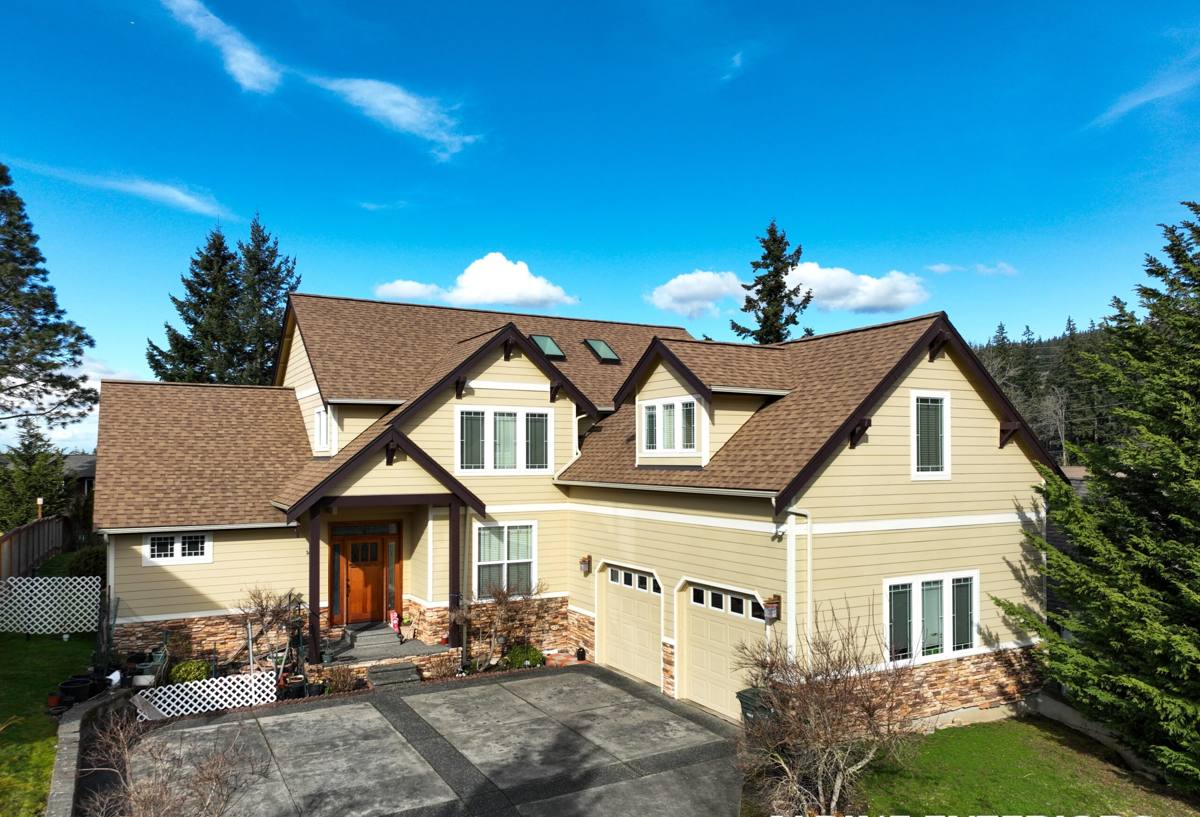
What Wiser Lake's Climate Does to Vertical Siding
Lynden sits inland from Bellingham Bay, but Whatcom County still gets a steady dose of marine air moving up from the Salish Sea, and homes closer to Wiser Lake pick up more of it than properties tucked further into the valley. That marine influence, combined with our long, wet winters, creates three specific problems for board and batten siding:
- Salt-laden air accelerates corrosion on exposed fasteners, uncoated trim, and cheap flashing — problems that show up first at the vertical seams a batten profile is full of.
- Driving rain doesn't just fall straight down here; wind pushes it sideways into every vertical joint, seam, and butt splice. Board and batten has more linear feet of seam per square foot of wall than lap siding, so every one of those seams is a potential entry point if it isn't flashed and lapped correctly.
- A long moss season — stretching from fall through spring in a wet year — means anything that traps moisture against the wall (dense shade near the lake, north-facing elevations, low airflow behind the siding) becomes a growth surface. Moss and algae hold moisture longer against the substrate, which is exactly what you don't want behind a vertical board profile.
None of this means board and batten is a bad choice for a Wiser Lake home. It means the installation details that get glossed over in milder climates can't be skipped here.
What a Correct Board & Batten Job Actually Involves
The System, Not Just the Boards
Board and batten is really a layered system: a water-resistive barrier, a drainage plane, the wide boards (or panels), the narrower battens that cover the seams between them, and the flashing and trim that tie it all together at windows, corners, and the foundation line. A siding crew that treats it as "boards nailed to the wall" is setting the house up for moisture problems within a few winters.
Rainscreen Gap
Because vertical siding channels water downward along every seam, we install with a drainage gap behind the siding rather than fastening directly against the weather barrier. That gap lets any water that does get past the outer surface drain and dry instead of sitting against the sheathing — which matters even more in a climate that stays wet for months at a stretch.
Fastening and Batten Spacing
Battens need consistent spacing over the board seams, with fasteners landing in solid framing or blocking — not just into the board edge. Incorrect batten spacing or fastener placement is one of the most common board and batten mistakes we see, and it's invisible from the ground until boards start cupping or seams start opening up.
Flashing at Every Transition
Windows, doors, roof-to-wall intersections, and the base of the wall all need proper step flashing, head flashing, and kick-out flashing integrated with the drainage plane — not caulk used as a substitute for flashing. Caulk fails; flashing, installed correctly, doesn't need to be relied on at all.
Why We Install James Hardie for Board & Batten — and Nothing Else
We are a James Hardie-only siding contractor. We don't install vinyl board and batten, engineered wood panels, cedar, or primed spruce battens, and we want to be upfront about why, because it's the whole reason this business exists in its current form.
Vinyl board and batten profiles can look convincing from the street, but vinyl expands and contracts significantly with temperature swings, which is a real liability on a long vertical run of battens — you get visible waviness and seam gaps over time, and vinyl offers no real fire resistance. Engineered wood (OSB-based) siding and traditional cedar battens both depend on their factory or field-applied coatings to keep moisture out; once that coating is compromised at a cut end, a fastener hole, or a seam, the substrate underneath is wood fiber that swells, and swollen fiber cement or wood siding doesn't go back to its original shape. In a climate with a moss season this long, we don't think that's a reasonable bet to make on a customer's home.
James Hardie fiber cement board and batten holds its dimension in wet and dry cycles, doesn't support the kind of rot that wood-based products can, and carries a factory-applied ColorPlus finish that's baked on and warranted against fading — no repainting cycle required the way cedar or primed wood battens demand. It's also non-combustible, which matters increasingly to insurers and to homeowners thinking about wildfire smoke and ember exposure even this far north. Hardie's HZ5 product line is engineered for exactly the wet, temperate climate zone Whatcom County sits in.
Our Process for a Wiser Lake Board & Batten Project
- On-site assessment — we look at your home's specific exposure: how close you are to the lake, which elevations take the worst wind-driven rain, tree cover and shade patterns that affect drying time, and the condition of the existing wall assembly.
- Tear-off and substrate check — old siding comes off and we inspect the sheathing for hidden rot or moisture damage before anything new goes up. This is the point where problems that have been hiding for years get found and fixed, not covered over.
- Water-resistive barrier and drainage plane — a new weather barrier and rainscreen gap are installed correctly the first time, sized for the wall assembly and this climate.
- Board and batten installation — Hardie boards and battens go up to manufacturer fastening specs, with flashing integrated at every window, door, and roofline transition as the work proceeds, not patched in afterward.
- Final inspection and walkthrough — we go over the finished job with you, including what routine maintenance to expect and what would count as a problem worth a call.
Cost Factors for Board & Batten Siding
Every home is different, but these are the main variables that move the price on a board and batten project near Wiser Lake:
| Factor | Why It Matters |
|---|---|
| Wall complexity | Gables, dormers, and multiple roof-to-wall transitions all add flashing detail and labor time |
| Existing siding removal | Tear-off and disposal of old material adds cost versus a bare or already-stripped wall |
| Substrate condition | Hidden rot or moisture damage found during tear-off may require sheathing repair before siding goes on |
| Batten spacing and trim detail | Tighter batten spacing and custom trim around openings increase material and labor |
| Access and site conditions | Slope, tree cover, and proximity to the lakeshore can affect staging and scaffolding needs |
We give straightforward, written estimates before any work starts, and we're glad to walk through exactly what's driving the number for your specific home.
Maintenance in a Salt Air and Moss-Prone Setting
Correctly installed James Hardie board and batten is low-maintenance, not no-maintenance. A short annual routine goes a long way near the lake:
- Rinse siding gently once or twice a year to clear salt residue and organic buildup, especially on shaded or north-facing walls.
- Keep gutters clear so overflow doesn't run down the wall face and feed moss growth at the base of the siding.
- Trim back vegetation and tree cover that keeps a wall section damp and shaded longer than the rest of the house.
- Check caulking at trim joints annually — caulk is a backup to good flashing, not a substitute, and it does wear out.
- Have any impact damage (branches, equipment, debris) inspected and repaired promptly rather than left through a wet season.
Why Local Experience in Wiser Lake Matters
Board and batten failures we get called out to fix almost always trace back to the same root causes: no rainscreen gap, flashing skipped or replaced with caulk, or fasteners that missed framing. Those mistakes are avoidable, but only if the crew installing your siding actually understands how wind-driven rain, lake-adjacent humidity, and a long moss season interact with a vertical seam profile — not just how to nail boards to a wall in dry weather. A crew that already works this specific area around Lynden has seen how these homes perform through a full wet season and knows which details are non-negotiable here, not in a drier or milder market.
If you're considering board and batten siding for a home near Wiser Lake, we'd be glad to take a look and give you a straightforward, no-pressure estimate — just fill out the form below.