 Lynden Siding
 Roof Replacement in Deming: What the Climate Demands
Deming sits back in the trees east of Lynden, and that changes what a roof has to deal with compared to a house out in the open. The tree cover holds shade and moisture on the roof deck longer after a storm, which is exactly the kind of environment moss and algae need to get established. At the same time, this is still Whatcom County, and that means the same driving rain and marine air that push in off the bay reach Deming too, just filtered through more forest before they get there. A roof out here has to shed a lot of water fast, resist a long moss season, and hold up to salt-laden air that slowly works on exposed metal and fasteners over the years. None of that is unusual for this part of Washington, but it does mean a roof built for a drier climate, or installed without attention to shade and airflow, will show its age here faster than it should.
Roof replacement is a big enough investment that it pays to get the details right the first time, especially in a spot like Deming where the roof rarely gets a full day of sun to dry out between rain events.
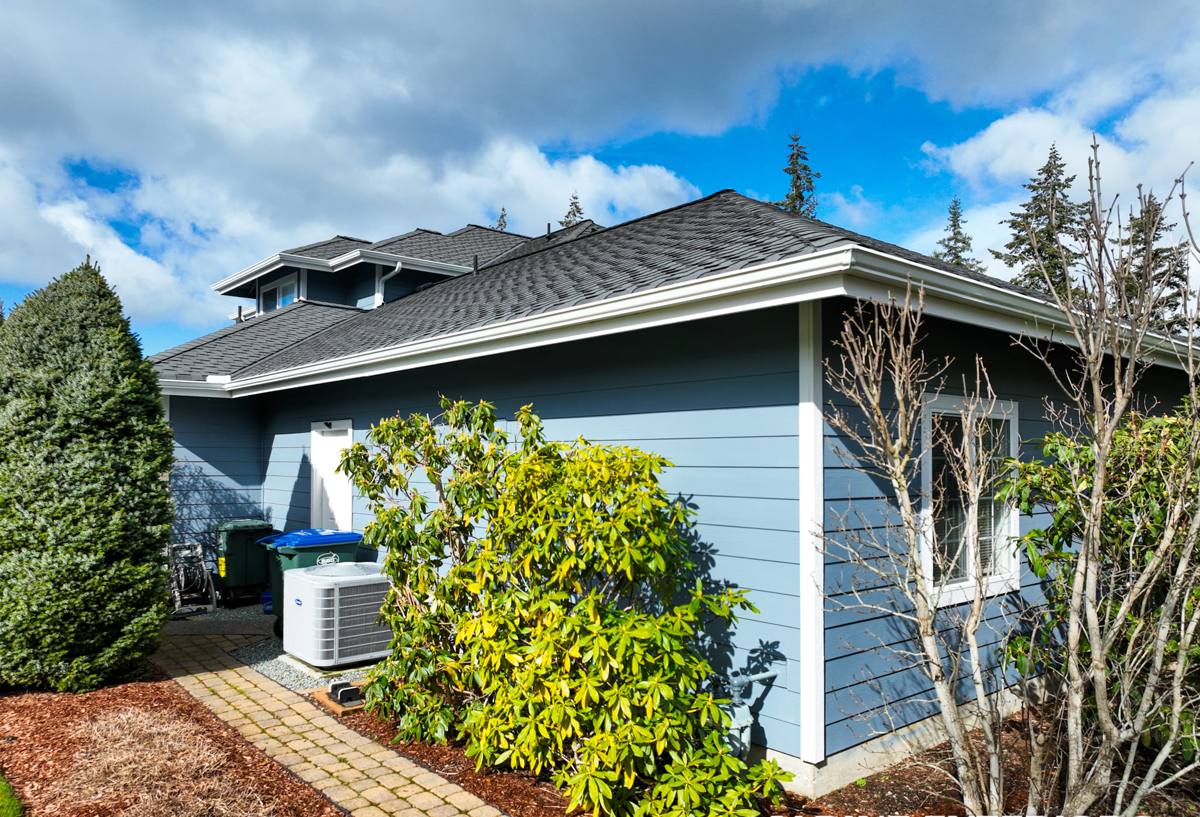
Signs a Deming Roof Needs Full Replacement, Not a Patch
Not every roof problem calls for a full tear-off. But there's a point where patching becomes throwing money at a roof that's already past its useful life, and homes under heavy tree cover tend to hit that point sooner than homes in the open. Some signs worth taking seriously:
- Granule loss heavy enough that you're finding grit in the gutters every season, not just after a new roof's first year
- Moss or lichen that keeps coming back within months of being cleaned off, even after treatment
- Soft or spongy spots when walking the roof, which usually means the decking underneath has taken on moisture
- Curling, cracked, or missing shingles clustered in shaded areas or valleys where water sits longest
- Staining on interior ceilings or in the attic, especially near valleys, chimneys, or skylights
- A roof approaching or past the end of its expected material lifespan, particularly if the original installation skipped proper ventilation
If you're seeing two or three of these at once, that's usually a sign the roofing system as a whole is failing, not just one section of shingles.
What a Correct Roof Replacement Actually Involves
A roof replacement is more than swapping old shingles for new ones. In a shaded, wet environment like Deming, the parts you don't see matter as much as the parts you do.
Tear-Off and Deck Inspection
We remove the old roofing down to the deck rather than layering over it. That's the only way to actually see the condition of the plywood or OEM sheathing underneath — and in a moss-prone area, hidden rot at the deck level is common enough that skipping this step is a real risk. Any soft or damaged decking gets replaced before anything new goes down.
Underlayment and Flashing
This is the layer that protects the house if wind-driven rain ever gets past the surface material, and it's where a lot of long-term leaks actually originate. We install a proper water-resistant underlayment and pay close attention to flashing at valleys, chimneys, skylights, and roof-to-wall transitions — the spots where two materials meet are almost always where a roof fails first.
Ventilation
A roof deck that can't breathe stays damp longer, which feeds moss growth and shortens the life of the decking itself. Balanced intake and exhaust ventilation matters everywhere, but it matters more under tree cover where the roof already gets less sun and airflow to begin with.
Choosing the Right Material for Deming's Tree Cover and Moisture
There's no single "best" roofing material for every house — it depends on the home's exposure, budget, and how much shade the roof sits under. Here's how the common options stack up for a property like a typical Deming home dealing with heavy shade and a long wet season:
| Material | Moss & Moisture Resistance | Relative Upfront Cost | Best Suited For |
|---|---|---|---|
| Standard asphalt composition shingle | Moderate — needs regular cleaning under shade | Lowest | Homes with partial sun exposure or where budget is the priority |
| Algae-resistant shingle (copper/zinc granules) | Good — granules actively resist algae and moss growth | Low to mid | Shaded lots where standard shingles have struggled before |
| Standing seam metal | Very good — smooth surface sheds moss and water fast | Highest | Homes under heavy tree cover with owners planning to stay long-term |
| Synthetic/composite shingle | Good — dense material resists moisture absorption | Mid to high | Homes wanting a shake or slate look without the moisture upkeep of wood |
For most Deming properties under significant tree cover, we steer people toward algae-resistant shingles or metal, simply because the maintenance burden of a standard shingle in deep shade adds up over the years — more frequent cleaning, more frequent moss treatment, and a shorter effective lifespan than the same product would get in full sun. That's a maintenance and moisture-behavior tradeoff, not a knock on standard shingles themselves, which are still a perfectly good choice on a roof with decent sun exposure.
Our Roof Replacement Process, Start to Finish
We keep the process straightforward so there are no surprises partway through the job:
- On-site inspection of the current roof, attic ventilation, and deck condition, with photos and a plain-language explanation of what we find
- A written estimate that spells out material options, scope of work, and timeline — no pressure to decide on the spot
- Scheduling around the weather window, since a wet-climate job needs a stretch of workable days to do it right
- Tear-off, deck repair where needed, and disposal of old material
- Installation of underlayment, flashing, ventilation components, and the new roofing material
- Final walkthrough where we cover what was done and what routine maintenance, if any, the new roof will need
Every roof and every property is a little different, but that's the backbone of how we approach the work.
Permits, Timeline, and Weather Windows in Whatcom County
Most full roof replacements in Whatcom County require a building permit, and we handle that process as part of the job rather than leaving it to the homeowner. Timeline depends on the size and pitch of the roof, but a typical single-family home replacement usually runs a few days of active work once materials are on site and the weather cooperates.
Weather is the real variable here. Whatcom County's driving rain doesn't follow a strict calendar, so we build in flexibility and avoid starting a tear-off without a reasonable window to get the roof dried in. Rushing a roof replacement into a bad forecast is how corners get cut, and that's not how we schedule jobs.
Why a Crew That Already Works in Deming Makes a Difference
A roofer who's worked under Deming's tree cover before already knows what to look for — where moss tends to build up first, how shaded valleys behave differently than open ones, and which ventilation setups actually hold up out here instead of just meeting minimum code. That local pattern recognition matters when you're deciding on material, ventilation, and flashing details, not just swapping shingles.
At Lynden Siding Company, roofing is part of a broader exterior scope we handle across Whatcom County, which means we're also thinking about how the roof interacts with siding, gutters, and trim — the places where water actually ends up after it leaves the roof surface. A roof replacement done in isolation, without regard for how the rest of the exterior manages water, is an incomplete job.
Checklist: Questions to Ask Before You Sign a Roof Replacement Contract
- Is the contractor licensed and insured in Washington, and can they provide proof?
- Does the written estimate specify the exact materials, including underlayment and flashing type — not just "shingles"?
- Is a full tear-off included, or is the quote based on roofing over the existing layer?
- Does the plan address attic and roof ventilation, or only the surface material?
- What does the manufacturer's warranty actually cover, and is it tied to certified installation?
- Who handles the building permit — the contractor or the homeowner?
- What's the plan if weather interrupts the job partway through?
A contractor who can answer these clearly, without vague or rushed responses, is a good sign of how they'll handle the actual work.
If your roof in Deming is showing its age, or you just want an honest read on whether it's a repair or a replacement, we're happy to take a look. Reach out for a free, no-pressure estimate using the form below.