 Lynden Siding
 Window Installation in Ferndale: Built for Salt Air, Driving Rain, and a Long Moss Season
Ferndale sits near the mouth of the Nooksack River and close enough to Bellingham Bay and the Salish Sea that homes here take on a specific mix of exterior stress: salt-tinged marine air drifting in off the water, rain that arrives sideways more often than straight down, and a moss and mildew season that can run most of the year on shaded or north-facing walls. None of that is unusual for this stretch of Whatcom County, but it matters a great deal when the work in question is window installation, because a window opening is the single busiest seam in an exterior wall. There are more joints, more transitions, and more places for water to find a way in around a window than almost anywhere else on a house.
Lynden Siding Company is based inland in Lynden, but our crew works Ferndale and the rest of Whatcom County regularly, and window installation on the coastal-influenced side of the county gets treated differently than window work on a more sheltered inland lot. The window unit itself is only part of the job. How it's flashed, how it's sealed, and how it ties into the surrounding siding is what actually determines whether it holds up through one wet Ferndale winter or twenty.
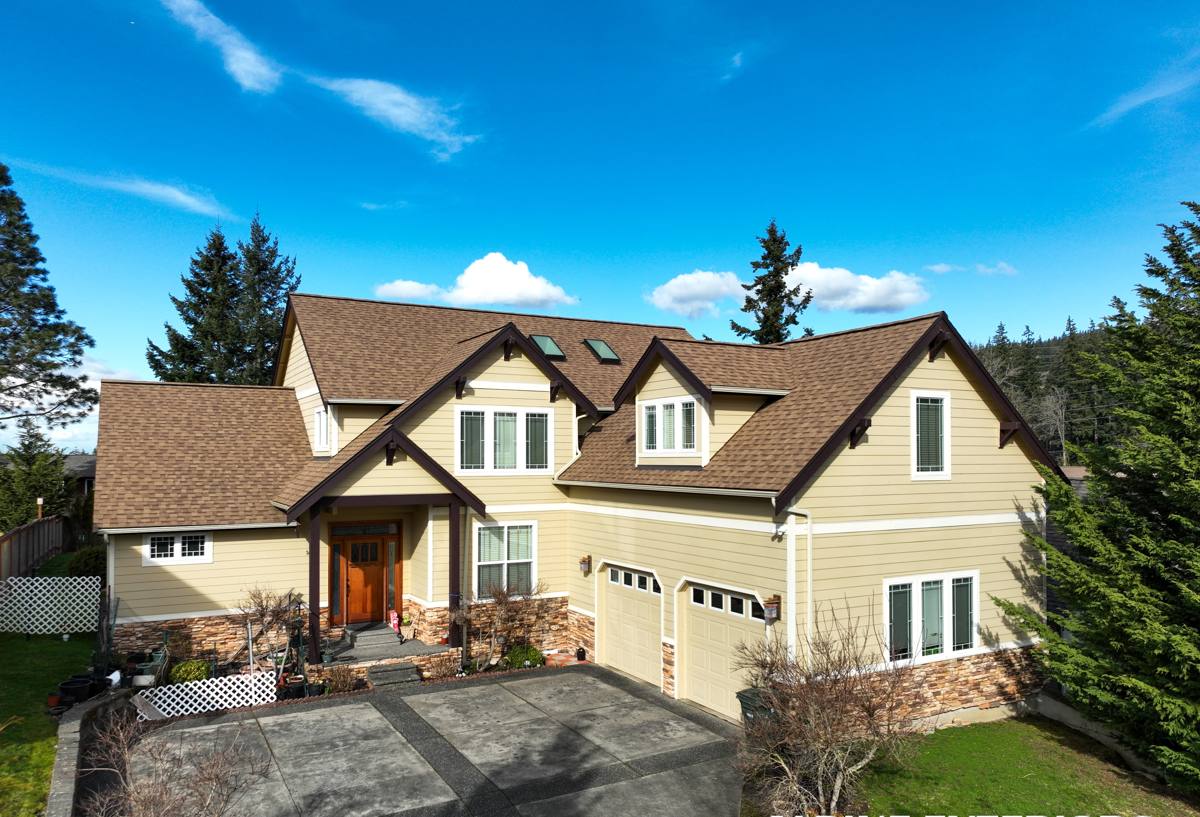
What Ferndale's Climate Does to Windows
Salt Air and Hardware Corrosion
Marine air carries salt further inland than most homeowners expect, and Ferndale's proximity to the water means window hardware, screen frames, and fasteners take on a steady low-grade corrosion load year-round. Lower-grade hardware finishes tend to show pitting, stiffness, or hardware that's harder to operate well before the window itself is due for replacement. It's one of the first things we check on an older Ferndale home — hardware condition often tells you more about how a window has actually held up than the glass does.
Wind-Driven Rain
Storms moving in off the water push rain sideways into wall assemblies rather than straight down, and that sideways load is a much tougher test of a window installation than of the window product itself. Flashing that laps correctly and directs water back out, away from the rough opening, is what keeps that rain from getting behind the siding. A window with sloppy flashing will leak in this climate regardless of how good the unit is.
Moss, Mildew, and Sill Rot
Mild temperatures and near-constant dampness through fall, winter, and spring give moss and mildew a long growth window across Whatcom County, and window sills, trim, and the wood framing around older windows are common places it settles in. Anything porous, or any spot where water sits instead of draining away, becomes a growth surface eventually. Shaded elevations and windows tucked under eaves with poor drainage usually show it first, sometimes well before it's visible from the street.
Condensation and Temperature Swings
The gap between a warm interior and a cold, wet Ferndale exterior creates real condensation pressure on glass and frames. Older single-pane windows and double-pane units with a failed seal show this constantly — fogging between the panes, water pooling on interior sills, or a frame that feels damp to the touch. That's a sign the seal or the unit has failed, not just a cosmetic nuisance to live with.
Signs a Ferndale Home Is Ready for New Windows
- Fogging or visible moisture trapped between the panes of a double-pane window
- Drafts or cold spots near the frame even when the window is fully latched
- Sills or trim that feel soft, look discolored, or show visible rot
- Windows that are hard to open, close, or lock the way they used to
- Visible daylight or gaps where the frame meets the surrounding siding
- Paint or finish peeling, bubbling, or chalking faster near the windows than on the rest of the wall
- A noticeable jump in heating costs that isn't explained by anything else in the house
What a Correct Window Installation Actually Involves
Removal and Opening Inspection
Before a new window goes in, the old one comes out and the rough opening gets checked — sheathing, framing, and any existing flashing get inspected for rot or hidden water damage. This is the point where problems that have been quietly building behind the old window for years actually surface. Skipping this step and simply setting a new window into a compromised opening just seals the existing damage back up.
Flashing and the Sill Pan
The sill pan under the window needs to be sloped to shed water outward, and flashing above and around the opening needs to lap in the correct order with the surrounding weather-resistive barrier, so water is always directed down and out rather than trapped behind the new unit. This is standard practice on every window we install in Ferndale, not an upgrade homeowners have to ask for separately.
Insulation and Air Sealing
The gap between the window frame and the rough opening needs a low-expansion foam or an appropriate insulating material that fills the space without bowing the frame — stuffing the gap with fiberglass batting or leaving it loose are both common shortcuts that cost energy performance and let air and moisture through.
Exterior Trim and Sealant Integration
The last step is tying the window's exterior trim back into the siding correctly, with sealant used to supplement the flashing rather than substitute for it. Caulk alone breaks down and cracks with UV and temperature cycling; it was never meant to be the only line of defense against wind-driven rain.
Choosing a Window Frame for This Climate
We talk homeowners through real trade-offs rather than pushing a single brand as the only right answer. What matters most for a Ferndale property is a tight, well-built frame, glazing that handles both energy performance and condensation resistance, and hardware that can take a marine-air corrosion load — not a name on the label.
| Frame Material | Moisture & Rot Resistance | Maintenance | Notes for Ferndale |
|---|---|---|---|
| Vinyl | Strong — won't rot, doesn't corrode | Low | Good value; solid standard choice for this climate |
| Fiberglass | Strong — dimensionally stable across temperature swings | Low | Holds paint if a custom exterior color is wanted |
| Wood, uncladded | Weak without diligent upkeep | High | Requires ongoing maintenance we don't recommend for direct marine exposure |
| Aluminum-clad wood | Good on the exterior face; interior wood still needs care | Moderate | Can work but adds cost and installation sensitivity |
What Actually Drives Cost on a Ferndale Window Job
Every window job is different, and broad ranges only mean so much without seeing the actual openings, but a few factors consistently move the price on jobs in this area more than anything else.
| Factor | Why It Matters |
|---|---|
| Full-frame vs. pocket (insert) replacement | Full-frame replaces flashing and sill pan too and costs more, but it's the only real fix when the opening has moisture damage |
| Number and size of openings | More and larger windows mean more material, more labor, and more flashing detail to get right |
| Custom shapes or sizes | Non-standard openings often require custom-ordered units with longer lead times and higher cost |
| Existing damage found at removal | Rotted sheathing or framing discovered once the old window is out adds repair scope beyond the window itself |
| Access and site conditions | Second-story openings or tight site access add labor time |
Our Process
- On-site look at every window in question — frame condition, hardware function, seal integrity, and how existing flashing ties into the siding
- A straightforward read on which windows are reasonable repair candidates and which make more sense to replace, opening by opening
- A written scope before any work starts, with product warranty and installation warranty kept separate and clear
- Flashing, sill pan detailing, and air sealing handled as standard practice on install day, not offered as an add-on
- A final walkthrough so you can see the finished work and operate every window before we consider the job done
A Quick Checklist Before Hiring for Window Work in Ferndale
- Ask specifically how they handle flashing and sill pan detailing, not just which window brand they sell
- Confirm current Washington contractor licensing and active liability insurance
- Get a written scope that separates product warranty from installation warranty
- Ask whether they recommend repair or replacement for each window and why
- Ask about lead times — custom-sized units built for a specific opening can take several weeks to arrive
Why a Crew That Already Works Ferndale Matters
A contractor who works this part of Whatcom County regularly already knows what wind-driven rain does to a window opening here, understands the corrosion load marine air puts on hardware over years rather than months, and treats flashing as standard practice instead of something to skip when a bid needs to come in lower. Those are the decisions that actually separate a window installation that holds up for decades from one that starts leaking within a few wet seasons. Because we also handle siding, roofing, and decks, the person detailing your window flashing understands exactly how it needs to tie into the siding and drainage plane around it — window work doesn't happen in isolation from the rest of the wall.
If you're dealing with drafty, foggy, or hard-to-operate windows on a Ferndale property — or you just want an honest read on whether repair or replacement makes more sense — we're happy to take a look. Reach out below for a free, no-pressure estimate.