 Lynden Siding
 Why Ferndale Homes Wear Out Siding Differently
Ferndale sits close enough to Bellingham Bay and the Strait of Georgia that salt-laden air is a real factor in how exterior materials age here, not just a talking point. Add Whatcom County's long wet season, frequent wind-driven rain off the water, and the shaded, damp conditions that let moss and algae take hold on north-facing walls, and you get a climate that is genuinely harder on siding than most of the country experiences. Homes closer to the water or tucked under tree cover tend to show the wear first: chalky or peeling paint, soft spots at the bottom courses, and a greenish cast that keeps coming back no matter how many times it gets pressure washed off.
None of that means Ferndale is a bad place to own a home — it means the siding has to be chosen and installed with those specific stresses in mind. A product and installation approach that works fine in a drier inland climate can fail early here, and a lot of the siding replacement calls we get in Ferndale are for houses that are only 12 to 18 years old.
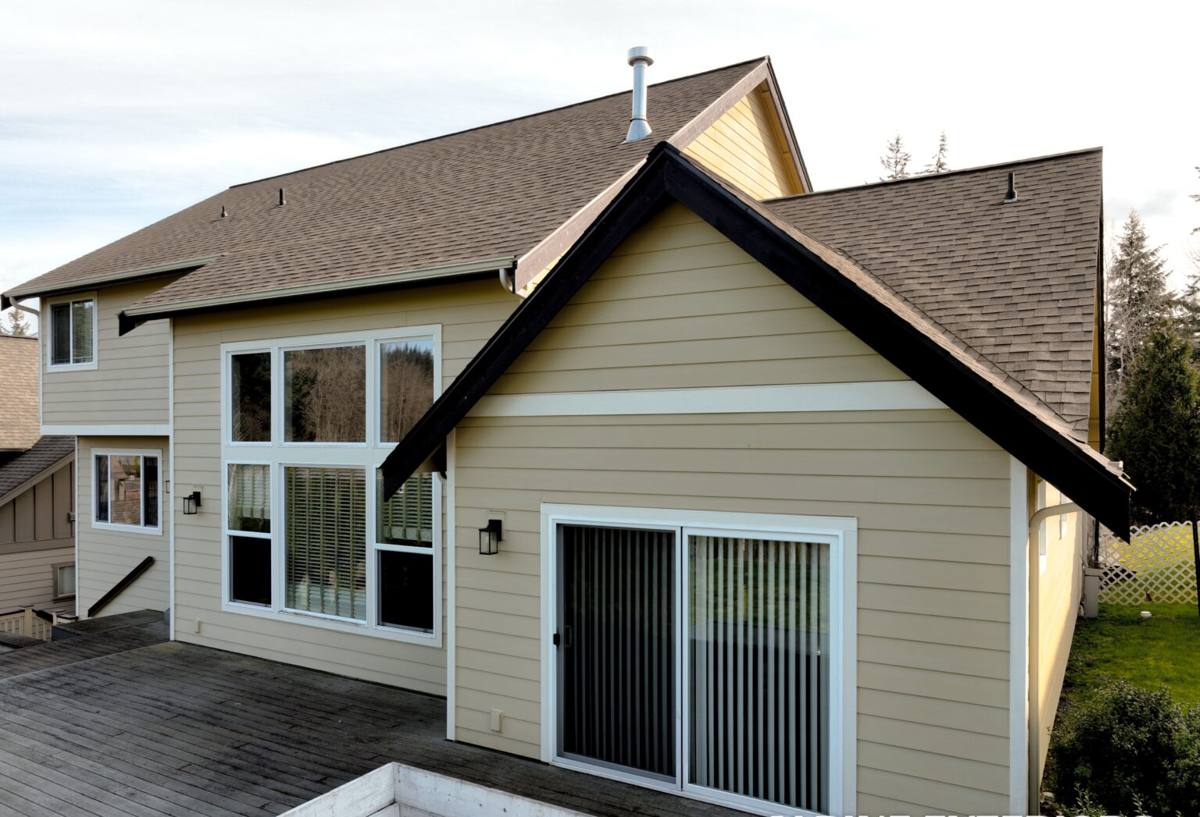
What "Correct" Siding Replacement Looks Like Here
Replacing siding isn't just swapping old boards for new ones. In a salt-air, high-moisture area like Ferndale, the work that happens underneath the siding matters as much as the siding itself.
The Water Management Layer
Every wall needs a continuous weather-resistive barrier (housewrap or building paper) installed with proper lapping, and every window, door, and penetration needs to be flashed so water is directed out and away from the sheathing, not trapped behind it. On a re-side, this is the point where a crew either does the job right or just covers up whatever was there before. We open the wall up, check the sheathing for rot or soft spots, and replace anything compromised before a single new board goes up.
Rain Screen and Ventilation
Given how much wind-driven rain this area sees, we install with a rain screen gap behind the siding wherever the wall assembly calls for it. That gap lets any moisture that does get past the cladding drain and dry out instead of sitting against the back of the siding and the sheathing. It's a small detail that has an outsized effect on how long the assembly lasts in a coastal-influenced climate.
Fastening and Clearances
Correct nailing patterns, proper fastener penetration into framing, and keeping the bottom edge of the siding clear of grade, decks, and hard-scape are all things that get rushed on a fast, cheap install and show up as problems five to ten years later — swelling, cupping, or fastener corrosion, especially in salt-influenced air.
Why We Install Only James Hardie Fiber Cement
We standardized on James Hardie fiber cement siding for every home we work on, including Ferndale, and we don't install vinyl, LP SmartSide, or other fiber cement brands. That's a deliberate professional standard, not a sales pitch.
- Non-combustible core: Hardie's fiber cement doesn't feed a fire the way wood-based or vinyl products can.
- Built for wet, coastal-influenced climates: Hardie's HZ5 product line is engineered for regions with more moisture exposure and freeze-thaw cycling, which fits Whatcom County's weather pattern.
- ColorPlus factory finish: a baked-on finish that resists the fading and moisture intrusion that plagues field-painted wood and lower-grade composite products, and holds up better against salt air than most site-applied paint jobs.
- Dimensionally stable: fiber cement doesn't swell, warp, or rot the way wood-based siding can when it stays damp for extended periods, which matters on shaded or water-facing elevations.
- Strong transferable warranty: backed by a manufacturer with decades of track record specifically in fiber cement, not a newer or thinner product line.
We're not going to pretend other products don't have a place in the market — vinyl is cheaper up front, and other fiber cement brands exist. But for the moisture load, salt exposure, and moss pressure that Ferndale and the surrounding Whatcom County area deal with, Hardie is the product we're willing to stand behind long-term, and it's the only one we put our crew's name on.
Moss, Algae, and Siding: What Actually Helps
Moss and algae growth on siding isn't just cosmetic — sustained organic growth holds moisture against the surface, which accelerates whatever underlying material problems already exist. A few things make a real difference:
- Proper rain screen gap so the wall assembly can dry between wet stretches instead of staying damp.
- Trimming back vegetation and tree cover where practical to get more sun and airflow on shaded walls.
- A factory finish (like ColorPlus) that sheds water more effectively than field-applied paint, which slows the buildup that gives moss a foothold.
- Keeping gutters and downspouts functioning so roof runoff isn't sheeting down specific sections of wall.
No siding product is immune to moss and algae in this climate — anything exposed to shade and moisture long enough can grow it. The goal of a correct installation is to reduce how fast it comes back and how much damage it can do while it's there.
How Our Process Works for a Ferndale Re-Side
1. On-Site Assessment
We walk the exterior, check for soft spots, moisture staining, and current siding condition, and look at exposure — which walls face prevailing wind and rain, which stay shaded, and whether the home is close enough to open water that salt exposure is a bigger factor.
2. Tear-Off and Sheathing Inspection
Old siding comes off and we inspect the sheathing and framing underneath. Any rot or water damage gets addressed before new material goes on — this is the step that gets skipped on cut-rate jobs and causes problems years later.
3. Water Management Install
New weather-resistive barrier, correct window and door flashing, and a rain screen gap where the assembly calls for it.
4. Hardie Installation to Spec
Fastening patterns, clearances, and joint treatment done to James Hardie's published installation requirements, which is also what keeps the manufacturer warranty intact.
5. Walkthrough
We go over the finished work with the homeowner before calling the job done.
Cost Factors for Ferndale Siding Replacement
Every home is different, so we won't quote a number without seeing the house, but these are the main variables that move the price:
| Factor | Why It Matters |
|---|---|
| Extent of sheathing repair | Water-damaged sheathing found during tear-off adds material and labor before re-siding can start |
| Home size and wall complexity | More corners, dormers, and trim detail means more labor and cut waste |
| Siding profile and trim package | Lap width, shingle-style accents, and trim choices affect material cost |
| Access and site conditions | Tight lots, landscaping, or multi-story sections can add setup and safety requirements |
| Rain screen and flashing scope | Full water management upgrades cost more upfront but reduce long-term risk |
Questions to Ask Before Hiring a Siding Contractor in Ferndale
A siding job that looks fine at completion can still fail in three to five years if the water management underneath was rushed. Before you hire anyone for a Ferndale re-side, it's worth asking:
- Do you install a rain screen gap, or just house wrap directly under the siding?
- How do you flash windows and doors, and can you walk me through it?
- Will you inspect and, if needed, replace sheathing before re-siding — and is that priced separately or built in?
- Are you a James Hardie certified or preferred installer, and does the manufacturer warranty depend on the install meeting their spec?
- Have you worked in Ferndale or similar coastal-exposure areas of Whatcom County before?
A contractor who already works this specific area understands why these details matter here in a way a crew coming from a drier, inland market may not.
Why Local Experience in Ferndale Matters
Salt air exposure, wind-driven rain direction, and moss pressure aren't uniform even within Whatcom County — a home a few blocks from open water deals with different conditions than one further inland, and shaded lots behave differently than open ones. A crew that has actually worked on Ferndale homes has a feel for which walls tend to take the worst of it, where moss comes back fastest, and how much rain screen and flashing detail a given exposure really needs. That local pattern recognition, combined with installing a single product system to manufacturer spec every time, is what keeps a siding job performing for decades instead of just looking good on installation day.
If your Ferndale home's siding is showing chalking, soft spots, recurring moss, or you're just planning ahead, we're happy to take a look and give you a straightforward, no-pressure assessment and estimate — no obligation, just an honest read on what your home actually needs.