 Lynden Siding
 Siding Installation in Sumas
Sumas sits right up against the Canadian border in Whatcom County, and like the rest of this corner of Washington, it spends a good chunk of the year under low clouds, steady drizzle, and heavy morning dampness that doesn't burn off until midday, if it burns off at all. Homes here take on moisture from every direction — driving rain off the foothills, marine air pushing inland from the Salish Sea, and long stretches of shade in winter that keep north-facing walls wet for days at a time. Siding in this part of the county isn't just a cosmetic layer. It's the thing standing between that moisture and your framing, sheathing, and insulation, day after day, year after year.
We install siding for homeowners throughout the Lynden and Sumas area, and we install exactly one product: James Hardie fiber cement. This page walks through what a proper siding installation looks like on a Sumas home, what the climate demands of the material and the crew, and why we don't cut corners on either.
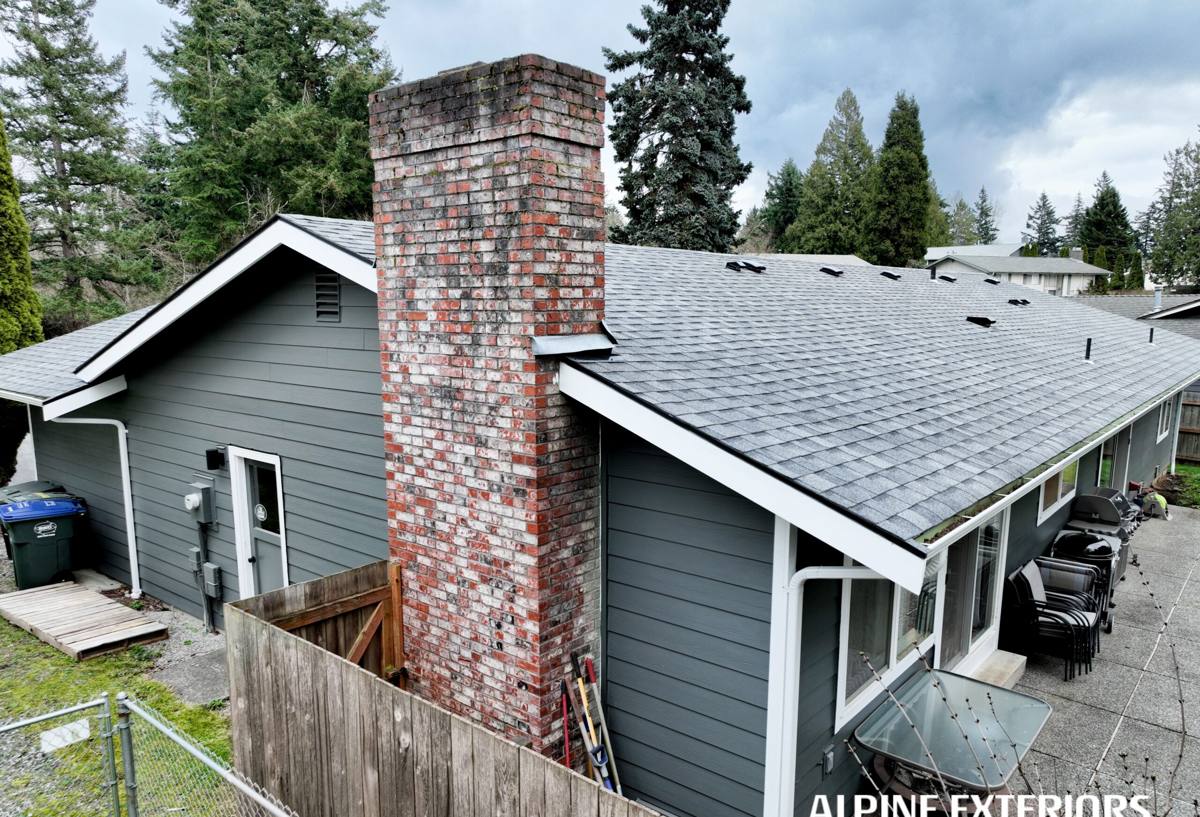
What Sumas Homes Are Up Against
Whatcom County's climate is mild compared to a lot of the country, but "mild" is misleading. Mild doesn't mean easy on a house — it means constant. Rather than a few brutal weeks of extreme weather, Sumas gets months of low-grade exposure: driving rain that finds every gap, salt-tinged marine air that works into seams and fasteners, and a moss season that can run from fall clear through spring on anything that stays shaded and damp.
- Driving rain — wind-driven storms push water sideways into siding, not just down it, which means laps, seams, and butt joints take more abuse here than in drier climates.
- Persistent dampness — long stretches without full sun mean siding surfaces, especially on north and east walls, stay wet longer, giving mold, mildew, and moss more time to take hold.
- Moss and algae growth — shaded, damp siding is a magnet for moss. Left unchecked, it holds moisture against the surface and accelerates whatever's underneath it.
- Freeze-thaw swings — Sumas gets colder winter nights than areas closer to the water, and repeated freezing and thawing is hard on any siding material that absorbs moisture or expands and contracts with temperature.
None of this is unusual for Whatcom County. It's just the baseline. The question isn't whether your siding will face this exposure — it's whether the material and the installation are built to handle it without slowly failing underneath a coat of paint.
Why We Only Install James Hardie
We standardized on James Hardie fiber cement siding because it's engineered for exactly this kind of climate. It's non-combustible, dimensionally stable, and doesn't rot, delaminate, or feed mold the way wood-based products can when they stay wet for extended periods. Hardie's HZ5 product line in particular is built for regions with more moisture and freeze-thaw cycling — a good fit for a border town like Sumas that sees colder winter mornings than the immediate coastline.
The factory-applied ColorPlus finish matters here too. It's baked on under controlled conditions, which gives it far better resistance to fading, cracking, and moisture intrusion than a coat of paint applied on site after installation — especially important when a house sits under damp, low-light conditions for months at a time. That finish is also backed by its own warranty against manufacturing defects, separate from the product warranty on the siding itself.
We get asked why we don't also offer vinyl, LP SmartSide, or other fiber cement brands. The honest answer is that we'd rather install one product extremely well than juggle several and get good at none of them. Hardie is what we'd put on our own homes in this climate, so it's what we install for everyone else.
What Correct Installation Actually Involves
Fiber cement siding performs the way it's supposed to only when it's installed to manufacturer specification. Most siding failures we see on older homes in this area aren't material failures — they're installation shortcuts that let water in behind the siding, where it does damage nobody can see until it's serious.
Weather-Resistive Barrier and Flashing
Every installation starts with a properly lapped weather-resistive barrier and correctly integrated flashing around windows, doors, and any penetration through the wall. In a climate that drives rain sideways, flashing details are what actually keep water out — the siding itself is the second line of defense, not the first.
Clearances and Gaps
Hardie specifies minimum clearances from grade, roof lines, decks, and other siding, along with gap requirements at butt joints and trim. These clearances exist specifically to let the material dry out after it gets wet. Skipping them is one of the most common ways installers unintentionally trap moisture against a wall.
Fastening
Correct fastener type, placement, and depth matter more with fiber cement than with softer materials — over-driven or under-driven fasteners can crack the board or leave it loose enough to move and let water track in behind it.
Caulking and Sealant Points
Sealant is only used where Hardie's specifications call for it, not as a substitute for proper flashing and clearances. Over-caulking is a common shortcut that looks fine at installation and fails within a few years.
Our Process for a Sumas Installation
Every project starts with an on-site look at the specific exposures your house faces — which walls take the worst of the driving rain, where shade keeps siding damp longest, what condition the existing sheathing and framing are in once old siding comes off. That assessment shapes decisions on flashing details, product line, and sequencing before any material goes up.
- On-site evaluation of the home's exposure, existing siding condition, and any moisture or rot found during removal
- Confirmation of product line, profile, and color, with attention to HZ5 suitability for this area's freeze-thaw pattern
- Removal of old siding and inspection of sheathing, with repairs made before anything new goes on
- Installation of weather-resistive barrier and flashing at every window, door, and penetration
- Hardie board installation to manufacturer clearance, gap, and fastening specifications
- Final walkthrough covering caulking points, trim details, and touch-up
We don't install over compromised sheathing just to save a day of labor. If we find rot or water damage during tear-off, we address it before the new siding goes up — otherwise you've paid for a nice-looking wall over a problem that's still there.
Comparing Siding Options for This Climate
Homeowners in Sumas sometimes ask us to bid against vinyl or other fiber cement brands. We're upfront that we only install Hardie, but here's a straightforward look at how the common options hold up against this area's conditions.
| Factor | Vinyl | Wood-based (LP SmartSide, cedar) | James Hardie Fiber Cement |
|---|---|---|---|
| Moisture resistance | Doesn't absorb water, but seams and gaps can let water track behind it | Absorbs moisture; requires consistent maintenance to prevent swelling and rot | Engineered fiber cement resists moisture damage and won't rot |
| Moss/algae resistance | Surface can host growth in shaded, damp areas | Prone to moss and mildew if not maintained | Factory finish resists staining; still needs occasional cleaning in shaded areas |
| Fire resistance | Can melt or deform under heat exposure | Combustible | Non-combustible |
| Finish durability | Color molded in but can fade or become brittle over time | Requires repainting/restaining on a maintenance cycle | Factory-baked ColorPlus finish, separate finish warranty |
| Freeze-thaw performance | Can become brittle in cold temperatures | Susceptible to cracking and splitting | Dimensionally stable through temperature swings |
This isn't a claim that other products are unusable — plenty of homes have them. It's a summary of why, for a climate like this one, we've chosen to specialize in the product that handles moisture, moss, and freeze-thaw exposure with the least long-term maintenance burden.
Maintenance After Installation
Hardie siding is low-maintenance, not no-maintenance. A little attention keeps it performing the way it's designed to in a wet, mossy climate like Whatcom County's.
- Rinse siding annually, with extra attention to shaded north- and east-facing walls where moss and algae take hold first
- Keep gutters clear so overflow doesn't run down the siding face
- Trim back vegetation and landscaping that holds moisture against the wall or blocks airflow
- Check caulking at trim and penetrations every couple of years and re-seal where it's cracked or pulled away
- Watch for any soft spots, staining, or discoloration near the bottom courses, which can signal a drainage or clearance issue underneath
Why Local Experience Matters
A crew that already works Whatcom County knows what a Sumas winter actually does to a wall — where snowmelt and rain runoff collect, which orientations stay shaded and damp longest, and how the freeze-thaw cycle here differs from milder coastal spots just a few miles away. That knowledge shapes real decisions on the job: which product line to spec, how much clearance to leave, where to pay extra attention to flashing. It's the difference between an installation that looks right on day one and one that's still performing correctly ten winters later.
If your Sumas home needs new siding, or you're weighing your options before an existing wall gets worse, we're happy to take a look and walk you through what we'd recommend and why. Reach out for a free, no-pressure estimate using the form below.