 Lynden Siding
 Windows in the Bellingham Area Work Harder Than Most
Homes around Bellingham and Lynden sit in one of the wetter, wind-exposed corners of Washington. Proximity to Bellingham Bay means salt-laden air moving inland, and the marine weather pattern that defines Whatcom County brings months of low-angle, wind-driven rain rather than the occasional downpour. Add a moss season that can run from fall through spring, and window assemblies here are under near-constant moisture pressure in a way that drier inland regions simply don't experience. A window that performs fine in eastern Washington can fail early here if it wasn't built, sealed, or installed with this climate in mind.
This page focuses specifically on window replacement for Bellingham-area homes — what the local weather does to windows over time, what a correctly done replacement actually involves, and how our process is built around the conditions this part of Whatcom County throws at a house.
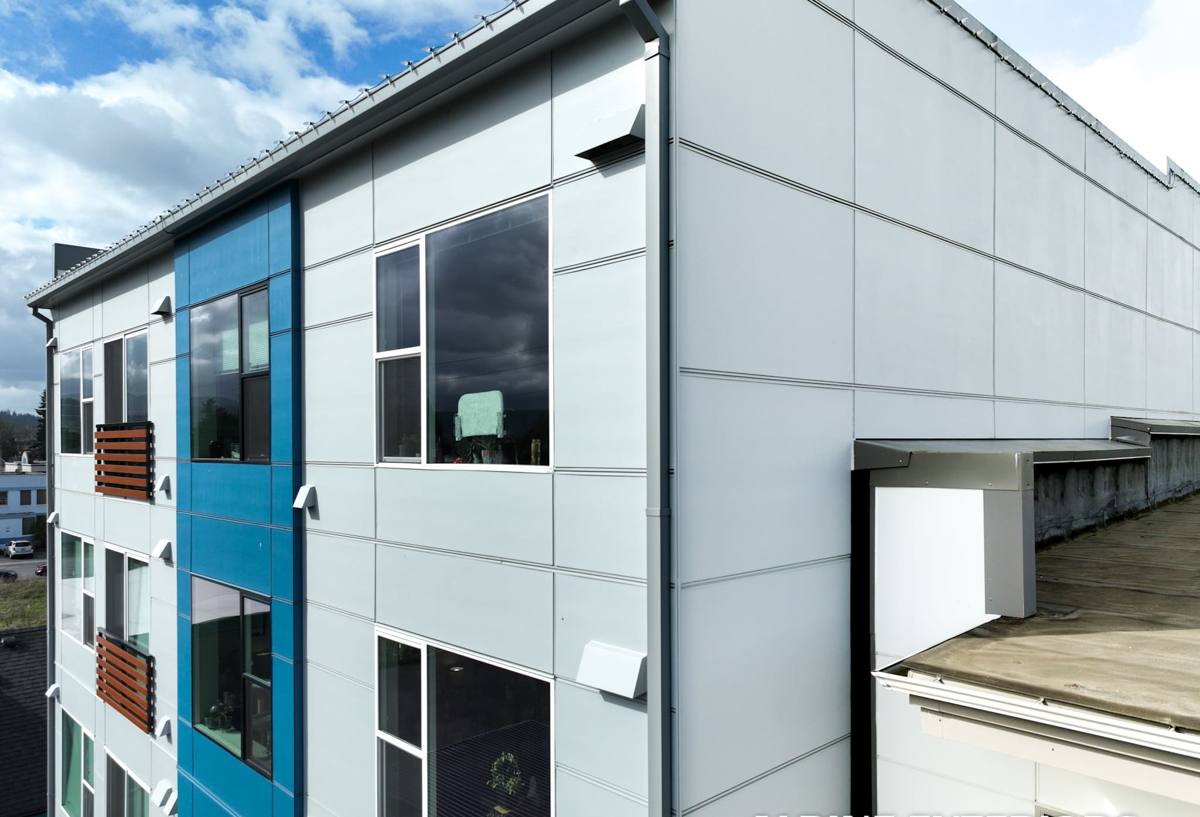
What Local Weather Does to Aging Windows
Salt Air and Coastal Moisture
Even a few miles inland from the bay, airborne salt accelerates corrosion on window hardware — hinges, latches, balance mechanisms, and screen frames. On older aluminum-frame windows, salt exposure also speeds up pitting and oxidation of the frame itself. Vinyl and fiberglass frames resist this corrosion, but the metal components inside any window — locks, rollers, weep hole covers — are still vulnerable if they aren't rated for coastal exposure.
Wind-Driven Rain
Rain that's pushed sideways by wind behaves differently than rain falling straight down. It gets forced up under sills, into flashing laps, and against seals that were never tested by vertical rainfall alone. Windows and installations that rely on caulk alone, without proper flashing and drainage paths, tend to show water intrusion first at the bottom corners of the frame — often years before it's visible from inside the house.
Moss, Algae, and Chronic Dampness
Long stretches of overcast, damp weather let moss and algae take hold on sills, trim, and anywhere water sits instead of shedding. Beyond the cosmetic issue, that trapped moisture keeps wood trim and sashes wet for extended periods, which is exactly the condition wood rot needs to get started. On older wood-frame windows, this is usually the first real failure point we see in this area.
Signs Your Bellingham-Area Home May Need Window Replacement
Not every window problem means full replacement, but these are the signs worth taking seriously in this climate:
- Fogging or a milky haze between panes — the seal has failed and the insulating gas or air gap is gone
- Visible soft, dark, or crumbling wood at the sill or lower frame corners
- Moss or black staining building up on the sill or trim that keeps returning after cleaning
- Windows that are difficult to open, close, or lock, or that no longer sit flush in the frame
- Noticeable drafts near the frame, especially during wind-driven storms
- Condensation forming on the inside of the glass in cold weather
- Single-pane glass or original aluminum frames on an older home that's never been updated
- A steady climb in heating costs with no other explanation
Any one of these on its own might just need a repair. Several at once, especially on windows original to the house, usually points to replacement being the more cost-effective long-term move.
What a Correct Window Replacement Job Involves Here
Flashing and Water Management
In a climate with regular wind-driven rain, the window itself is only part of the system. Correct installation means integrating sill pan flashing, head flashing, and side flashing with the home's existing weather-resistive barrier so water is directed out and down, never trapped behind the siding or trim. Caulk plays a role, but it's a backup to proper flashing, not a substitute for it. This is the step that's most often shortcut, and it's also the one that determines whether a window lasts 25 years or leaks within five.
Fit, Shimming, and Insulation
A window that's slightly out of square, unevenly shimmed, or has gaps left unfilled around the frame will develop drafts and moisture problems regardless of how good the window itself is. Proper installation means the unit is level, plumb, and square in the opening, gaps are insulated (not just stuffed with excess foam that can bow the frame), and interior and exterior trim is resealed correctly.
Matching the Window to the Opening and the House
Replacement windows need to be sized and detailed to fit the existing rough opening cleanly, whether that means a full-frame replacement (removing down to the studs) or an insert replacement into a sound existing frame. Older Whatcom County homes often have settled or slightly irregular openings, so this step gets more attention here than it might on newer construction.
Choosing a Frame Material for This Climate
There's no single "best" window material — the right choice depends on budget, maintenance tolerance, and how exposed the window is to wind and moisture. Here's how the common options hold up under Whatcom County conditions:
| Frame Material | Moisture & Salt-Air Resistance | Maintenance | General Cost Range |
|---|---|---|---|
| Vinyl | Good — won't rot or corrode; seams and hardware are the main wear points | Low — occasional cleaning | Lower to mid |
| Fiberglass | Very good — dimensionally stable in wet/dry cycling, resists warping | Low | Mid to higher |
| Wood (unclad) | Poor without diligent upkeep — most vulnerable to rot in this climate | High — regular painting/sealing required | Mid to higher |
| Wood with aluminum or vinyl cladding | Good — cladding shields the wood from direct weather exposure | Low to moderate | Higher |
| Aluminum (uninsulated) | Fair — prone to condensation and salt-air corrosion over time | Low | Lower |
For most homes in this area, we steer homeowners toward vinyl or fiberglass for straightforward budget-conscious replacements, and clad-wood when the look of real wood trim matters and the homeowner is comfortable with the added cost. Unclad wood windows can work, but we're honest with clients that they carry the highest maintenance burden in a climate this wet, and we'll say so up front rather than sell against our own judgment.
Our Window Replacement Process
1. On-Site Assessment
We look at each window individually — frame condition, signs of past water intrusion, sill and trim health, and how exposed that particular window is to prevailing wind and rain. Not every window on a house needs the same treatment.
2. Product Selection
We walk through frame material, glass package (including double- or triple-pane options), and style based on the home's exposure, budget, and how the homeowner wants the finished look to read from the street.
3. Removal and Preparation
Old units are removed carefully, and we inspect the opening for hidden rot or water damage before anything new goes in. If we find compromised framing, we address it before installation rather than sealing a new window over a bad substrate.
4. Installation and Weatherproofing
Flashing, shimming, insulation, and sealing are done to manage water the way this climate demands — not a generic install pulled from a drier region's playbook.
5. Cleanup and Walkthrough
We clear debris, walk the homeowner through operation and care, and go over warranty coverage on both the product and our labor before calling the job done.
Why Local Experience in Bellingham and Lynden Matters
A crew that mainly works drier climates learns to prioritize different things than a crew that works Whatcom County year-round. We know which corners of a house catch the worst of the wind-driven rain, which older wood-frame windows in this area tend to fail first, and how much moss and moisture buildup is normal versus a sign of a deeper problem. That local pattern recognition shortens the assessment, avoids overbuilding for problems that don't exist here, and makes sure the details that do matter — flashing, drainage, and sealing — get the attention they need. It also means we're a short drive away if a warranty question or a storm-related concern comes up after the job is finished, not a crew that has moved on to another region.
What Affects the Cost of Window Replacement
Every home is different, but the main factors that move the price up or down are consistent:
| Factor | Effect on Cost |
|---|---|
| Number of windows being replaced | More units typically lower the per-window cost |
| Frame material chosen | Vinyl is generally the most budget-friendly; fiberglass and clad-wood cost more |
| Full-frame vs. insert replacement | Full-frame costs more but is necessary when the existing frame is damaged |
| Hidden rot or water damage found during removal | Repair work adds cost but prevents sealing a new window over a bad opening |
| Window size and style (standard vs. custom shapes) | Custom sizes and specialty shapes increase cost |
| Glass package (double-pane vs. triple-pane, coatings) | Upgraded glass adds cost but improves comfort and energy performance |
We'd rather walk a homeowner through these factors in person and give a real number for their specific windows than throw out a broad estimate that doesn't hold up once we're on-site.
Get a Straightforward Look at Your Windows
If your windows are fogging, drafting, showing rot, or just original to a home that's been through a lot of Whatcom County winters, it's worth having someone look before small problems turn into structural ones. We offer free, no-pressure estimates for homeowners in Bellingham and the surrounding Lynden area — fill out the form below and we'll take a straightforward look at what your home actually needs.