 Lynden Siding
 Decks Built for Custer's Coastal Whatcom County Climate
Custer sits in the coastal stretch of Whatcom County, close enough to open water that salt-tinged air is part of daily life, even on lots that feel tucked away under fir and cedar cover. That combination is tough on outdoor structures. Salt air accelerates corrosion on fasteners and hardware, driving rain off the water finds every gap in a poorly built ledger connection, and the long, wet moss season here coats anything horizontal that doesn't drain and dry properly. A deck built without those three factors in mind will look fine for a year or two and then start showing problems — soft spots, rust streaks, slick green film, boards that cup and crown.
We build decks for homes in and around Custer with those conditions treated as the starting point, not an afterthought. That means different fastener choices, different framing details, and different material recommendations than you'd get from a builder working a drier inland climate. It's not exotic — it's just building to match the place the deck actually sits.
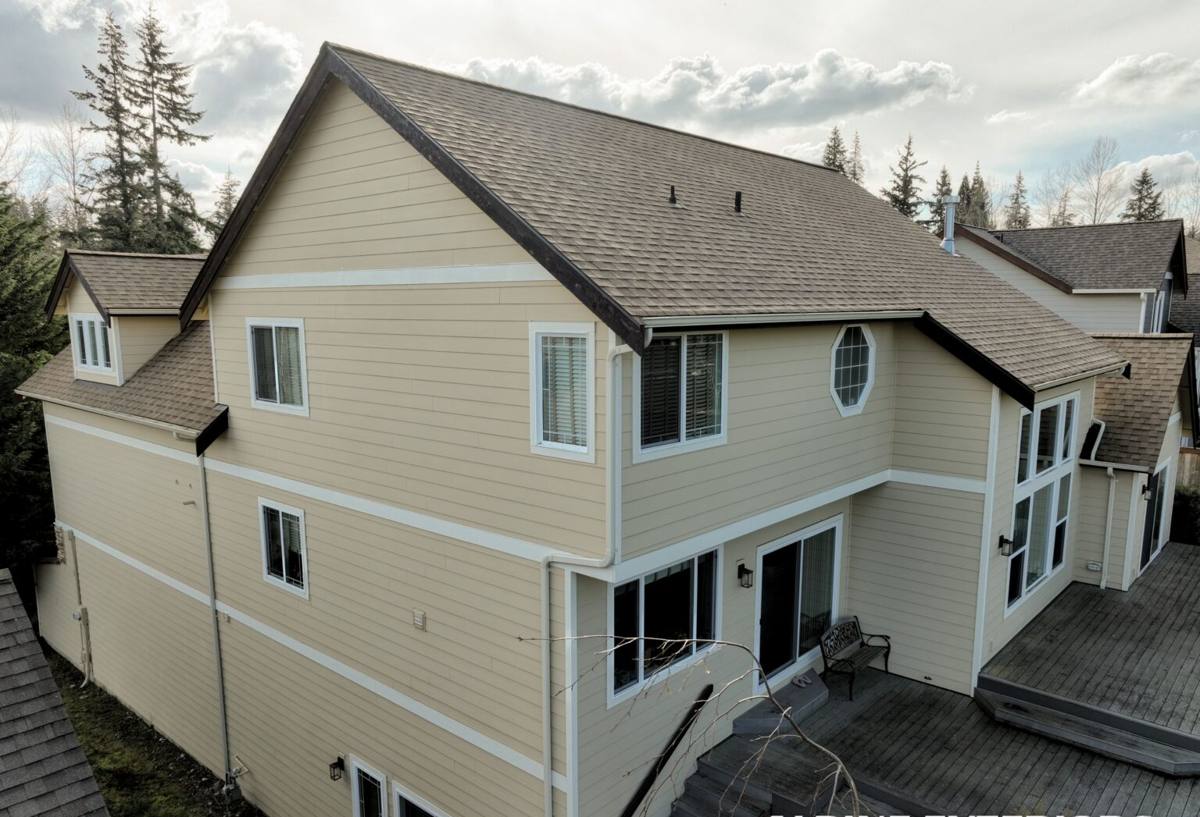
What a Custer Climate Does to an Ordinary Deck
Three separate stresses stack up on outdoor structures here, and they compound each other:
- Salt-laden air speeds up oxidation on exposed metal — screws, joist hangers, bolts, and railing hardware corrode faster than the same parts would inland, especially where coatings are thin or fasteners were never rated for exterior/coastal exposure.
- Wind-driven rain off the water pushes water sideways and upward under railings, around post bases, and into ledger board connections — areas that a dry-climate deck design can get away with treating casually.
- Extended shade and moisture from tree cover keep deck surfaces damp for days after a storm passes, which is exactly what moss and algae need to establish and spread across boards, stairs, and railings.
None of these problems show up on day one. They show up in year three or four, after the builder is long gone, when a homeowner is dealing with a soft ledger board, rusted-through joist hangers, or a deck surface that's dangerously slick every morning from October through April.
Material Options for a Custer Deck
There's no single "right" decking material for every home — it depends on budget, how much upkeep you want to do, and how much sun versus shade the deck actually gets. Here's how the common choices hold up under local conditions:
| Material | Moss/Algae Resistance | Maintenance | Typical Lifespan Here |
|---|---|---|---|
| Pressure-treated fir/pine | Low — porous surface holds moisture, needs cleaning and sealing | Annual cleaning, re-sealing every 2-3 years | 15-20 years with upkeep |
| Cedar | Moderate — naturally rot-resistant but still needs sealing to slow moss | Cleaning and oil/sealant every 1-2 years | 20-25 years with upkeep |
| Capped composite | Good — dense cap sheds moisture, resists staining, still needs periodic washing | Occasional washing, no sealing or staining | 25-30+ years |
| PVC decking | Best — non-porous surface gives moss and algae almost nothing to grip | Occasional washing | 30+ years |
Wood costs less up front and looks warm and natural, which is why we still build plenty of cedar and pressure-treated decks. But wood asks for real, ongoing maintenance in this climate — skip a cleaning or sealing cycle and moss gets a foothold fast, especially on shaded portions of the deck. Composite and PVC cost more initially but largely take moss and rot out of the equation, which matters most on decks that sit under tree canopy or on the shady side of the house.
Composite vs. Wood: The Honest Trade-Off
We don't push composite on every homeowner — plenty of Custer decks in full sun with an owner who's willing to clean and reseal do fine in cedar for decades. The trade-off is simple: wood is cheaper to install and warmer to look at, composite is more expensive to install and cheaper to own over 20 years because you're not repeating maintenance every season. We'll walk through both options honestly based on your site's actual sun and shade rather than defaulting to whichever is easier to sell.
Design Decisions That Matter More Here Than Elsewhere
A deck design that works fine in a dry climate can be a maintenance headache in coastal Whatcom County. A few decisions we make differently for local sites:
Board Orientation and Drainage Slope
We build in a slight slope away from the house and pay close attention to gaps between boards so water actually sheds instead of pooling. Standing water is what turns a deck green — a properly drained surface dries out between rain events instead of staying damp for a week straight.
Airflow Underneath
Low decks with poor underside ventilation trap moisture against the framing, which is exactly where hidden rot starts. We size and place skirting, and where needed, use ventilation gaps, so air can move underneath and framing gets a chance to dry out between storms.
Sun and Shade Mapping
Before we finalize material recommendations, we look at how much direct sun each section of the deck actually gets across the seasons. A deck half in permanent shade under mature trees needs different material and cleaning-schedule advice than one that sits in open sun most of the day — treating the whole deck the same way ignores how differently those zones will age.
Framing and Fasteners: The Part You Don't See
Most of what determines whether a deck survives salt air and rain for 25 years isn't visible once the project is finished — it's underneath. We use stainless steel or coated fasteners and connectors rated for coastal/exterior exposure rather than standard-grade hardware, because the price difference between the two is small relative to the cost of pulling up decking to replace corroded joist hangers a decade in. Ledger board flashing and waterproofing at the house connection gets particular attention, since that's the single most common failure point on decks near the water — a poorly flashed ledger lets water track into the rim joist and band board of the house itself, not just the deck.
Our Process for a Custer Deck Project
- On-site assessment. We walk the actual lot, note sun/shade patterns, drainage direction, existing structure condition if it's a rebuild, and access for materials.
- Design and material conversation. We talk through wood versus composite versus PVC honestly, sized to your budget and how much upkeep you actually want to commit to.
- Permit and code check. We confirm what Whatcom County requires for the specific size, height, and location of your deck before any framing starts.
- Footings and framing. Footings are set to proper frost depth and bearing, framing uses coastal-rated fasteners and hardware, and ledger connections are flashed and waterproofed correctly.
- Decking, railing, and stairs. Surface material is installed with attention to spacing and drainage; railings and stairs are built to current code for height and baluster spacing.
- Final walkthrough. We go over care and maintenance specific to the material you chose, so you know exactly what upkeep (if any) is expected and when.
Keeping Moss and Rot From Coming Back
A well-built deck still needs some basic seasonal attention in this climate — the goal is to make that upkeep light, not to eliminate it entirely (which usually isn't realistic for wood decking under tree cover). A simple seasonal checklist we give homeowners:
- Sweep leaves and debris off the deck surface regularly in fall — trapped organic matter is what feeds moss growth.
- Rinse or lightly scrub shaded areas before moss visibly establishes, rather than after — it's far easier to prevent than remove.
- Check that gaps between boards stay clear of debris so water keeps draining instead of pooling.
- Inspect railing posts and stair stringers once a year for movement, softness, or rust bleed at fasteners.
- Re-seal or re-stain wood decking on the schedule appropriate to the product — don't wait until it visibly needs it, since damage starts before it's visible.
- Trim back overhanging branches where practical to reduce shade and debris load on the deck surface.
Permits and Code in Whatcom County
Most new decks and many rebuilds in Whatcom County require a permit, with requirements tied to deck height, size, and proximity to property lines. Footings need to be set to the required frost depth and sized for proper bearing, and guardrails, baluster spacing, and stair geometry all have to meet current code — these aren't optional details, and skipping them creates real liability along with resale and insurance headaches down the line. We handle the permit process as part of the project rather than leaving it for the homeowner to sort out separately, and we build to the code requirements that apply to your specific site rather than a generic minimum.
Why Work With a Crew Already Familiar With Custer
A deck builder who mainly works dry, inland sites will still build you a structurally sound deck — but they may not default to coastal-rated hardware, may not think through shade-driven moss patterns before they start, and may not know what Whatcom County's permitting office expects for a project in this area. Those aren't dramatic differences on paper, but they show up as the difference between a deck that needs real repair work in year five and one that's still solid at year twenty-five. We work sites across Whatcom County regularly, including Custer, and we build every deck assuming the salt air, the rain, and the moss season are going to test it — because they will.
If you're planning a new deck or need to replace one that's showing its age, we're happy to come take a look, talk through honest material and design options for your specific lot, and put together a straightforward estimate — no pressure, no pushy upsell. Use the form below to get started.