 Lynden Siding
 New-Construction Windows: A Different Job Than Replacement
New-construction window work isn't the same trade as swapping out an old window in an existing wall. On a new build, you're installing into a bare, unfinished rough opening before the siding, trim, or interior finishes go on. There's no old flashing to work around and no existing frame to match — but there's also no room for error, because whatever gets built into that wall now is what the house lives with for decades. Get the flashing sequence wrong at framing stage, and it can take years to show up as a stain on drywall or rot in a stud bay.
For homes going up in Maple Falls, that first-time-right install matters more than in a lot of places. This is a higher-elevation, tree-covered part of Whatcom County, and the weather leans hard into wood, house wrap, and window openings for a good part of the year. We treat every new-construction window opening as a drainage problem to solve, not just a hole to fill with a window.
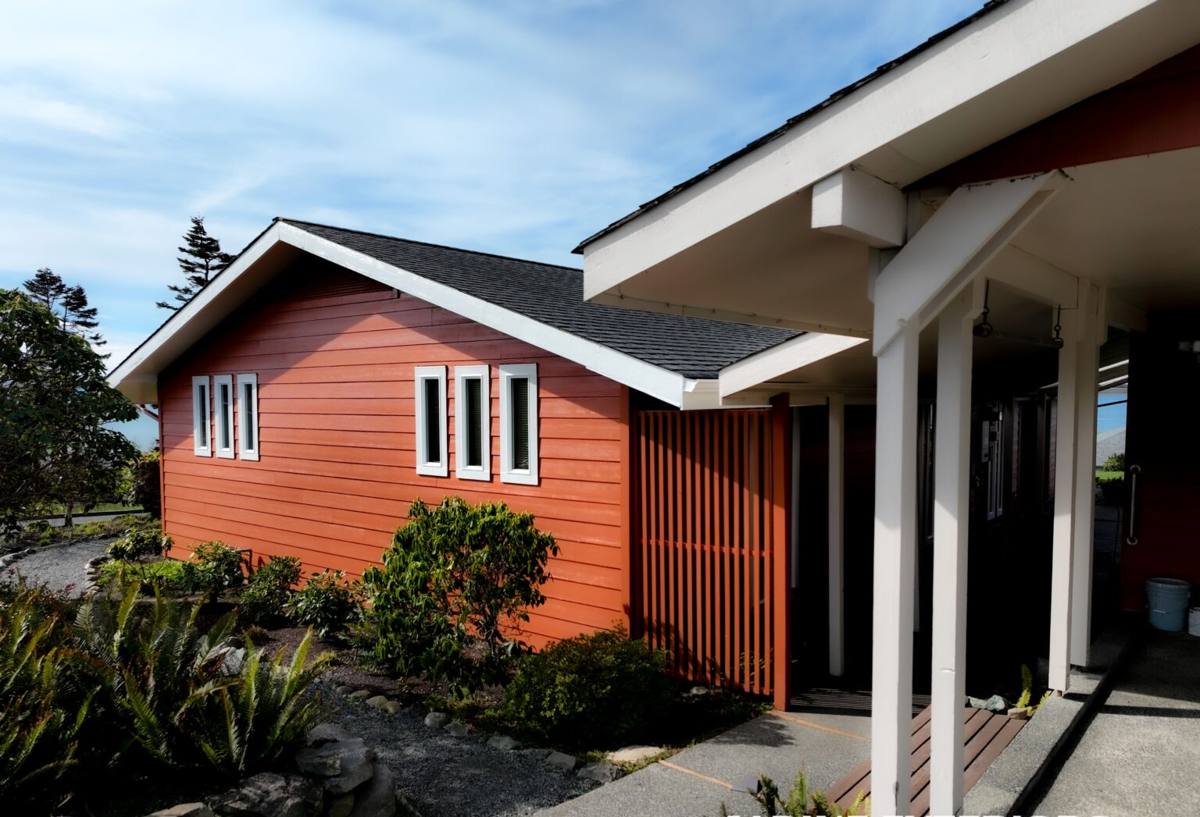
What Maple Falls' Weather Does to a New Window Opening
Whatcom County runs from saltwater shoreline near Bellingham Bay up to the Cascade foothills, and Maple Falls sits toward the inland, higher-elevation end of that range. Salt air is a real concern for homes closer to the water, but out here the bigger factors are the ones the framers and window crew deal with directly: long stretches of driving rain, heavy tree cover that keeps siding and trim damp longer after a storm, and a moss season that can run most of the year on north-facing walls and anything shaded by the surrounding timber.
None of that is a reason to over-build a window install — it's a reason to get the basics exactly right. A window opening that drains properly and sheds water away from the wall assembly will perform fine in this climate. One with a shortcut in the flashing or a reversed lap will hold moisture against the sheathing, and in a shaded, high-rainfall setting like this, that moisture doesn't get much chance to dry out between storms.
What a Correct New-Construction Window Install Involves
There's a specific order of operations for installing a window into a new rough opening, and it's not optional — it's how water is supposed to move down and out of the wall, not into it.
Sill Pans and Sloped Drainage
Every opening should get a sill pan — a flashing membrane at the bottom of the rough opening, built or installed with a slight slope to the exterior — before the window ever goes in. If water ever gets past the window itself (and eventually, some always does), the sill pan is what carries it back outside instead of down into the wall framing.
Integrating the Window with the Weather-Resistive Barrier
The window's flashing has to be layered into the house wrap or weather-resistive barrier in the correct shingle-style order — each layer overlapping the one below it so water is always directed outward and downward, never trapped behind a reversed lap. This is the step that gets rushed on a tight framing schedule, and it's the one that causes the most callbacks years later.
Fastening, Shimming, and Manufacturer Instructions
Windows have to be set plumb, level, and square, shimmed at the manufacturer's specified points, and fastened through the nailing fin per that manufacturer's installation instructions — not a generic pattern. Skipping or altering this step can void the window's warranty even if the window itself is a good one, because manufacturers test their products against a specific install method.
Choosing Windows for New Construction Here
For a new build, you're choosing the frame material and glazing package once, and it's built into the house — so it's worth understanding the real trade-offs rather than just picking on price.
| Frame Material | Typical Upfront Cost | Moisture Tolerance | Maintenance |
|---|---|---|---|
| Vinyl | Lowest per opening | Good — won't rot, but seals and hardware are what age over time | Low — occasional cleaning and hardware checks |
| Fiberglass | Mid-to-upper range | Very good — stable in wet, temperature-swinging conditions | Low — durable finish, holds up well long-term |
| Wood or wood-clad | Highest | Best appearance, but the wood components need ongoing attention in a wet climate | Higher — exterior cladding helps, but exposed wood detailing needs regular upkeep |
In a shaded, high-rainfall setting like Maple Falls, we lean toward vinyl or fiberglass for most new builds because they tolerate sustained damp conditions with the least ongoing maintenance. Wood or wood-clad windows can absolutely work here too — they just need an owner who's committed to the upkeep, and we'll say so plainly if that's the direction a homeowner wants to go. This is a maintenance-and-moisture trade-off, not a quality judgment against any one manufacturer.
How We Sequence the Work on a New Build
New-construction window installs happen at a specific point in the build, and getting the sequence right matters as much as the install itself.
- We coordinate with the builder or framer on rough opening sizes before framing is finalized, so windows aren't fighting an opening that's slightly off.
- Sill pan flashing goes in as soon as the rough opening is framed and before house wrap is run past that opening.
- The window is set, shimmed, and fastened, then flashed into the weather-resistive barrier in the correct overlap order.
- We check every opening for plumb, level, square, and proper reveal before the crew moves to the next one — not after siding has already gone up and hidden a problem.
- Exterior trim and siding are sequenced in after the flashing is confirmed, not before, so nothing gets covered up prematurely.
Because this is timed to the framing schedule, being available and local matters. A crew that has to drive in from out of the area on someone else's timeline is a common reason window install gets rushed or delayed on a build.
Mistakes We Catch on New-Construction Sites
Most window problems in new construction don't come from a bad window — they come from a shortcut in the install. These are the issues we watch for on every opening:
- Missing or flat (non-sloped) sill pan flashing that lets water pool instead of drain
- Weather-resistive barrier lapped in the wrong order around the window flange
- Full-perimeter caulk bead around the exterior trim that seals in moisture instead of giving it a path out
- Rough openings sized too tight or too loose, forcing the window out of square once fastened
- Fastening pattern that doesn't match the manufacturer's instructions, risking the warranty
- Insulation packed too tightly around the frame, which can bow vinyl frames and affect operation
- Interior sills and exterior trim installed before the flashing is verified and signed off
- Egress and energy code requirements not confirmed before the window is ordered
Why a Crew That Already Works Maple Falls Matters
New-construction window installs are one part of a coordinated build schedule — framers, the weather-resistive barrier crew, the window installer, and the siding crew all have to hand the wall off to each other cleanly. A crew that already works jobs in and around Maple Falls understands how the local weather affects that handoff: how long a shaded opening needs to stay protected before siding closes it in, how quickly moss and mildew can take hold on exposed sheathing during a wet stretch, and how to plan around the rain patterns that are typical for this part of Whatcom County rather than working around them after the fact.
There's also a permitting and inspection side to this. New construction has to meet Washington's building and energy code requirements, and a local crew that's been through those inspections in this county knows what the inspector is going to check on a window opening — sill pan, flashing order, and fastening — and builds to that standard the first time instead of relying on a callback to fix it.
Warranty, Inspections, and What You're Left With
A correctly installed new-construction window should need very little from you for years: operating hardware works smoothly, no drafts around the frame, no staining or softness at the sill or the trim below it. We stand behind our installation work, and we make sure the manufacturer's product warranty stays intact by installing to their published instructions — not a shortcut version of them. If anything about an opening looks off during the build, we'd rather flag it and fix it before the wall is closed up than leave it for someone to discover later.
If you're building in Maple Falls and want a straight answer on what your window openings need, we're glad to walk the plans or the framed site with you and put together a free, no-pressure estimate — just use the form below to get started.