 Lynden Siding
 James Hardie Siding, Installed for Custer's Weather
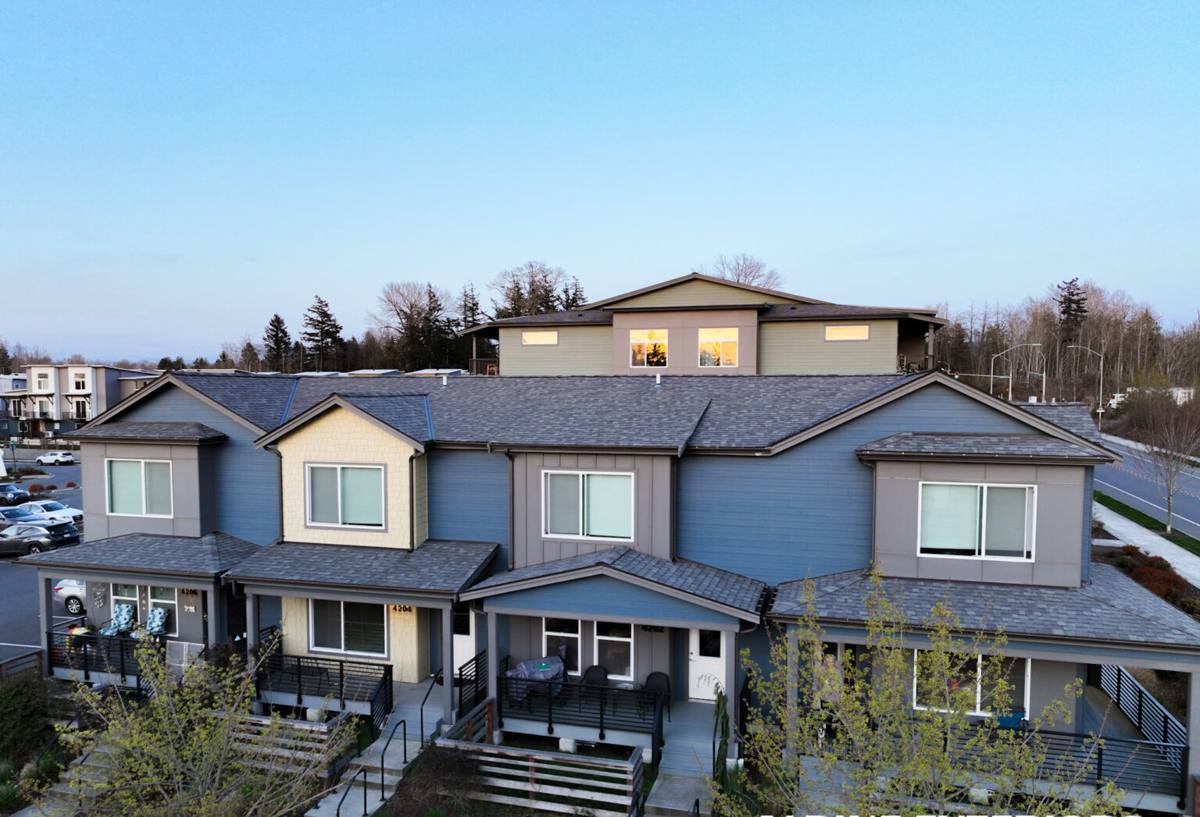
Custer is a small Whatcom County community near Lynden, and like most of this corner of the state, it sits somewhere between agricultural flatland and the reach of marine air coming in off the water. That combination is exactly why we install James Hardie fiber cement siding here and don't offer anything else. This page isn't a general introduction to the product — it's specifically about what a James Hardie installation needs to get right on a Custer property, given the salt air, the driving rain, and the long moss season that define this stretch of Whatcom County year-round.
A siding job in Custer isn't the same job as a siding job in a dry inland climate, even if the material on the truck has the same brand name. The product line, the profile, the fastening schedule, and the flashing details all get chosen with this specific exposure in mind, and that's the part of the job that actually determines whether a Hardie installation lasts twenty-plus years or starts showing problems in five.
What Custer's Weather Asks of an Exterior Wall
Salt-Laden Air
Even set back from the shoreline, Custer gets enough salt-carrying marine air to accelerate corrosion on fasteners, trim hardware, and lower-grade factory finishes over time. It's a slow process, not a dramatic one — the difference shows up years later, in how well a finish holds its color and how long fasteners stay sound, not in anything visible on install day.
Wind-Driven Rain
Open, flat terrain around Custer doesn't slow storms down much, and rain coming off the water tends to arrive sideways rather than straight down. That matters for siding because wind-driven rain tests lap joints, trim intersections, and every seam around a window or door far harder than a simple annual rainfall total would suggest. Water management detail — not the siding material alone — is what keeps that rain out of the wall.
A Long Moss and Mildew Season
Mild temperatures and near-constant moisture through fall, winter, and spring give moss and mildew a growth window that runs across most of the calendar, especially on shaded, tree-lined lots. Organic growth on a siding surface traps moisture against the wall behind it, and that trapped moisture is where a lot of long-term siding problems actually start, regardless of what the siding is made of.
Picking the Right Hardie Line and Profile for This Property
James Hardie makes several product lines and profiles, and matching the right one to a Custer home is part of doing this job correctly — it isn't a one-size-fits-all product.
HZ5 Engineering
Hardie engineers its siding by climate zone, and the HZ5 line is built for regions with freeze-thaw cycles and sustained moisture exposure, which is a closer match to Whatcom County's winters than a product engineered primarily for hot, dry regions. We install the HZ5 line here for that reason, not as an upsell.
ColorPlus Factory Finish
Rather than a field-applied paint job, Hardie's ColorPlus finish is baked on in multiple coats at the factory, under controlled conditions, before the boards ever reach a Custer job site. That finish is formulated specifically to hold color and resist fading under UV and salt-air exposure better than a site-painted coating, and it carries its own warranty separate from the substrate warranty.
Choosing a Profile
Beyond the climate-zone engineering, there's a real choice to make about the look and detailing of the siding itself. We walk homeowners through the options rather than defaulting to whichever profile is fastest to install.
| Profile | Look | Best Fit |
|---|---|---|
| HardiePlank lap siding | Traditional horizontal lap, widest color and texture selection | Most Custer homes — the default choice for a reason |
| HardiePanel vertical siding | Clean vertical lines, often paired with board-and-batten trim | Accent walls, gables, or a more modern exterior |
| HardieShingle | Staggered or straight-edge shingle profile | Craftsman-style homes or shingle accent sections |
| HardieTrim | Fascia, corner boards, window and door trim | Used alongside any of the above for a finished, sealed look |
What a Correct Installation Actually Looks Like
Fiber cement's long-term performance depends heavily on installation quality, more than most homeowners expect. The material itself resists rot, insects, and combustion, but a rushed or out-of-spec install can undercut all of that. On a Custer property, we hold to specific details because the climate doesn't forgive shortcuts the way a drier region might.
- Manufacturer-specified clearances are maintained at grade, roofline, and deck connections, keeping splash-back and standing moisture away from board edges
- Fasteners are the correct type, placement, and depth for the profile and substrate, which prevents cracking and preserves the water-resistive barrier behind the siding
- Flashing at every window, door, and penetration is lapped correctly and sealed with materials rated for sustained moisture exposure, not caulk used as a stand-in for real flashing
- Factory-cut edges are used wherever a cut can be avoided, and field cuts are sealed per Hardie's spec to protect the exposed edge
- A drainage plane or rain screen is installed behind the siding so any moisture that does get past the surface can drain and dry instead of sitting against the wall
- Panel and plank gaps are set to Hardie's specified tolerances to allow for material movement without opening a path for water
None of this is an upgrade homeowners have to request. It's the baseline for how we install James Hardie siding on every Custer job, because the alternative is a siding system that looks fine for a season or two and then starts failing at the seams.
Our Process, Start to Finish
- On-site assessment. We look at the existing siding, sheathing condition, and how water currently moves around the property before recommending anything.
- Tear-off and sheathing check. Old siding comes off and we inspect the sheathing underneath for rot or damage that needs repair before new siding goes on — this is where hidden problems usually surface.
- Weather-resistive barrier and drainage plane. A proper moisture barrier and rain screen go on before any Hardie product touches the wall, since this layer does most of the long-term moisture management work.
- Flashing at every penetration. Windows, doors, hose bibs, vents, and any other wall penetration get flashed and integrated with the barrier before siding closes over them.
- Siding installation to spec. Panels or planks go up with correct fastening, clearances, and gaps, using factory-cut edges wherever practical.
- Trim, caulking, and detail work. Corner boards, window and door trim, and any remaining seams are finished and sealed.
- Final walkthrough. We go over the finished job with the homeowner and address anything before calling it done.
What This Costs and What Actually Drives the Number
Every Custer property is different, and we're not going to quote a number without seeing the house, but the factors that move the price are consistent from job to job.
| Factor | How It Affects Cost |
|---|---|
| Existing sheathing condition | Rot or water damage found during tear-off adds repair scope before new siding can go on |
| Profile choice | Lap siding is generally the most economical; shingle profiles and mixed-profile designs add labor |
| Home size and wall complexity | More corners, gables, and trim details mean more cutting and detail work |
| Access and site conditions | Tight lots, second stories, or landscaping obstacles affect staging and labor time |
| Color and finish selection | Standard ColorPlus colors are typically less costly than custom or premium finish options |
Fiber cement generally costs more upfront than vinyl and is roughly comparable to or somewhat above engineered wood siding, reflecting the heavier material and more labor-intensive installation. Where it tends to even out is maintenance cost over the life of the siding, since there's no repainting or recaulking schedule to keep up the way there is with a wood-based or wood-fiber core product.
Living With Hardie Siding in a Climate Like This
Correctly installed James Hardie siding is genuinely low-maintenance compared to wood or engineered wood, but "low-maintenance" doesn't mean zero-maintenance, especially with a moss and mildew season that runs most of the year around Custer. A short annual routine keeps it performing the way it's designed to.
- Rinse the siding down once or twice a year to clear pollen, dust, and early moss growth before it takes hold
- Keep gutters and downspouts clear so overflow doesn't run directly down the siding face
- Trim back vegetation and tree limbs that keep sections of wall shaded and damp longer than the rest of the house
- Check caulking at trim joints and penetrations periodically and have any cracked sealant redone before it becomes an entry point for water
- Address any impact damage or chipped finish promptly rather than letting exposed substrate sit through a wet season
Why a Crew That Already Works in Custer Makes a Difference
A contractor who regularly works this part of Whatcom County already knows how wind-driven rain behaves on an exposed wall, how far salt-laden air actually reaches inland, and how aggressive the moss season really is on a shaded, tree-lined lot. That knowledge shows up in decisions a homeowner never sees directly — how much lap a flashing detail gets, which fastener schedule gets followed, whether a drainage plane is treated as standard or as an upsell. Those are the decisions that determine whether a Hardie installation holds up for decades or needs attention within a few wet winters.
Get a Free, No-Pressure Estimate
If you're planning a re-side or new build in Custer and want James Hardie siding installed the way this climate actually requires, we're glad to walk the property and give a straightforward assessment and quote. Use the form below to schedule a free, no-pressure estimate.