 Lynden Siding
 Why Bellingham Homes Are Hard on Siding
Bellingham sits close enough to the water that homes take on a steady dose of salt-laden air, and that air doesn't stay still — it rides in on wind-driven rain for a good chunk of the year. Add Whatcom County's long, damp shoulder seasons, and you get a climate that keeps exterior wall surfaces wet or humid for extended stretches. Moss doesn't need much encouragement here; north-facing walls, areas shaded by mature trees, and anywhere siding stays cool and damp will grow it if the material and the installation let moisture linger.
None of this is unusual for the region, but it does mean siding choices that work fine in a drier climate can underperform here. Materials that absorb moisture, swell, or need frequent recoating get punished faster in Bellingham than they would somewhere with less rain and less salt exposure. That's the backdrop for every siding decision on a home in this area, and it's why the product and the install details matter more here than they might elsewhere.
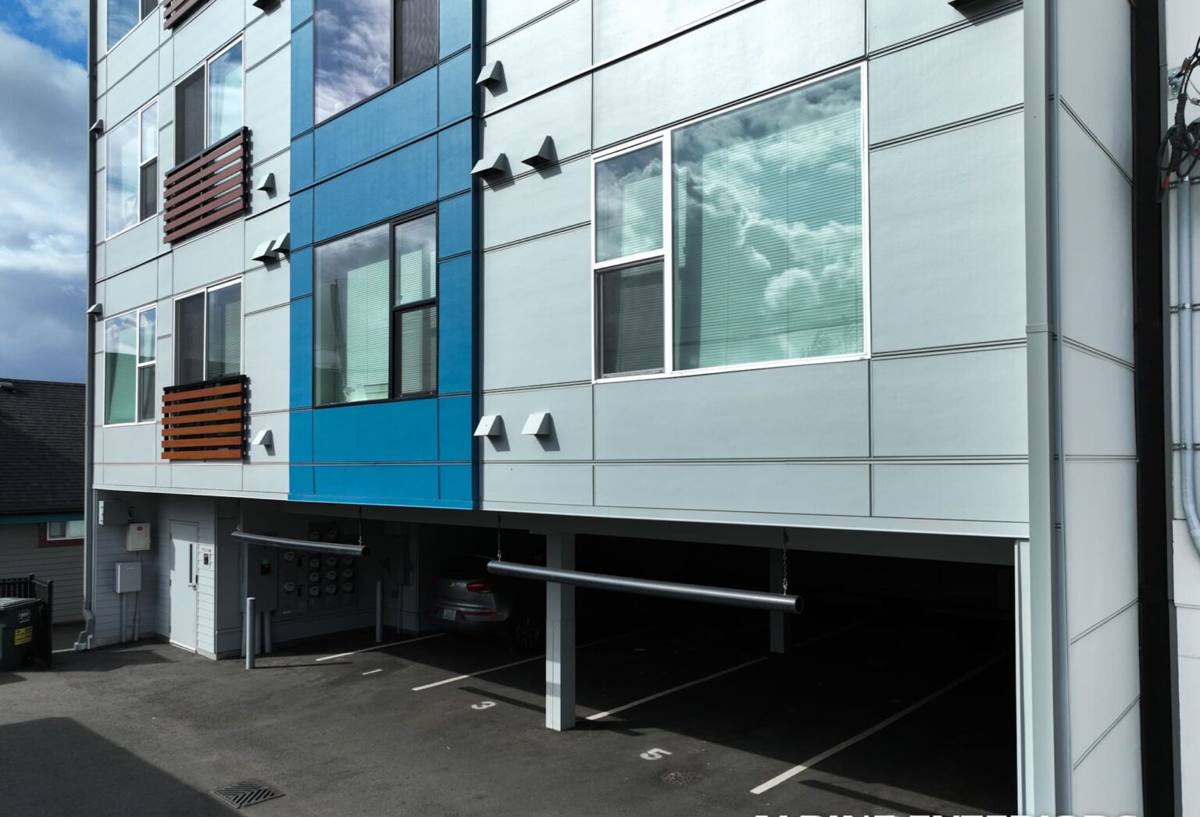
What Salt Air and Moss Actually Do to Siding
Salt air accelerates corrosion on exposed metal fasteners and trim, and it can degrade certain coatings and finishes faster than inland conditions would. Driving rain finds every gap in flashing, caulk, or panel overlap, and it doesn't need a big gap — capillary action will pull water into a hairline seam over time. Moss and algae growth on wood-based or absorbent siding materials traps moisture against the surface, which keeps that surface wetter for longer and speeds up whatever decay process is already underway underneath.
The cumulative effect on the wrong siding is paint that fails early, boards that swell and cup, seams that open up, and moisture that eventually reaches the wall sheathing. That last part is the expensive one — surface problems are a repaint, but trapped moisture behind the siding can mean rot, mold, and sheathing replacement. A siding system that resists water absorption and sheds it correctly at every joint is doing real structural protection work here, not just cosmetic work.
Why We Install James Hardie and Nothing Else
We standardized on James Hardie fiber cement for every job we do, including here in the Bellingham area, because it's engineered for exactly the conditions this climate creates. It's non-combustible, it doesn't absorb water the way wood-based or wood-composite products do, and Hardie makes a version of its product — the HZ5 line — specifically engineered for wetter, harsher climate zones like the Pacific Northwest. The factory-applied ColorPlus finish is baked on under controlled conditions, which gives it better adhesion and weather resistance than field-applied paint, and that matters in a climate where recoating a house isn't a fun job to schedule around the rain.
We don't install LP SmartSide, vinyl, Cemplank, Allura, primed spruce, or cedar, and we're upfront about why: every one of those products asks a homeowner to accept a trade-off — moisture sensitivity, more frequent maintenance, a shorter realistic service life, or an installation process that's less forgiving of West Coast weather — that we don't think makes sense to sign a Bellingham homeowner up for. That's not a knock on every use case those products have; it's a statement about what we're willing to put our name on in this specific climate.
What HZ5 Specifically Buys You Here
Hardie's HZ5 formulation is engineered for regions with more moisture exposure and freeze-thaw cycling than the HZ10 line built for hot, dry climates. In practical terms for a Bellingham home, that means the panel itself is matched to the job of surviving repeated wet-dry cycles without breaking down, which is exactly the stress this coastal climate puts on a wall.
What a Correct Installation Actually Involves
Fiber cement siding is only as good as the flashing and gapping behind it. Hardie's own installation instructions are specific about clearances, fastener patterns, and joint treatment, and skipping those details is the single biggest reason any fiber cement job — ours or anyone else's — fails early in a wet climate. A correct install in this area includes:
- Proper water-resistive barrier and flashing integration behind every siding course, not just at windows and doors
- Correct clearance between siding and grade, roofing, decks, and other horizontal surfaces so water has somewhere to go
- Sealed or flashed butt joints rather than caulk-only seams that will eventually fail
- Fastener placement and spacing per Hardie's published specs, using corrosion-resistant fasteners appropriate for a salt-air environment
- Proper gapping around penetrations, trim, and corner boards to allow for expansion without forcing water paths
- Kick-out flashing at roof-to-wall intersections, which is a common and expensive miss on older installs in this region
None of this is exotic. It's the difference between following the manufacturer's installation manual and not, and it's also exactly where warranty coverage lives or dies — Hardie's product warranty assumes the installation followed their published requirements.
Our Process on a Bellingham Job
We start with a walk-around assessment of the home's exposure — which walls take the worst of the wind-driven rain, where moss has already established itself, where trees keep siding shaded and damp, and whether the existing water-resistive barrier and flashing are salvageable or need to be replaced as part of the job. From there we scope the tear-off, confirm the substrate underneath is sound (or flag what isn't), and plan the flashing and drainage details before a single piece of siding goes up.
Installation follows Hardie's fastening and clearance specs, with particular attention to the joints and penetrations that are the usual failure points in this climate. We finish with caulking and touch-up only where Hardie's instructions call for it — ColorPlus panels are engineered to need less field caulking than a painted product, and over-caulking joints that are supposed to allow movement is its own long-term problem.
Signs Your Current Siding Is Losing the Fight
If you're not sure whether it's time to replace siding versus just clean or repaint it, a few signs point toward replacement rather than maintenance:
- Moss or algae that returns within a season or two of cleaning, especially on north- or shade-facing walls
- Paint that's peeling, bubbling, or failing well before its expected repaint interval
- Soft, swollen, or delaminating spots, particularly near the bottom courses or around windows and trim
- Visible gaps at seams, corners, or butt joints where caulk has cracked or pulled away
- A musty smell or soft drywall on interior walls that back up to exterior siding, which can indicate moisture has already gotten behind the cladding
Any of the last two, in particular, are worth having looked at soon rather than waiting — trapped moisture problems get more expensive the longer they sit.
Comparing Siding Materials for This Climate
| Factor | James Hardie Fiber Cement | Wood / Cedar | Vinyl |
|---|---|---|---|
| Moisture absorption | Very low | High — swells, cups, rots without diligent upkeep | Non-absorbent, but seams and moisture behind panels can trap water |
| Maintenance in salt air / rain | Occasional wash; factory finish resists fading and peeling | Regular staining or painting, moss treatment | Low, but can crack or warp with age and UV exposure |
| Fire resistance | Non-combustible | Combustible | Can melt or deform under heat |
| Typical realistic service life | Decades, with manufacturer-backed warranty when installed to spec | Shorter without consistent maintenance | Variable; seams and fasteners are common failure points |
| Coastal/moss resistance | Engineered HZ5 formulation for wetter climates | Prone to moss and rot without treatment | Resists moss growth on the surface itself, but doesn't address wall moisture |
This is a general comparison, not a claim that every wood or vinyl installation fails — but it explains why, for the climate Bellingham sits in, we've chosen to install one product and stand behind it rather than offer several options with very different long-term outcomes.
Color and Finish Choices for Coastal Light
Bellingham's overcast, diffuse light reads differently than direct sun, and it's worth keeping in mind when picking a ColorPlus finish — colors can look a shade cooler or flatter under consistent cloud cover than they do on a sample chip in direct light. We can walk through Hardie's color options with actual samples on-site so you're picking based on how it will look on your home in this light, not just in a showroom.
Hiring a Crew That Actually Works This Area
Installation quality is the biggest variable in how long any siding job lasts, and that's especially true in a climate that punishes shortcuts. When vetting a contractor for James Hardie work in Bellingham or anywhere in Whatcom County, it's worth asking:
- Are they a factory-certified Hardie installer, and can they explain their flashing and gapping approach in detail?
- Do they carry current licensing and insurance for exterior work in Washington?
- Will they put the manufacturer's warranty terms in writing, and do they understand what voids it?
- Do they have experience specifically with coastal or high-moisture jobs, not just general siding work?
- Are they willing to explain their process for water-resistive barrier and joint treatment before work starts, rather than after?
A crew that's used to working in this climate will treat flashing and drainage details as the main event, not an afterthought — because they've seen what happens on the houses where someone skipped them.
Get a Free, No-Pressure Estimate
If your Bellingham home's siding is showing its age, growing moss it shouldn't, or you're just planning ahead for a replacement done right the first time, we're happy to take a look and walk you through what a correct James Hardie installation would involve for your specific home. Use the form below to request a free estimate — no pressure, just a straight answer about what your home needs.