 Lynden Siding
 Fiber Cement Siding Built for Ferndale's Coastal Exposure
Ferndale sits close enough to the water and out over open, low-lying farmland that its homes take a specific kind of beating from the weather: salt-tinged air drifting in off the Sound, rain that gets pushed sideways into wall assemblies instead of falling straight down, and a moss season that can linger most of the year on shaded or north-facing walls. Fiber cement siding, installed correctly, is one of the few wall systems that shrugs off all three at once instead of trading one weakness for another.
This page is specifically about fiber cement siding installation for Ferndale homes, not a general siding overview and not a product comparison. It covers what the climate actually asks of a fiber cement wall system, which James Hardie product lines we install and why, what a correct installation looks like step by step, and how our process runs from first walkthrough to finished punch list.
We install James Hardie fiber cement exclusively across Ferndale and the rest of Whatcom County. That's not a brand preference picked off a supplier list — it's a standard we settled on after years of seeing which materials actually hold up in this climate and which ones quietly don't.
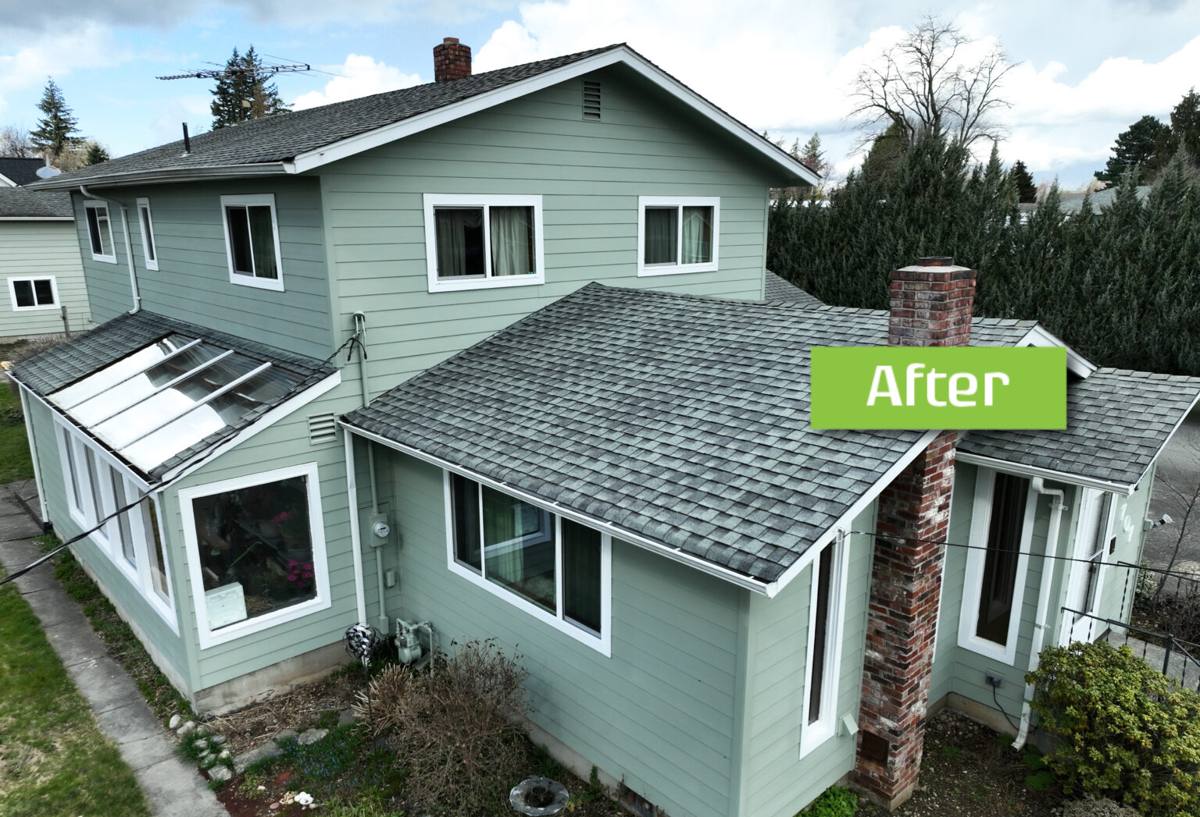
What Ferndale's Climate Asks of a Fiber Cement Wall System
Salt Air and Coastal Corrosion
Even homes set back from the immediate shoreline pick up a steady dose of salt-laden air moving through this stretch of Whatcom County. Salt speeds up corrosion in fasteners, flashing, and trim hardware faster than a drier inland climate would, and it can degrade a weak finish well before the siding panel itself has any structural problem. A fiber cement job that ignores this reality on the hardware side can still develop rust streaks and failed fastener heads years before the siding material would otherwise need attention, which is why we spec corrosion-resistant fasteners and flashing as standard practice rather than an upgrade.
Wind-Driven Rain
Rain around Ferndale rarely falls straight down. Wind pushes it sideways into lap joints, corner boards, and window and door trim, which is a tougher test of a wall's water management than a simple annual rainfall figure suggests. Fiber cement itself doesn't absorb and swell the way wood-based siding can, but the panel is only as good as the joints, laps, and flashing around it, which is why installation detail matters as much as the material choice on a home exposed to this kind of weather.
A Moss Season That Doesn't Really End
Mild temperatures, plenty of shade from mature trees, and near-constant moisture add up to a moss and mildew season that runs most of the year across Whatcom County. It shows up first on shaded and north-facing walls, well before it's visible from the street. Fiber cement's inorganic core doesn't feed organic growth the way a wood-based product can, but proper drainage detailing behind the siding still matters for keeping moisture from sitting against the wall long enough for growth to take hold.
The James Hardie Product Lines We Install in Ferndale
We install James Hardie fiber cement exclusively, and Hardie's catalog isn't one product — it's a family of profiles engineered for different looks and different climate demands. On Ferndale jobs, we spec the HZ5 formulation, which is built specifically for regions with heavy moisture exposure and freeze-thaw cycling, rather than defaulting to a generic national product line.
HardiePlank Lap Siding
The most common choice for Ferndale homes, available in a range of exposure widths and textures, from smooth to a wood-grain finish. Lap siding sheds wind-driven rain well when it's installed with correct overlap and fastening, which is the majority of what we install across the area.
HardiePanel Vertical Siding
Used for board-and-batten looks or as an accent against lap siding on gables and entry features. Vertical panels change how water runs down the wall, so the drainage and flashing details differ from a horizontal lap installation, and that distinction matters more in a wind-driven-rain climate than it would somewhere drier.
HardieShingle Staggered-Edge Panels
A shingle-style look without the maintenance burden of real cedar shingles, often used on accent gables or as a full-wall treatment on homes going for a more traditional Pacific Northwest look.
HardieTrim Boards
Corner boards, window and door trim, and fascia detail that match the same factory-finished durability as the field siding. Mixing fiber cement field siding with a lower-grade trim product is a common way a job looks fine on install day but ages unevenly a few years in.
| Product Line | Typical Use | What It Looks Like |
|---|---|---|
| HardiePlank | Full-wall horizontal siding | Traditional lap look, smooth or textured |
| HardiePanel | Accents, gables, board-and-batten walls | Clean vertical lines |
| HardieShingle | Accent gables or full traditional-style walls | Staggered-edge shingle look |
| HardieTrim | Corners, window/door surrounds, fascia | Smooth painted trim boards |
Every one of these product lines is available with the factory-applied ColorPlus finish, which is baked on under controlled factory conditions rather than brushed on in the field. That matters here specifically because a field-applied finish is exactly the kind of coating that salt air and UV exposure break down fastest. Most Ferndale homes end up mixing two or three of these profiles — lap siding for the main field, a panel or shingle accent on a gable, and matching trim throughout — and we'll walk through which combination fits the home's style during the estimate rather than pushing a single default look.
What a Correct Fiber Cement Installation Involves
The single biggest reason fiber cement gets a mixed reputation in some markets isn't the material — it's installation shortcuts. A Hardie product installed a little bit wrong doesn't fail immediately, which is exactly what lets bad habits go unnoticed until a homeowner is dealing with a callback years later.
Fastening and Clearances
Hardie specifies exact fastener types, spacing, and penetration depth, along with minimum clearances from grade, roof lines, and decks. Those clearances aren't arbitrary — they're what keeps splashback and standing moisture away from the bottom edge of the siding, which is the single most common place fiber cement problems start when it's installed too close to grade or tight against a deck ledger.
Drainage Plane and Moisture Barrier
A correctly built wall assembly includes a water-resistive barrier and, ideally, a drainage gap that lets any moisture that does get behind the siding find its way back out instead of sitting against the sheathing. This step matters more in a climate with sustained wet-season moisture and a long moss season than it would in a drier region, and it's one of the details that's invisible once the siding is up — which is also why it's one of the easiest things for a rushed crew to skip.
Joint, Corner, and Trim Detailing
Every seam, corner, and trim transition is a potential entry point for wind-driven rain. Correct lapping, sealant selection, and flashing sequencing at windows, doors, and roof-to-wall intersections is what actually keeps water out — not the siding material by itself. We treat this detailing with the same seriousness as the material spec, because it's where a good product either earns its warranty or quietly doesn't.
Our Process for a Ferndale Fiber Cement Project
- Walkthrough and assessment: We look at the whole exterior in person, including existing siding condition, trim, flashing, and any visible moisture or moss issues, before we talk numbers.
- Tear-off vs. overlay decision: We'll tell you honestly whether your existing siding and substrate can support a direct overlay or whether a full tear-off is the right call given what we see.
- Substrate prep: Once old siding is off, we inspect sheathing and framing for hidden moisture damage, repair what needs repairing, and install a new water-resistive barrier before anything new goes up.
- Fiber cement installation: Panels or planks go up to Hardie's fastening and clearance specifications, with corrosion-resistant hardware appropriate for coastal exposure.
- Trim, flashing, and joint detailing: Corners, window and door surrounds, and every lap joint get sealed and flashed to keep wind-driven rain out.
- Final walkthrough and warranty registration: We walk the finished job with you, address any punch-list items, and register the installation for Hardie's manufacturer warranty.
Scheduling around Whatcom County's wetter months is part of the plan, not an afterthought — fiber cement installation needs reasonably dry conditions to go on correctly, and we build that into the timeline rather than rushing a job between storms.
Repair, Partial Replacement, or Full Re-Side?
Not every Ferndale siding problem needs a full tear-off. A section that took storm damage, trim that's failed around a single window, or a localized moisture issue can often be repaired and matched into existing Hardie siding without touching the rest of the wall. But when moisture has been tracking behind the siding for a while, or the existing material has reached the end of its useful life, patching it usually just delays a larger job and can mask a bigger problem underneath. Part of an honest repair estimate is figuring out which situation you're actually in — an isolated issue, or a symptom of something happening across the whole wall — rather than defaulting to whichever answer is more profitable for us.
Signs Your Ferndale Home May Need New Fiber Cement Siding
- Moss or dark staining that returns quickly after cleaning, especially on shaded or north-facing walls
- Soft, spongy, or delaminating siding, particularly low on the wall or around window and door trim
- Rust streaking at fastener heads or corroded trim hardware
- Visible gaps at seams, corners, or trim joints where wind-driven rain can track in
- Cracked, chipped, or missing panels after storms or wind events
- Paint or finish that's peeling, chalking, or bubbling well before it should
- Rising energy bills that may point to a wall assembly no longer sealing the way it should
Why a Crew That Already Works Ferndale Matters
A crew that installs fiber cement across Whatcom County day in and day out has already seen how salt air, wind-driven rain, and moss actually behave on real houses through a full year of weather, not just how a product performs on a spec sheet. That shows up in practical decisions on install day: how much clearance to leave at grade on a shaded lot, which wall orientations need the most flashing attention, and where a job on an exposed, lower-lying property near Ferndale needs different detailing than one tucked into a more sheltered part of the county. A crew without that local experience isn't necessarily careless, but they're more likely to apply generic detailing that doesn't quite match what this specific stretch of coastline actually does to a wall.
Fiber cement siding also doesn't perform in isolation. A roof valley that's shedding water onto a wall, a poorly flashed window, or a gutter that's overflowing onto the siding below can all show up as siding problems even when the siding itself was installed correctly. Because we also handle roofing, windows, and decks, we look at a Ferndale home as one connected exterior system rather than treating the wall as a problem separate from everything attached to it.
Get a Free, No-Pressure Estimate
If you're considering fiber cement siding for a Ferndale home, whether it's a full re-side, a partial repair, or an honest second opinion on what's going on behind an aging wall, we're glad to take a look. Reach out using the form below to schedule a free estimate, no pressure and no upsell script.