 Lynden Siding
 Roof Repair Built for Deming's Weather
Deming sits in the wetter, greener stretch of Whatcom County, tucked against the foothills with tree cover that keeps roofs shaded, damp, and slow to dry out for much of the year. That combination is exactly what drives most of the repair calls we get out here. It isn't usually one dramatic failure — it's months of standing moisture, moss creeping under shingle tabs, and driving rain finding the one seam that was never quite sealed right.
A roof in Deming works harder than a roof in a drier part of the state, even though it may look fine from the ground. Whatcom County's long wet season, combined with the salt-laden air that moves through the broader region off the Sound, accelerates corrosion on flashing, fasteners, and any exposed metal. Add in wind-driven rain during winter storms, and small gaps that would be harmless somewhere drier become active leak points here.
Repairing a roof correctly in this climate means understanding where water actually goes once it gets past the surface layer — not just patching what's visible from the ground or a ladder.
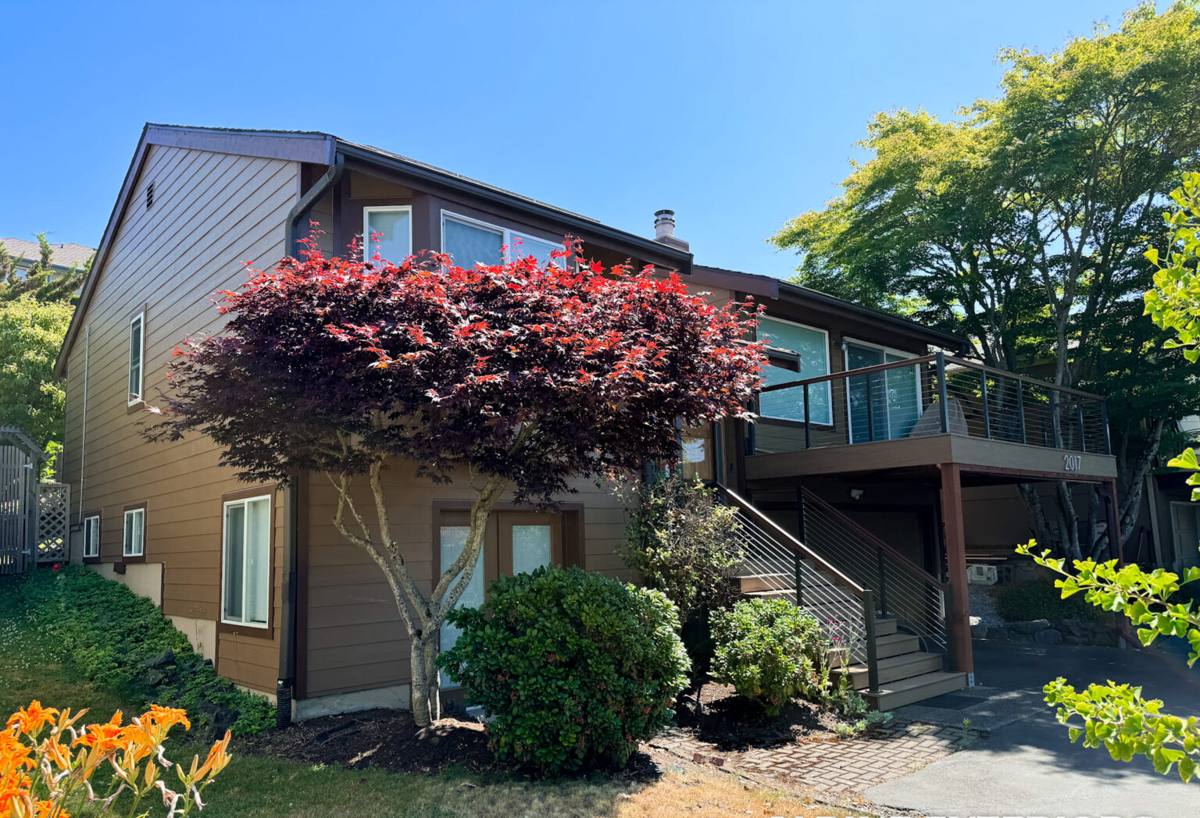
Signs Your Deming Home May Need Roof Repair
Most roof damage in this area starts quietly. By the time a homeowner sees a stain on the ceiling, water has usually been finding its way in for a while. Here's what we tell Deming homeowners to watch for between professional inspections:
- Dark streaks, green film, or thick moss buildup on north-facing or shaded slopes
- Granules collecting in gutters or at the base of downspouts
- Shingles that look cupped, lifted at the edges, or cracked
- Soft or spongy spots when walking the roof deck (we check this during inspections, not something to test yourself)
- Water stains on interior ceilings, especially near chimneys, skylights, or where two rooflines meet
- Daylight visible through the attic roof deck
- Rusted or lifted flashing around vents, chimneys, and valleys
- Sagging sections along the roofline, which usually points to deck damage underneath
If you're seeing more than one of these, it's worth getting a repair estimate before the next heavy rain cycle rather than after.
What Causes Roof Damage in Deming Specifically
Every region wears down a roof differently. In Deming, three factors do most of the damage, and they tend to compound each other.
Moss and Organic Growth
Tree cover and shade mean roofs here stay damp longer after rain than roofs in more open areas. Moss doesn't just sit on the surface — its root structure works into shingle granules and seams, lifting them and creating channels for water to travel underneath. Left alone through a full moss season, that lifting turns small leaks into deck-level rot.
Driving Rain and Wind
Winter storms in Whatcom County frequently bring rain sideways, not straight down. That matters because flashing, ridge caps, and shingle overlaps are designed to shed water moving downward — driving rain tests every seam differently and finds weaknesses that would never show up in calm weather.
Salt Air and Corrosion
Metal components — nail heads, flashing, gutter fasteners, vent boots — corrode faster in areas exposed to salt-influenced air moving through the region. Corroded fasteners back out or weaken over time, which is why a roof that looked fine at installation can develop leaks years later at exactly those connection points.
What a Correct Roof Repair Actually Involves
A proper repair isn't just sealing the spot where water is showing up inside. Water rarely travels straight down — it follows the roof deck, rafters, or underlayment sideways before dripping somewhere visible. That means the interior stain and the actual point of entry are often several feet apart.
Here's what we check on every repair, regardless of how small the job looks at first:
- The source, not just the symptom — tracing water back to where it's actually entering, not just where it's showing up
- Underlayment condition — if the felt or synthetic underlayment beneath the damaged area is compromised, patching shingles alone won't hold
- Deck integrity — soft, delaminated, or rotted decking has to be cut out and replaced before any new roofing goes down over it
- Flashing at every transition — chimneys, skylights, valleys, and wall intersections are the most common repeat-leak points and get inspected even if they weren't the reported problem
- Matching materials — using compatible shingle type, weight, and where possible matching color so the repair doesn't stand out or create a mismatched wear pattern
- Proper fastening and sealing — corrosion-resistant fasteners and correctly applied sealants suited to this climate, not just whatever seals fastest
A repair that skips any of these steps might stop a visible leak for a season, but it doesn't address why the roof failed in the first place.
Our Roof Repair Process
1. Inspection and Honest Assessment
We walk the roof (weather permitting) and check the attic from the inside when possible. We'll tell you plainly whether you're looking at a targeted repair or whether the damage points to a bigger issue — no upselling, no downplaying.
2. Written Estimate
You get a clear scope of work and price before anything starts. If we find additional damage once we open up the area, we explain it and get your approval before proceeding.
3. The Repair
We remove damaged materials down to sound decking, address the actual cause (not just the visible hole), and rebuild the area to match the surrounding roof system as closely as possible.
4. Cleanup and Walkthrough
Debris and old materials leave the property with us. We walk the completed work with you so you know exactly what was done and why.
Repair or Replace? How We Help You Decide
Not every leak means you need a new roof, and not every roof worth saving is obvious from a single problem area. We look at the whole picture before recommending either direction.
| Factor | Leans Toward Repair | Leans Toward Replacement |
|---|---|---|
| Roof age | Under 15 years, or well-maintained mid-life roof | Nearing or past expected material lifespan |
| Damage extent | Isolated to one section or penetration point | Multiple leak points across different areas |
| Deck condition | Solid, no widespread rot | Soft or delaminated decking in several spots |
| Moss/growth history | Recent, surface-level | Long-term, with granule loss and lifted shingles throughout |
| Prior repairs | First or second repair on this roof | Repeated repairs to the same or nearby areas |
When a roof is genuinely repairable, we say so — a smaller, honest job now is better for everyone than pushing a replacement that isn't needed yet.
Materials We Work With for Repairs
Most Deming homes we work on are asphalt composition shingle roofs, which is what we repair most often. We also handle repairs on metal roofing and cedar systems where they're already installed. Our approach differs by material because each one fails differently:
- Asphalt composition shingles — most common, most straightforward to match and patch when the underlying deck is sound
- Metal roofing — repairs focus heavily on fastener condition and seam sealant, since metal roofs rarely fail across a whole panel but often leak at penetrations and laps
- Cedar shake/shingle — repair decisions here weigh moisture retention carefully, since cedar in a shaded, damp setting like Deming needs proper ventilation behind it to avoid accelerated rot; we'll walk you through what that means for your specific roof rather than assume one approach fits every cedar installation
If a product or installation method isn't something we recommend for a given situation, it's because of how it performs long-term in this climate specifically — moisture behavior, maintenance demands, or how forgiving it is of imperfect installation — not because of the brand itself.
Why a Local Crew Matters for Deming Roof Repair
A roofer who works Whatcom County regularly already knows how the moss season behaves here, which valleys and roof transitions tend to fail first in this kind of weather, and how driving rain off winter storms tests a repair differently than it would in a drier climate. That's not something you can fully substitute with a checklist.
It also matters for scheduling. Roof leaks in this region don't wait for convenient weather — a crew based nearby can get to an active leak faster than one traveling in from out of the area, which matters when water is actively getting into your attic or walls.
Between Repairs: Keeping Your Roof in Good Shape
A few habits go a long way toward stretching the life of a repair and avoiding repeat problems in this climate:
- Keep gutters and downspouts clear so water has somewhere to go besides under your shingles
- Have moss treated or removed before it establishes root structure, not after
- Trim back branches that keep sections of the roof shaded and slow to dry
- Check attic ventilation — poor airflow traps moisture that accelerates deck rot from the inside
- Schedule a roof inspection after major wind or rain events, not just on a fixed yearly schedule
None of these replace a professional inspection, but they reduce how often you need one urgently.
If you're seeing signs of a leak, moss buildup, or damage on a Deming-area roof, we're happy to take a look and give you a straight answer about what it needs. Request a free, no-pressure estimate using the form below and we'll get back to you with next steps.