 Lynden Siding
 Why Birch Bay Decks Wear Out Faster Than You'd Think
Birch Bay sits close enough to the water that salt air is a daily fact of life, not an occasional nuisance. That air carries moisture and fine salt that settles on everything outside, including your deck. Combine that with Whatcom County's long wet season and the shoulder months where fog and drizzle roll in off the water, and you've got a deck environment that's noticeably harder on materials than a typical inland yard just a few miles up the road toward Lynden.
Three things do most of the damage: salt-laden air that accelerates corrosion on fasteners and hardware, driving rain that gets pushed sideways into gaps and end grain by coastal wind, and a moss season that can run from fall through spring. Moss and algae don't just look bad — they hold moisture against the wood surface, keep boards from drying out between rain events, and turn into a slip hazard on stairs and low-traffic areas of the deck.
None of this means a deck in Birch Bay can't last a long time. It means the build details that don't matter much in a dry inland climate matter a lot here — fastener choice, drainage, ventilation under the deck, and how the ledger board is flashed against the house. A deck built without those details in mind will show problems years before it should.
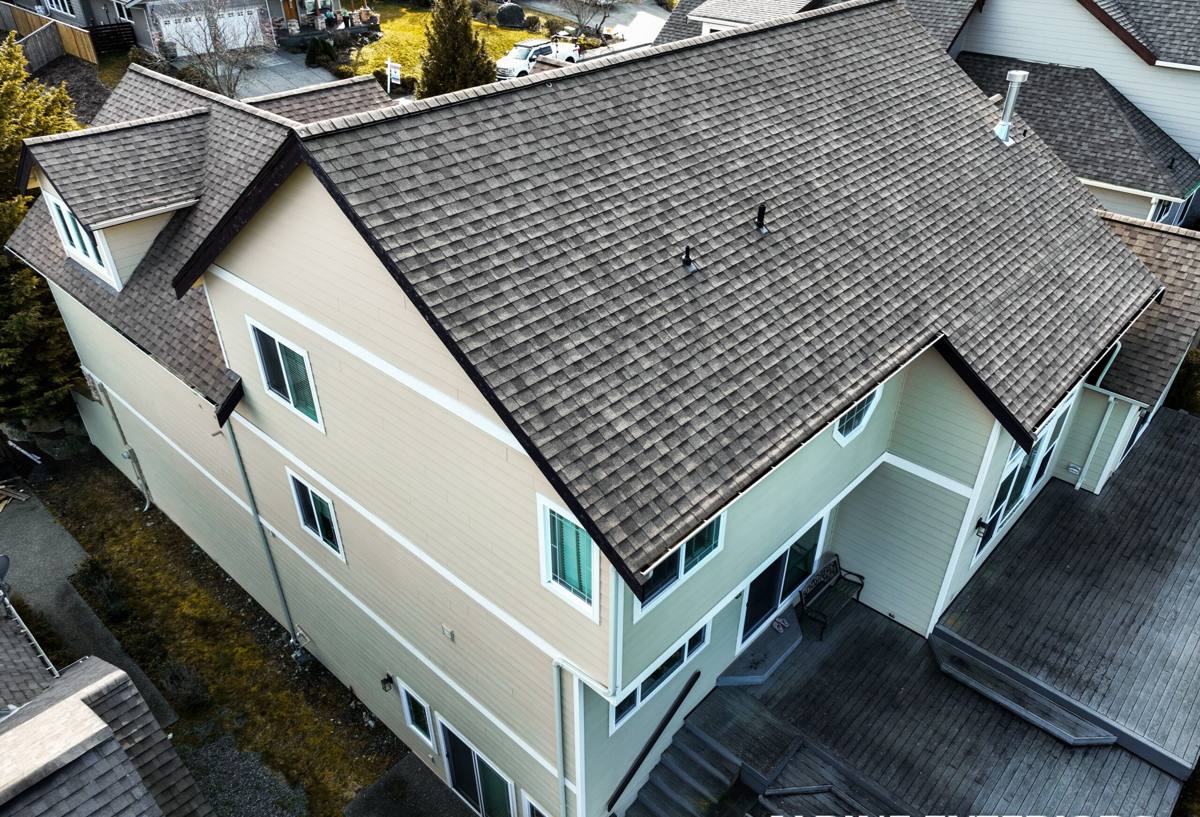
Signs It's Time to Replace, Not Just Repair
Not every tired-looking deck needs a full teardown. But there's a point where patching boards and re-staining stops being worth it, especially on an older deck that was never built with coastal exposure in mind. Here's what tells us a deck has crossed that line:
- Soft, spongy spots in the decking or on the stair treads when you press with your foot
- Rot or dark staining at the ledger board where the deck meets the house
- Rusted, streaking fasteners or hardware that's visibly corroding
- Joists or beams that flex noticeably more than they used to
- Persistent moss or black algae staining that returns within weeks of cleaning
- Railings that wiggle or posts that have rotted at the base
- A structure that predates current guardrail and stair codes
If it's mostly cosmetic — faded finish, a few loose boards, some surface mildew — a repair or refinish can buy years. If the framing, ledger connection, or fastener system is failing, replacement is the honest answer, and we'll tell you which one you're actually looking at.
Decking Material Options for a Salt-Air Environment
Wood
Cedar and pressure-treated fir are both still used in this area and both can work well, but they ask more of you as a homeowner. Wood needs regular cleaning to keep moss from taking hold, periodic sealing to shed water, and closer attention to end grain and fastener holes where moisture gets in first. In a driving-rain, high-moss environment like Birch Bay, wood decks age faster if maintenance slips even one season.
Composite
Composite decking resists moisture absorption far better than wood and doesn't need staining or sealing. It's a strong fit for a coastal property where upkeep time is limited. The trade-off is upfront cost and the fact that lower-grade composite can still support surface mold or algae growth if it stays shaded and damp — good airflow underneath still matters.
PVC / Capped Composite
Fully capped boards shed water and resist staining the best of the three, which is useful where salt spray and prolonged dampness are part of daily life. It's the highest upfront investment, but it's also the lowest-maintenance option over the life of the deck, which matters to owners who don't want to be out there scrubbing moss every spring.
| Material | Moisture & Salt-Air Performance | Maintenance | Typical Lifespan |
|---|---|---|---|
| Cedar / Treated Wood | Fair — absorbs moisture, needs sealing | Annual cleaning + periodic sealing | 15-20 years |
| Composite | Good — low absorption | Periodic washing | 20-25 years |
| PVC / Capped Composite | Best — fully sheds moisture | Occasional rinse | 25-30+ years |
There's no wrong answer here — it comes down to budget and how much maintenance you actually want to do. What we won't do is put wood decking directly against a poorly flashed ledger or skip the details that protect whichever material you choose. That's where most early failures actually start, not with the decking itself.
What a Correct Deck Replacement Involves
Framing & Structure
The framing is what actually holds the deck up, and it's the part most likely to get shortcut on an older build. We size joists and beams to current code span tables, not to whatever was on the old deck, and we check the ledger board connection to the house carefully — that's the single most common failure point on older decks in wet climates, because it's where water gets trapped against the structure if it isn't flashed correctly.
Fasteners & Hardware for Coastal Corrosion
In a salt-air environment, the fasteners matter as much as the lumber. Standard galvanized screws and nails corrode faster this close to the water, so we use stainless steel or heavy-duty coated fasteners rated for coastal and treated-wood exposure, along with corrosion-resistant joist hangers and structural connectors. It costs a little more upfront and it's the difference between hardware that lasts and hardware that's streaking and weakening within a few seasons.
Drainage & Under-Deck Moisture Management
Water needs somewhere to go, and in a driving-rain climate it needs to go there fast. That means proper board spacing for drainage and airflow, flashing tape over joists to protect end grain, correctly flashed ledger connections, and grading or drainage at ground level so water doesn't pool under the deck. Poor airflow underneath is exactly what lets moss and mildew take hold in the shaded, damp space beneath a low deck.
Our Process From Estimate to Finished Deck
We keep the process straightforward because a deck replacement shouldn't feel like a mystery:
- On-site visit to assess the existing structure, ledger condition, and any moss, rot, or corrosion damage
- Honest recommendation on repair versus full replacement, with the reasoning explained
- Material walkthrough — wood, composite, or PVC — based on your budget and how much maintenance you want long-term
- Written estimate covering demolition, framing, fasteners, decking, and railings
- Permitting handled where required before work begins
- Demo of the old structure and inspection of ledger and support posts once it's exposed
- Framing, flashing, and fastening built to coastal-exposure standards
- Decking, stairs, and railings installed and finished
- Final walkthrough so you know how to care for the material you chose
Permits and Local Considerations
Deck replacement in Whatcom County typically requires a permit once you're rebuilding structure and not just replacing surface boards on an unchanged frame, and elevated decks have specific guardrail and stair requirements that older decks often don't meet. We handle the permitting conversation as part of the estimate so there are no surprises mid-project. Coastal-adjacent lots can also carry setback or drainage considerations depending on the specific property, which is something we check before finalizing a plan rather than after.
Cost Factors for a Birch Bay Deck Replacement
Every deck is different, but the same handful of factors drive the price up or down on most projects we quote in this area:
| Factor | Why It Affects Cost |
|---|---|
| Deck size and layout | More square footage and multiple levels mean more material and labor |
| Decking material chosen | Wood, composite, and PVC carry different material costs and install time |
| Framing condition | Rotted joists, beams, or posts add demo and rebuild scope |
| Ledger and flashing repair | Water damage at the house connection often means siding or sheathing repair too |
| Railings and stairs | Style, material, and code-required guardrail height affect both cost and labor |
| Height off grade | Taller decks need more substantial support and stricter guardrail compliance |
We'll never give you a number that isn't based on actually looking at your structure. Broad ranges without seeing the deck aren't useful to you, and we'd rather walk the site first.
Why Hire a Crew That Already Works Birch Bay
A contractor based inland or unfamiliar with this stretch of coastline can still build a technically sound deck, but they're less likely to default to the fastener grade, flashing details, and drainage planning that this specific environment calls for — because most of their jobs don't need it. Working regularly in Birch Bay and along the Lynden and Whatcom County waterfront means we're not guessing about how salt air and moss season treat a deck over time; we're building to account for it from the start, without treating it as an upcharge or an afterthought.
If your deck is showing its age, or you just want a straight opinion on whether it's a repair job or a replacement job, we're glad to take a look. Reach out for a free, no-pressure estimate using the form below — no obligation, just an honest read on where your deck actually stands.