 Lynden Siding
 Roofing for the Lynden–Abbotsford Border Area
Homes on both sides of the Lynden, Washington and Abbotsford, BC line deal with the same weather, whether or not they deal with the same border crossing paperwork. We install new roofs for homeowners throughout this corridor, and after years of working these neighborhoods, we've learned that a roof built for a dry climate simply doesn't hold up here. The Pacific storm track, the pull of salt air off the Strait of Georgia and Puget Sound, and a moss season that can stretch nine months out of twelve all conspire against a roof that isn't built with this specific area in mind.
This page covers what a correct new roof installation looks like for a home in the Abbotsford, BC area near Lynden — not a generic roofing overview, but the specific decisions, materials, and installation details that matter for houses sitting in Whatcom County's wet, mossy, salt-touched air.
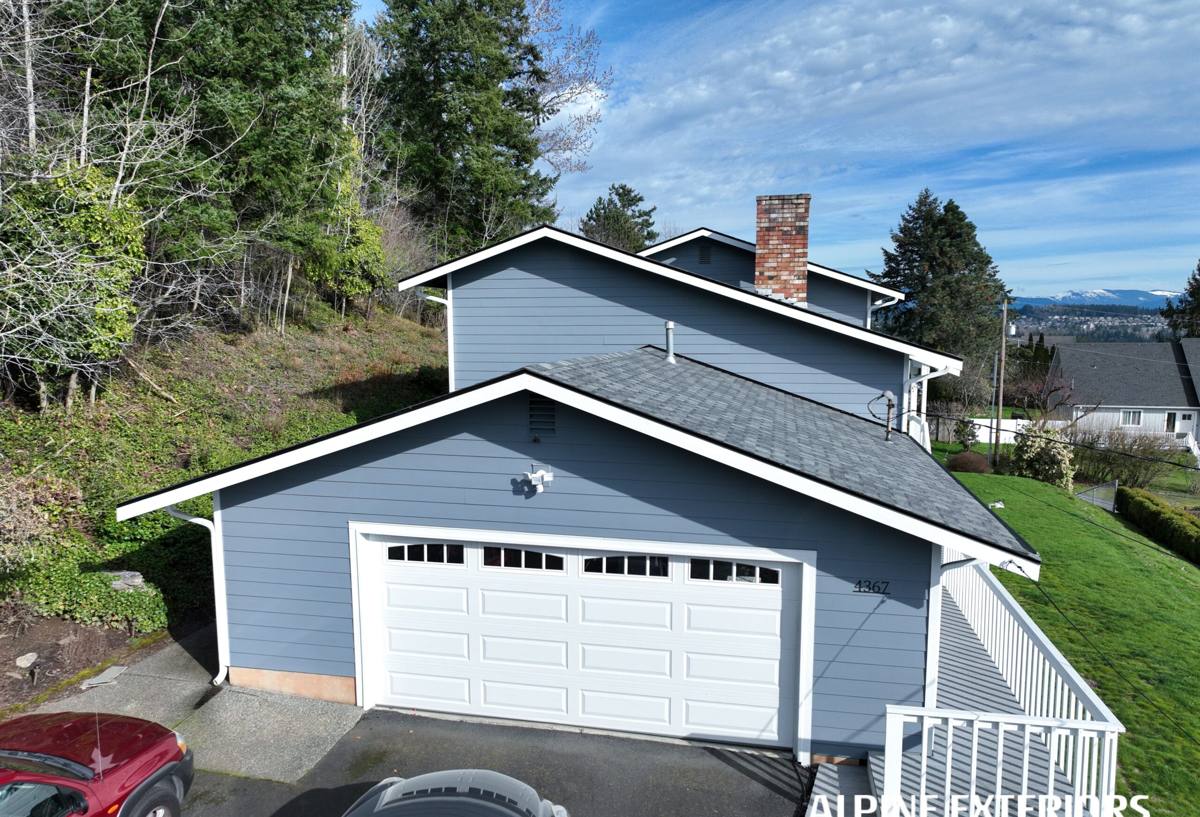
What This Climate Actually Does to a Roof
It's worth being specific about the forces at work, because they shape almost every recommendation that follows.
Driving Rain and Wind-Driven Water
Storms coming off the water don't just drop rain straight down — they push it sideways under shingle tabs, around flashing, and into any gap that a fair-weather installation would get away with. A roof here needs underlayment, flashing, and fastening details built for wind-driven rain, not just vertical rainfall.
Salt Air
Proximity to the Strait of Georgia and Puget Sound means airborne salt travels further inland than most homeowners assume. Salt accelerates corrosion on exposed metal — nails, flashing, vents, and fasteners — which is why fastener and flashing material choice matters more here than in an inland climate.
Moss and Sustained Moisture
Shade, moisture, and mild temperatures are a perfect combination for moss growth. Moss isn't just cosmetic — it holds water against the roofing surface, works its way under shingle tabs, and can lift edges over time, giving wind and rain an entry point they wouldn't otherwise have. A roof in this area needs to be designed to shed moisture and resist moss from day one, not treated for moss after the fact.
Signs a Home in This Area Needs a New Roof, Not a Repair
- Granule loss showing up in gutters or at downspout outlets, especially after a windy rain event
- Moss established across multiple sections of the roof, not just a shaded corner
- Shingles that are cupping, curling, or have visibly lifted tabs
- Soft spots or sagging felt when walking the roof deck
- Repeated leaks around the same penetration or valley despite prior patch repairs
- Visible daylight or water staining in the attic near the roof line
- A roof that's reached or passed the manufacturer's expected service life for this climate
One or two of these on their own might mean a repair is enough. Several at once, or a roof past 20-25 years old in this climate, usually means it's time to talk about full replacement rather than chasing leaks section by section.
What a Correct New Roof Installation Involves Here
Tear-Off and Deck Inspection
We remove the existing roofing down to the deck rather than layering over it. This isn't just best practice — it's the only way to actually see what's underneath. Wet or moss-affected roofs often hide deck rot at valleys, around chimneys, and near old flashing points that a layover would simply bury for another 20 years.
Underlayment Built for Wind-Driven Rain
Given how much wind-driven rain this area sees, we install a synthetic or ice-and-water underlayment at eaves, valleys, and around penetrations — the places where sideways rain finds its way in. This is one of the details that separates a roof that's built for the coast from one that's built for a catalog.
Flashing That Resists Salt Corrosion
Flashing around chimneys, skylights, dormers, and sidewalls is where most leaks actually start, and it's also where salt air does the most damage over time. We use corrosion-resistant flashing materials and fastening details appropriate for a salt-air environment, rather than the minimum-grade flashing that might be fine 50 miles inland.
Ventilation That Fights Moisture, Not Just Heat
Roof ventilation gets talked about mostly in terms of heat, but in this climate its bigger job is managing moisture — pulling humid attic air out before it condenses on the underside of the deck. Poor ventilation shortens roof life regardless of how good the shingles are, and it's an easy detail to get wrong or skip.
Shingle or Material Installation to Spec
Nail placement, exposure, and sealing all matter more in high-wind, high-rain conditions than manufacturers' minimum instructions might suggest. We install to the fastening pattern that holds up to actual coastal wind events, not just the pattern that satisfies a warranty checklist.
Material Options and Trade-Offs for This Area
| Material | Moss/Moisture Behavior | Salt Air Durability | Typical Lifespan Here |
|---|---|---|---|
| Architectural asphalt shingle | Good with proper ventilation and algae-resistant granules | Good with corrosion-resistant fasteners and flashing | 20-30 years |
| Standard 3-tab shingle | More prone to moss lift at tab edges | Adequate | 15-20 years |
| Metal roofing | Sheds moisture and resists moss well | Requires coated/corrosion-resistant fasteners and panels | 40-plus years |
| Cedar shake | High moisture retention, higher moss/maintenance burden | Fair, needs regular treatment | 20-30 years with upkeep |
We're honest about the trade-offs here rather than pushing one product. Cedar shake looks great, but it holds moisture and needs ongoing maintenance to keep moss from taking hold — that's a real cost of ownership, not a knock on the material. Metal handles this climate exceptionally well but carries a higher upfront cost. Architectural asphalt shingle remains the most common choice in this area because it balances upfront cost, appearance, and climate performance reasonably well when installed correctly.
Cost Factors Specific to This Area
| Factor | Why It Matters Here |
|---|---|
| Deck condition under old moss/moisture damage | Hidden rot from long-term moisture exposure is common and adds repair scope |
| Roof pitch and complexity | More valleys and penetrations mean more flashing work in a wind-driven-rain climate |
| Ventilation upgrades | Older homes often need added ventilation to meet moisture-management needs |
| Material choice | Corrosion-resistant fasteners and flashing add modest cost but matter near salt air |
| Access and staging | Property layout and roof height affect labor time regardless of material |
We don't quote a roof over the phone. An accurate number depends on what we find once we're actually up there, and we'd rather give a homeowner a real number than a low one that changes halfway through the job.
Our Process for an Abbotsford-Area New Roof Project
- On-site inspection of the current roof, attic ventilation, and any visible moss or moisture damage
- Straightforward walkthrough of material options and why we'd recommend one for this specific home
- Written estimate outlining scope, materials, and timeline before any work begins
- Full tear-off and deck inspection, with any rot or damage flagged and discussed before we cover it back up
- Underlayment, flashing, and ventilation installed to the standard this climate actually requires
- Final walkthrough so the homeowner sees the finished work and understands what was done and why
Why Hiring a Crew That Already Works This Area Matters
A roofing crew based somewhere dry, or one that mostly works inland jobs, can install a technically correct roof that still underperforms here — because "correct" in a mild, dry climate and "correct" for a house getting hit with wind-driven rain and salt air off the water are not the same standard. We work Lynden and the surrounding Whatcom County communities regularly, including the Abbotsford, BC border area, so we're not guessing at how this climate behaves — we're accounting for it in every flashing detail, fastener choice, and ventilation decision before the first shingle goes down.
There's also a practical side to hiring local: a crew that already knows the area can respond faster if something needs attention after a storm, and has a track record of work in the community that's easy to verify by simply asking around.
Maintaining a New Roof in This Climate
- Keep gutters clear so water isn't backing up under the roof edge during heavy rain
- Have moss growth addressed early, before it has a chance to lift shingle edges
- Trim back overhanging branches that keep sections of the roof shaded and damp
- Schedule a periodic inspection, especially after a significant wind or storm event
- Check attic ventilation isn't blocked by insulation or debris
A new roof installed correctly for this climate should need very little beyond this kind of basic upkeep — the goal of doing the underlayment, flashing, and ventilation right the first time is exactly to avoid recurring problems down the road.
Get a Straightforward Estimate
If you're weighing a roof repair against full replacement, or just want an honest read on where your current roof stands, we're happy to take a look. The estimate is free, there's no pressure, and you'll get a plain-English explanation of what we see and what we'd recommend — use the form below to get started.