 Lynden Siding
 Composite Decking Built for Deming's Wet, Shaded Climate
Deming sits back in the trees along the Nooksack River corridor, and that setting is beautiful right up until you try to keep an outdoor deck looking good in it. Between the driving rain that moves through Whatcom County for much of the year, the salt-tinged marine air pushing inland off Bellingham Bay and the Puget Sound basin, and a moss season that can run from early fall well into spring, a deck out here works harder than one in a drier part of the state. Composite decking, installed correctly for these conditions, is one of the few options that holds up to rain, shade, and moss pressure at the same time without turning into a yearly maintenance chore.
This page covers what we actually do when we build composite decking for homeowners around Deming — the material choices, the structure underneath the boards, and the details that matter more here than they would in a drier climate.
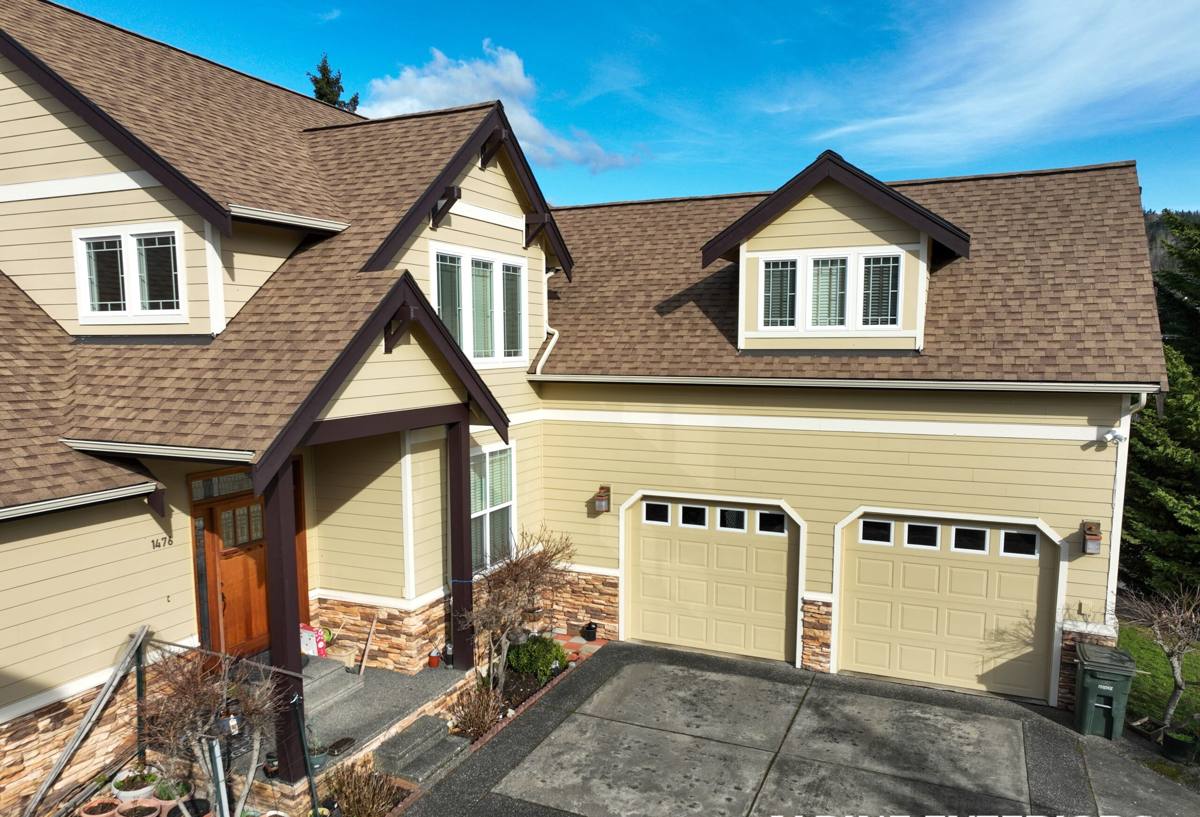
What Deming's Weather Actually Does to a Deck
Moisture that doesn't dry out fast
A lot of properties around Deming sit under heavy tree cover, which is part of the area's appeal but also means less direct sun and airflow to dry a deck surface between rain events. Wood that stays damp for days at a stretch is exactly the environment moss, algae, and mildew need to establish themselves.
Moss and organic growth
Moss doesn't just sit on top of decking — it roots into grain, board seams, and fastener holes, holding moisture against the surface long after the rain has stopped. On real wood, that's a slow path toward soft spots and rot. On lower-grade composite, it can still stain the surface and roughen the walking texture over time if it's never cleaned off.
Salt-influenced marine air
The marine air that moves through Whatcom County carries enough salt and humidity to speed up corrosion on fasteners, ledger hardware, and any exposed metal in a deck's frame. It's a slower effect than you'd see right on open water, but over ten or twenty years it adds up — especially on hardware that was never rated for coastal-adjacent, wet-climate exposure to begin with.
Composite vs. Wood vs. PVC: What Actually Holds Up Here
We get asked to compare materials on almost every decking estimate, so here's the honest breakdown for this specific climate rather than a generic pros-and-cons list.
| Material | How it handles moss & moisture | Ongoing maintenance | Realistic lifespan in this climate |
|---|---|---|---|
| Pressure-treated wood | Absorbs moisture, feeds moss and mildew growth, prone to cupping and splintering as it cycles wet/dry | Annual cleaning plus periodic staining or sealing to keep water out | 10-15 years with consistent upkeep |
| Capped composite | Sealed outer shell resists moisture absorption, staining, and moss taking root in the surface | Occasional wash-down; no staining, sealing, or sanding | 25-30+ years, backed by manufacturer warranty |
| PVC/cellular vinyl | Fully synthetic core, essentially immune to moisture absorption | Low; can expand and contract more with temperature swings | 25-30+ years |
For most Deming homes, we recommend capped composite. It handles shade, standing moisture, and moss pressure better than wood without the higher cost and different installation tolerances that come with full PVC systems. The cap layer is what does the real work — it's the difference between a board that sheds moss with a rinse and one that lets it take hold in exposed wood-composite fiber.
What a Correct Composite Decking Job Actually Involves
Composite boards are forgiving compared to wood, but the installation underneath them is where a deck either lasts three decades or starts having problems in five years. In a climate like this one, a few details matter more than they would elsewhere:
Framing and ventilation
Composite decking needs airflow underneath it, not just structural support. Joist spacing has to match the manufacturer's specification for the board profile being used — grooved edge boards, in particular, often require tighter spacing than solid wood decking would. Skimping here shows up years later as flex, bounce, or premature sagging.
Flashing and ledger connections
Where the deck attaches to the house is the single most common point of failure on any deck in a wet climate, regardless of decking material. Proper ledger flashing keeps water from tracking behind the siding and into the rim joist. This is a step that's invisible once the deck is finished, which is exactly why it's the step most likely to get shortcut by crews that don't specialize in this kind of work.
Fasteners and hardware
Hidden fastener systems and clips need to be stainless steel or coated for coastal/marine-air exposure — not a generic exterior-rated fastener. Mixed metals or the wrong coating class is how you end up with rust streaks bleeding through composite boards a few years in.
Board spacing and drainage
Gapping between boards has to account for both composite's thermal expansion and this region's rain volume, so water sheds through rather than pooling. Too tight, and boards can buckle or trap moisture; too loose, and the deck feels unfinished and lets debris build up underneath.
Our Process for a Deming Composite Deck
- On-site assessment — we look at sun/shade exposure, existing structure (if replacing a deck), drainage around the footprint, and how the ledger attaches to your home.
- Material walkthrough — we go over board profiles, colors, and cap types in person, not just from a brochure, so you know what you're actually getting.
- Structural build-out — framing, flashing, and joist spacing are set to the decking manufacturer's specs and to what this climate demands, not just code minimums.
- Decking installation — boards, fastening system, and edge/stair details installed to manufacturer spec to keep the warranty intact.
- Final walkthrough — we walk the finished deck with you and cover basic care before we consider the job done.
Why Hiring a Crew That Already Works Deming Matters
Composite decking manufacturers publish installation specs, but those specs assume a generic climate. A crew that regularly works Whatcom County's wetter, shadier lots already knows to size ventilation and joist spacing for local moisture loads, to flash ledgers for driving rain rather than occasional showers, and to spec hardware that won't corrode under marine-influenced air. That's the kind of judgment that doesn't show up in a manufacturer's install manual — it comes from having built and later serviced decks in exactly this kind of setting.
It also matters when something needs attention down the road. A crew familiar with the area's decks can tell the difference between normal composite weathering and an early sign of a framing or flashing problem, instead of guessing.
Living With Composite Decking in a Moss-Prone Climate
Composite decking is low-maintenance, not no-maintenance. In a climate like Deming's, a small amount of seasonal care goes a long way toward keeping a deck looking and performing the way it should for its full warranty life.
- Sweep off leaves, needles, and organic debris regularly, especially under tree canopy — trapped debris holds moisture against the boards.
- Rinse the deck surface a few times a year, more often in shaded areas, to keep moss and algae from getting a foothold.
- Clear debris out of the gaps between boards so water can keep draining through rather than pooling.
- Check railing posts and stair connections annually for movement, since hardware is what ages first in marine-influenced air.
- Avoid pressure-washing at close range or high PSI, which can damage the cap layer on composite boards over time.
What Drives the Cost of a Composite Deck in This Area
| Factor | Why it matters here |
|---|---|
| Board tier and cap type | Higher-cap boards resist moss and moisture better, which matters more under tree cover than in open sun |
| Site access and grade | Wooded, sloped lots common around Deming can add framing complexity and material handling time |
| Existing structure condition | Replacing an old wood deck may mean rebuilding framing that wasn't sized or flashed for composite loads |
| Railing and hardware selection | Marine-air-rated hardware costs more up front but avoids early corrosion and callbacks |
| Square footage and layout | Stairs, multiple levels, and picture-frame edge detailing all add labor beyond the base per-square-foot rate |
We don't quote decking projects off a flat per-square-foot number pulled from a national average — every one of these factors changes the real cost, and we walk through them with you before you commit to anything.
Get a Straight Answer on Your Deming Deck Project
If you're planning a new composite deck or replacing one that hasn't held up to the moss and moisture out here, we're happy to take a look and give you an honest read on what it needs — no pressure, no inflated scope. Use the form below to request a free estimate, and we'll walk the site with you before anything gets quoted.