 Lynden Siding
 Siding Repair Is a Different Job Than Siding Replacement
A repair call and a full re-side call sound similar on the phone, but they're not the same job, and treating them the same is how homeowners end up either overpaying for a full tear-off they didn't need or underpaying for a patch that fails again in a year. In Bellingham, where salt air, driving rain, and a long moss season all work on a house at once, that distinction matters even more than it would somewhere drier. We work this part of Whatcom County regularly, including nearby Lynden, and most of what we see on repair calls traces back to the same handful of climate-driven causes showing up in different spots on the house.
This page is about siding repair specifically for Bellingham homes: what's actually causing the damage, what a repair has to get right to hold up, and how we decide whether a section can be fixed or whether it's telling you something bigger is going on behind the wall.
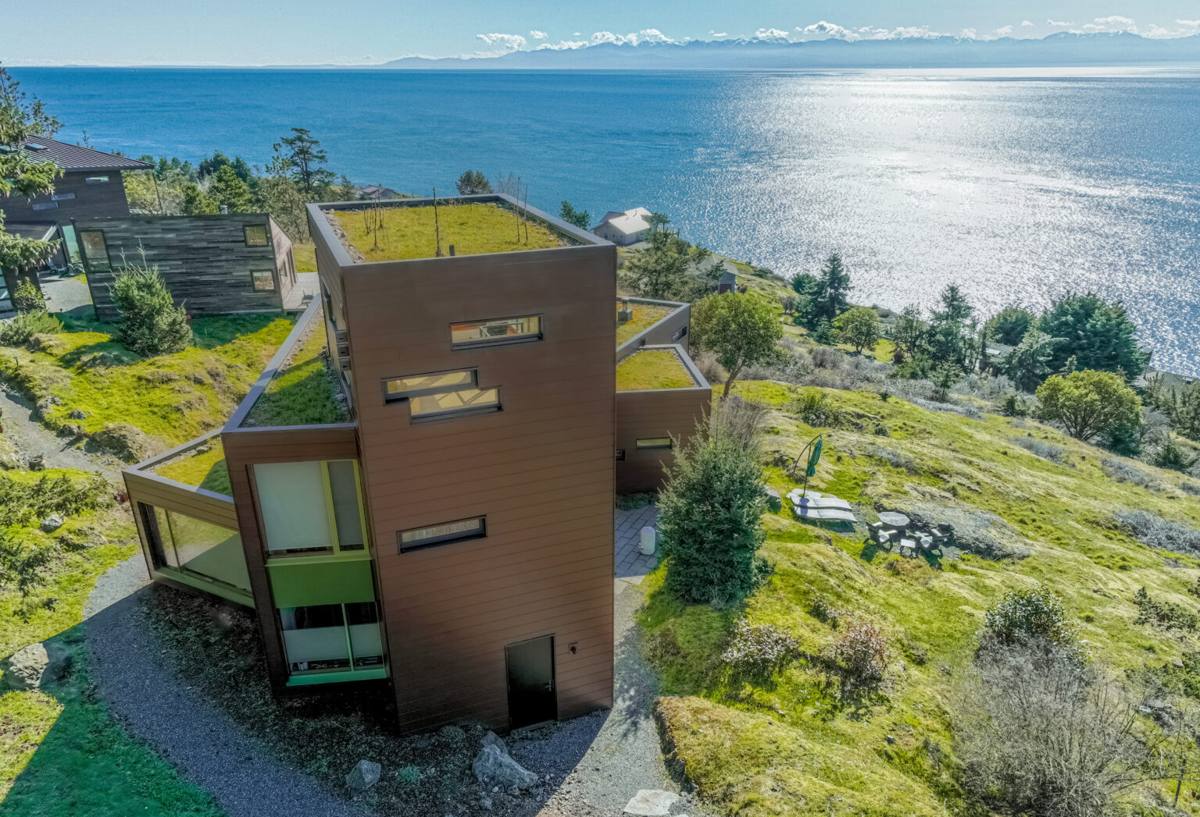
What Bellingham's Climate Does to Siding Over Time
Salt Air and Fastener Corrosion
Bellingham's position on the bay means a steady flow of salt-tinged marine air moving across the city, not just during storms. That air does slow, quiet work on fasteners, flashing, and lower-grade trim hardware — corrosion that doesn't announce itself the way a cracked board does, but that eventually shows up as staining, loose trim, or a fastener that's lost its grip. It's one of the more common root causes behind repair calls that look, at first glance, like they're about the siding board itself.
Wind-Driven Rain at Seams and Trim
Rain in this region rarely falls straight down. It's pushed sideways by wind off the water, which means it finds its way into lap joints, trim seams, and wall penetrations that a purely vertical rainfall pattern would never reach. A lot of what gets called in as a "leak" is really water working through a seam or trim joint that was fine for years until caulking failed or a flashing detail was never quite right to begin with.
A Long Moss and Mildew Season
Mild temperatures and consistent dampness give moss and mildew a long runway on north-facing and shaded walls, sometimes close to year-round. Moss itself isn't usually what damages siding, but it holds moisture against the surface for extended periods, and that sustained wetness is what accelerates whatever weakness is already there, whether that's a porous material, a failed seal, or exposed fastener heads.
What Actually Brings Us Out on Bellingham Repair Calls
Most repair calls fall into a short list of causes, and knowing which one you're dealing with changes the fix:
- Impact damage from storm debris, falling branches, or accidental contact during other exterior work
- Soft or delaminating sections on older wood-based or engineered wood siding where moisture has gotten into the material itself
- Failed caulking or sealant at trim joints, corners, and penetrations, letting wind-driven rain track behind the siding
- Corrosion staining around fastener heads, especially on siding that's been up for a decade or more
- Warping or cupping on siding that's gone through repeated wet-dry cycles without adequate ventilation behind it
Each of those points to a different repair, and sometimes to a bigger conversation than a repair at all.
What a Correct Siding Repair Actually Involves
Diagnosing What's Behind the Damage First
The visible damage is rarely the whole story. Before we touch a board, we check what's underneath it: is the sheathing dry and solid, or has moisture been tracking behind the siding long enough to soften it? A repair that goes back over compromised sheathing without addressing it is a repair that's going to need to happen again, usually sooner than anyone wants.
Matching Material, Profile, and Finish
If the existing siding is James Hardie, matching a repair section is usually straightforward — we can source the same plank width, profile, and ColorPlus finish so the repair blends in rather than standing out as an obvious patch. Older siding, or siding from a discontinued color run, can be harder to match exactly, and we'll tell you honestly if a perfect match isn't realistic before you commit to the repair.
Flashing and Sealing Detail
Any repair around a window, corner, or trim joint has to restore the flashing and sealing detail correctly, not just cover the visible gap with fresh caulk. Caulk over a bad flashing detail looks fine for a season and fails again the next wet winter. We treat the flashing as part of the repair, not an afterthought to it.
Repair or Replace? How We Make That Call
| What We Find | What It Usually Means | Typical Recommendation |
|---|---|---|
| Isolated impact damage, sheathing behind it is dry | Localized, one-time damage | Repair or replace the affected section only |
| Soft, spongy siding in multiple spots on the same wall | Moisture has been tracking behind the wall for a while | Open the wall further to assess sheathing before deciding scope |
| Failed caulking at several trim joints, siding itself is sound | Sealant has reached the end of its service life | Reseal and re-flash affected joints |
| Widespread warping, cupping, or delamination across the wall | The siding material itself is at the end of its useful life | Full re-side is usually the better long-term value |
| Existing siding is a discontinued color or profile with no clean match | A patch would be visually obvious | Discuss whether a full wall or elevation re-side makes more sense than a mismatched patch |
We'll always tell you plainly which category your house falls into. A patch that's really postponing a bigger job doesn't do you any favors, and we'd rather lose a small repair job now than have you calling back in two years with the same problem spread further across the wall.
Our Siding Repair Process for Bellingham Homes
- Inspection: We look at the damaged area and the surrounding siding, checking for signs the problem extends beyond what's visible from the ground.
- Diagnosis: We open up the affected section enough to check the sheathing and framing behind it before quoting anything.
- Honest scope: We tell you whether this is a repair, a larger repair than it first looked like, or a case where replacement is the better move — and why.
- Material sourcing: If it's a repair, we source matching material and finish as closely as the existing siding allows.
- Repair and reseal: We restore the siding, flashing, and sealant as one connected system, not as separate patches.
- Walkthrough: We show you what we found and what we did before we consider the job finished.
Signs Your Bellingham Home Needs Siding Repair
- Moss or dark staining that returns quickly after cleaning, especially on shaded or north-facing walls
- Soft or spongy siding when pressed near the base of the wall or around window and door trim
- Cracked, chipped, or missing sections of siding after a storm or wind event
- Visible gaps or cracked caulking at seams, corners, and trim joints
- Rust-colored streaking below fastener heads or trim hardware
- Peeling paint, bubbling, or visible warping on individual boards
- A section of siding that looks or feels different from the wall around it
Repairing Non-Hardie Siding
Not every Bellingham home we repair already has James Hardie siding on it, and we don't turn away a legitimate repair just because the existing material is vinyl, cedar, primed spruce, or an engineered wood product. What we will tell you honestly is when that material's own limitations are the real reason it's failing, not bad luck or a one-time event. Engineered wood siding that's soft at multiple cut edges, vinyl that's cracked across several panels from UV and temperature cycling, or cedar that needs repainting again after only a couple of years are all signs the underlying material is reaching the end of what it can reasonably do in this climate. In those cases, a patch repair is a short-term fix, and we'll say so rather than charging you for a fix we don't expect to hold.
When a repair does turn into a larger conversation about replacing a wall or an elevation, James Hardie fiber cement is what we install, for the same reasons across every job we take: a non-combustible core, a factory-applied ColorPlus finish that holds up better than field-applied paint, HZ product lines engineered for sustained moisture and freeze-thaw exposure, and a strong transferable warranty when installed to spec.
Why a Local Crew Matters for Repair Work Specifically
Repair work rewards local knowledge even more than a full re-side does, because the diagnosis has to be right the first time. A crew that works Bellingham and nearby Lynden regularly has seen how salt air, wind-driven rain, and moss actually behave through a full year on this specific mix of hillside, bay-facing, and older housing stock — which walls stay wet longest, which trim details tend to fail first, and which repair calls are usually a small fix versus a sign of something larger. That local pattern recognition is what keeps a repair from being a guess, and it's also what lets us respond quickly when storm damage or a sudden leak needs attention before the next wet stretch makes it worse.
If you're dealing with damaged, soft, or failing siding on a Bellingham or Lynden home, we're glad to take an honest look and tell you exactly what's going on. Reach out using the form below to schedule a free, no-pressure estimate.