 Lynden Siding
 Siding for a Border-Region Climate
Aldergrove sits right against the Washington–British Columbia line, close enough to Lynden that the two communities share the same weather system, the same soil, and a lot of the same housing stock. That matters more than most homeowners realize when it comes to siding. This stretch of the border doesn't get hurricanes or hailstorms, but it gets something siding manufacturers actually design against: long stretches of driving rain, marine-influenced air moving in off Puget Sound and the Strait of Georgia, and a moss season that can run eight months out of the year on shaded, north-facing walls.
None of that is dramatic weather. That's exactly why it's dangerous to siding that isn't installed correctly. Slow, steady moisture exposure doesn't announce itself with a single bad storm — it works quietly behind panels with poor flashing, into seams that were never properly lapped, and into any wall assembly that traps water instead of shedding it. A siding job that looks fine on install day can fail five years later because of details nobody checked.
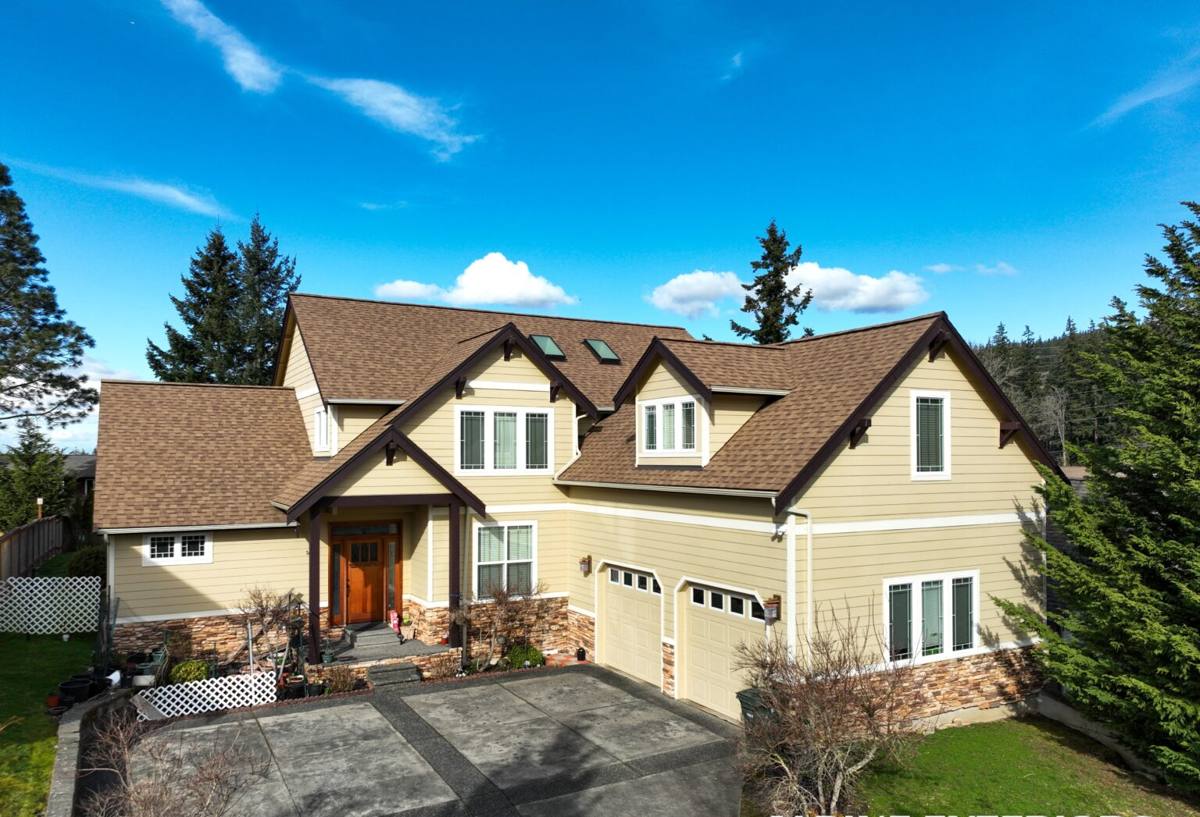
What Aldergrove-Area Homes Actually Need From Their Siding
Homes in this part of Whatcom County — and just across the line into the Aldergrove side of Langley — deal with a specific combination of stressors, not any one extreme. Three show up again and again:
Persistent Marine Moisture
The air here rarely dries out completely. Even in summer, mornings bring dew and low cloud that keeps siding damp longer than in drier inland climates. Products that absorb water, swell, or rely on field-applied paint to stay sealed lose that fight slowly, one wet season at a time.
Driving, Wind-Pushed Rain
Rain here rarely falls straight down. Wind off the flats pushes it sideways into wall assemblies, which is why lap details, flashing at windows and doors, and the gap behind the siding matter as much as the siding material itself. A premium product installed with sloppy flashing performs worse than a modest product installed correctly.
A Long, Real Moss Season
Shaded elevations, especially north- and east-facing walls under mature trees, stay damp enough for moss and algae to establish and spread for most of the year. Siding that can't be power-washed or that stains permanently where moss takes hold turns into a recurring maintenance headache instead of a one-time install.
Why We Only Install James Hardie Fiber Cement
We don't install vinyl, LP SmartSide, primed wood, or other fiber cement brands. That's a deliberate standard, not a sales pitch. James Hardie's fiber cement is non-combustible, dimensionally stable in swings between wet and dry, and finished at the factory with ColorPlus technology — a baked-on finish that holds color and resists fading far longer than a field-applied paint job, which matters when a wall stays damp as often as it does here. Hardie's HardieZone HZ10 formulation is engineered specifically for climates like ours, where moisture exposure is constant rather than occasional.
Vinyl can crack in cold snaps and warp in direct sun, and it's a petroleum product that can't be repainted to change a home's look later. LP SmartSide and other engineered wood products use wood strand cores that are vulnerable if the outer coating is ever breached and moisture gets in — a real risk on a wall that's damp more often than dry. Both are reasonable products in the right application. We simply don't think either is the right long-term answer for the specific moisture load this region puts on a wall, and we'd rather stand behind one product system we trust completely than install several we have reservations about.
What a Correct Installation Actually Involves
The material is only part of the job. Most siding failures we get called out to inspect trace back to installation shortcuts, not product defects. A correct James Hardie installation in this climate includes:
- A continuous, properly lapped weather-resistive barrier behind the siding — the last line of defense if any water gets past the cladding
- A drainage gap (rainscreen) between the siding and the barrier so any incidental moisture can drain and dry instead of sitting against the wall
- Correct flashing at every window, door, and roof-to-wall transition, installed in the right shingle-lap order so water is always directed outward and down
- Manufacturer-specified fastening — right nail type, spacing, and depth, since over-driven or under-driven fasteners are one of the most common causes of early siding failure
- Proper clearance at the bottom of the wall and around any penetrations, so siding isn't sitting in contact with soil, decking, or standing water
- Factory-mitered or properly caulked joints using sealants rated for the product, not general-purpose caulk
Every one of these is invisible once the job is finished and the trim is painted. That's exactly why the crew doing the work — and their attention to the details nobody will ever see again — matters more than the brand name on the product box.
How Our Process Works
We keep the process straightforward and the same for every home we work on, whether it's in Lynden proper or out toward the Aldergrove side of the border:
- Walkthrough and assessment. We look at the current siding, check for hidden moisture damage at trim, corners, and penetrations, and assess what condition the sheathing is in underneath.
- Written estimate. You get a clear scope of work and a real number, not a rough guess — including whether any sheathing repair is likely needed once tear-off starts.
- Tear-off and inspection. Old siding comes off and we inspect the wall assembly before anything new goes up. Any rot or compromised sheathing gets addressed before the new barrier goes on — covering a problem is never an option.
- Weather barrier and flashing. This is the step that determines whether the job holds up in ten years of driving rain, and it's the step we don't rush.
- Hardie installation. Panels or lap siding go up to manufacturer spec, with attention to fastening, gapping, and joint sealing throughout.
- Final walkthrough. We go over the finished work with you directly, not just leave a bill on the counter.
Siding Materials Compared for This Climate
| Factor | James Hardie Fiber Cement | Vinyl | LP SmartSide / Engineered Wood |
|---|---|---|---|
| Moisture resistance | Excellent — cement-based, doesn't absorb and swell | Good on its own, but seams and fasteners can let water behind panels | Vulnerable if the protective coating is breached |
| Moss/algae resistance | Doesn't feed organic growth; power-washes without damage | Resists growth but can trap moisture behind panels | Growth risk if surface coating wears thin |
| Finish stability | Factory-baked ColorPlus finish, long fade resistance | Color molded in, but can chalk and fade over time | Requires field paint/stain maintenance |
| Fire resistance | Non-combustible | Combustible | Combustible |
| Typical lifespan when correctly installed | Multiple decades | Multiple decades, but prone to cracking/warping | Shorter if moisture gets past the coating |
Cost Factors for Siding Installation Near the Border
Every home is different, so we don't publish flat pricing, but a few factors consistently drive the cost of a siding installation in this area:
| Factor | How It Affects the Job |
|---|---|
| Existing wall condition | Rot or moisture damage found at tear-off means sheathing repair before new siding goes on |
| Home size and wall complexity | More corners, gables, and trim detail means more labor and material cutting |
| Siding profile chosen | Lap siding, panel systems, and shingle-style Hardie products carry different material and labor costs |
| Access and site conditions | Steep grades, mature landscaping, or tight setbacks near the property line add setup time |
| Trim and accessory scope | Full trim, fascia, and soffit replacement alongside siding changes the total scope |
Why a Local Lynden Crew Matters Here
We're based in Lynden, and the homes we work on near Aldergrove sit inside the same weather pattern we deal with every day — the same wind-driven rain, the same marine humidity, the same shaded-wall moss problem. That's not a small thing. A crew that only occasionally works this specific border microclimate is more likely to treat flashing and drainage details as optional. We don't, because we see what happens to the walls that skip them.
Being close by also means faster response if a warranty question comes up down the road, and a shorter distance to travel for the walkthrough, the estimate, and the actual install — not a crew rotating through from somewhere with a completely different climate profile.
Signs Your Current Siding Needs Attention
- Soft or spongy spots when you press on the siding, especially near the bottom of walls
- Persistent moss or dark staining on north- or shade-facing walls that returns after cleaning
- Visible cracking, warping, or gaps at panel seams and corners
- Paint that's peeling or bubbling, which often signals moisture trapped behind the surface
- Soft trim boards or discoloration around window and door frames
- Rising energy bills that can't be explained by anything else — a sign the wall assembly may no longer be sealing properly
Any one of these on its own isn't necessarily an emergency, but they're worth having a professional look at before the next wet season.
If you're a homeowner in the Aldergrove or greater Lynden area and want a straight answer about what your siding actually needs, we're happy to take a look. Reach out for a free, no-pressure estimate — no obligation, just an honest assessment of where things stand.