 Lynden Siding
 Building a Deck That Actually Holds Up in Aldergrove
A deck in Aldergrove doesn't fail because of one bad storm. It fails slowly — a fastener that starts to weep rust, a board that cups after its third wet winter, a set of stair stringers that soften from the inside out while the surface still looks fine. The Fraser Valley's mix of salt-laden coastal air, long stretches of driving rain, and moss that never really stops growing puts real, cumulative stress on outdoor structures. A deck built without that in mind will look good in the showroom photos and start showing problems within a few seasons.
We build custom decks with that climate as the starting assumption, not an afterthought. That means specific choices about framing, fasteners, drainage, and decking material — not just picking a board color and calling it done.
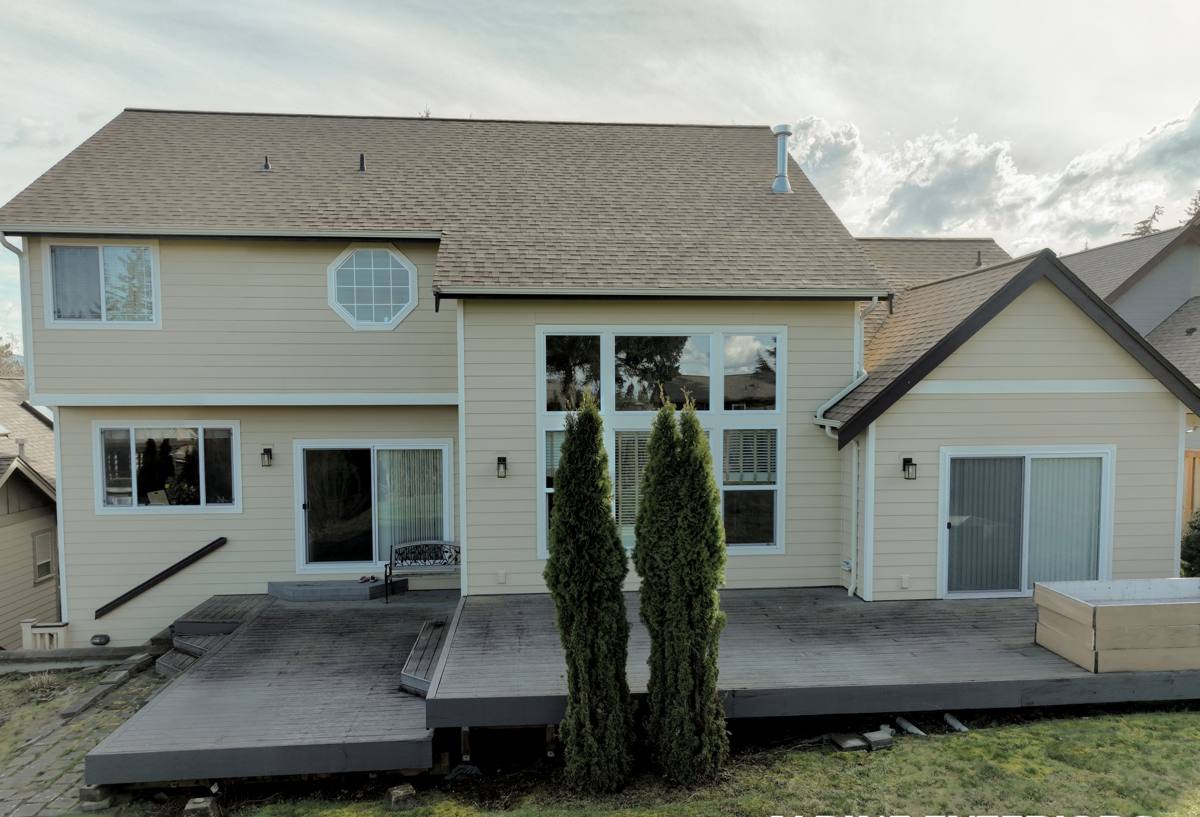
What the Local Climate Actually Does to a Deck
Aldergrove sits in the Fraser Valley, close enough to Boundary Bay and the Strait of Georgia that damp, salt-tinged air moves through regularly, even on days that don't feel particularly "coastal." Combine that with a long rainy season and short winter days, and a deck spends a large part of the year staying wet — not just getting rained on, but staying saturated at the surface and in shaded, poorly ventilated spots underneath.
Three things tend to cause the most trouble locally:
- Standing moisture in board gaps, around post bases, and under low decks with poor airflow underneath
- Moss and algae on north-facing sections and anywhere shaded by trees or the house itself, which holds moisture against the wood or composite surface
- Corrosion-prone hardware — the wrong fasteners or brackets start rusting and staining the decking within a couple of seasons in this air
None of these are exotic problems. They're well understood, and they're all solvable with the right materials and details. The issue is that a lot of deck failures we get called out to inspect trace back to shortcuts taken in exactly these three areas.
Choosing Decking Material for This Climate
Wood, Composite, or PVC
There's no single "right" decking material — there's a right material for your budget, your maintenance appetite, and how much shade and moisture your specific site gets. Here's how the common options actually compare once you factor in Aldergrove's weather pattern rather than a manufacturer's brochure numbers.
| Material | Moisture & Moss Resistance | Maintenance | Typical Lifespan |
|---|---|---|---|
| Pressure-treated wood | Good if sealed regularly; absorbs moisture at cut ends and fastener holes | Annual cleaning, re-sealing every 1-2 years | 10-15 years with upkeep |
| Cedar | Naturally rot-resistant but still needs sealing in shaded, wet spots | Regular cleaning, periodic staining or sealing | 15-20 years with upkeep |
| Composite decking | Very good — doesn't absorb water like wood, though surface moss can still grow if never cleaned | Occasional washing, no sealing or staining | 25-30 years, backed by manufacturer warranty |
| PVC/capped decking | Excellent — fully moisture-sealed board | Lowest maintenance of the group | 25-30+ years, backed by manufacturer warranty |
Composite and PVC cost more up front, and that's the honest trade-off — you're paying for less maintenance and better long-term moisture performance, not necessarily a better-looking deck. Wood costs less initially but only performs well if someone actually keeps up with sealing and cleaning on schedule. We'll walk you through which makes sense for your specific deck location, sun exposure, and how much upkeep you actually want to do.
What a Correctly Built Deck Involves
Below the Boards
Most of what determines whether a deck lasts happens before a single decking board goes down. Footings need to sit below frost depth and bear on solid, undisturbed soil — not fill dirt. Ledger boards attached to the house need proper flashing so water is directed away from the wall framing, not trapped behind it. Joists benefit from a protective tape over the top edge, which stops water from soaking into the end grain and causing the rot that eventually shows up as soft, spongy spots years later.
Fasteners and Hardware
In a climate with this much moisture and salt in the air, standard fasteners rust, streak the decking, and eventually lose holding strength. We use fasteners and structural hardware rated for the specific decking and framing material — stainless or coated hardware where it matters most, and hidden fastener systems on composite and PVC decking where the manufacturer specifies it, since that also keeps water from pooling in exposed screw holes.
Spacing, Drainage, and Airflow
Board spacing has to account for both drainage and the seasonal expansion and contraction of the material — wood, composite, and PVC all move differently with moisture and temperature. Low decks need enough clearance underneath for air to actually circulate; without it, the underside stays damp for days after a rain and becomes a moss and mildew farm that nobody sees until it's a bigger problem.
Railings and Stairs
Railings and stair stringers take a disproportionate amount of structural load and weather exposure. They need to meet current code for height, baluster spacing, and load-bearing connection points — not just look finished. We build these to code as a baseline, not an upsell.
Our Process, Start to Finish
- On-site consultation — we look at your yard's sun exposure, drainage, tree cover, and how the deck will actually be used before talking materials
- Material and design walkthrough — honest comparison of wood, composite, and PVC options for your specific site and budget, no pressure toward the most expensive option
- Written estimate — clear scope, materials, and price before any work begins
- Permitting — we handle the paperwork and inspections required for the jurisdiction your property falls under
- Construction — footings, framing, decking, railings, and stairs built in that order, with attention to the moisture-management details above
- Final walkthrough — we go over the finished deck with you, including what maintenance (if any) it needs going forward
Permits and Local Requirements
Aldergrove properties fall under local building code and permitting requirements that govern footing depth, railing height, guard spacing, and setback from property lines. These rules exist for good reason — a deck that's out of code on railing height or stair rise is a real injury risk, not just a paperwork issue. We handle the permit application and inspection scheduling as part of the job so you're not the one chasing down approvals or wondering if the work will pass inspection.
Keeping a Deck Ahead of Moss and Moisture
Even a well-built deck needs some seasonal attention in this climate. The good news is that most of it is simple and doesn't take long if you stay ahead of it rather than catching up after moss has taken hold.
- Sweep debris and standing leaves off the deck surface regularly through fall, especially in shaded corners
- Rinse or wash the surface at least once or twice a year to knock back early moss and algae growth before it gets established
- Check and clear gaps between boards so water and debris don't pack in and hold moisture against the wood or composite
- Inspect fastener heads and hardware yearly for early rust staining, which is easier to address early than after it's spread
- Re-seal or re-stain wood decking on the schedule the product actually requires, not "whenever it looks dull"
- Confirm gutters and downspouts near the deck are directing water away from framing and footings, not onto them
Why Hire a Crew That Already Works in This Area
We're close enough to Aldergrove that jobs on that side of the line are a regular part of our schedule, not a special trip. That matters because a deck built by a crew that already understands Fraser Valley moisture, moss patterns, and typical soil conditions in this corridor starts off with fewer guesses baked into the design. We're not learning the local climate on your project — we've already accounted for it in how we frame, fasten, and finish every deck we build here.
It also matters for what happens after the last board is installed. If a question comes up two years in — a squeak, a spot that's holding water, a railing connection that needs a look — you're calling a crew that's still nearby and still standing behind the work, not chasing down someone who did a one-off job and moved on.
Get a Straight Answer on Your Deck Project
Every yard is different — sun exposure, soil, tree cover, and how you actually plan to use the space all change what makes sense. If you're weighing a deck project in Aldergrove, we're happy to come take a look, talk through material options honestly, and put together a written estimate with no pressure attached. Fill out the form below to get started.