 Lynden Siding
 Deck Building in Acme: Built for the Weather That's Actually Here
Acme sits in a part of Whatcom County where trees, moisture, and time all work against an outdoor structure. A deck out here doesn't fail because the homeowner did anything wrong — it fails because it was built like a deck in a dry climate, then left to fight a wet one for fifteen years. We build decks in this area with that reality in mind from the first stake in the ground, not as an afterthought once the boards start to feel spongy.
This page is specifically about deck building for homes in and around Acme. If you're comparing bids or trying to understand what actually matters in a build out here, this covers the framing, material, and process decisions that separate a deck that lasts one season from one that lasts decades.
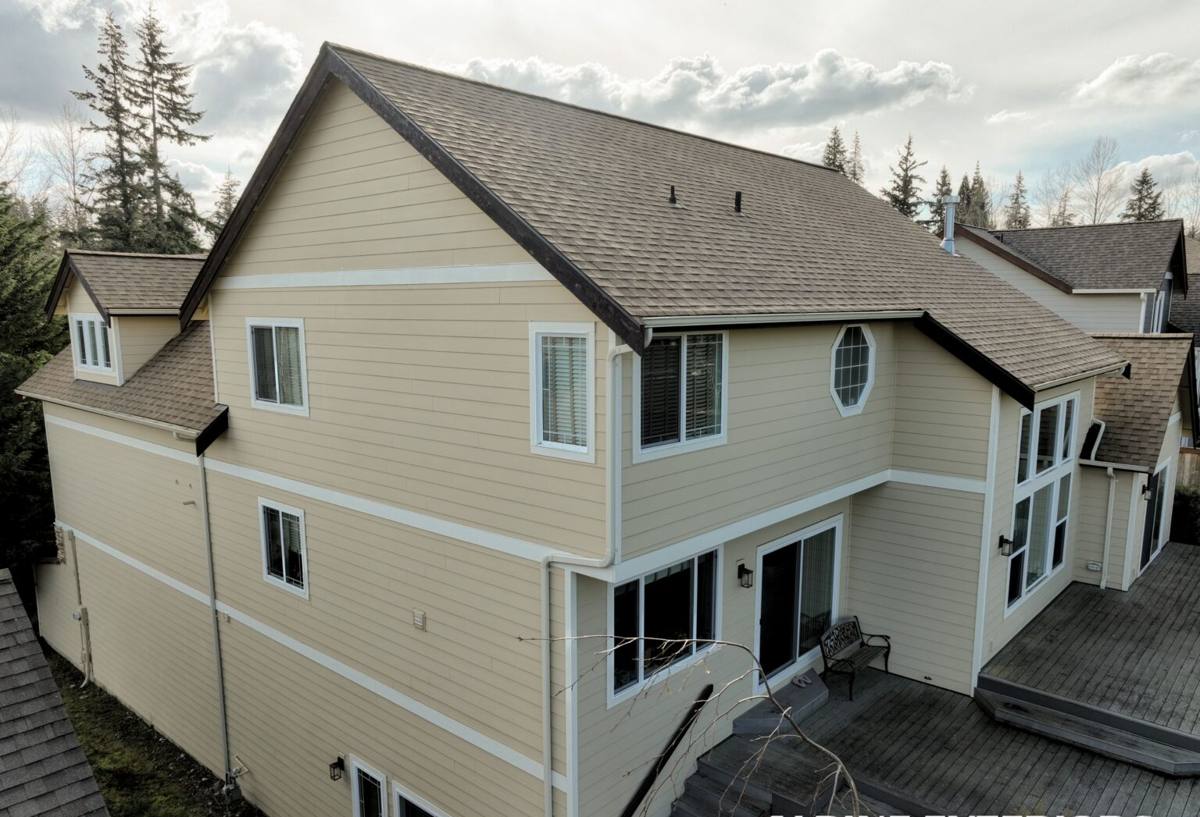
Why Acme's Conditions Are Tougher on a Deck
Whatcom County gets a long, wet stretch of the year, and Acme's setting — closer to tree cover and low-lying terrain than the open valley floor around Lynden — tends to hold moisture a little longer after a storm passes. Add in the salt-tinged marine air that moves through this whole region off the Sound, and you've got three things working against any outdoor structure at once: driving rain, humidity that doesn't fully clear between storms, and a moss and algae season that can run from fall through spring.
Individually, none of these are dramatic. Together, over years, they're the reason we see decks with soft joists under otherwise fine-looking decking, rusted fasteners bleeding through boards, and moss holding water against surfaces that were never sealed to handle it. None of that is unusual for this area — it's just what happens when a deck isn't built or maintained with the local climate in mind.
What This Means in Practice
A deck built for Acme needs to shed water fast, resist moss colonization on horizontal surfaces, and use hardware that won't corrode from years of damp exposure. Every decision below — framing, fasteners, decking material, drainage — traces back to those three requirements.
What a Correctly Built Deck Needs Out Here
Drainage First, Always
Water needs somewhere to go — off the deck surface, away from the ledger board, and away from the posts and footings. That means proper board spacing, a slight slope away from the house, and grading underneath the deck so water doesn't pool and sit against the framing. A deck that traps water underneath it is a deck that rots from below, out of sight, while the surface still looks fine.
Moss Resistance Where It Actually Matters
Moss doesn't hurt a deck by being ugly — it hurts a deck by holding moisture against the wood or composite surface for weeks at a time and making the boards dangerously slick. Good airflow underneath the deck, proper spacing between boards, and material choice all reduce how much moss gets a foothold in the first place. No deck in this climate will be moss-proof forever, but it can be built to make moss a once-a-year cleaning task instead of a structural threat.
Corrosion-Resistant Hardware
This is the detail that gets skipped most often on budget builds, and it's the one that causes the most expensive failures. Standard fasteners rust in this climate faster than most people expect, and a rusted structural connection is a safety issue, not a cosmetic one. Every ledger bolt, joist hanger, and structural screw on a deck we build is rated for exterior, coastal-adjacent exposure.
Framing and Structure: Getting the Bones Right
The decking boards are what everyone sees, but the framing underneath is what determines whether the deck is still safe in fifteen years. A few things we treat as non-negotiable on every build:
- Ledger boards properly flashed and sealed against the house to stop water intrusion at the single most common failure point on any attached deck
- Joists sized and spaced to code for the actual span and load, not the minimum that happens to look fine on day one
- Post bases set above grade with proper footings, so wood never sits in direct contact with wet soil
- Joist tape or a comparable moisture barrier on top of framing members, to keep water from wicking into end grain and top surfaces
- Hardware rated for exterior and coastal-adjacent exposure throughout, not just at the ledger
None of this is visible once the deck is finished, which is exactly why it's worth asking about before construction starts. A deck can look identical on the surface while having a completely different service life underneath, based on choices no one can see after the fact.
Choosing the Right Decking Material for This Climate
There's no single "best" decking material for every homeowner — it depends on budget, maintenance tolerance, and how the deck will be used. But in a climate like Whatcom County's, some materials simply handle moisture, rain, and moss better than others with less upkeep required to stay that way.
| Material | Moisture & Moss Behavior | Maintenance | Typical Lifespan |
|---|---|---|---|
| Pressure-treated wood | Resists rot when properly maintained; moss and algae will still grow on the surface without regular cleaning | Annual cleaning and re-sealing recommended | 10–15 years with upkeep |
| Cedar | Naturally moisture- and insect-resistant, but the surface still needs protection from prolonged wet exposure | Sealing every 1–2 years to maintain resistance and appearance | 15–20 years with upkeep |
| Composite decking | Does not rot or absorb water the way wood does; moss can still grow on the surface but doesn't damage the board itself | Occasional washing; no sealing or staining required | 25–30 years, per manufacturer warranties |
| PVC decking | Fully resistant to moisture absorption and rot; best moss and algae shedding of the group with regular rinsing | Occasional washing only | 25–30+ years, per manufacturer warranties |
Wood has real advantages — cost and a natural look chief among them — and we install it well when that's the right fit for the homeowner. But we're upfront about the trade-off: wood asks for more of your time every year to keep it performing the way it did when it was new. Composite and PVC cost more up front and ask for almost nothing after that. Neither choice is wrong; it's a question of what you'd rather spend, money now or maintenance later.
Our Deck Building Process
1. On-Site Assessment
We walk the site, check drainage patterns, note tree cover and sun exposure, and talk through how the deck will actually be used. A deck for morning coffee is a different design problem than a deck for a hot tub or a full outdoor kitchen.
2. Design and Material Selection
We go over decking material options honestly, including the maintenance trade-offs above, and design the layout, railing, and any stairs to fit the house and the lot rather than a generic template.
3. Permitting
Most new decks and many substantial rebuilds in Whatcom County require a permit, particularly once height, size, or attachment to the house crosses certain thresholds. We handle that process rather than leaving it to the homeowner to sort out.
4. Construction
Footings, framing, ledger flashing, decking, and railing, built in that order with inspections at the structural stages that call for them. We don't cover framing decisions with decking before they've been done right.
5. Final Walkthrough
We go over the finished deck together, including how to care for whatever material was installed, so there are no surprises about what upkeep looks like going forward.
Maintenance and Warning Signs Checklist
Whatever material you choose, a little attention once or twice a year keeps small issues from becoming structural ones. Here's what we tell homeowners in this area to watch for:
- Moss or algae buildup on the deck surface, especially in shaded corners or under overhangs
- Soft or spongy spots underfoot, which usually point to moisture reaching the framing below
- Rust staining around fasteners or hardware
- Gaps opening up around the ledger board where it meets the house
- Standing water that doesn't drain within an hour or two after rain stops
- Peeling or worn sealant on wood decking, which leaves the surface unprotected
- Loose railing posts or wobble at stair connections
Any of these are worth a call before they get worse, not after. Moisture problems in this climate tend to compound quietly for a season or two before they show up as something expensive.
Permits, Codes, and Local Considerations Around Acme
Building codes exist for good reason on decks specifically — attached decks are one of the more common structures to fail when built without proper permitting and inspection, because the failure points (ledger attachment, footing depth, guardrail height) aren't things most homeowners can evaluate by eye. Whatcom County has its own permitting requirements for new decks and significant rebuilds, and we manage that process as part of the build rather than treating it as optional paperwork. Getting it inspected properly isn't just about compliance — it's a second set of eyes on the parts of the deck you won't be able to see again once it's finished.
Why a Crew That Already Works in Acme Matters
A contractor who builds decks across a wide, varied service area learns to build for whatever climate they're standing in that week. A crew that works this specific area regularly already knows how Whatcom County's rain patterns behave, which fastener and flashing choices actually hold up here, and which decking materials fight moss with the least fuss over a Pacific Northwest winter. That's not a marketing point — it's the difference between a deck that gets built once and performs, and one that needs revisiting in three years because a detail that works fine in a drier climate doesn't work here.
We also know the practical side of building in this area — soil conditions on sloped or wooded lots, what typically comes up during Whatcom County permitting, and how to sequence a build around the wetter months so the framing isn't sitting exposed to weather longer than it needs to be.
Get a Straightforward Estimate
If you're planning a new deck in Acme or need an honest look at whether an existing one is still sound, we're happy to come take a look. There's no pressure and no pushy sales pitch — just a clear assessment and a straightforward estimate based on what your home and lot actually need. Use the form below to get started.