 Lynden Siding
 Siding Replacement in Abbotsford, BC: What the Climate Actually Demands
Abbotsford sits close enough to the border that homeowners here deal with the same weather pattern we see across Whatcom County: long wet stretches, driving rain that comes in sideways during winter storms, and marine-influenced air moving up from the Salish Sea that carries a fine load of salt with it. None of that is dramatic on its own. The problem is what it does over years, not days. Siding in this region isn't tested by one bad storm — it's tested by eight months of dampness a year, every year, for the life of the product.
That's the lens we use when we talk about siding replacement for Abbotsford homes. It's not just a cosmetic upgrade. It's choosing a material and an installation method that can actually shrug off the specific conditions this part of the Fraser Valley throws at a house.
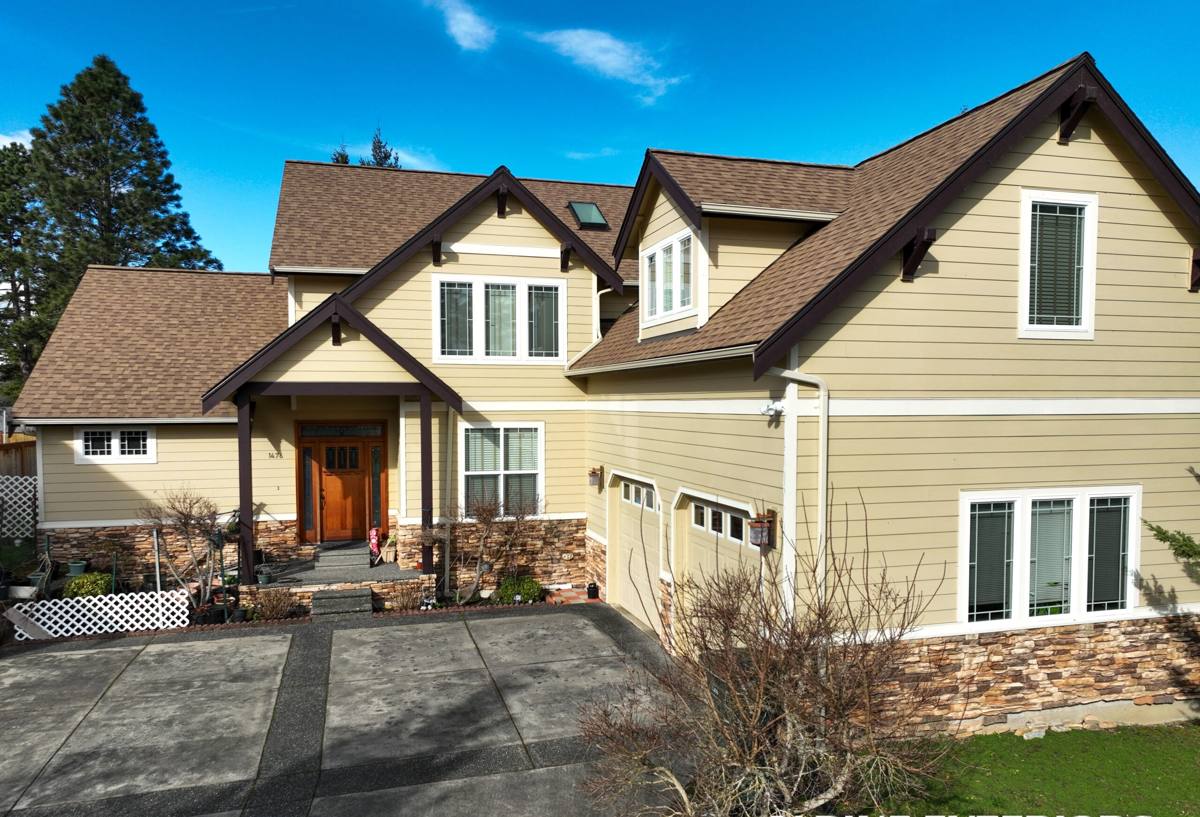
Why Moss, Driving Rain, and Salt Air Wear Down the Wrong Siding
Three regional factors do most of the damage to siding here, and they compound each other:
Driving Rain
Wind-driven rain doesn't just wet the surface of a wall — it pushes moisture up and under lap joints, around trim, and into any gap in the water-resistive barrier. Siding that isn't installed with proper flashing and drainage behind it will eventually let that water find a way in, even if the material itself is fine.
Long Moss Season
Shaded north and east-facing walls, tree cover, and consistent moisture create ideal conditions for moss and algae growth on siding that holds onto moisture. Porous or poorly finished siding surfaces give moss something to grip. Once established, it holds water against the wall even longer, extending the damp season for that section of the house well past what the weather alone would cause.
Salt-Laden Air
Air moving inland off the Salish Sea carries salt that accelerates corrosion of fasteners, trim, and any exposed metal components. It also interacts with certain paint and coating systems over time, causing fading or breakdown faster than the same product would experience further inland.
Individually, each of these is manageable. Together, over 15-20 years, they're exactly the combination that exposes weak points in cheaper siding systems, poor fastening, or shortcuts taken during the original install.
Is It Time to Replace, Not Repair?
Not every siding problem means a full replacement. But there's a point where patching stops making sense and a full replacement is the more honest recommendation. Signs worth taking seriously:
- Soft or spongy spots when you press on the siding, especially near the bottom courses or around windows
- Persistent moss or dark staining that returns within weeks of cleaning
- Visible warping, buckling, or gaps between boards that weren't there a few years ago
- Paint that's peeling or bubbling rather than just fading evenly
- Rising energy bills with no other explanation, which can point to a compromised weather barrier
- Siding that's original to a home built more than 20-25 years ago, especially if it's a wood-based or composite product
If you're only seeing one or two of these on an otherwise sound wall, targeted repair may be all that's needed. If several are showing up together, that's usually the underlying material telling you it's done.
Why We Install Only James Hardie Fiber Cement
We don't install vinyl, LP SmartSide, primed spruce, cedar, or other fiber cement brands. That's a deliberate standard, not a limitation of what we know how to work with. In a climate like this one, the material matters as much as the installation.
A Non-Combustible Core
James Hardie siding is fiber cement — a mix of cement, sand, and cellulose fibers — which means it doesn't burn, rot, or feed insects the way wood-based products can. That matters less for the rain and moss discussion and more for long-term peace of mind, particularly during dry summer months when wildfire smoke and ember risk become a regional concern.
ColorPlus Factory Finish
Rather than relying on a job-site paint job, Hardie's ColorPlus finish is baked on in a controlled factory environment, which gives it better adhesion and more consistent coverage than field-applied paint. In a moss-prone, high-moisture area, a finish that resists fading and holds up to repeated wet-dry cycles is doing real work, not just looking good on day one.
Climate-Engineered HZ Product Lines
Hardie makes region-specific formulations (HZ5 and HZ10) engineered for different moisture and freeze-thaw conditions across North America. We install the line matched to this climate zone, not a generic version meant for a drier part of the country.
A Warranty Backed by the Manufacturer
Hardie's transferable limited warranty is tied to the product and its factory finish, not just our workmanship. That's a meaningfully different guarantee than what you get with field-painted or off-brand siding systems, and it matters if you sell the home before the siding's useful life is up.
What a Correct Siding Replacement Involves
The siding itself is only part of the job. Most siding failures we see traced back to something behind the boards, not the boards themselves. A correct replacement includes:
Full Tear-Off and Sheathing Inspection
We remove the old siding down to the sheathing and inspect for rot, soft spots, or existing water damage before anything new goes up. Covering a hidden problem with new siding just delays it and makes it more expensive to fix later.
Water-Resistive Barrier and Flashing
A properly lapped weather-resistive barrier and correctly integrated flashing around windows, doors, and penetrations is what actually keeps driving rain out of the wall assembly. This is the step that matters most in a climate with sustained wind-driven rain, and it's also the step most often shortcut on lower-bid jobs.
Fastening and Clearances
Hardie siding has specific fastening patterns and minimum clearances from grade, roofing, and other surfaces that are part of maintaining the manufacturer's warranty. Skipping these details doesn't just risk performance — it can void warranty coverage without the homeowner ever knowing.
Finish Details
Caulking, trim work, and touch-up at cut edges are what separate a clean, long-lasting installation from one that starts showing problems within a few years. These are small line items that get rushed when a crew is trying to move fast.
What Affects the Cost of Your Siding Replacement
Every home is different, so we don't quote a number without seeing the house. But the main variables that move the price are consistent:
| Factor | Why It Matters |
|---|---|
| Home size and wall area | More square footage means more material and labor hours |
| Current siding removal | Tear-off and disposal add time, especially with multiple existing layers |
| Sheathing condition | Rot or water damage found during tear-off requires repair before new siding goes up |
| Home style and trim complexity | Dormers, multiple gables, and detailed trim take more time than a simple rectangular wall |
| Siding profile and accessories | Lap width, shingle-style siding, and trim board choices vary in material cost |
| Access and site conditions | Tight lots, landscaping, or multi-story walls can affect staging and labor time |
We walk through these factors with you during the estimate so you understand where the number comes from, not just what it is.
Our Process for Abbotsford Homeowners
Our process doesn't change based on which side of the line you're on — the same standards apply whether we're working a job in Lynden or one just across the border. That starts with an honest, no-pressure walk-through of your home's current siding and what we're seeing, followed by a clear written estimate that breaks down material, labor, and any sheathing repair we anticipate. Once a project is scheduled, we handle tear-off, inspection, weather barrier installation, and the Hardie install itself as one continuous, sequenced job — not a rushed weekend project split across crews. We walk the finished work with you before we consider the job done.
Why a Crew That Already Works This Area Matters
A siding installer who's used to drier inland conditions can make assumptions that don't hold up here — lighter flashing details, faster caulking schedules, or fastening patterns that skip the extra step this climate calls for. A crew that's used to the Fraser Valley's rain patterns, moss growth, and marine air treats those details as standard practice, not an afterthought. That familiarity is the difference between siding that looks good at installation and siding that's still performing correctly in year fifteen.
If your Abbotsford home's siding is showing signs of wear, or you're simply due for an honest opinion on whether repair or replacement makes more sense, we're happy to take a look. Reach out for a free, no-pressure estimate using the form below.