 Lynden Siding
 Why Wiser Lake Roofs Take a Different Kind of Beating
Homes around Wiser Lake sit in a rural, tree-lined pocket just outside Lynden, and that setting changes how a roof ages compared to a house on an open lot in town. Mature trees ring much of the lake, which means more shade, more overhanging branches dropping needles and leaf litter into valleys, and roof sections that simply don't dry out as fast after a storm. Combine that with the driving rain that blows sideways off Bellingham Bay and the Strait of Georgia during a typical Whatcom County winter, and you get roofs that stay damp longer than most manufacturers' shingle warranties assume.
Add the salt-tinged air that rides inland on westerly wind, and metal flashing, fasteners, and vent components corrode faster here than they would 40 miles inland. None of this means a roof at Wiser Lake is doomed — it means the replacement has to be built for these specific conditions, not installed the same way it would be on a dry, open lot.
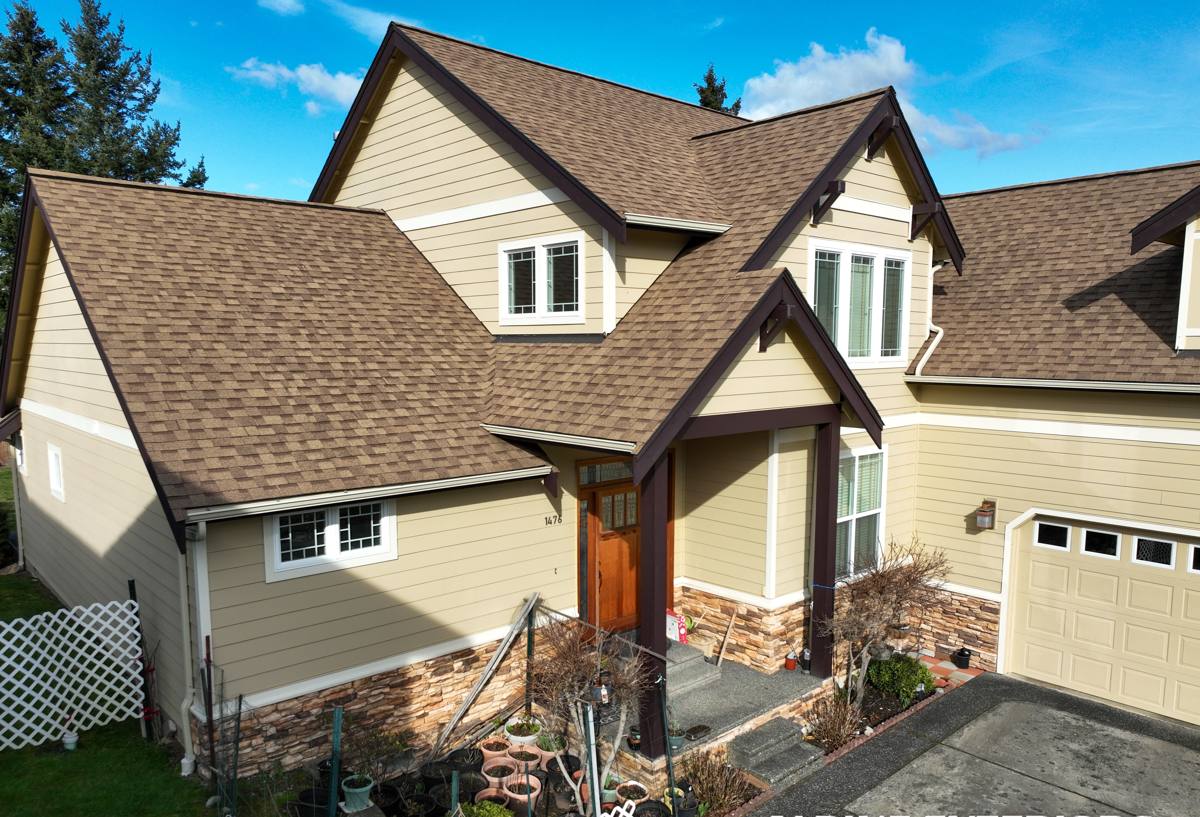
Recognizing When Repair Isn't Enough
Not every roof problem at Wiser Lake calls for a full tear-off. But there's a point where patching individual leaks stops making financial sense and starts masking bigger decking or structural issues underneath. Before we recommend replacement over repair, we look for a combination of these signs — not just one:
- Shingles that are cupping, cracking, or losing granules across large sections, not just one storm-damaged area
- Moss or algae that keeps returning within months of cleaning, especially on north-facing or shaded slopes
- Soft or spongy decking felt underfoot during inspection, a sign moisture has reached the plywood
- Daylight visible through the attic roof deck, or water staining on rafters and insulation
- A roof older than 20-25 years for asphalt shingle, regardless of how it looks from the ground
- Multiple past repairs in different spots, suggesting the underlayment is failing system-wide, not locally
If your roof shows two or more of these, a replacement estimate is usually worth getting even if you weren't planning to spend the money this year — catching it before the decking rots further saves real money.
What a Correct Roof Replacement Involves
Tear-Off and Deck Inspection
We don't install new shingles over old ones, and we don't recommend it on lake-adjacent homes where trapped moisture is already a concern. A full tear-off lets us see the actual condition of the roof deck — the plywood or OSB sheathing underneath everything else. Any soft, delaminated, or water-stained sections get replaced before a single new shingle goes down. Skipping this step is how homeowners end up with a roof that looks new but starts leaking again in two or three years.
Underlayment and Flashing Built for Wet Climates
In a climate that sees this much sustained rain, the underlayment matters almost as much as the shingle itself. We use ice-and-water shield membrane at eaves, valleys, and roof penetrations — the spots where wind-driven rain and standing water are most likely to find a way in — backed by synthetic underlayment across the rest of the field. Flashing around chimneys, skylights, and wall intersections gets replaced, not reused, and we specify corrosion-resistant fasteners given how much salt air moves through this area.
Ventilation That Actually Stops Moss and Mildew
A roof that can't breathe traps heat and moisture in the attic, which shortens shingle life and feeds the exact moss and mildew growth that's already a problem on shaded, tree-covered lots. Proper intake at the eaves paired with exhaust at the ridge keeps air moving, which is one of the most overlooked factors in how long a new roof actually lasts out here.
Choosing Roofing Materials for the Wiser Lake Microclimate
There's no single "best" roofing material for every house — it depends on your roof's pitch, how much shade it gets, and your budget. Here's how the common options stack up for a property dealing with sustained moisture and moss pressure:
| Material | Moss/Moisture Resistance | Typical Lifespan | Trade-Offs |
|---|---|---|---|
| Standard 3-tab asphalt | Fair — needs regular cleaning | 15-20 years | Lowest upfront cost, shortest life in shaded, damp areas |
| Architectural (laminate) shingle | Good, especially with algae-resistant granules | 25-30 years | Better wind and moss resistance, moderate cost increase |
| Standing seam metal | Very good — moss struggles to hold on smooth panels | 40-50+ years | Higher upfront cost, needs experienced installers for a wet climate |
| Cedar shake | Poor in shaded, damp settings without diligent upkeep | 20-30 years with maintenance | Attractive but high-maintenance in tree-covered lots like Wiser Lake |
For most Wiser Lake homes under heavy tree cover, we steer people toward architectural shingle with algae-resistant granules or standing seam metal. Cedar shake can work on a lot with good sun exposure and an owner committed to upkeep, but we're upfront that it's a harder sell on a shaded, moisture-heavy lot — that's a maintenance-burden conversation, not a knock on the material itself.
What Drives the Cost of a Roof Replacement Here
Every estimate is specific to the house, but a few factors consistently move the number up or down on Wiser Lake properties:
| Factor | Why It Matters |
|---|---|
| Roof pitch and complexity | Steep or multi-valley roofs take longer to tear off and flash correctly |
| Decking condition | Rotted or soft sheathing found during tear-off adds material and labor |
| Tree cover and access | Overhanging limbs and tight, wooded driveways can slow staging and cleanup |
| Material choice | Metal and premium architectural shingle cost more upfront but last longer |
| Number of layers to remove | Some older homes have two layers of shingles, which adds disposal cost |
| Ventilation upgrades | Adding proper intake/exhaust venting where none existed adds a modest cost that pays back in shingle life |
We'll walk through which of these apply to your roof specifically during the estimate, so there are no surprises once tear-off starts.
Our Process, Start to Finish
- On-site inspection. We walk the roof and attic, check for soft decking, ventilation issues, and moss patterns specific to your lot's sun and tree exposure.
- Written estimate. A clear, itemized quote covering material, tear-off, decking allowance, and disposal — no vague lump sums.
- Material selection. We help you weigh shingle versus metal against your budget and how much shade your roof actually gets.
- Tear-off and deck repair. Old roofing comes off, decking is inspected board by board, and any compromised sections are replaced.
- Underlayment, flashing, and ventilation installed. Built to the wet-climate standard described above, not the bare code minimum.
- New roofing installed and inspected. Shingles or panels go down to manufacturer spec, then we walk the roof again before calling it done.
- Site cleanup. Magnetic sweep for nails, full debris haul-off — especially important around a lake where loose material shouldn't end up in the water or shoreline vegetation.
Permits and Practical Realities of Rural, Lake-Area Properties
Roof replacements in unincorporated Whatcom County typically require a building permit, and we handle that process as part of the job rather than leaving it on the homeowner's plate. Rural lake-area lots also come with their own logistics: septic system locations that affect where equipment and dumpsters can sit, well covers that need to stay clear, and driveways or shared access roads that aren't built for a full-size delivery truck. Some lakefront parcels also carry community covenants or shoreline-related restrictions worth checking before work starts. None of this is complicated, but it does need to be planned for before the crew shows up, not discovered halfway through the job.
Why Local Experience on Wiser Lake Roofs Matters
A crew that's already worked lake-adjacent, tree-covered properties around Lynden knows what to expect before the ladder goes up — which slopes are going to have moss buildup under the surface, where decking is likely to be soft, and how to stage a job on a wooded lot without tearing up the yard or blocking a narrow shared driveway. That familiarity translates into a more accurate estimate up front and fewer surprises once tear-off starts. It also means we're not learning the local permitting process or the quirks of Whatcom County's wet-season scheduling on your job — we already know it.
If your roof is showing its age, or you just want an honest read on whether repair or replacement makes more sense for your Wiser Lake home, we're happy to take a look. The estimate is free, there's no pressure, and you'll get a straight answer either way — just fill out the form below to get started.