 Lynden Siding
 Building New Near Wiser Lake Means Getting the Envelope Right the First Time
Wiser Lake sits in one of the wetter, greener corners of Whatcom County, and homes going up in this part of the Lynden area face a specific mix of weather: long stretches of driving rain off the Pacific, damp air carrying a trace of salt up from the Sound, and a moss season that can run eight months or longer on anything shaded or north-facing. None of that is dramatic on its own, but it adds up over the life of a house. A new-construction window opening is the one point in a home's life where every layer around that window is still open and accessible. Get the flashing, the weather-resistive barrier, and the sill detail right at this stage, and the window will shed water correctly for decades. Get it wrong, and you're looking at hidden rot behind trim, staining, or a callback in three to five years that requires cutting into finished siding to fix.
Why This Matters More Here Than in a Dry Climate
In a drier region, a sloppy window install might go unnoticed for a long time because there simply isn't enough water hitting the wall to expose the mistake. Whatcom County doesn't offer that grace period. Between fall and spring, wind-driven rain regularly hits window openings at an angle, pushing water sideways into any gap that isn't properly lapped or sealed. Add in the humidity that keeps moss and algae established on siding and trim for most of the year, and small installation errors get tested constantly instead of occasionally.
New Construction vs. Replacement: Not the Same Job
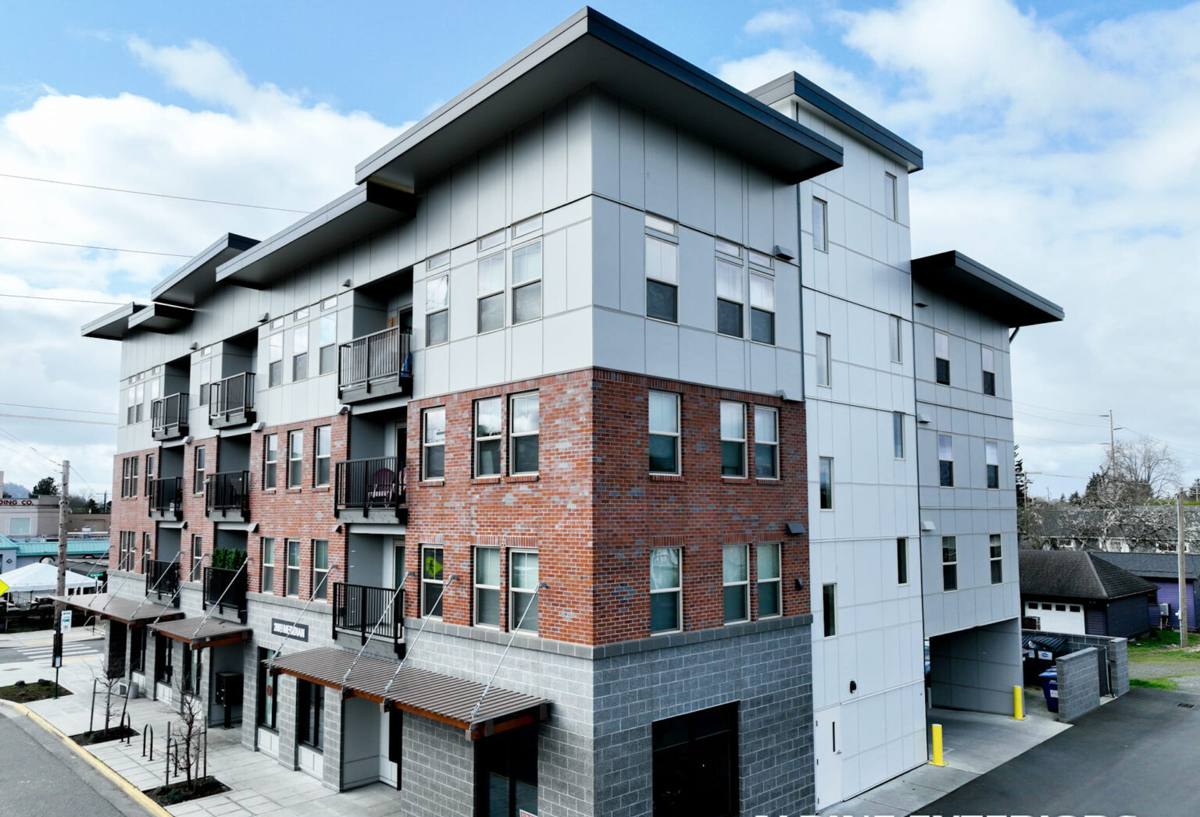
A lot of homeowners assume window installation is window installation, but new-construction and replacement work are genuinely different trades within the same skillset. On a new build, we're working with an open stud bay, an unfinished weather-resistive barrier, and a window unit with a nailing fin that gets integrated directly into the wall assembly before siding goes on. There's no old frame to work around and no existing finish to protect — but there's also no room for error correction later without demolition. Once siding, trim, and interior finishes go on top of a new-construction window, the flashing details underneath are sealed away for good.
This is also the stage where window placement, rough opening sizing, and coordination with the framer, sider, and painter all have to line up. A crew that only does replacements isn't necessarily equipped for that sequencing — it's a different rhythm of work, tied to the builder's schedule rather than a standalone appointment.
What a Correct Installation Actually Involves
There's a specific order of operations that keeps water moving out and down, never sideways or in. Skipping steps or doing them out of sequence is the single biggest cause of hidden water damage in walls we've opened up on other people's builds.
- Rough opening prep: squaring the opening and confirming dimensions before the window ever shows up on site
- Sill pan flashing: a sloped, sealed pan under the window so any water that gets past the glass drains back outside instead of into the framing
- Weather-resistive barrier integration: the WRB is lapped in shingle fashion — upper layers over lower — around the entire opening before the window goes in
- Setting the window: shimmed level, plumb, and square in the opening, fastened through the nailing fin per the manufacturer's schedule
- Flashing tape over the fin: side flashing first, then head flashing last, so water always sheds onto a layer below it, never behind one
- Sealant at the right points only: some manufacturers specify no sealant behind the sill so any incidental moisture can still weep out — sealing the wrong spot traps water instead of releasing it
- Interior air sealing and insulation: low-expansion foam or backer rod around the frame to stop drafts without bowing the frame out of square
- Flashing tape applied in the wrong order — head flashing tucked under side flashing instead of over it, which funnels water directly into the wall
- Sealant applied under the sill where the manufacturer calls for a weep path, trapping any water that does get past the window
- Windows shimmed out of square to make a slightly-off rough opening "work," which stresses the frame and causes premature seal failure
- WRB not lapped correctly around the opening before the window went in, leaving a hidden gap that only shows up as a stain years later
- Rinse pollen, dust, and moss spores off frames and tracks a couple of times a year, more often on shaded or north-facing walls
- Check that weep holes at the sill aren't blocked by debris, especially after fall leaf drop
- Look at exterior caulk lines annually for cracking or separation, particularly at trim-to-siding joints near windows
- Keep gutters clear so overflow doesn't run down the wall and pool at window heads
- Watch for moss creeping onto trim near windows and remove it before it holds moisture against the wood or siding
Every one of those steps is inspectable at the time of install and invisible a week later. That's exactly why the crew doing the work — and their habits when no one's checking — matters more here than almost anywhere else in the build.
Choosing a Window Built for This Climate
Frame material and glass package both affect how a window handles the Wiser Lake area's combination of rain, humidity, and temperature swings. There's no single "best" window for every project — it depends on budget, the home's design, and how much upkeep the owner wants to take on.
| Frame Type | Moisture Behavior | Maintenance | Typical Fit |
|---|---|---|---|
| Vinyl | Won't rot; expands/contracts with temperature, so quality corner welding matters | Low — occasional cleaning | Budget-conscious new builds, rental or spec homes |
| Fiberglass | Very stable dimensionally, minimal expansion; holds paint well in wet climates | Low to moderate | Custom homes wanting durability without wood upkeep |
| Wood-clad | Interior wood needs protection from condensation; exterior clad shields from rain if properly flashed | Higher — interior finish upkeep | Traditional or high-end aesthetic where interior wood look matters |
For most new construction in this area, we steer clients toward vinyl or fiberglass for anything facing prevailing weather, and reserve wood-clad units for protected elevations where overhangs and orientation limit direct rain exposure. That's a judgment call based on installation sensitivity and long-term moisture behavior, not a knock on any manufacturer.
Our Process When We Come in on a New Build
We work directly with the builder's schedule rather than as a standalone appointment, since window install has to happen at a specific point between framing and siding.
Before Windows Arrive
We check rough openings against the window order — a mismatch caught before install day is a phone call; caught after is a delay. We also confirm the WRB is installed and lapped correctly by the framing or siding crew before we start flashing around openings.
Install Day
Each opening gets the full sequence: sill pan, window set and shimmed, side and head flashing in the correct lapping order, and a check for square and operation before we move to the next opening. We don't caulk over problems — if an opening is out of square or the WRB wasn't lapped correctly, we flag it and fix the underlying issue rather than sealing around it.
After Install
We do a final pass checking operation, weatherstripping contact, and that flashing tape is fully adhered with no lifted edges before siding crews close the wall up. Once siding covers those details, this is the last chance to catch anything.
Mistakes We See on Builds We're Called in to Fix
Most callbacks in this region trace back to a handful of recurring issues, not exotic failures.
None of these show up on a walkthrough. They show up as a soft spot in trim, a stain on drywall, or moss creeping in behind fascia during a wet Whatcom County winter — usually well after the builder has moved on to the next project.
Why a Crew That Already Works Wiser Lake and Lynden Is Worth Choosing
A local crew has already seen how this specific area's weather behaves against a house — which elevations take the worst wind-driven rain, how moss establishes on shaded siding, and how salt-tinged air affects fasteners and finishes over time. That's not something a crew from outside the region necessarily accounts for automatically. We're also easy to reach if a builder needs a schedule adjustment or an owner has a question after move-in, rather than being a one-time crew that isn't local when a warranty question comes up two years later.
Once You've Moved In: Keeping New Windows Performing
New-construction windows installed correctly need very little attention, but a short seasonal routine helps them hold up through Whatcom County's wet stretches.
If you're building near Wiser Lake or elsewhere around Lynden and want a crew that treats window flashing as seriously as the framing inspection, we're happy to walk through your plans and give you a straightforward, no-pressure estimate. There's a form below — reach out and we'll set up a time to talk about your build.