 Lynden Siding
 Metal Roofing Built for Wiser Lake's Conditions
Wiser Lake sits in a pocket of Whatcom County where lake humidity, heavy tree cover, and marine air off the Salish Sea all combine against a roof at the same time. Homes here deal with driving winter rain, a long stretch of shaded, damp weather that keeps moss going strong for months, and salt-tinged air that eventually finds every unsealed fastener and exposed cut edge. A roof that would hold up fine in a drier inland town can start failing years early out here.
Metal roofing handles this combination better than most materials, but only when it's specified and installed correctly for the site. A metal roof put on with generic details, the wrong fastener spacing, or no attention to the moisture load coming off the lake will show problems just like anything else. This page covers what a Wiser Lake home actually needs from a metal roof, what a correct installation looks like, and how we approach these jobs.
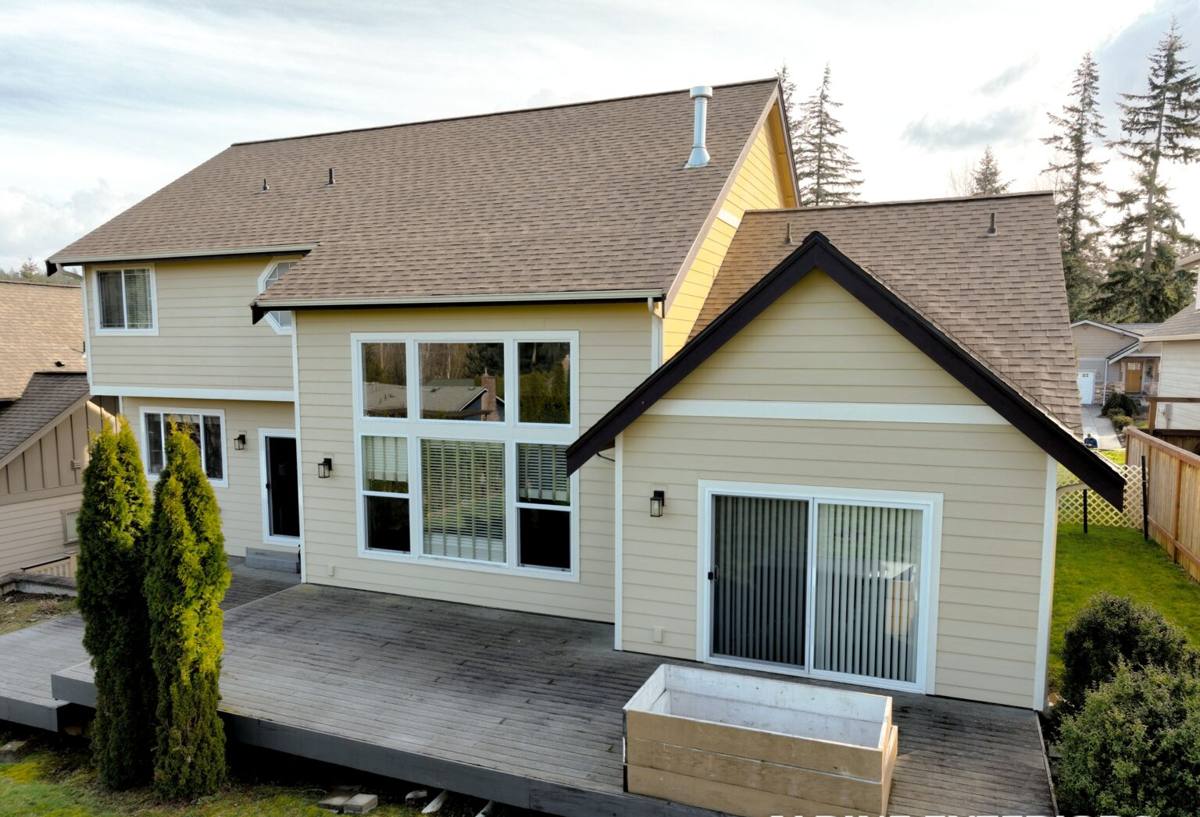
Why This Microclimate Is Harder on a Roof
Lynden and the surrounding parts of Whatcom County get plenty of rain, but a lake environment adds humidity that lingers after the rain itself has stopped. Combine that with mature tree cover around much of Wiser Lake — which keeps roof surfaces shaded and slow to dry — and you get an extended moss season that can run well into what should be the dry months. Add occasional marine air carrying salt inland from Bellingham Bay and the broader Puget Sound region, and metal components without proper coatings or fastener protection start corroding faster than they would elsewhere in the county.
What Moss Actually Does to a Roof
Moss isn't just cosmetic. It holds moisture against the roof surface far longer than open air would, and on shingle roofs it works its way under tabs and lifts them. On a metal roof, moss is far less likely to take hold on the panel field itself, but it will still colonize debris that collects in valleys, around penetrations, and in gutters — and that trapped organic matter holds water against flashing and fastener points, which is exactly where a poorly detailed installation will fail first.
What a Correct Metal Roof Installation Involves
A metal roof is a system, not just a set of panels. Getting it right for a wet, shaded lake property means paying attention to details that don't matter as much in a drier climate.
- A synthetic underlayment rated for long-term moisture exposure, not a basic felt that degrades under sustained dampness
- Ice-and-water shield at eaves, valleys, and around all penetrations, where trapped moisture does the most damage
- Fastener patterns and clip spacing matched to the panel type and local wind exposure, not just factory minimums
- Room for thermal expansion and contraction in the panel layout, so panels aren't fighting themselves as temperatures swing
- Properly formed flashing at every valley, wall transition, and roof penetration, sealed with materials suited to metal rather than generic caulk
- Ridge and soffit ventilation sized to move humid attic air out, since trapped moisture under a metal roof causes condensation problems independent of what's falling from the sky
Skip any one of these and you end up with a roof that looks like a metal roof but doesn't perform like one. This is where a lot of the corner-cutting happens on lower-bid jobs, because these details cost labor time without being visible once the roof is finished.
Choosing a Metal Roofing System for a Wiser Lake Property
Not every metal roofing system is the right fit for every home. The table below covers the main options we install and how they hold up in this specific climate.
| System | Best Fit | Maintenance in This Climate | Notes |
|---|---|---|---|
| Standing seam (concealed fastener) | Most Wiser Lake homes, especially lakefront and higher-visibility roofs | Low — no exposed fasteners to fail or re-seal over time | Handles thermal movement and driving rain well; higher upfront cost, longest service life |
| Exposed-fastener panel | Outbuildings, shops, budget-conscious re-roofs | Moderate — fastener washers need periodic inspection | More affordable, but gaskets on exposed screws are the first thing to wear out in wet, temperature-swinging conditions |
| Stone-coated steel | Homeowners who want a shingle or shake appearance with metal's durability | Low to moderate — coated surface needs occasional debris clearing | Heavier than standard panel systems; good option where architectural style calls for a traditional look |
For most homes around the lake, we lean toward standing seam because it removes the exposed-fastener maintenance item entirely — one less thing to track in a climate that already asks a lot of a roof. That said, exposed-fastener systems are a legitimate, cost-effective choice for detached garages, shops, and other structures where the trade-offs make sense.
How We Approach a Wiser Lake Metal Roofing Project
Our process doesn't change dramatically from house to house, but the details we check are shaped by what we've seen go wrong on lake and tree-covered properties specifically.
- On-site assessment: we look at existing decking condition, current ventilation, tree overhang, and any signs of moss or moisture staining before quoting anything
- Tear-off vs. overlay decision: metal can sometimes go over existing shingles, but on a property with any history of moss or trapped moisture, we generally recommend a full tear-off so we can inspect and address the decking underneath
- Material selection: panel profile, gauge, and finish chosen based on the home's exposure, roof pitch, and how much shade the site gets
- Installation: underlayment, flashing, ventilation, and panels installed in that order, with flashing and penetration details treated as the priority rather than an afterthought
- Cleanup and walkthrough: site cleared of fasteners and offcuts, gutters checked and cleared, and a final walkthrough so you know what to watch for going forward
Keeping a Metal Roof Performing Around Wiser Lake
Metal roofing is genuinely low-maintenance compared to shingles, but "low-maintenance" isn't "no-maintenance" in a shaded, lake-adjacent setting. A short annual checklist covers most of what matters:
- Clear gutters and valleys of needles and leaf debris at least once before winter, since tree cover around the lake sheds heavily
- Check that downspouts are draining freely and not backing water up under eave flashing
- Look for any moss or algae buildup collecting in low-flow areas, even if the panel field itself stays clean
- Inspect pipe boots and penetration flashing for cracking or shrinkage, which is the most common failure point on any roof type
- On exposed-fastener systems, scan for washers that look compressed, cracked, or discolored and have them replaced before they leak
- After any significant windstorm, do a visual check for lifted flashing or debris impact
Cost Factors for Metal Roofing in This Area
Metal roofing costs more upfront than composition shingles, but the gap is easier to justify once you factor in how much less attention it needs over the following decades. What actually moves the price on a given job comes down to a handful of factors:
| Factor | Why It Affects Cost |
|---|---|
| Roof pitch and complexity | More valleys, dormers, and transitions mean more flashing work and labor time |
| Tear-off vs. overlay | Full tear-off adds labor and disposal cost but lets us address decking and moisture issues directly |
| Panel system chosen | Standing seam runs higher than exposed-fastener panel due to formed seams and concealed clips |
| Site access | Tree cover, lake-side access limitations, and steep lots around Wiser Lake can add setup time |
| Roof size | Larger roofs bring down the per-square cost but raise the total project size |
We walk through these factors on-site during the estimate so you understand exactly what's driving your number, not just a flat quote with no explanation behind it.
Why It Matters That We Already Work This Area
A roofing crew that mostly works drier, more open parts of Whatcom County can still install a technically fine metal roof — but they may not think to size ventilation for lake humidity, or plan gutter and valley details around heavy tree litter, because it isn't a problem they deal with regularly. Working Wiser Lake and the greater Lynden area consistently means we already know which details to prioritize before we ever get on the roof, and we're familiar with the permitting and inspection process in Whatcom County so there are no surprises mid-project.
If you're weighing a metal roof for a home near Wiser Lake, we're happy to walk your roof, talk through what your specific site needs, and give you a straightforward estimate — no pressure, no obligation. The form below is the easiest way to get that conversation started.