 Lynden Siding
 Why Maple Falls Siding Wears Differently Than Siding in Town
Maple Falls sits up in the wooded foothill country east of Lynden, and that setting changes how siding ages. Heavier tree cover means more shade, more standing moisture on north- and east-facing walls, and a moss season that runs longer than it does out in the open lowlands. Add in the driving rain that blows through Whatcom County off the Salish Sea and the humid, moisture-laden air that settles into the valleys, and you have an environment that never really lets siding dry out completely between storms. Siding here doesn't fail because it's a bad product — it fails because water finds the one seam, the one nail hole, or the one piece of caulk that gave up first, and then it has weeks of damp shade to keep working on the damage.
We've repaired enough siding out this way to know the failure patterns are predictable: rot starting low near grade where splash-back keeps boards wet, moss colonies building up on shaded walls until they hold moisture against the surface, and swollen or delaminating panels where a gutter has been quietly overflowing onto the same six feet of wall for a season or two. A repair that doesn't address why the damage happened will just fail again in the same spot.
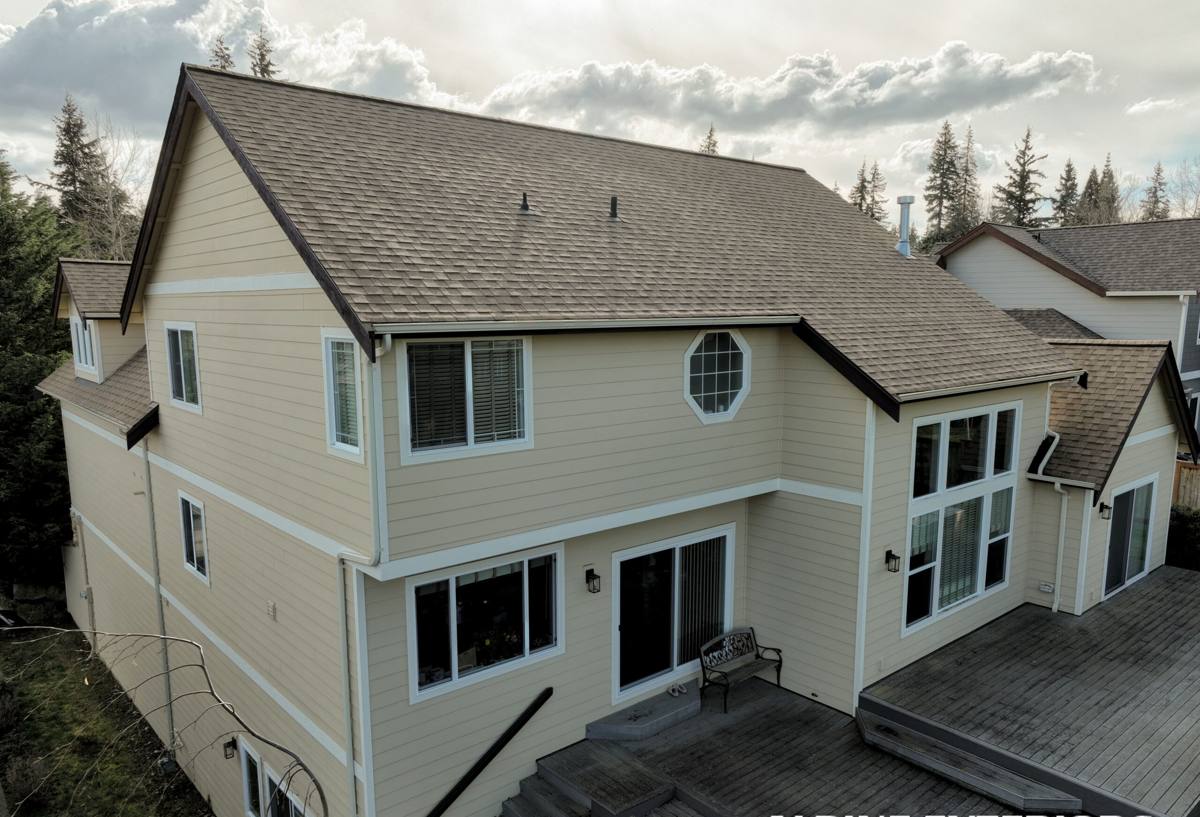
Signs a Maple Falls Home Needs Siding Repair
The subtle signs homeowners miss
- Soft or spongy spots when you press on the siding near the bottom courses or around window and door trim
- Dark streaking or thick moss growth concentrated on one or two walls rather than the whole house
- Paint that's bubbling or peeling in a localized patch instead of failing evenly across the wall
- Nail heads that have started to pop or "grin through" as boards swell and shrink with moisture cycles
- A musty smell or slight give in interior drywall on the other side of an exterior wall
Signs pointing toward more than a patch
If the damage is limited to a section — a few boards near a downspout, trim around one window, a corner that took a hit — repair is usually the right call. If we find soft sheathing behind multiple walls, siding that's original from decades ago and brittle throughout, or rot that's spread along a seam for many feet, patching one spot just delays a bigger job. Part of our estimate process is being straight with you about which situation you're actually in.
What a Correct Siding Repair Actually Involves
Finding the water path, not just the damaged board
Replacing a rotted or cracked piece of siding without figuring out how water got behind it in the first place is the most common shortcut in this trade, and it's why the same spot so often fails again within a year or two. A proper repair starts by tracing the moisture back to its source — a gap in flashing, a caulk joint that's cracked open, a gutter that's been dumping water onto the wall, or grade that's built up too close to the bottom of the siding. Fix the cause, then fix the board.
Matching materials the right way
Fiber cement siding has thickness, texture, and butt-joint profiles specific to its product line, so a patch has to match the existing plank or panel, not just be "close enough." Where an exact factory-finish color match isn't possible on an older run of siding, we're upfront about that before starting, and we'll talk through whether a full wall or elevation re-side makes more visual and financial sense than a mismatched patch.
Sealing and flashing details
Every repair gets proper flashing and sealant at butt joints, trim intersections, and penetrations — the same details that matter on a new install. In a climate that sees this much driving rain, a repair that skips flashing to save time is a repair that's already scheduled to fail again.
Repair or Replace? How We Help You Decide
| Factor | Leans Toward Repair | Leans Toward Replacement |
|---|---|---|
| Extent of damage | Isolated to one wall or a few boards | Present on multiple elevations |
| Age of siding | Newer or mid-life, sound elsewhere | Original, brittle, or long past its expected service life |
| Sheathing condition behind siding | Dry and solid once opened up | Soft, delaminated, or previously repaired more than once |
| Repair history | First time addressing this wall | Same area has been patched before |
| Material | Fiber cement in serviceable condition | Product prone to widespread moisture issues (see below) |
We walk every wall before quoting anything so the recommendation is based on what we actually find, not a guess from the driveway.
Why We Only Repair and Install James Hardie Fiber Cement
We standardized on James Hardie fiber cement siding, and we don't install LP SmartSide, vinyl, Cemplank, Allura, primed spruce, or cedar. That's a deliberate call based on how these products perform in a climate like ours, not brand loyalty. Vinyl expands and contracts with temperature swings and can crack in the cold snaps that come through this area; wood and engineered wood products need consistent maintenance to keep moisture out of exposed edges, and a long moss season doesn't do them any favors. Fiber cement is non-combustible, dimensionally stable, and engineered specifically to hold up against exactly the kind of sustained damp exposure that Whatcom County delivers.
James Hardie's ColorPlus factory finish is baked on under controlled conditions rather than field-applied, which matters a lot for repair matching and for how the color holds up against UV and moisture over time. Hardie also builds its HZ5 product line for climates like this Pacific Northwest zone — engineered around the freeze-thaw and moisture cycles our region actually sees — and backs it with a strong limited warranty that's meaningful because the product is engineered to earn it. When we repair a home, we want the patch to perform as long as the rest of the wall, and that only works reliably with one material system we know inside and out.
Our Repair Process
1. On-site inspection
We look at the damaged area and the walls around it, check for moisture behind the siding where accessible, and identify the water source — not just the visible symptom.
2. Honest scope and estimate
You get a clear explanation of what's damaged, why, and whether repair or a larger scope makes sense, along with a written estimate before any work starts.
3. The repair itself
Damaged material comes out, any wet or compromised sheathing is addressed, new flashing and sealant go in at every joint, and matching James Hardie material is installed to the same standard as new construction.
4. Final walkthrough
We check the finished repair with you and point out anything worth keeping an eye on going forward, especially if the original cause was something you can help manage — like a gutter or landscaping issue.
Protecting the Repair Long-Term: Moss and Moisture Maintenance
A well-done repair still lives in the same climate that caused the original damage, so a little seasonal attention goes a long way in Maple Falls' shaded, damp conditions.
- Keep gutters and downspouts clear so water isn't overflowing onto the wall below
- Trim back tree limbs and brush that keep a wall in constant shade and slow drying
- Rinse moss and algae off shaded siding before it builds up a thick mat that holds moisture against the surface
- Check caulk joints at trim and penetrations once a year and re-seal anything that's cracked or pulled away
- Keep soil, mulch, and landscaping from building up against the bottom edge of the siding
- Watch previously repaired areas each fall as the rains pick back up, since that's when a missed issue tends to show itself
Why Hiring a Crew That Already Works in Maple Falls Matters
A repair job benefits from a contractor who already understands how homes in this specific area age — which elevations tend to hold moss, how tree cover changes drying time, and what Whatcom County's weather actually does to a wall over a full year, not just on the day of the estimate. It also means faster, more reliable follow-up if you have a question after the work is done, rather than waiting on a crew that's based somewhere else and only comes through occasionally. We treat every repair as a chance to catch small problems before they become expensive ones, which only works if the crew is paying attention to the same handful of homes and neighborhoods over time.
If you've noticed soft spots, moss buildup, or damage on your siding, we're happy to take a look and give you a straightforward assessment — no pressure, no upsell to a full replacement unless that's genuinely what the home needs. Request a free estimate using the form below and we'll get back to you to schedule a walkthrough.