 Lynden Siding
 Storm Damage Roofing in Laurel: What Makes This Area Different
Laurel sits in the flat, exposed farmland that surrounds Lynden, and that open exposure is exactly why storm damage here looks different from storm damage in a sheltered subdivision closer to Bellingham. There's little tree cover to break the wind, the fields let gusts build speed before they hit a roofline, and the moisture coming off the Puget Sound and Georgia Strait keeps everything damp for months at a stretch. Add in the cold outflow winds that funnel down out of the Fraser Valley in the winter, and you get a combination of wind-driven rain, sudden gust loading, and near-constant humidity that most roofing materials weren't tested for in a showroom.
We've repaired enough roofs in and around Laurel to know that storm damage rarely announces itself the way homeowners expect. It's not always a dramatic hole or a pile of shingles in the yard. More often it's a lifted tab, a bent piece of flashing, or a soft spot in the decking that only shows up as a stain on the ceiling weeks later. Understanding that pattern is the first step in repairing it correctly instead of just patching what's visible.
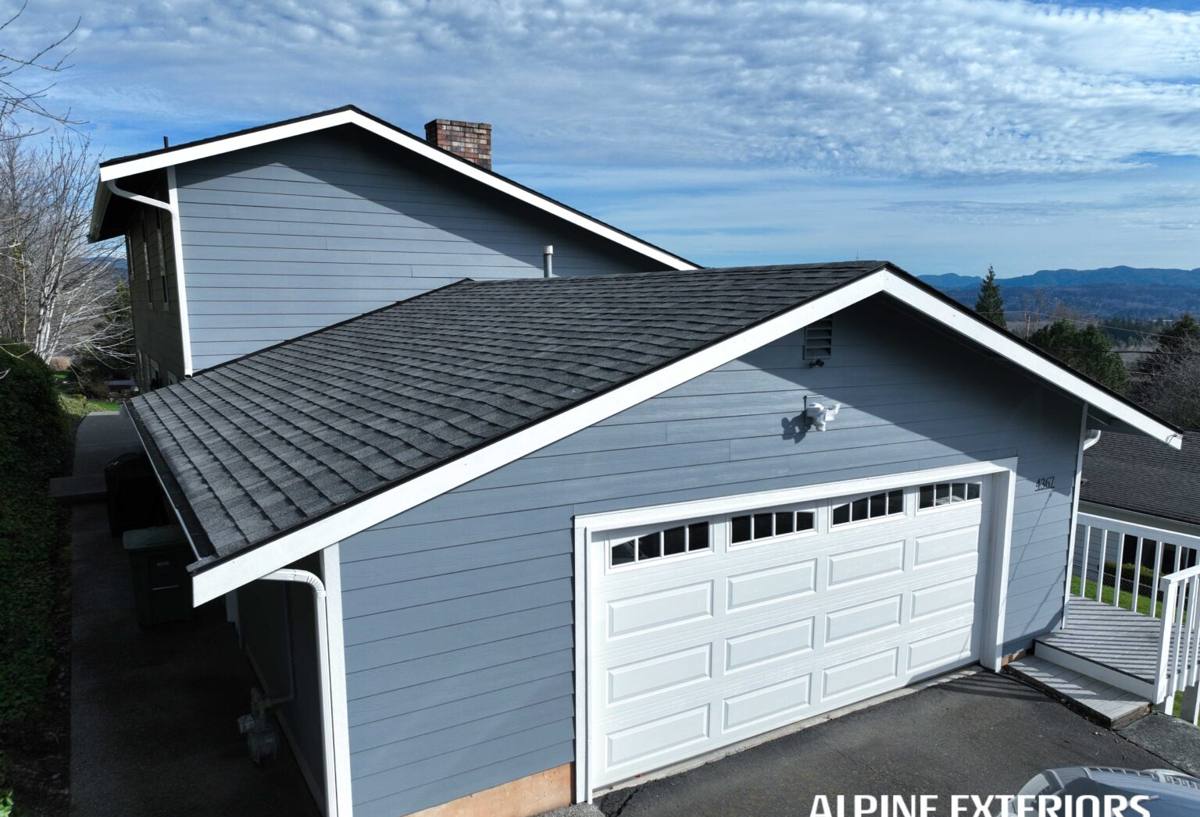
Common Storm Damage We See on Laurel Roofs
Every storm is a little different, but the damage tends to fall into a short list of repeat offenders:
- Wind-lifted or missing shingles — especially along ridge lines and roof edges, where uplift pressure is highest during a gust.
- Flashing failures — around chimneys, vents, and skylights, where sealant has aged and finally lets go under wind-driven rain.
- Moss and debris damming — built-up moss or wet organic debris that traps water and forces it under shingles instead of off the roof.
- Gutter and edge damage — overflow and ice-edge issues that back water up under the first course of shingles.
- Limb and debris impact — bruised or punctured shingles from branches and wind-borne debris, common on properties bordering open fields or older trees.
Salt-laden air moving inland from the Sound accelerates corrosion on exposed fasteners and metal flashing faster than most homeowners expect, which is why a repair that looks fine on day one can fail again within a year or two if the underlying hardware isn't addressed.
What a Correct Storm Damage Repair Actually Involves
It Starts With an Honest Inspection
A proper storm damage repair starts on the roof, not on a clipboard estimate written from the ground. We walk the roof, check the attic or decking from below where accessible, and look past the obvious damage for the secondary problems a storm usually leaves behind — soaked insulation, rusted fasteners, or underlayment that's lost its seal. Repairing only what's visible from the driveway is the single most common shortcut that leads to a second, more expensive repair down the road.
Matching Materials, Not Just Covering Gaps
Whenever possible, we match the existing shingle profile, color, and exposure so the repair blends into the rest of the roof rather than sitting as an obvious patch. On older roofs where an exact match isn't available, we'll tell you honestly what your options are — a close match, a slightly visible patch, or a case where a full slope replacement makes more financial sense than chasing discontinued shingles.
Flashing and Fasteners Get the Same Attention as Shingles
Given how much salt air and moisture this area sees, we replace corroded fasteners and re-seal or replace compromised flashing as part of the repair, not as an upsell afterward. A shingle repair over failing flashing is a repair that's already halfway to failing again.
Emergency Tarping vs. a Permanent Fix
If a storm has left your roof open to the weather, the priority is stopping active water intrusion — not scheduling a full repair three weeks out. We can install a temporary tarp or emergency cover to protect the decking and interior while a permanent repair is planned and materials are sourced. This two-step approach is standard practice in the roofing trade for a reason: it buys time to do the permanent repair correctly instead of rushing it in the middle of the next storm system moving through Whatcom County.
Our Process for Laurel Homeowners
- Initial call and scheduling. We ask what you're seeing — a stain, a missing shingle, water in the attic — and get a realistic sense of urgency before we schedule.
- On-roof and attic inspection. We document the damage with photos, note the cause where it's identifiable (wind, impact, age-related failure), and check for secondary damage.
- Written scope and estimate. You get a clear explanation of what needs to be repaired, what materials will be used, and why — not just a total price.
- Repair work. We complete the repair, including any flashing, fastener, or underlayment work the inspection turned up.
- Final walk-through. We show you what was done and flag anything worth watching, like an aging section of roof nearby that wasn't part of this repair but may need attention later.
Insurance Considerations
Many storm damage repairs are covered under homeowners' insurance, particularly when the cause is a documented wind or impact event. We're happy to provide the documentation and photos an adjuster typically asks for, and to explain in plain terms what we found and why we recommend the repair scope we do. We don't handle the claim itself or make promises about what an insurer will approve — that's between you and your carrier — but we won't leave you guessing about the condition of your roof either.
Repair or Replace? Cost Factors to Weigh
Not every storm-damaged roof needs a full replacement, and not every roof is a good candidate for another round of patching. These are the factors that actually drive that decision:
| Factor | Favors Repair | Favors Replacement |
|---|---|---|
| Roof age | Under 12–15 years, otherwise sound | Nearing or past typical shingle lifespan |
| Extent of damage | Isolated to one slope or area | Widespread across multiple slopes |
| Decking condition | Dry, solid decking underneath | Soft, rotted, or repeatedly wet decking |
| Shingle availability | Close match still manufactured | Discontinued profile or color |
| Repair history | First significant repair | Multiple past repairs in different spots |
When a roof is borderline, we'll give you our honest read rather than defaulting to the bigger job. Sometimes the right answer really is a targeted repair that buys several more years of service.
Moss Season and Long-Term Roof Health
Whatcom County's damp, moderate climate means moss season is closer to a year-round concern than a seasonal one, especially on north-facing slopes that stay shaded and wet longer after a storm passes. Moss doesn't just look bad — it holds moisture against the shingle surface and lifts edges as it grows, which turns a minor storm-related lift into a bigger leak path faster than it would on a clean roof. As part of any storm repair, we'll point out moss buildup that's contributing to the problem and talk through realistic maintenance options, rather than treating it as a separate sales pitch.
Why a Crew That Already Works in Laurel Matters
A contractor who works this specific stretch of Whatcom County knows what a storm actually did to roofs here versus what a generic storm-damage checklist assumes. We know which roof orientations take the worst of the wind-driven rain in this area, how fast moss reestablishes itself in this climate, and what permitting and inspection expectations look like for the county. That local familiarity shows up in faster, more accurate assessments and fewer surprises once the repair is underway — not in anything flashy, just in getting it right the first time.
What to Check After a Storm
- Look for shingle debris (granules, torn pieces, whole shingles) in the yard or gutters.
- Check ceilings and attic spaces for new water stains, especially after wind-driven rain.
- Look at flashing around chimneys, vents, and skylights for visible gaps or lifted edges.
- Check gutters for overflow marks or sagging sections after heavy rain.
- Note any large branches or debris that fell on or near the roof, even if no damage is obvious from the ground.
- If you smell mustiness in a room below the roofline, treat it as a possible sign of a slow leak, not just an odor.
If you're seeing any of these signs on a home in Laurel or elsewhere around Lynden, we're glad to take a look and give you a straight answer about what's going on and what it will take to fix it. Reach out for a free, no-pressure estimate using the form below.