 Lynden Siding
 Storm Damage Roof Repair for Custer Homes
Custer doesn't get the kind of dramatic storm coverage that makes the evening news, but that's part of the problem. Roofs here take damage from a steady grind of wind, wind-driven rain, and long stretches of standing moisture rather than from a single obvious event homeowners can point to. A wind gust that lifts a row of shingles during a January system, or rain forced sideways under a ridge cap during a fall blow, doesn't always announce itself with a hole in the ceiling. It shows up eighteen months later as a soft spot on the deck or a stain spreading across a bedroom ceiling, and by then it's a bigger job than it needed to be.
This page covers storm damage roof repair specifically for Custer, not a generic version of the service. Whatcom County's coastal exposure this far north brings salt-tinged air onto most roofs in town, not just waterfront ones, and that combines with wind-driven rain and a moss season that runs most of the year to create a specific set of failure patterns worth understanding before you're standing on a ladder after a storm trying to figure out what you're looking at.
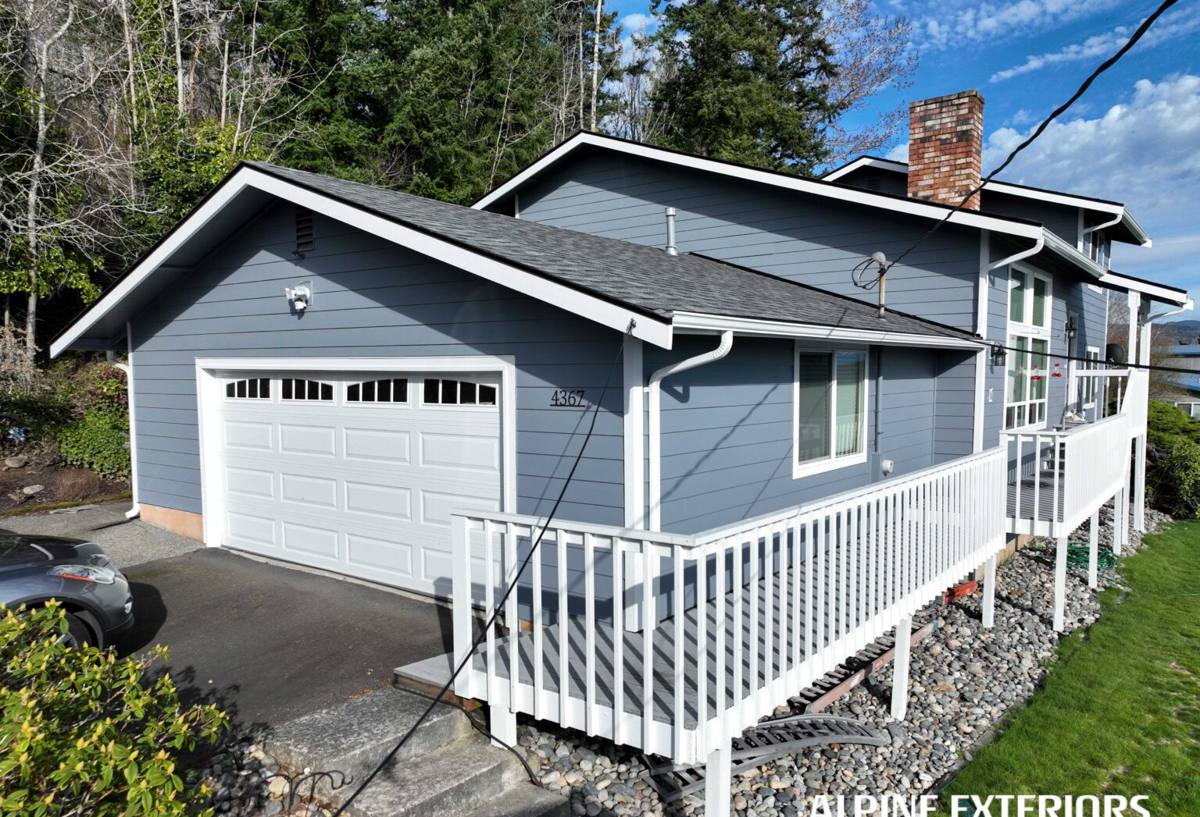
What Actually Causes Storm Damage on a Custer Roof
"Storm damage" covers more than a single obvious wind event. In this part of Whatcom County, it usually comes from one of three overlapping sources, and it's common for a roof to be dealing with more than one at once.
Wind
Sustained wind and gusts lift shingle tabs, work fasteners loose over repeated cycles, and can tear ridge cap or hip shingles free entirely on more exposed lots. A shingle doesn't have to blow off completely to be compromised; a lifted tab that reseals crooked or doesn't reseal at all is now a point where the next rain gets underneath.
Wind-Driven Rain
Rain that falls straight down is a much easier problem for a roof to handle than rain pushed sideways and upward by wind, which is the normal pattern here for a good part of the year. Driven rain finds gaps at ridge caps, valleys, and any flashing that was sealed rather than properly integrated, and it can travel a surprising distance under a shingle field before it shows up as a stain somewhere else entirely.
Falling Debris and Load
Tree cover around a lot of Custer properties means broken branches and occasional whole-limb drops during wind events, which can crack or puncture shingles and, less often, damage decking underneath. Extended cold snaps with wet snow or ice add weight and can back water up at eaves if gutters are already struggling with debris from the same storm.
Why Storm Damage Often Goes Unnoticed Until It's Worse
Most of what a storm does to a roof isn't visible from the ground or even from a quick look in the attic right afterward. Lifted shingle tabs can look nearly normal from the yard. A cracked shingle over a valley might not leak until the next storm hits from a slightly different angle. Damage that starts small and stays hidden behind roofing material or insulation for months is the pattern we see most often on post-storm calls in this area, and it's exactly why we treat every inspection as a full roof check rather than a look at whatever spot the homeowner is worried about.
Signs Worth Checking After Any Significant Wind or Rain Event
- Shingles or shingle tabs visibly out of alignment, curled, or missing entirely
- Granules collecting in gutters or at downspout outlets after a storm, beyond normal wear
- New or spreading water stains on interior ceilings, especially near valleys, chimneys, or skylights
- Soft or spongy spots when walking the attic deck, which can indicate wet insulation below
- Debris, branches, or moss buildup pooling water instead of shedding it off the roof plane
- Gutters or downspouts pulled loose, bent, or overflowing during rain
None of these by themselves confirm a serious problem, but any one of them is a reason to get a roof looked at rather than waiting to see if it gets worse on its own.
What a Correct Storm Damage Repair Involves
A storm repair that's done right addresses the roof as a connected system, not just the spot that's visibly damaged. Patching over a torn shingle without checking what's underneath it, or what let the wind get under it in the first place, tends to produce a repair that fails again in the next storm.
| Repair Step | Why It Matters in Custer Conditions |
|---|---|
| Full roof and attic inspection, not just the damaged section | Wind and driven rain rarely affect only one spot; adjacent areas often show early-stage damage |
| Deck inspection under removed shingles | Confirms whether moisture has reached the sheathing before new material goes back down |
| Matching shingle type, profile, and color as closely as available | Keeps the repair from standing out and preserves the roof's overall water-shedding pattern |
| Flashing re-inspection at valleys, chimneys, and penetrations near the repair | These are the most common places wind-driven rain actually gets in, storm or no storm |
| Fastener replacement to manufacturer spec, not just re-nailing what's there | Corrosion-resistant fasteners matter more here given the salt exposure most Custer roofs see |
| Gutter and downspout check | Storm debris that clogs drainage can cause water backup that looks like a new roof leak |
We document what we find with photos before, during, and after the work, both so you know exactly what was repaired and so you have a clear record if the repair is tied to an insurance claim.
Repair or Replace: How We Make That Call
Not every storm-damaged roof needs a full replacement, and we don't default to recommending one. The honest answer depends on the roof's age, how widespread the damage actually is once we're up there, and what condition the rest of the roofing turns out to be in.
| Factor | Leans Toward Repair | Leans Toward Replacement |
|---|---|---|
| Roof age relative to expected lifespan | Roof is younger and otherwise in good condition | Roof is already near or past its expected service life |
| Extent of damage | Damage is isolated to one section or slope | Damage is spread across multiple slopes or the deck itself |
| Underlying shingle condition | Surrounding shingles are still flexible and well-adhered | Surrounding shingles are brittle, curling, or already losing granules |
| Deck condition found during inspection | Sheathing is dry and sound | Sheathing shows rot or sustained moisture damage |
| Shingle availability for a clean match | Matching material is readily available | Product is discontinued or color has faded enough that a patch would be obvious |
We'll tell you plainly which side of that table your roof falls on, including when a repair is the right call even if a replacement would be a bigger job for us. That's a judgment call worth getting from someone who's looked at the whole roof, not just the spot that's leaking.
Working With Insurance After a Storm
Most storm damage roof repairs in this area involve a homeowner's insurance claim, and the process goes more smoothly when the documentation is thorough from the start. We photograph the damage before any work begins, note the likely cause and approximate timing based on what we see, and provide a written scope of repair that an adjuster can review against their own inspection. We don't inflate a scope to chase a bigger payout, and we don't pad a claim with unrelated pre-existing wear, because a claim that doesn't hold up to scrutiny ends up costing the homeowner time and credibility on the next one. Our job is to give you an accurate, defensible picture of what the storm actually did, and let that stand on its own.
If your insurer's adjuster wants to meet on-site, we're glad to walk the roof with them directly and point to what we found. Two sets of eyes on the same damage, with photo documentation from both, tends to produce a fairer outcome than relying on a single drive-by assessment.
Our Storm Damage Repair Process
- Prompt initial contact: After a storm, we prioritize scheduling inspections quickly, since a delayed look often means a delayed tarp and more secondary water damage.
- Full inspection, roof and attic: We check the whole roof and the attic deck from underneath, not just the reported problem area.
- Temporary protection if needed: If there's active exposure, we get a tarp or temporary covering in place to stop further water intrusion before the permanent repair is scheduled.
- Photo documentation: Every finding is photographed, both for your records and for any insurance claim you're filing.
- Written scope and estimate: You get a clear breakdown of what needs repair, what we recommend, and why, before any work starts.
- Repair execution: Matching material goes in to manufacturer specification, with particular attention to flashing and fastening given the wind and rain patterns here.
- Final walkthrough: We review the completed repair with you and confirm the roof is fully sealed and draining correctly.
Why Hiring a Crew That Already Works in Custer Matters
Storm response work attracts traveling crews that show up after a bad weather stretch, do quick patch jobs, and move on to the next town before anyone finds out how the repair actually holds up. A crew that already works roofs in and around Custer has a reason to get it right the first time, because we're still here for the next storm, the next inspection, and the next question you have two years down the road.
Local experience also means we already know which parts of a Custer roof take the worst of the wind-driven rain, where salt air tends to chew through cheaper flashing metal first, and which shaded, tree-covered slopes hold moss and moisture long enough to weaken a roof from underneath even without a storm involved. That background shapes what we look for during an inspection instead of us relearning the local climate on your roof.
Questions Worth Asking Any Contractor After Storm Damage
- Do they inspect the full roof and attic, or just the section you called about?
- Will they document damage with photos suitable for an insurance claim?
- Do they carry current WA contractor licensing, liability insurance, and workers' compensation?
- Can they point to an established, ongoing presence working roofs in or near Custer?
- Do they explain repair versus replacement honestly, including when repair is the cheaper, correct answer?
- Is temporary protection (tarping) available immediately if the roof is actively exposed?
Cost Factors in Storm Damage Roof Repair
Every storm repair is priced around the actual scope of damage rather than a flat rate, since the range between a single-shingle patch and a multi-slope repair with deck replacement is significant. These are the factors that move the number most:
| Factor | What It Affects |
|---|---|
| Extent of shingle and flashing damage | How much material and labor the repair actually requires |
| Deck condition once shingles are pulled back | Whether sheathing replacement is needed in addition to roofing material |
| Shingle match availability | Whether the existing product is still in production or a close alternative is needed |
| Roof pitch and access | Staging, safety equipment, and labor time on steeper or harder-to-reach sections |
| Temporary protection needed before permanent repair | Tarping and securing the area adds a step when the repair can't happen immediately |
| Gutter and downspout repair alongside roofing work | Storm damage often affects drainage components at the same time as the roof itself |
A written, itemized estimate that breaks these factors out is worth far more than a single number, especially when you're comparing our scope against an insurance adjuster's estimate or another contractor's bid.
If a recent storm has left you unsure whether your roof needs attention, or you've got a spot you've been keeping an eye on, we're glad to come take a straightforward, no-pressure look and put together a written estimate. Use the form below to request a free storm damage roof inspection.