 Lynden Siding
 Maple Falls Sits in a Wetter, Shadier Pocket of Whatcom County
Maple Falls sits up in the forested foothills east of Lynden, and that setting changes what siding has to deal with compared to a home out in the open valley. Tree cover keeps yards and north-facing walls shaded for most of the day, which means siding here dries out slower after every rain. Whatcom County already gets a long, wet stretch from fall through spring, and the moisture the region pulls off the Puget Sound and the Pacific carries a faint salt content that, combined with near-constant dampness under the canopy, speeds up corrosion on fasteners, hinges, and exposed trim.
Put those two things together — shade that won't let walls dry, and rain that keeps coming back — and you get a long moss season. Moss and algae don't just look bad; they hold moisture against the siding surface for weeks at a time, which is exactly the condition that rots wood, delaminates cheap composite panels, and breaks down paint film. A siding replacement done right in Maple Falls has to account for all of this, not just match whatever was there before.
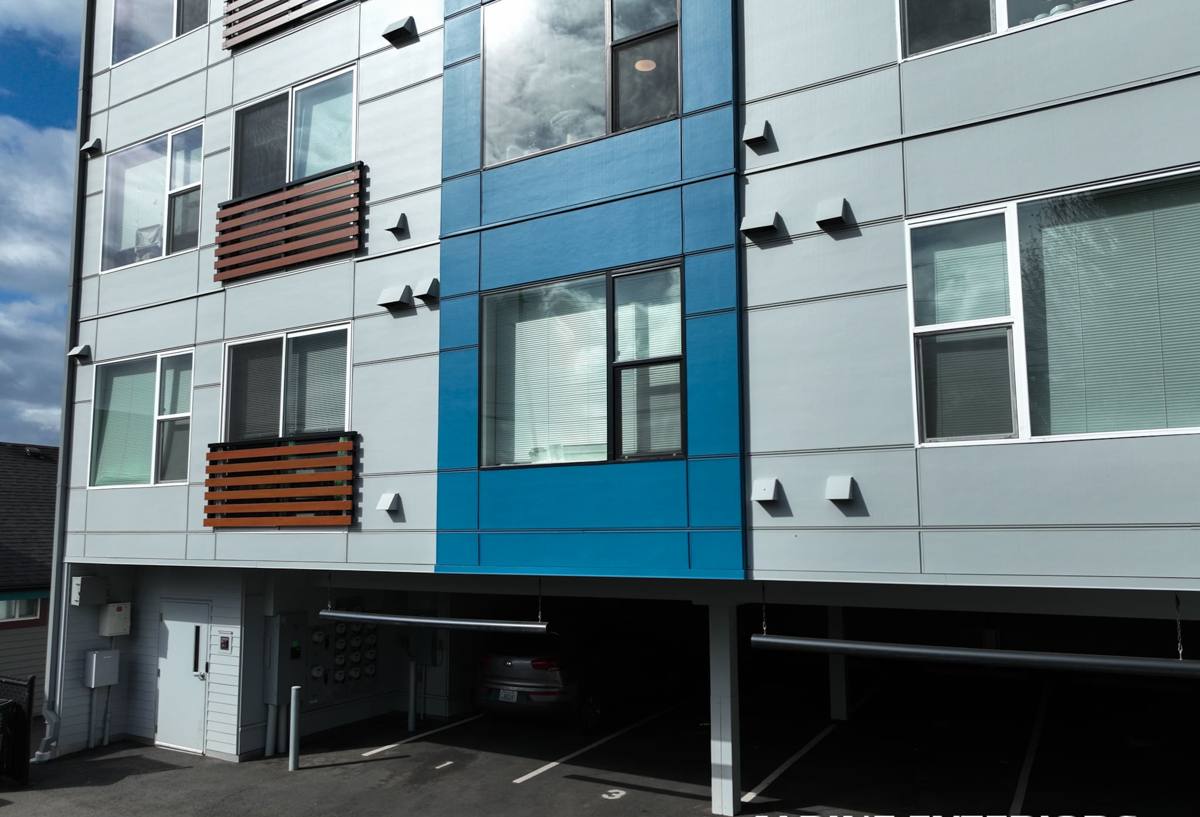
Signs Your Maple Falls Home Needs Siding Replacement, Not Another Repair
Homeowners in this area often patch and repaint for years before calling anyone, which is reasonable — but there's a point where repair stops making financial sense. Watch for:
- Boards that feel soft or spongy when pressed, especially along the bottom courses and on north- or shade-facing walls
- Moss or dark algae staining that comes back within a few weeks of cleaning
- Paint that blisters, peels, or won't hold between normal repaint cycles
- Visible gaps, warping, or cupping at panel seams and corner trim
- Rot concentrated at butt joints, window sills, and door trim
- Rising heating bills or noticeable drafts near exterior walls
- Original siding older than 20–25 years, particularly wood or engineered wood products
Any one of these on its own might be a repair. Several at once, especially on a shaded elevation, usually means the water has been getting behind the siding longer than it looks from the outside.
What a Correct Siding Replacement Actually Involves
It's Not Just the Visible Layer
Tearing off old siding and nailing up new panels is the easy part to see and the easy part to get wrong. A proper replacement starts with an inspection of the sheathing underneath — in a damp, shaded area like Maple Falls, it's common to find soft or rotted sheathing behind siding that looked fine from the yard. That gets cut out and replaced before anything new goes up, not covered over.
Water Management Comes Before the Siding
A correctly installed water-resistive barrier, properly lapped and taped, goes down first. Flashing gets installed at every window head, door, and penetration — not caulked over as a shortcut. Fastener patterns follow the manufacturer's spec for spacing and depth, and clearances matter: siding needs a gap from grade, roof lines, and decks so water has somewhere to go instead of wicking straight into the bottom edge of the panel. Caulk has a specific, limited job at certain joints — it is not a substitute for correct flashing, and over-caulking a wall usually traps moisture rather than keeping it out.
Ventilation Where the Site Calls for It
On heavily shaded lots that stay damp longer, a rainscreen gap behind the siding gives walls a way to dry out between storms instead of holding moisture against the sheathing. It's a detail that's easy to skip and hard to notice once the wall is closed up — which is exactly why it should be discussed at the estimate stage, not decided on the fly.
Why We Install Only James Hardie Fiber Cement
We don't install vinyl, LP SmartSide, Cemplank, Allura, primed spruce, or cedar. That's not a marketing line — it's a standard we hold because of what happens to those products over years in a climate like this one.
Vinyl is affordable and low-maintenance in a general sense, but it expands and contracts with temperature swings, can crack in a hard cold snap, and its color fades over time with no way to refinish it short of replacement. Engineered wood products like LP SmartSide perform well when every cut edge is sealed exactly to spec, but any lapse in that detail — a job-site cut left unsealed, a fastener placed wrong — gives moisture a way in, and moisture is not in short supply in Maple Falls. Cedar and primed spruce are beautiful materials, but they're organic: they feed the same moss and mildew that shaded, damp lots already produce in abundance, and they demand a refinishing schedule that only gets more frequent under tree cover.
James Hardie fiber cement is non-combustible, dimensionally stable in wet-dry cycling, and doesn't provide an organic food source for moss and mildew the way wood does. The factory-applied ColorPlus finish is baked on under controlled conditions, which holds color far more consistently than field-applied paint and comes with its own finish warranty. For a property that's going to spend a lot of its life shaded and damp, that combination matters more than it does on a home in full sun.
| Material | Behavior in Shade & Moisture | Maintenance Needed | Typical Lifespan, Correctly Installed |
|---|---|---|---|
| Vinyl | Doesn't rot, but traps condensation behind panels; fades with UV over time | Low, but no refinishing option once faded | 20–30 years |
| Cedar / Primed Spruce | Organic surface feeds moss and mildew in shaded, damp conditions | Refinishing every 3–7 years, more often under tree cover | Highly variable, often 15–25 years without diligent upkeep |
| Engineered Wood (e.g. LP SmartSide) | Performs well if every cut edge and joint is sealed to spec; vulnerable if not | Moderate; edge sealing and caulk maintenance | 25–30 years with strict maintenance |
| James Hardie Fiber Cement | Non-combustible, dimensionally stable, doesn't feed moss/mildew | Low; occasional wash, no refinishing of factory finish | 30+ years to manufacturer warranty terms |
James Hardie Product Lines That Fit a Maple Falls Home
James Hardie engineers its siding by climate zone, and the Pacific Northwest falls under the HZ5 line, built specifically for regions with heavy rainfall and moisture exposure. For most Maple Falls homes, that means HardiePlank lap siding as the primary field material, with HardiePanel for accent sections like gables or shed dormers, and HardieTrim for corners, window and door casing, and fascia. All of it carries the ColorPlus factory finish, which resists fading and chipping better than field-applied paint and comes backed by a dedicated finish warranty separate from the product warranty on the siding itself. The result is a wall system engineered for exactly the wet, shaded conditions Maple Falls sees most of the year.
Cost Factors on a Maple Falls Project
Every home is different, so we don't quote broad numbers without seeing the property, but a few factors consistently move the price on jobs in this area:
| Factor | How It Affects the Job |
|---|---|
| Home size and number of stories | More surface area and taller walls mean more material and labor time |
| Condition of existing sheathing | Rot repair discovered during tear-off adds material and time before new siding goes up |
| Trim and architectural detail | Gables, dormers, and multiple window/door openings add cutting and flashing work |
| Site access | Wooded, sloped lots common around Maple Falls can slow staging and material handling |
| Siding profile chosen | Lap width, panel style, and trim selections shift material cost |
Our Process for a Maple Falls Project
- On-site assessment, including moisture checks on existing siding and visible sheathing where accessible
- Written scope covering tear-off, any sheathing repair, water-resistive barrier, flashing, and the specific Hardie products planned
- Tear-off and sheathing repair, with rotted material replaced rather than covered
- Water-resistive barrier and flashing installed at every window, door, and penetration
- James Hardie siding and trim installed to manufacturer fastener and clearance specifications
- Final walkthrough to confirm caulking, trim, and finish details before we consider the job done
Why a Crew That Already Works Maple Falls Matters
A lot of siding problems in this area trace back to a crew that installed the same way they would on a sunny, open lot in a drier part of the state — no rainscreen, minimal flashing detail, standard clearances that don't account for shade that never fully dries. A crew that already works Maple Falls knows to look harder at north-facing walls and tree-shaded elevations, plans around the wet season for scheduling, and doesn't treat a heavily wooded, damp lot the same as an open one in Lynden proper. That local pattern recognition is the difference between a siding job that holds up for thirty years and one that's showing moss and soft spots again in ten.
If your siding is showing its age, or you just want an honest read on what shape it's in, we're happy to take a look. The estimate is free, there's no pressure, and you'll get a straight answer about what your home actually needs — use the form below to get started.