 Lynden Siding
 Siding Installation for Abbotsford, BC Homes
Lynden Siding Company is based just south of the border in Whatcom County, and Abbotsford is one of the closest communities we work in on the Canadian side. The Fraser Valley shares the same weather pattern we deal with every day in Lynden — long wet winters, heavy rain off the coast, and stretches of damp, low-light weather that give moss and mildew plenty of time to take hold. Siding installation here isn't a cosmetic project. It's the one system standing between your framing and a climate that never really dries out for months at a time.
We install one product: James Hardie fiber cement siding. This page walks through what the Abbotsford climate actually does to siding over time, what a correct installation involves, and why we've built our business around a single product line instead of offering everything on the shelf.
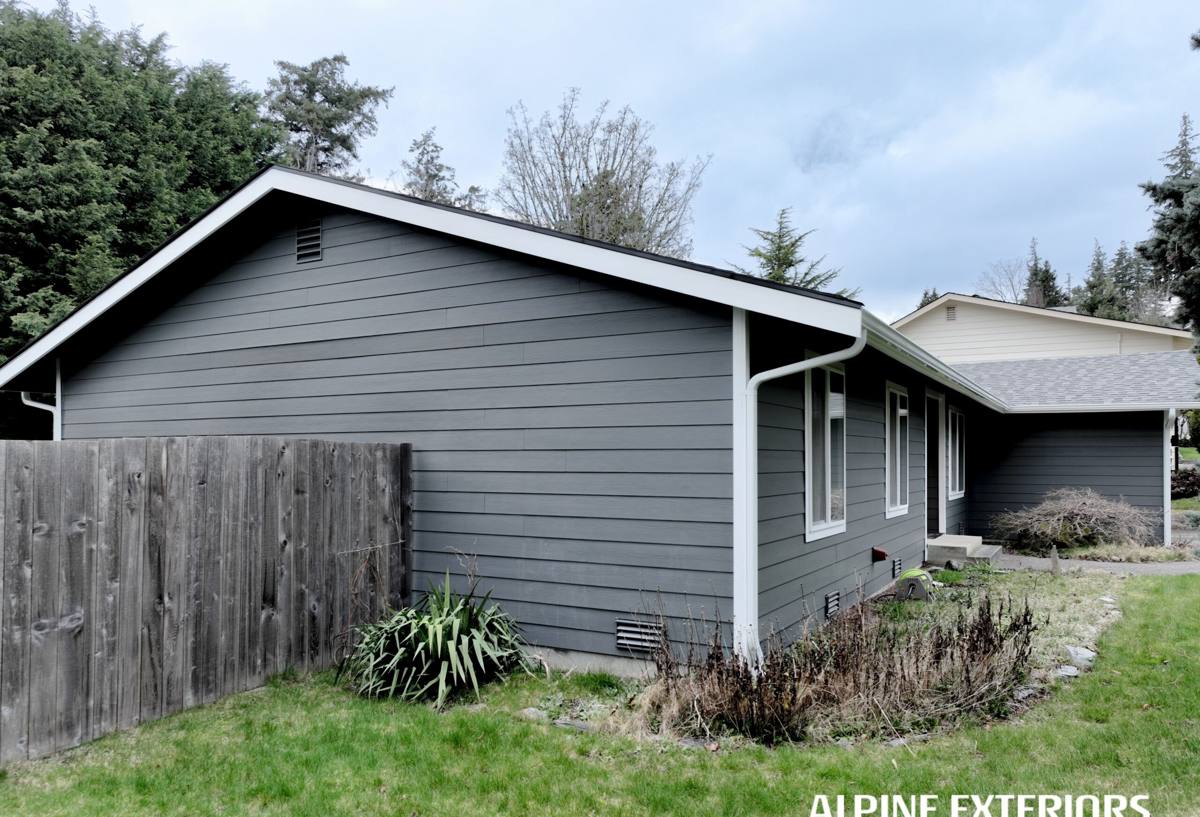
What This Climate Does to Siding Over Time
Driving Rain and Wind-Driven Moisture
Rain in the Fraser Valley doesn't just fall straight down — wind off the Strait and the valley's own weather patterns push it sideways into wall assemblies, especially on exposed elevations and around windows, corners, and trim. Siding that isn't installed with the right laps, clearances, and flashing details will let that water find a way behind the cladding. Once moisture gets behind siding, it doesn't leave quickly; it sits against the sheathing and framing, and that's where rot starts.
Moss, Mildew, and the Long Damp Season
Abbotsford, like the rest of the region, gets a long moss season — shaded walls, north-facing elevations, and anything under tree cover stays damp for weeks at a stretch. Moss and mildew don't just look bad; they hold moisture against the siding surface longer than bare siding would, and on some materials they create a foothold for the finish to break down underneath. A siding job here needs a surface and a finish that can shed that growth rather than feed it.
Salt Air and Coastal Influence
The Fraser Valley sits close enough to the coast that homes in the area still deal with some salt-laden air, particularly during storms that push moisture inland. Salt air accelerates corrosion on fasteners and metal flashing, and it's harder on finishes that aren't formulated to resist it. It's a slower, quieter form of wear than a wind event, but over ten or fifteen years it shows up in fading, chalking, and fastener failure on lower-grade materials.
Signs Your Abbotsford Home May Need New Siding
Because moisture damage happens behind the siding before it's visible on the surface, a lot of homeowners wait too long to look closely. Some things worth checking on a walk around the house:
- Soft, spongy, or bubbling spots when you press on the siding, especially near the bottom of walls
- Peeling, bubbling, or chalky paint that keeps coming back within a year or two of repainting
- Persistent moss or black streaking that returns quickly after cleaning
- Warped, cupped, or buckling panels, particularly on shaded or north-facing walls
- Visible gaps, cracking, or separation around trim, corners, and window flashing
- A noticeable jump in heating bills without any other explanation
- Siding that's original to a home built more than 20-25 years ago and hasn't been inspected recently
Any one of these on its own isn't necessarily an emergency, but a few together are worth having someone look at before another wet season passes.
What a Correct Installation Actually Involves
The Weather-Resistive Barrier and Drainage Plane
Siding is the visible layer, but the water-resistive barrier underneath it is doing most of the real work. In a climate that gets as much sustained rain as this one, that barrier needs to be installed with proper overlaps, sealed penetrations, and — ideally — a drainage gap that lets any moisture that does get past the siding drain out and dry rather than sit against the sheathing. Skipping or rushing this layer is one of the most common causes of hidden rot behind siding that looks fine from the street.
Flashing Details That Matter
Windows, doors, decks, roof-to-wall transitions, and butt joints are where water intrusion actually happens. Correct flashing — installed in the right order, lapped the right direction, and integrated with the weather barrier rather than just caulked over it — is what keeps driving rain from working its way in at those transitions. Caulk is a backup, not a substitute for flashing done right the first time.
Fastening, Clearances, and Ground Contact
James Hardie has specific fastening patterns and clearance requirements for a reason: proper nail placement prevents panel cracking and keeps the product performing as designed, and keeping siding a few inches clear of grade, decks, and roof lines prevents it from sitting in standing water or snow. These are the kinds of details that don't show up in a quick visual estimate but make the difference between siding that lasts three decades and siding that needs attention in ten years.
Why We Install Only James Hardie Fiber Cement
We used to see the same problem walk through the door in different forms: siding that looked fine when it went up but couldn't hold up to this region's rain, moss, and damp winters over the long haul. Vinyl can warp and fade, and it doesn't stop moisture from moving through the wall assembly the way a rigid, non-combustible product does. Engineered wood products like LP SmartSide perform well when the finish and flashing are maintained perfectly, but they're wood-based, which means they're more sensitive to sustained moisture exposure than fiber cement. Primed wood and cedar look great new but demand a repainting and maintenance schedule most homeowners can't keep up with in a climate this wet.
James Hardie fiber cement is non-combustible, dimensionally stable, and available in HZ product lines engineered for specific climate zones — including versions built around resistance to moisture and freeze-thaw cycling that matter in the Pacific Northwest. The factory-applied ColorPlus finish is baked on under controlled conditions rather than field-painted, which gives it better adhesion and fade resistance than a job-site paint job, and it comes with a real, transferable warranty. We standardized on one product because we'd rather be excellent at installing the material we trust than average at installing five we don't.
How Hardie Compares to Other Siding Options for This Climate
| Factor | James Hardie Fiber Cement | Vinyl Siding | Wood / LP SmartSide |
|---|---|---|---|
| Resistance to driving rain | High — rigid, engineered drainage details | Moderate — can warp, seams can open | Moderate — dependent on finish upkeep |
| Moss and mildew resistance | Good, especially with ColorPlus finish | Fair — can stain and hold algae | Fair — wood-based products absorb moisture |
| Salt air / coastal durability | Strong — factory finish resists fading | Moderate — can chalk and fade over time | Moderate — finish breaks down faster |
| Maintenance | Low — occasional wash, no repainting cycle | Low, but limited repair options if damaged | Higher — repainting and sealing on a schedule |
| Fire resistance | Non-combustible | Combustible | Combustible |
| Typical upfront cost | Mid-to-higher | Lower | Lower-to-mid |
| Warranty structure | Long-term, transferable | Varies, often limited | Varies by product and finish |
Our Installation Process
- Assessment and estimate: We walk the exterior, check for existing moisture or rot issues, and talk through what's driving the project — a full replacement, storm repair, or an aging system that's due.
- Product and color selection: We go over Hardie board profiles, trim options, and ColorPlus color choices that suit the home and hold up to this region's light and weather.
- Prep and tear-off: Old siding comes off and the sheathing gets inspected. Anything soft, rotted, or compromised gets addressed before a single new panel goes up — covering damage instead of fixing it just locks the problem in.
- Weather barrier and flashing: The drainage plane and flashing details go in first, correctly lapped and sealed at every window, door, and transition.
- Installation to spec: Panels are fastened, spaced, and clearance-checked according to James Hardie's installation requirements, not shortcuts that save an afternoon.
- Final walkthrough: We go over the finished work with the homeowner before calling the job done, not after.
Why Local Experience in Abbotsford Matters
A crew that mainly works dry-climate jobs and takes on a Fraser Valley project occasionally will make different assumptions about flashing, drainage, and clearances than a crew that deals with this weather pattern year-round. We're close by in Lynden, we already know what this region's rain and moss season does to a wall assembly over ten or twenty years, and we install the same product system on every job, so there's no relearning curve from one house to the next. That consistency is what keeps a siding job performing the way it's supposed to a decade after the crew has left.
If you're in Abbotsford and thinking about new siding, we're happy to come take a look, answer questions honestly, and give you a straightforward estimate — no pressure, no sales script. The form below is the easiest way to get started.