 Lynden Siding
 Roof Replacement for Sumas Homes
Sumas sits out at the far edge of Whatcom County, hard against the Canadian border in the flat, open farmland of the Sumas Prairie — a different setting from the tighter, tree-lined lots closer to central Lynden, but part of the same service area and the same weather system. Marine air moves inland off the Sound and up the valley toward the border, rain tends to arrive sideways more often than straight down, and mild, damp conditions give moss a long growing season on any roof plane that stays shaded. A roof built without those specific loads in mind — or one nearing the end of its life that's already lost the fight against a few of them — tends to show it here sooner than a homeowner expects.
Lynden Siding Company works roofs, siding, windows, and decks across this end of the county, and roof replacement in the Sumas area gets treated as its own job, not a copy-paste of what works closer to town. This page covers what a Sumas roof actually needs, what a correct replacement involves, and how the process runs from first call to final walkthrough.
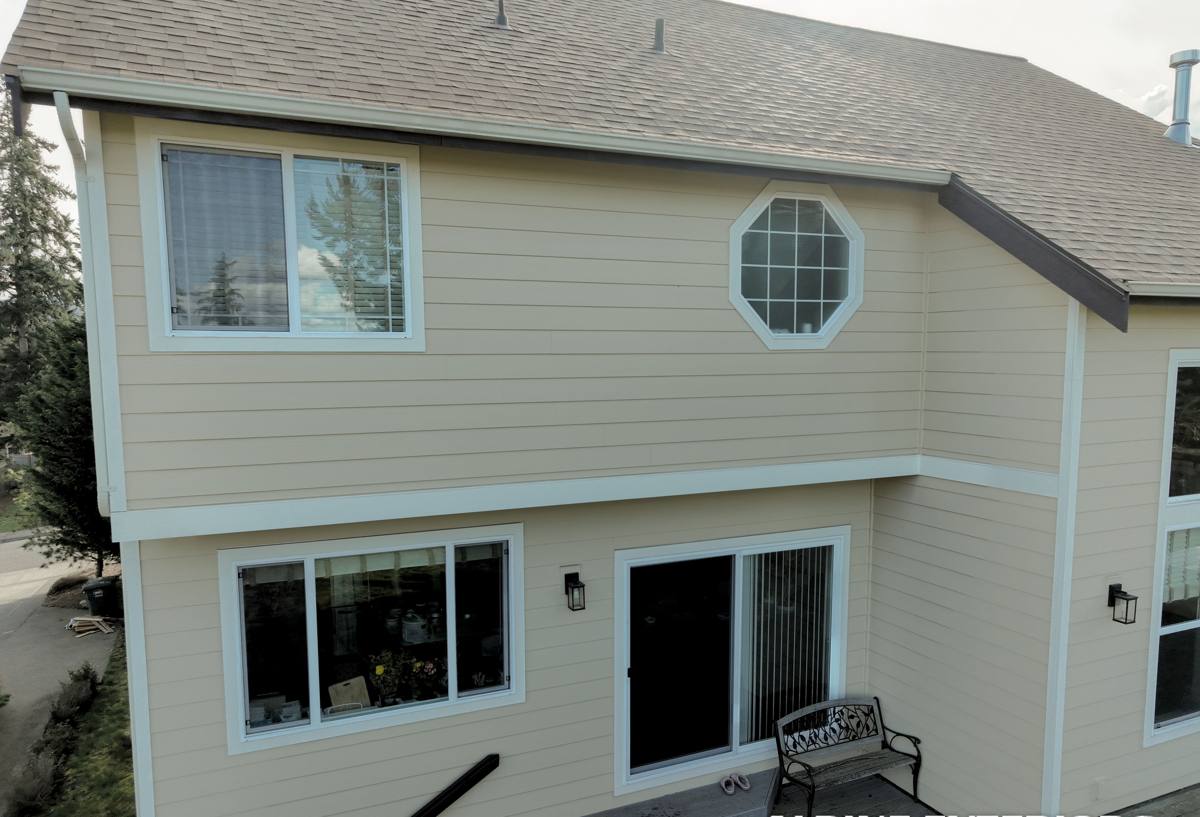
What Sumas's Climate Does to a Roof
Driving Rain Across Open Ground
Sumas Prairie is flat, open farmland with little to break the wind, and rain moving through pushes sideways into roof valleys, around chimneys and vent pipes, and under any flashing that isn't lapped and sealed correctly. That's a heavier, more directional load than an annual rainfall number suggests, and it's exactly where a roof with weak flashing details or aging underlayment starts to leak first — not necessarily through the shingles themselves, but around them.
Salt Air, Even This Far Inland
Sumas is well inland from the coastline, and it's tempting to assume salt exposure isn't a real factor out here — but marine air carries a long way across this part of Washington, and over years it still plays a role in corroding fasteners, flashing, and lower-grade metal components. It's a slower, more diluted effect than at a waterfront property, but it's still a reason not to assume an inland location means standard, non-coastal hardware is good enough.
A Long Moss and Algae Season
Mild temperatures and persistent regional dampness add up to a moss season that runs most of the year on shaded roof planes, and open farmland doesn't change that — trees along property lines, outbuildings, and the home itself all cast enough shade to keep some sections of a roof damp long after the sun's out everywhere else. Moss does more than stain a roof; it holds water against the surface and works under shingle edges, which is exactly the kind of slow damage that turns a fifteen-year-old roof into one that needs full replacement instead of another cleaning.
Cold Outflow Wind and Freeze-Thaw Cycling
Because of its position at the head of the valley near the border, Sumas sees more cold outflow wind events during winter than towns closer to the water, and those events bring sharp temperature swings along with real wind load. Water that's already worked its way into a roofing material or an aging deck, then freezes during one of those cold snaps, expands and accelerates cracking in a way a purely wet-but-mild climate wouldn't. A roof that's marginal on a calmer, more sheltered site can fail outright when an outflow event brings wind behind the rain.
Roofing Materials That Hold Up in Sumas
There's no single right material for every home — pitch, sun and shade exposure, budget, and how long you plan to stay in the house all factor in. What matters is understanding the honest trade-offs for this specific climate before deciding.
| Material | Moss & Moisture Behavior | Wind & Corrosion Notes | Realistic Lifespan Here |
|---|---|---|---|
| Architectural asphalt shingle | Good with proper ventilation; algae-resistant granule options help on shaded planes | Rated wind resistance varies by product; fastener quality matters more in outflow wind areas | 20-30 years |
| Standing seam metal | Sheds moss and moisture well due to a smooth, non-porous surface | Needs corrosion-resistant fasteners and clips given regional salt air | 40-60 years |
| Cedar shake | Absorbs moisture readily; needs airflow underneath to dry between rains | Higher maintenance in a long moss season | 20-30 years with consistent upkeep |
| Composite/synthetic shingle | Resists moisture absorption; performance varies by product quality | Generally good wind ratings; verify manufacturer specs | 30-50 years depending on product |
We'll walk through which option fits a given roof's pitch and exposure rather than defaulting to whatever's easiest to sell. A steep, open, sun-exposed roof on the prairie and a lower-pitched roof shaded by a tree line don't call for the same answer, even on properties a few miles apart.
What a Correct Roof Replacement Actually Involves
Most roof failures in this climate don't start with bad shingles — they start with shortcuts underneath the shingles that don't show up until years later. On a full replacement, that means:
- Underlayment rated for sustained moisture exposure, not the minimum-code product
- Properly lapped and sealed flashing at every valley, chimney, vent pipe, and roof-to-wall transition
- Attic and roof deck ventilation that lets moisture escape instead of trapping it against the underside of the deck
- Ice-and-water shield at eaves and valleys where wind-driven rain and debris tend to collect
- Corrosion-resistant fasteners and metal components, sized for this area's wind exposure rather than a calmer inland default
None of these add much to a job's cost relative to the roofing material itself, but skipping any of them is what turns a twenty-five-year roof into a fifteen-year roof on a property that takes this much wind and moisture.
Signs a Sumas Roof Needs Replacing, Not Just Repair
- Moss buildup in valleys or on shaded slopes that returns quickly after cleaning
- Granules collecting in gutters or at the base of downspouts
- Curling, cupping, or missing shingles, especially after a windstorm
- Water staining on interior ceilings near exterior walls or around chimneys
- Daylight visible through the roof deck when viewed from inside the attic
- Soft spots or noticeable give when the roof surface is walked
- Rust staining running from fasteners, flashing, or vent pipe boots
- A roof already past 20-25 years old with more than one or two prior repairs
Any single item on that list is worth a professional look. Several of them together, on a roof already past its expected service life, usually point toward replacement being the more honest recommendation than another round of patchwork.
Repair or Replace? How We Help You Decide
We don't default to recommending a full replacement. We look at the roof's age, how much of the total surface is affected, whether the deck underneath has moisture damage, and how many repairs it's already had. A localized leak on a roof that's otherwise sound is usually a straightforward repair. A roof nearing the end of its rated life with moss-related damage across multiple slopes, or a deck with soft spots from long-term trapped moisture, is more honestly addressed with a replacement — patching that kind of roof again usually just delays a bigger job while the underlying damage keeps spreading. We'll explain what we actually find on your roof and why, and give you the real trade-offs rather than steering toward whichever option happens to be more profitable for us.
What Affects Roof Replacement Cost in Sumas
| Factor | What It Affects | Why It Matters Here |
|---|---|---|
| Tear-off vs. overlay | Labor scope and access to the deck | Tear-off is the only way to catch moisture and rot damage common under an aging roof in this climate |
| Deck condition | Repair costs before new roofing goes on | Long-term trapped moisture and moss can rot roof decking, especially on shaded planes |
| Roof pitch and complexity | Labor time, safety equipment, and material waste | Multiple valleys and roof-to-wall transitions each need their own flashing detail |
| Wind and fastening spec | Material and labor requirements | Outflow wind events near the border can call for tighter fastening than a sheltered site further west |
| Site access | Labor time and equipment needs | Rural and agricultural properties can have longer driveways or wider staging needs than an in-town lot |
Exact costs depend on the specific roof and its exposure, which is why we walk the property in person and give a real number instead of quoting off a generic price sheet.
How Our Roof Replacement Process Works
Inspection and Estimate
Every job starts with a real look at the roof — current material condition, deck access where we can get it, and how sun, shade, and wind exposure vary across different roof planes. That's what drives the estimate, not a flat per-square-foot guess.
Tear-Off and Deck Inspection
Once the old roofing comes off, we check the deck underneath for rot or soft spots before anything new goes down. Covering damaged decking with new roofing just hides a problem that keeps getting worse underneath — we'd rather find it now and address it than have it surface again in a few years.
Underlayment and Flashing
Given how many roof failures in this area trace back to water getting in around a valley, chimney, or vent pipe rather than through the field of the roof itself, underlayment and flashing get careful, deliberate attention here. It's the step that's easiest to rush and hardest to inspect once the new roofing is down, so we treat it as non-negotiable.
Installation to Manufacturer Spec
Manufacturer warranties depend on installation following their published specifications — fastening patterns, ventilation requirements, and correct detailing at edges and penetrations. We install to that spec as the baseline, not as an upsell.
Final Walkthrough
We walk the finished roof with the homeowner, cover care and maintenance expectations — including realistic moss prevention for this climate — and confirm everything matches what was estimated before calling the job complete.
Why a Crew That Already Works Sumas Matters
A crew that works this end of Whatcom County regularly understands how open-farmland wind, driving rain, and a long moss season actually behave on real roofs here over a full year, not just how a material performs on a spec sheet. That experience shows up in practical decisions on install day: which roof orientations on a Sumas property need extra ice-and-water shield, how much fastening is worth adding given how exposed a flat prairie lot can be to an outflow wind event, and which flashing details are worth the extra time so you're not dealing with a callback after the next winter storm. Sumas sits far enough from town, and close enough to the border, that its exposure looks a little different from a sheltered lot closer to central Lynden — and a crew with real experience out here treats that difference seriously instead of applying a one-size-fits-all approach built for a calmer site.
If your Sumas-area home needs a roof inspection, a repair, or you're weighing a full replacement, we're glad to come take a look and give you a straightforward, honest read on what it actually needs — no pressure, no upsell script. Reach out using the form below to schedule a free estimate.