 Lynden Siding
 Roof Repair Built for the Wiser Lake Setting
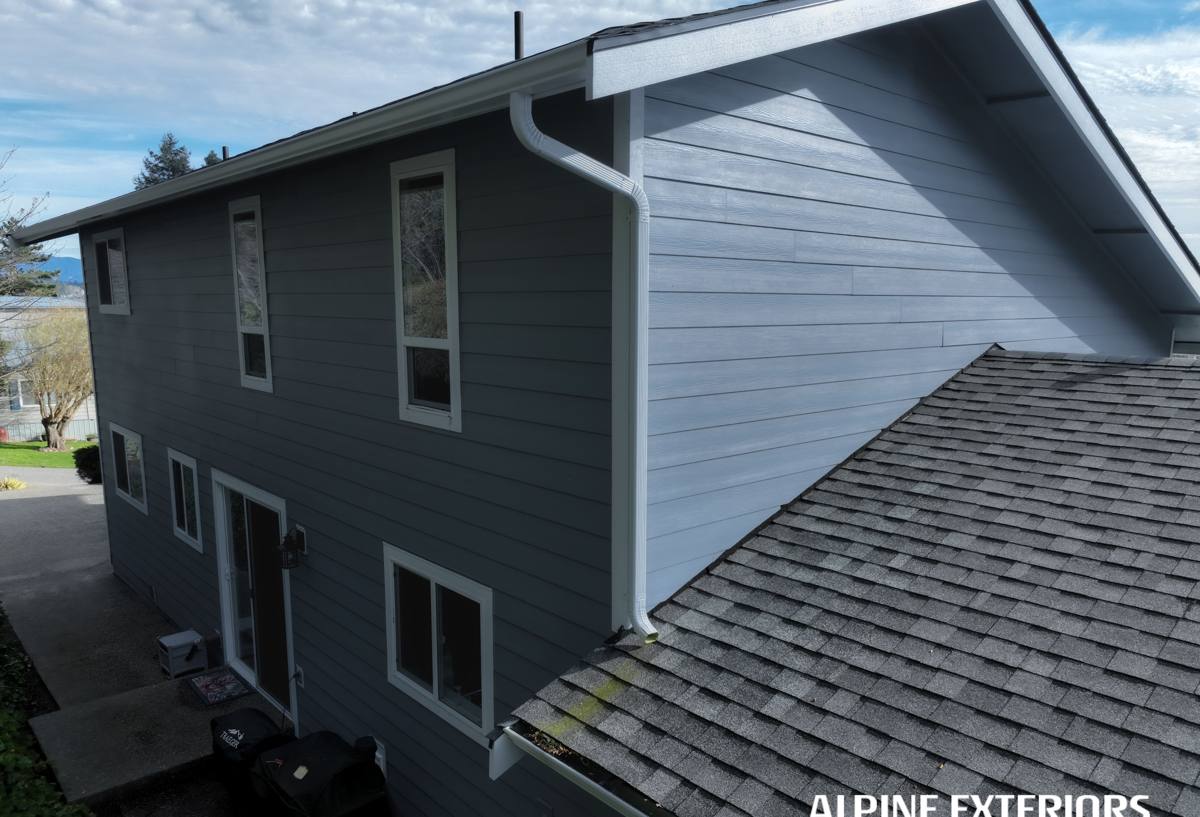
Wiser Lake sits in a part of Whatcom County where the trees stay thick, the ground stays damp, and the roofs over people's heads rarely get a full day of direct sun for months at a time. That combination is hard on a roof in ways that a more open, sunnier property never has to deal with. Add in Lynden's share of driving rain off Pacific weather systems and the marine-influenced air that moves through this part of the county, and you get roofs that hold moisture longer, grow moss faster, and hide leaks better than roofs in drier neighborhoods. Repairing a roof out here isn't the same job as patching a shingle on a wide-open lot in town — it means understanding how shade, humidity, and standing moisture actually behave on a residential roof deck.
Why Roofs Near Wiser Lake Wear Differently
Shade and Moisture Don't Let Up
Lakeside and lake-adjacent lots tend to keep more tree cover than in-town properties, and that tree cover is a mixed blessing. It's good for privacy and cooling, but it also means less sun exposure on the roof plane, slower drying after every rain, and a steady supply of needles, leaves, and organic debris landing in valleys and gutters. Moss and algae need exactly that: shade, moisture, and something to hold onto. Once moss gets a foothold under shingle tabs, it lifts them just enough for wind-driven rain to work its way underneath.
Salt Air and Driving Rain Add Up Over Time
Whatcom County's proximity to Puget Sound and the Strait of Georgia means homes here deal with a low but steady dose of salt-tinged marine air, on top of the region's long, wet winters. Salt air accelerates corrosion on exposed metal — nail heads, flashing, gutter hardware — while driving rain finds every gap in a flashing detail that isn't sealed correctly. Neither problem shows up overnight. They show up as a slow leak two or three winters after a repair was done wrong.
Moss Season Runs Long Here
In a shaded, damp microclimate like the Wiser Lake area, moss doesn't just appear in the wettest months and disappear in summer — it can hang on nearly year-round on north-facing slopes and shaded valleys. Left untreated, it doesn't just look bad. It holds water against the roofing material continuously, which is a very different stress than an occasional heavy rain.
What a Correct Repair Actually Involves
A lot of roof "repairs" are really just patches — a bead of sealant, a replaced shingle, done. That can work for a simple, isolated problem. But on a roof that's been dealing with chronic moisture, a patch over a symptom often leaves the actual cause untouched. A correct repair starts with figuring out where the water is actually getting in, which is frequently several feet away from where the stain shows up on the ceiling.
- Trace the water path from the interior stain or leak back to its actual entry point on the roof, not just the nearest visible damage
- Check flashing around chimneys, skylights, vent pipes, and roof-to-wall transitions — these fail more often than open field shingles do
- Pull back shingles around the suspected area to check the underlayment and decking condition, not just the surface
- Confirm the decking is solid; soft or delaminated plywood needs to be cut out and replaced, not covered over
- Match replacement shingles and flashing metal as closely as possible so the repair doesn't become a second weak point
- Clear moss and debris from the surrounding area so the repair isn't immediately undermined by the same conditions that caused the original damage
Common Issues We Find on Wiser Lake Roofs
We see a recurring pattern on homes in this area, and it's rarely one single dramatic failure. It's usually a combination of smaller issues that compound:
Moss and Algae Staining
Dark streaking and visible moss growth, especially on shaded slopes, are usually the first sign something needs attention — not just cosmetically, but structurally, since moss holds moisture against the roofing material.
Flashing Failure
Chimney flashing, skylight flashing, and step flashing along roof-to-wall joints are the most common leak sources we find. These details take the most direct hit from wind-driven rain and are the first place corrosion shows up in salt-influenced air.
Clogged Valleys and Gutters
Heavy tree cover near the lake means valleys and gutters fill with organic debris faster than in more open areas. A clogged valley backs water up under the shingles above it, which can cause damage well before anyone notices a leak inside.
Soft or Delaminated Decking
When moisture problems go unaddressed for a season or two, the plywood decking underneath the shingles can start to soften. This is the difference between a same-day repair and a job that requires opening up the roof.
Our Repair Process
We keep this straightforward because homeowners deserve to know what's happening on their own roof:
- Inspection. We walk the roof (weather permitting) and check the attic from the inside where accessible, looking for moisture staining, deteriorated wood, and signs of past repair attempts.
- Diagnosis. We identify the actual cause of the problem, not just the visible symptom, and explain what we found in plain terms.
- Written scope and estimate. You get a clear description of the work and an honest cost range before anything starts.
- Repair. We fix the identified cause — flashing, decking, shingles, or a combination — using materials matched to your existing roof where possible.
- Cleanup and moss treatment. We clear debris from valleys and gutters and treat existing moss so the repair isn't immediately compromised again.
- Follow-up. If something isn't right after the first hard rain, we come back and make it right.
Repair or Replacement? How We Make That Call
Not every roof problem near Wiser Lake needs a full replacement, and not every roof can be reasonably patched. Here's generally how the decision breaks down:
| Factor | Repair usually makes sense | Replacement is usually the honest answer |
|---|---|---|
| Age of roof | Well within its expected service life | At or past the material's typical lifespan |
| Extent of damage | Isolated to one area (a valley, a flashing point) | Multiple areas failing independently |
| Decking condition | Solid, dry plywood underneath | Widespread soft or delaminated decking |
| Moss/algae coverage | Spot treatment and cleaning resolves it | Heavy, long-established growth across most slopes |
| Prior repair history | First or second repair on this roof | Repeated patch jobs in the same areas over the years |
We'll tell you honestly which category your roof falls into. There's no benefit to us talking a homeowner into a full replacement when a targeted repair will genuinely hold up, and there's no benefit to patching a roof that's going to need replacing within a year or two anyway.
Materials We Use — and Why
For repairs in a shaded, damp setting like this, we lean toward algae-resistant shingle products where a full section needs replacing, since standard shingles are more prone to visible staining and moss uptake in continuous shade. For flashing, we use metal that holds up to the area's moisture exposure rather than the thinnest option available, because flashing failures are the single most common callback we see in this region — a few dollars saved on flashing material almost always costs more in a repeat repair later. We also don't rely on caulk or sealant as a standalone fix for a flashing problem; sealant fails and shrinks over time, so it's a supplement to a correctly installed flashing detail, never a replacement for one.
Ongoing Maintenance for Wiser Lake Homes
Given the local conditions, a little seasonal attention goes a long way toward avoiding repeat repairs:
- Clear valleys and gutters of leaves and needles at least twice a year, more often under heavy tree cover
- Treat moss and algae growth before it becomes thick enough to lift shingle tabs
- Trim back branches that overhang the roofline to reduce debris buildup and abrasion
- After any major windstorm, do a visual check for lifted or missing shingles
- Have flashing points (chimney, skylights, vent pipes) inspected every couple of years, since these fail before the field of the roof does
- Address small leaks promptly — a slow drip caught early is a repair; ignored for a season, it's often a decking replacement
Why a Local Lynden Crew Matters Here
A roofer who mainly works drier, more open parts of the county can still do competent work, but a crew that regularly repairs roofs around Wiser Lake and the rest of the Lynden area already knows what to check first. We know shaded valleys hold moss longer, that flashing takes the brunt of the region's driving rain, and that a leak reported in one room often traces back to a completely different part of the roof. That familiarity means fewer surprises, a faster and more accurate diagnosis, and a repair that's built for what this specific setting actually throws at a roof year after year — not a generic fix borrowed from a drier climate.
If you're dealing with a leak, visible moss, or just want an honest read on your roof's condition, we're happy to take a look. Fill out the form below for a free, no-pressure estimate — we'll tell you straight what we find and what it would take to fix it right.