 Lynden Siding
 Roof Repair Built for Ferndale's Coastal Climate
Ferndale sits close enough to the water that homes here take a different kind of beating than roofs further inland. Salt-laden air off the Strait works its way into fasteners, flashing, and exposed metal. Driving rain off Puget Sound doesn't fall straight down — it gets pushed sideways under the wind, which means it finds every weak seam, lifted shingle tab, and gap in step flashing that a calmer climate might never expose. And then there's moss. Whatcom County's long wet season, mild temperatures, and heavy tree cover give moss months at a time to take hold on north-facing slopes and shaded valleys. None of this is exotic knowledge to a roofer who's worked Ferndale for years — but it matters, because a repair done without accounting for it tends to fail again within a season or two.
This page is about roof repair specifically for Ferndale homes — not a general roofing overview. If you've got a leak, a soft spot, missing shingles, or a roof that's just starting to show its age, here's what actually matters for getting it fixed right the first time.
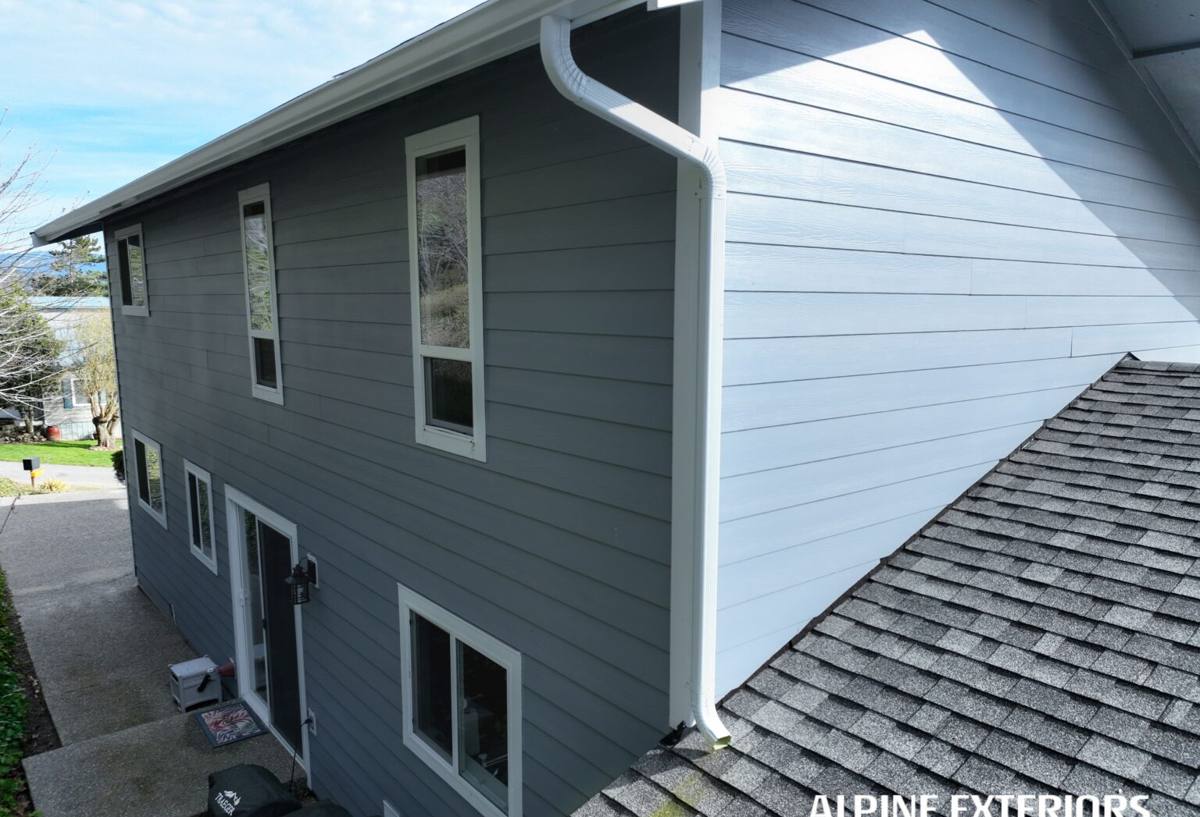
What Ferndale Roofs Are Actually Up Against
Salt Air and Corrosion
Metal components — nails, flashing, drip edge, vent boots with metal collars — corrode faster near the coast than they do 30 miles inland. Standard electro-galvanized fasteners can start rusting within a few years in a salt-air environment, and once a nail head rusts through or a flashing seam corrodes, water has a direct path into the roof deck. This is one of the most common root causes we find behind "mystery" leaks in this area: the shingles look fine, but the metal underneath them has failed.
Wind-Driven Rain
Ferndale gets its share of storms rolling in off the water, and the rain in those storms often comes in at an angle instead of straight down. That matters for repair work because it means water can be pushed uphill under shingles, around chimney flashing, and into valleys that would stay dry in a gentler storm. A repair that only addresses the visible shingle damage and ignores the underlayment or flashing detail underneath it can look fine on a calm day and still leak in the next windstorm.
Moss and Prolonged Moisture
Western Washington's wet season runs long, and Ferndale's tree cover and coastal humidity keep roofs damp for extended stretches, especially on north- and east-facing slopes that don't get much sun exposure. Moss doesn't just sit on top of shingles — its root structures lift shingle edges and hold moisture directly against the roofing material, which accelerates granule loss and can rot the wood decking underneath if it's left unaddressed for a few seasons.
Signs a Ferndale Roof Needs Repair, Not Replacement
Not every roof problem means a full tear-off. Most of the calls we get in this area are legitimate repair situations — localized damage that can be fixed properly without replacing a roof that still has years of life left. Common signs include:
- A ceiling stain that appears or grows after a windy rainstorm specifically (points to wind-driven water intrusion at flashing or a shingle edge)
- Missing, cracked, or curling shingles in one section rather than across the whole roof
- Moss buildup concentrated on shaded slopes, with visible granule loss underneath it
- Rusted or lifted flashing around chimneys, skylights, or roof-to-wall transitions
- Soft or spongy decking felt underfoot in one localized area (usually near a valley, chimney, or old vent penetration)
- Granules collecting in gutters after a storm, concentrated near one part of the roof
If damage is spread across most of the roof, if the shingles are past their expected service life, or if decking rot has spread beyond a small area, replacement is usually the more honest answer — and we'll tell you that directly instead of patching something that needs more.
What a Correct Repair Actually Involves
A roof repair that holds up in Ferndale's climate goes past the visible damage. Here's the difference between a surface patch and a repair that actually solves the problem:
| Step | Why it matters here |
|---|---|
| Inspect beyond the visible damage — check flashing, fasteners, and decking around the failure point | Wind-driven rain often causes damage upstream of where the leak shows up inside; fixing only the visible spot misses the actual entry point |
| Check fastener and flashing condition for corrosion, not just the shingles | Salt air corrodes metal faster than it degrades asphalt shingles, so a shingle-only repair can leave the real failure point untouched |
| Replace damaged decking, not just shingles, if moisture has reached the wood | Prolonged moss and moisture exposure can soften decking; shingling over soft decking doesn't fix the underlying weakness |
| Re-seal and re-flash penetrations (vents, chimneys, skylights) touched during the repair | These are the most common leak points in this region, and a repair that disturbs them without properly resealing creates a new weak spot |
| Match materials to the existing roof where possible | Mismatched shingle profiles or colors age differently and can create new water-shedding issues at the seam |
Our Repair Process
1. On-Site Inspection
We start by looking at the roof itself, not just where the stain showed up on your ceiling. Because of how wind-driven rain behaves in this area, the actual entry point is often several feet from where water shows up inside. We check the surrounding flashing, fastener condition, and decking before we ever talk about a fix.
2. A Straight Answer on Scope
We'll tell you plainly whether this is a contained repair or something that's grown into replacement territory. We don't pad small jobs into bigger ones, and we don't undersell a job that needs more than a patch.
3. The Repair Itself
We address the root cause — corroded flashing, a failed seal, damaged decking — not just the surface symptom. Materials are matched to your existing roof where possible, and any flashing or penetrations we touch get properly re-sealed before we consider the job done.
4. Cleanup and Walkthrough
We clear debris, check gutters near the repair area for granules or moss buildup that could point to a related issue, and walk you through what we did and why.
Moss: Prevention Matters as Much as Removal
Removing moss without addressing why it's growing there just buys you a season or two before it's back. On shaded, north-facing slopes common throughout Ferndale, moss regrowth is close to guaranteed unless something changes. During a repair, we'll flag if zinc or copper strips (installed at the ridge, where rainwater naturally carries trace metal down the slope) would help suppress regrowth on a moss-prone section, and we'll be honest that this is a suppression tool, not a permanent fix — nothing stops moss entirely in a climate this wet.
We also don't recommend pressure washing moss off shingles. It's fast, but it strips granules and shortens the life of the roofing material — often trading a moss problem for a premature-wear problem. A slower, gentler removal approach costs you a bit more patience but protects the shingles underneath.
Why It Matters That We Already Work This Area
A roofer unfamiliar with Whatcom County's coastal conditions might diagnose a Ferndale leak the same way they'd diagnose one in a drier, calmer climate — and miss the wind-driven or salt-corrosion angle entirely. Working this area regularly means we already know to check flashing corrosion before assuming a shingle is simply worn out, and to check for wind-direction clues before assuming a leak's interior location matches its exterior source. That local pattern recognition is the difference between a repair that solves the problem and one that gets revisited next storm season.
It also means we're not guessing at what materials hold up here. Coastal exposure and long wet seasons aren't kind to every product, and we can talk through what's worked reliably in this specific climate versus what tends to need more maintenance than it's worth.
Before You Call a Roofer: A Quick Checklist
- Note when the leak or stain appeared — was it during or right after a windstorm, or a slow, steady drip over time?
- Check if the issue is localized to one area or spread across the roof
- Look at gutters for granule buildup or moss debris, and note which side of the roof it's coming from
- Avoid climbing onto the roof yourself, especially if it's mossy — wet moss on a sloped roof is genuinely dangerous footing
- Get an inspection before storm season if you already suspect a weak spot, rather than waiting for a leak to confirm it
Get a Free, No-Pressure Estimate
If you're dealing with a leak, missing shingles, moss damage, or just want a second opinion on a roof that's showing its age, we're happy to take a look. The estimate is free, there's no pressure to move forward, and if what you actually need is a smaller fix than you expected, we'll tell you that too. Fill out the form below and we'll get in touch to schedule a time to come out.