 Lynden Siding
 Building New Near Sumas Means Getting the Windows Right the First Time
When you're framing a new home in the Sumas area, the windows aren't a swap-out project you can revisit in a few years without much cost. They're installed once, into open framing, before the siding, trim, and interior finish close everything up around them. Whatcom County's weather doesn't give new construction much room for error — moist marine air pushes in off the Sound on a regular basis, driving rain comes in sideways during fall and winter storm systems, and the long stretch of gray, wet months each year is exactly the kind of environment that turns a mediocre window installation into a moisture problem behind the wall.
We're a Lynden-based crew, and Sumas is part of our regular service area — not a once-in-a-while trip. That matters more than it sounds like it should, because window installation quality in this part of Washington isn't really about the window unit itself. It's about how the window integrates with the weather-resistive barrier, the flashing, and the siding that goes on around it. Get that sequence wrong and you won't see it for a year or two — until the moss season and the rain finally find the gap.
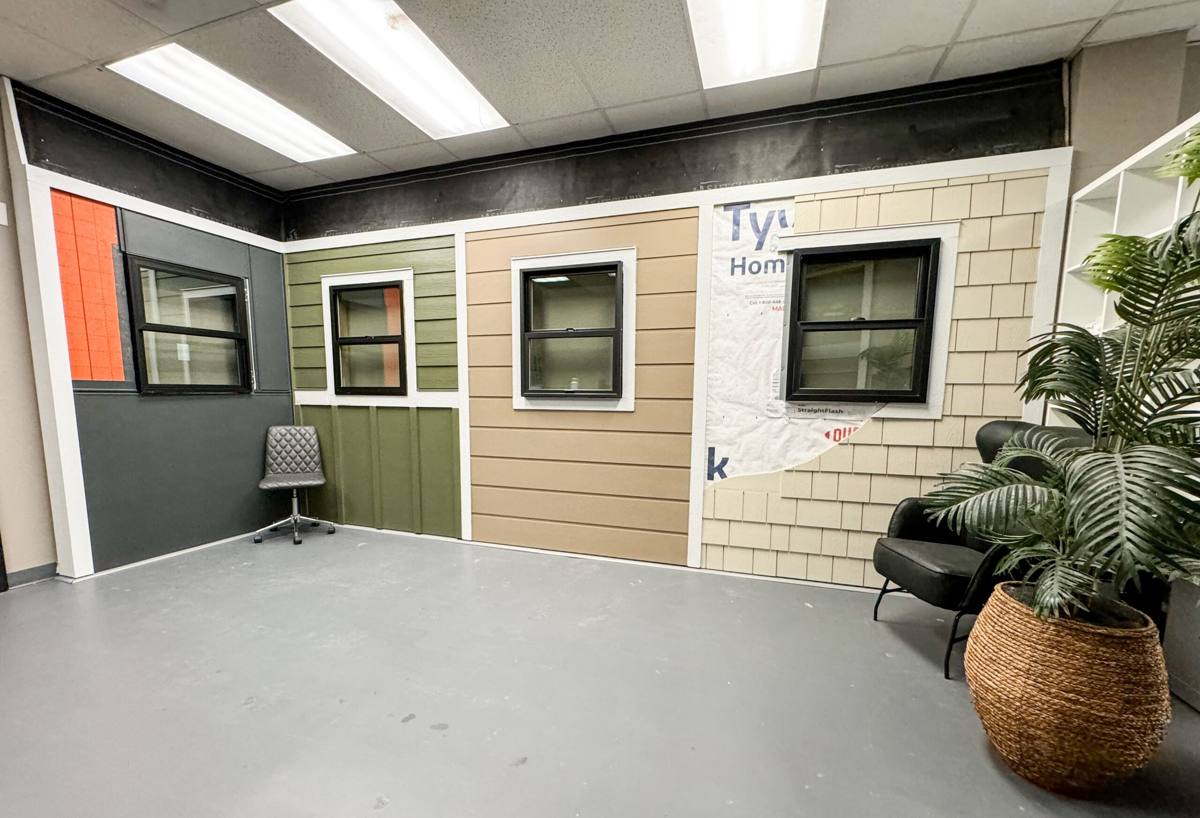
What "New-Construction Windows" Actually Means
There's a real difference between a new-construction window and a replacement (or "pocket") window, and it's not just marketing language.
New-Construction Units
New-construction windows have a nailing flange (fin) around the perimeter of the frame. That flange gets integrated directly into the wall's weather-resistive barrier and flashing system before siding goes on. Because the wall is still open, we have full access to set the window plumb, level, and square, and to build a proper flashing sequence in and around it — something you simply cannot do once siding, trim, and interior drywall are already in place.
Why That Access Matters in This Climate
In a drier climate, a mediocre flashing job might go years without showing a problem. Around Lynden and Sumas, where driving rain and long wet seasons are the norm, water finds shortcuts fast. New construction is the one point in a home's life where a crew can build in proper drainage and flashing redundancy without cutting into finished walls. It's worth doing carefully the first time.
What Sumas-Area Homes Need From Their Windows
Every window installation in this region has to answer to the same basic conditions, but a few show up especially often on new builds near Sumas:
- Wind-driven rain resistance — storms here don't always fall straight down; flashing and sill pans need to handle rain pushed sideways and upward under the sill, not just gravity-fed runoff.
- Moisture management behind the cladding — a long moss season means prolonged dampness against exterior walls for months at a stretch; the drainage plane behind the siding needs an unobstructed path to shed that moisture, and the window opening is one of the most common places that path gets blocked by mistake.
- Condensation control — cooler, moisture-laden air common to this part of Whatcom County makes glass performance and proper interior air sealing more important than in drier inland climates.
- Corrosion-resistant hardware — salt-tinged air moving in off the Sound, combined with near-constant humidity, is harder on cheap fasteners and hardware finishes than most people expect.
- UV and weather exposure on trim — even with less harsh sun than other regions, repeated wet-dry cycling breaks down poorly sealed trim and caulk joints faster than homeowners anticipate.
Our Installation Process
The steps themselves aren't a secret — most crews would describe something similar. The difference is in how carefully each one gets done, especially the parts nobody sees again after the siding goes up.
1. Rough Opening Check
Before a window ever gets set, we confirm the rough opening is square, plumb, and sized correctly. Framing tolerances that seem minor on paper cause real problems once a window is fastened into an out-of-square opening.
2. Sill Pan and Flashing Sequence
We install a sloped sill pan so any water that gets past the window has somewhere to go — out, not down into the framing. Flashing tape and the weather-resistive barrier get layered in the correct shingle-lap order (bottom pieces overlapped by the ones above) so water is always directed outward and down, never trapped behind a layer.
3. Setting the Window
The unit gets set plumb, level, and square, shimmed correctly at anchor points, and fastened per the manufacturer's schedule — not just "enough screws to hold it." An out-of-square window strains its own hardware and won't seal or operate correctly for the life of the house.
4. Sealing and Insulation
Gaps around the frame get sealed and insulated properly — not overpacked with expanding foam, which can bow a frame out of square, and not left with gaps that let in cold air and moisture-laden drafts.
5. Exterior Integration with Siding
Because we do siding as well as windows, we build the flashing and trim details with the finished siding plane already in mind. That coordination is exactly where problems creep in on jobs where the window installer and the siding crew never talk to each other.
Material Choices for New Construction
We don't push one brand — we work with several established manufacturers of vinyl, fiberglass, and composite windows and help homeowners weigh the trade-offs for their situation. Here's a general comparison of how the common frame materials perform in a wet, marine-influenced climate like ours:
| Material | Moisture Behavior | Maintenance | Relative Cost |
|---|---|---|---|
| Vinyl | Won't rot; performs well in wet climates when properly installed | Low — occasional cleaning | Lower |
| Fiberglass | Very stable, minimal expansion/contraction with humidity swings | Low | Mid to higher |
| Wood / Wood-Clad | Requires consistent exterior seal maintenance to prevent moisture intrusion | Higher — periodic refinishing/caulking | Higher |
| Aluminum | Prone to condensation without thermal breaks; less common in new residential builds here | Low, but condensation-related issues possible | Varies |
For most new-construction homes in this area, vinyl and fiberglass units make up the bulk of what we install, largely because they hold up well against long wet seasons without demanding ongoing upkeep from the homeowner. Wood and wood-clad windows can still be the right call for a specific look, but we're upfront that they come with a real maintenance commitment in a climate that stays damp for months at a time.
Mistakes We See on New-Construction Jobs
Most of the window problems we get called to look at later didn't come from a bad window — they came from a shortcut during installation. A few patterns worth knowing about before you hire anyone:
- Flashing installed out of shingle-lap order, which channels water inward instead of out
- Sill pans skipped entirely, relying on caulk alone to stop water at the sill
- Windows fastened without correcting an out-of-square rough opening first
- Gaps sealed with expanding foam only, with no mechanical fastening check behind it
- Siding installed tight against the window flange with no room for the drainage plane to do its job
None of these show up on move-in day. They show up two or three moss seasons later, as staining, soft trim, or a drafty window that never quite closes right. Our standard is to build the flashing and drainage sequence the same careful way every time, whether or not anyone will ever see it again.
Why Hiring a Crew That Already Works in Sumas Matters
New-construction window work touches building code, local inspection expectations, and the practical realities of building in this specific climate. A crew that regularly works Sumas and the greater Lynden area already knows what inspectors here are looking for at the window-flashing stage, understands how local wind and rain patterns actually behave against a given elevation, and isn't learning Whatcom County's moisture challenges on your house. That familiarity shows up in fewer surprises during the build and fewer callbacks after it.
It also matters for coordination. When the same company handles both the window installation and the siding, there's no gap in communication between two separate crews about how the flashing, weather barrier, and cladding are supposed to tie together. That handoff is one of the most common places problems get introduced on a new build.
What Drives Cost on a New-Construction Window Job
Every project is different, but the main factors that move the price on a new-construction window install are fairly consistent:
- Number and size of openings — more windows and larger units mean more material and labor
- Frame material — vinyl typically costs less than fiberglass or wood-clad units
- Window style — fixed picture windows are simpler than operable casements, sliders, or custom shapes
- Elevation and access — upper-story or hard-to-access openings take more time to set correctly
- Coordination with other trades — how tightly the framing and siding schedules line up affects labor efficiency
Costs on new-construction window packages can range widely depending on these factors, from a modest package on a smaller home to a much larger investment on a home with many openings or higher-end materials. We'll walk through the specifics for your build during an estimate rather than quote a number that doesn't reflect your actual plans.
Timing It Right With Your Build
New-construction windows have to arrive and get installed at a specific point in the framing schedule — too early and they're exposed to weather and job-site damage longer than necessary; too late and they hold up the siding crew and everyone behind them. If you're working with a builder or general contractor, we coordinate directly with them on timing so the window install doesn't become the bottleneck. If you're managing the build yourself, we're glad to walk you through where window installation fits relative to framing, weather barrier, and siding.
Questions Worth Asking Any Window Installer Before You Hire
- Do you install a sloped sill pan on every window, or only when specified?
- How do you sequence flashing relative to the weather-resistive barrier?
- Will the same crew coordinate the window installation with the siding trim details?
- What's your fastening schedule, and does it match the manufacturer's requirements?
- Can you walk me through what happens if a rough opening isn't square?
If a contractor can't answer these clearly, that's worth noticing before framing closes up the answer for good.
If you're planning new construction in the Sumas area and want to talk through window options, timing, or how the work fits with your siding plans, we're happy to take a look and put together a free, no-pressure estimate. Use the form below to get started.