 Lynden Siding
 Why Metal Roofing Holds Up Differently in Bellingham
Bellingham sits close enough to the water that salt air is a real factor in how any roof ages, and it gets the same long, wet stretches of Pacific Northwest weather that the rest of Whatcom County deals with every fall and winter. Add in a shady, tree-heavy lot — common on a lot of Bellingham streets — and you've got the three things that wear out a roof fastest: corrosion, water intrusion, and moss. Metal roofing handles all three better than most other roofing materials, but only when it's specified and installed correctly for this exact climate. A metal roof installed the way it would be in a dry inland town is not the same job as a metal roof installed for a home a few miles from Bellingham Bay.
We're not going to tell you metal roofing is the right choice for every home — it isn't always the best fit budget-wise, and we'll say so upfront during an estimate. But for homeowners who want a roof that can genuinely go 40-plus years without needing much attention, and who are tired of dealing with moss scraping and gutter cleanouts every year, metal is worth a serious look.
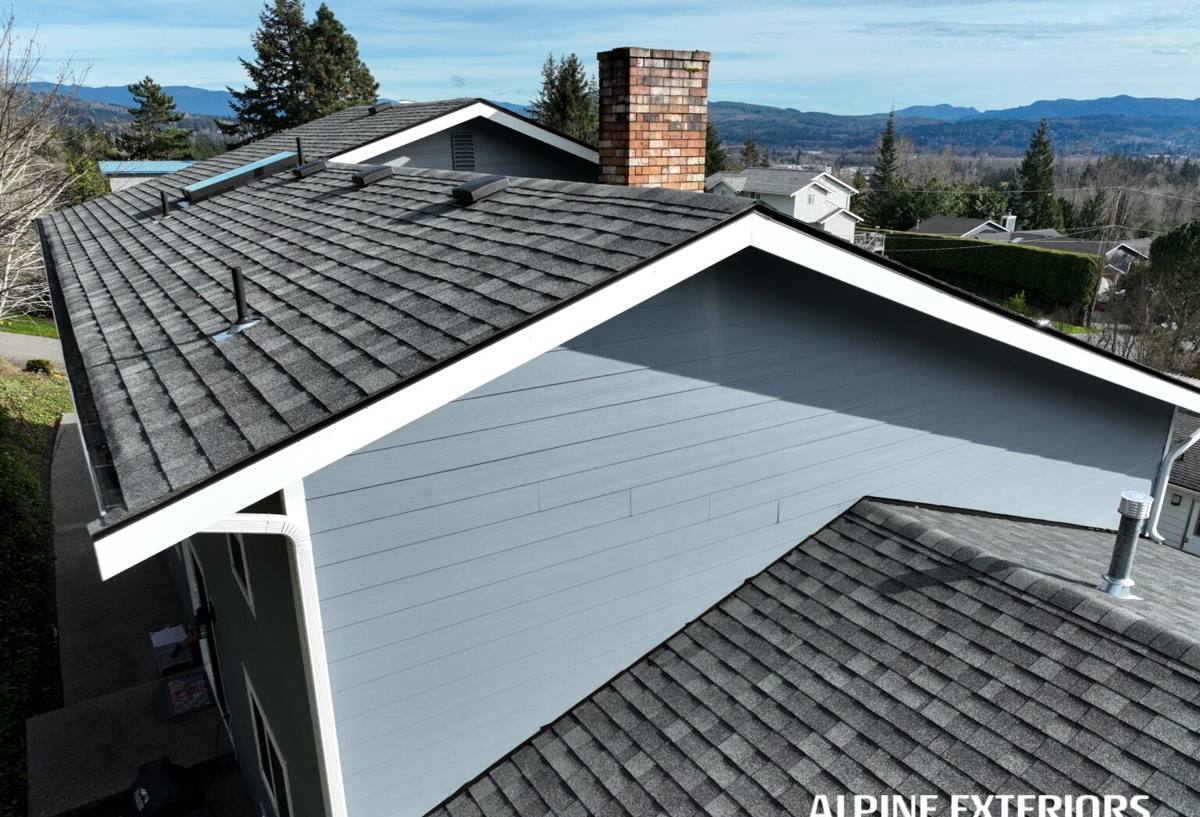
What Coastal Air and Rain Actually Do to a Roof Here
Salt air and corrosion
Salt-laden air accelerates corrosion on any exposed metal — fasteners, flashing, panel edges, and cut ends where a protective coating has been compromised. This doesn't mean a metal roof will rust out in a few years; it means the specific alloy, coating, and fastener package matter more here than they would fifty miles inland. Bare or poorly coated steel, or fasteners of a different metal than the panel, are where problems show up first. We factor coastal exposure into the material spec for every Bellingham project rather than defaulting to whatever's cheapest at the supply house.
Driving rain and wind-driven moisture
Storms off the water bring rain that doesn't just fall straight down — it drives sideways under wind, which pushes water into laps, seams, and fastener penetrations that would stay dry in a calmer climate. A roof detailed for average rain exposure can leak here even though the material itself is sound. This is why seam type, underlayment, and flashing detail work matter as much as the panel you choose.
The long moss season
Whatcom County's moss season runs long — cool, damp conditions linger for months, and shaded or north-facing roof sections barely dry out between rains. Moss needs organic debris and moisture to get a foothold; smooth metal panels give it far less to grab onto than shingles or shakes, but valleys, poorly flashed penetrations, and areas where debris collects can still grow moss and algae over time if they're not detailed to shed water and debris cleanly.
Choosing the Right Metal Roofing System
"Metal roofing" covers a range of products with very different performance and price points. Here's how the main options compare for a Bellingham home:
| System | Typical Lifespan | Maintenance | Best Fit |
|---|---|---|---|
| Standing seam (concealed fastener) | 40–60+ years | Low — no exposed fasteners to fail | Homes prioritizing longevity and clean lines; best moisture performance |
| Exposed-fastener panel (corrugated/ribbed) | 25–40 years | Moderate — fasteners and washers need periodic checking | Budget-conscious projects, outbuildings, simpler rooflines |
| Metal shingles/shakes | 30–50 years | Low to moderate | Homeowners wanting a traditional look with metal's durability |
Standing seam is what we recommend most often for full home re-roofs here, specifically because its concealed fastener system removes the weakest point in coastal, wet climates — the exposed screw. Exposed-fastener panels aren't a bad product, but the washers and screws are wear items that need occasional attention, and that's a harder sell on a house a short drive from salt water.
The Installation Details That Actually Keep Water Out
The panel itself is often the least important variable in whether a metal roof leaks. Most metal roof failures we've seen trace back to installation shortcuts, not product defects. A correct install for this climate includes:
- Full synthetic underlayment rated for metal roofing, with self-adhered ice-and-water membrane at eaves, valleys, and around every penetration
- Matched fasteners and flashing metal to avoid galvanic corrosion between dissimilar metals
- Panel seams and end laps oriented and sealed to shed wind-driven rain, not just straight-down rain
- Properly sized and pitched valleys — the single most common leak point on any roof, metal or otherwise
- Closure strips and boots at every penetration (vents, flues, skylights) sized and sealed for the specific panel profile
- Correct fastener torque and spacing — overdriven or underdriven screws are a leading cause of exposed-fastener leaks
Ventilation and Condensation
Metal conducts heat and cold faster than shingles, which means attic ventilation and insulation matter more once you switch materials. Without adequate ridge and soffit venting, moisture from inside the house can condense on the underside of cold metal panels during Bellingham's damp winters — a problem that has nothing to do with the roof leaking from outside, but looks like a leak from inside the attic. We check existing attic ventilation as part of every metal roofing estimate and will flag it if it needs upgrading alongside the roof itself.
Our Process
- On-site assessment — we inspect the existing roof deck, ventilation, flashing, and any moss or moisture damage, and measure exposure to wind and salt air based on the home's specific location
- System recommendation — we walk you through panel options, coating choices, and color, with honest pros and cons for your specific roof, not a one-size pitch
- Tear-off or overlay decision — most re-roofs get a full tear-off to inspect and repair the deck; we'll tell you if your situation allows a lighter-touch approach
- Deck prep and underlayment — repairing any soft or damaged sheathing before anything goes down, then installing underlayment rated for the panel system
- Panel installation — panels, seams, and flashing installed to spec, with attention to every valley, penetration, and edge detail described above
- Final walkthrough — we review the finished roof with you, including care notes and what to watch for over the first year
What Affects the Cost
Metal roofing costs more upfront than asphalt shingles, and the range on any given house depends on several factors:
| Factor | Why It Matters |
|---|---|
| Panel system chosen | Standing seam runs higher than exposed-fastener panel per square foot |
| Roof pitch and complexity | Steep roofs, multiple valleys, and dormers all add labor time |
| Tear-off vs. overlay | Removing old roofing and repairing deck damage adds cost but avoids trapped moisture problems later |
| Coating and finish | Premium coatings (like Kynar-type finishes) cost more but hold color and resist coastal corrosion longer |
| Ventilation upgrades | Adding or improving ridge/soffit venting is often worth bundling into the same project |
We'll break these down specifically for your roof during an estimate rather than quoting a flat per-square-foot number that doesn't account for your home's actual conditions.
Questions Worth Asking Any Metal Roofing Contractor
- What underlayment and ice-and-water membrane are included, and where specifically will they be installed?
- Are the fasteners and flashing metal compatible with the panel material to avoid galvanic corrosion?
- What's the coating warranty versus the panel/substrate warranty — they're often different documents from different parties
- Will the crew be checking or upgrading attic ventilation as part of the job?
- How will valleys and penetrations be detailed, and can they explain why in plain terms?
- Is the estimate based on an actual on-site inspection, or a phone quote?
Why a Crew That Already Works in Bellingham Matters
A lot of roofing problems in this area come down to details that only show up when you've actually worked on enough local roofs to know what fails and why. A crew that's used to installing in drier or more inland conditions may not automatically account for salt air corrosion on fasteners, or may not think twice about a valley detail that would be fine in a different climate but invites leaks here. Working regularly in Bellingham and the surrounding Whatcom County area means we've seen how these roofs age over years, not just how they look on install day — and we build every project around what actually holds up under this specific combination of coastal air, heavy rain, and long moss season.
If you're weighing metal roofing for a Bellingham home, we're happy to walk your roof, talk through what your specific site and exposure call for, and give you a straightforward, no-pressure estimate. There's no cost or obligation to have a look — just fill out the form below to get started.