 Lynden Siding
 Fiber Cement Siding for Maple Falls Homes
Maple Falls sits up in the foothills of Whatcom County, closer to Mount Baker than to the water, and that changes what a siding job actually has to hold up against. Homes here deal with less direct salt exposure than towns along the coast, but they take on their own mix of heavy tree cover, persistent valley moisture, and a longer, colder winter stretch than the lowland parts of the county see. We're based nearby in Lynden, and Maple Falls is regular territory for our crew — enough that we've watched firsthand how differently a house ages up here compared to the flatter, more open ground closer to town.
We install James Hardie fiber cement siding exclusively, on every home we side, in every part of Whatcom County we work. That's not a marketing line — it's a professional standard built from watching which materials actually hold up in this specific climate and which ones quietly shift maintenance problems onto the homeowner a few years down the road.
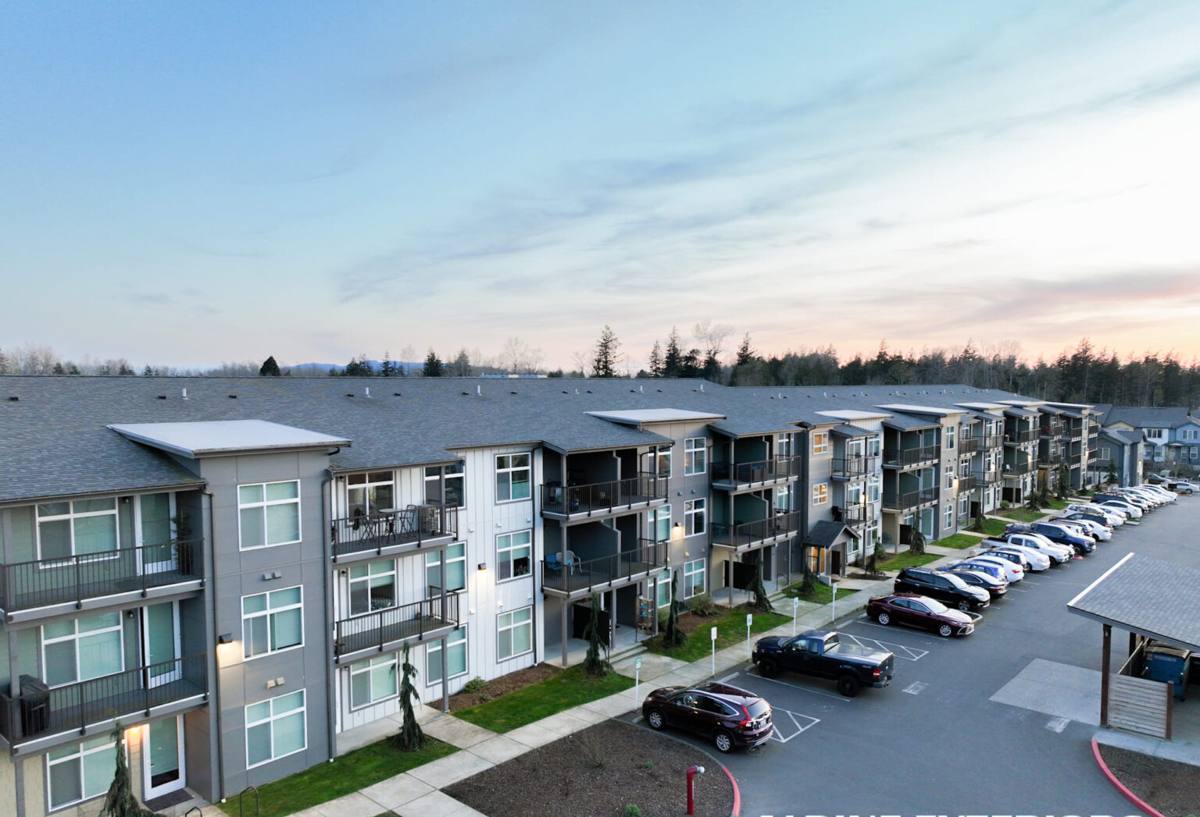
What Maple Falls' Foothill Climate Does to Siding
Driving Rain and Slow-Drying Walls
Storm systems that move through the foothills don't just drop rain straight down — wind pushes it sideways into wall assemblies, especially on homes tucked among trees where airflow is more broken up than on an open lot. That wind-driven rain finds its way into gaps at seams, trim, and window flashing faster than straight-down rain ever would, and it's exactly the kind of moisture a correctly built wall is designed to shed rather than absorb.
A Long Moss Season Under Heavy Tree Cover
Maple Falls carries more tree cover than most of the lowland towns in Whatcom County, and that shade keeps walls and roof surfaces damp longer after every rain. Moss and mildew take hold fastest on siding that stays wet the longest, and on a heavily shaded property that can mean a moss season running most of the year rather than just the wettest months. Any siding material with even a little surface porosity gives that moss something to grip onto over time.
Freeze-Thaw Cycling at Higher Elevation
Sitting closer to the foothills and higher ground near Mount Baker, Maple Falls sees colder winter nights and more freeze-thaw cycling than lowland Whatcom County towns closer to sea level. Water that gets behind or into a siding material and then freezes can expand joints, crack caulking, and work fasteners loose over a handful of winters. A material that doesn't absorb and hold water in the first place avoids most of that damage before it ever starts.
Less Direct Salt Air, Same Regional Standard
Maple Falls doesn't sit on the water, so it doesn't take the same steady salt exposure as towns closer to Bellingham Bay or the Strait. But the broader Whatcom County climate — persistent moisture, a long wet season, and real freeze-thaw cycling in the foothills — still calls for a siding system engineered for the Pacific Northwest rather than a generic national product. We hold every Maple Falls project to the same installation standard we use countywide, because the risk here is different from a coastal town's, not smaller.
Why Fiber Cement — and Why James Hardie Specifically
Fiber cement as a category holds up differently than wood-based or vinyl siding in a wet, shaded, foothill climate, mainly because it doesn't swell, cup, or rot the way materials with wood content can. But not every fiber cement product is built or backed the same way, which is part of why we standardized on one manufacturer instead of treating fiber cement as an interchangeable category.
| Material | Moisture Behavior | Performance Under Heavy Tree Cover | Finish |
|---|---|---|---|
| James Hardie fiber cement | Dimensionally stable; doesn't swell or rot | Resists moss growth well; low surface porosity | Factory-applied ColorPlus, baked on |
| LP SmartSide (engineered wood) | More sensitive to moisture at cuts and fastener holes | Needs consistent edge sealing to resist shaded, damp conditions | Field or factory-primed, painted on site |
| Vinyl | Doesn't rot, but can warp and doesn't manage moisture trapped behind it | Can trap moisture against sheathing in shaded, slow-drying areas | Color molded through, fades over time |
| Cedar | Absorbs moisture readily without regular sealing | Needs frequent maintenance to resist moss and rot under shade | Field-applied stain or paint, recurring upkeep |
We don't install LP SmartSide, vinyl, Cemplank, Allura, primed spruce, or cedar. Each has a place in the market, and other contractors install them competently. But we've made a professional call to stand behind one fiber cement system built and warrantied specifically for this kind of climate, rather than offer a lower-cost option that trades long-term performance for a smaller number up front. James Hardie's HZ5 product line is engineered for regions with sustained moisture and real freeze-thaw exposure, which describes foothill Whatcom County well, and the factory-applied ColorPlus finish holds its color and resists moisture better than anything painted on site after installation.
Fiber cement's non-combustible core is also worth mentioning specifically for a place like Maple Falls. Homes here sit closer to forested land than most of the county, and while no siding material makes a house fireproof, a non-combustible exterior is one part of a more defensible home in a way that matters less in flatter, more open parts of Whatcom County.
What a Correct Fiber Cement Install Involves
Fiber cement performs the way it's supposed to only when it's installed to the manufacturer's spec, and in a foothill climate like this, skipping a step tends to show up as a problem within a few wet winters rather than right away. The basics we won't cut on any Maple Falls project:
- House wrap or weather-resistive barrier installed and properly lapped before any siding goes up
- A rainscreen or drainage gap behind the siding so moisture that gets past the surface can drain and dry instead of sitting against the sheathing
- Correct fastener type and spacing — corrosion-resistant fasteners placed exactly where Hardie's install spec calls for them, not just enough to hold the board up
- Properly lapped flashing at every window, door, and roof-to-wall transition, since these are the places wind-driven rain finds first
- Sealed butt joints and trim transitions built to shed water outward rather than rely on caulk alone to keep it out
- Field-cut edges primed before installation, since the factory ColorPlus finish only protects the face and edges of the board as manufactured
- Clearance between siding and grade, decks, or roof lines so the material never sits in standing water or snowmelt runoff
None of this is unusual or proprietary — it's James Hardie's own published installation requirements, followed consistently rather than shortcut on the details that are hardest to check once the job is finished and the wall looks fine from the ground.
Our Process for a Maple Falls Fiber Cement Project
Walkthrough and Assessment
We start by walking the specific walls involved — which ones face prevailing weather directly, which sit under heavy tree cover and stay damp longest, and whether the existing siding or sheathing already shows moisture damage that needs addressing before new material goes on. Installing new siding over a wall with hidden rot just buries the same problem under fresh material.
Planning Before Install Day
We work out fastening pattern, trim details, and how the siding will meet windows, corners, and rooflines before crews start cutting board. Deciding these details on paper first, rather than improvising in the field, is part of what keeps a job on Hardie's actual installation spec instead of a shortcut version of it.
Installation to Manufacturer Spec
Every fastener, gap, and flashing lap follows James Hardie's published requirements for this climate zone. That's what keeps the manufacturer's warranty intact, and it's also just what makes the wall perform the way it's supposed to for decades rather than years.
Final Walkthrough
We walk the finished job with you, explain what little maintenance fiber cement actually needs, and make sure you know what a properly sealed joint or a correctly clear drainage gap should look like if you ever want to check it yourself.
Cost Factors for Fiber Cement Siding in Maple Falls
| Factor | Why It Matters |
|---|---|
| Home size and wall complexity | More corners, dormers, and trim transitions mean more cutting and flashing detail |
| Tear-off vs. install over existing siding | Tear-off often reveals sheathing or framing repair needed before new siding goes up |
| Existing moisture damage | Foothill homes under heavy tree cover are more likely to have hidden damage behind older siding |
| Access and site conditions | Sloped lots, long driveways, and tree-crowded building sites can add labor time |
| Profile and trim style chosen | Lap, panel, and shingle-style profiles carry different material and labor costs |
These are general drivers, not a quote. Two homes in Maple Falls with similar square footage can end up with very different scopes once we're actually pulling old siding and looking at what's underneath, which is why we walk every property in person before putting a real number on the work.
Signs a Maple Falls Home Needs New Siding
- Moss or dark staining that returns quickly after cleaning, especially on shaded or north-facing walls
- Soft or spongy siding, particularly low on the wall or around window and door trim
- Visible warping, cupping, or separation at seams and butt joints
- Peeling paint or a chalky, faded finish on older painted siding
- Cracked or missing caulking at trim and corner boards
- Rot or discoloration on the sheathing, visible once a section of siding is removed or damaged
Why Hire a Crew That Already Works Maple Falls
A crew that regularly works this specific stretch of foothill Whatcom County has already seen how driving rain, heavy tree cover, and colder winter nights behave on real houses here, not just how a product performs on a spec sheet. That experience shapes decisions on install day — which walls need extra flashing attention because of shade and slope, how much drainage clearance actually matters in a climate this damp, and where a rainscreen gap earns its keep. It's the difference between a fiber cement wall that still looks and performs the same in twenty years and one that starts showing seam staining or soft trim within the first few wet seasons.
Get a Free, No-Pressure Estimate
If your Maple Falls home needs new siding, or you're not sure whether what's on the walls now is holding up the way it should, we're glad to take a look and give you a straightforward, honest assessment. Reach out using the form below to schedule a free estimate — no pressure, no upsell script.