 Lynden Siding
 Board and batten siding has a clean, vertical look that works well on farmhouses, craftsman remodels, and the mix of rural and in-town properties around Maple Falls. But the style only holds up if the installation underneath it is done right. In a stretch of Whatcom County that deals with salt-laden air, long stretches of driving rain, and moss that doesn't take a season off, board and batten siding is less forgiving of mistakes than lap siding — every seam, every batten edge, and every fastener line is a place water can find its way in if the job isn't built correctly the first time.
This page covers what board and batten siding needs to hold up on a Maple Falls home, what a correct installation actually involves, and why we install it exclusively in James Hardie fiber cement rather than the wood, engineered wood, or vinyl versions of the same look.
Why Maple Falls' Climate Is Tougher on Board and Batten
Board and batten siding is built from narrow vertical boards with a raised batten strip covering each seam. That design creates more linear seams per square foot of wall than horizontal lap siding does — and every one of those seams is a potential water entry point. In most of the country that's a minor consideration. In this part of Whatcom County, it's a bigger deal, for three reasons that show up together on the same wall:
- Salt air: Proximity to Puget Sound and the Salish Sea means airborne salt works into fasteners, trim edges, and any exposed wood fiber, accelerating corrosion and softening paint film over time.
- Driving rain: Wind-driven rain off the water pushes moisture sideways into vertical seams and batten joints, not just straight down the wall the way it would in a calmer climate.
- Long moss season: Cool, damp, shaded conditions for much of the year let moss and algae establish on north-facing walls and anywhere siding stays wet longer than it should — and moss holds moisture against the surface far longer than bare siding does.
None of that means board and batten is a bad choice for a Maple Falls home. It means the material and the installation both have to be matched to those conditions, not just to how the style looks in a photo.
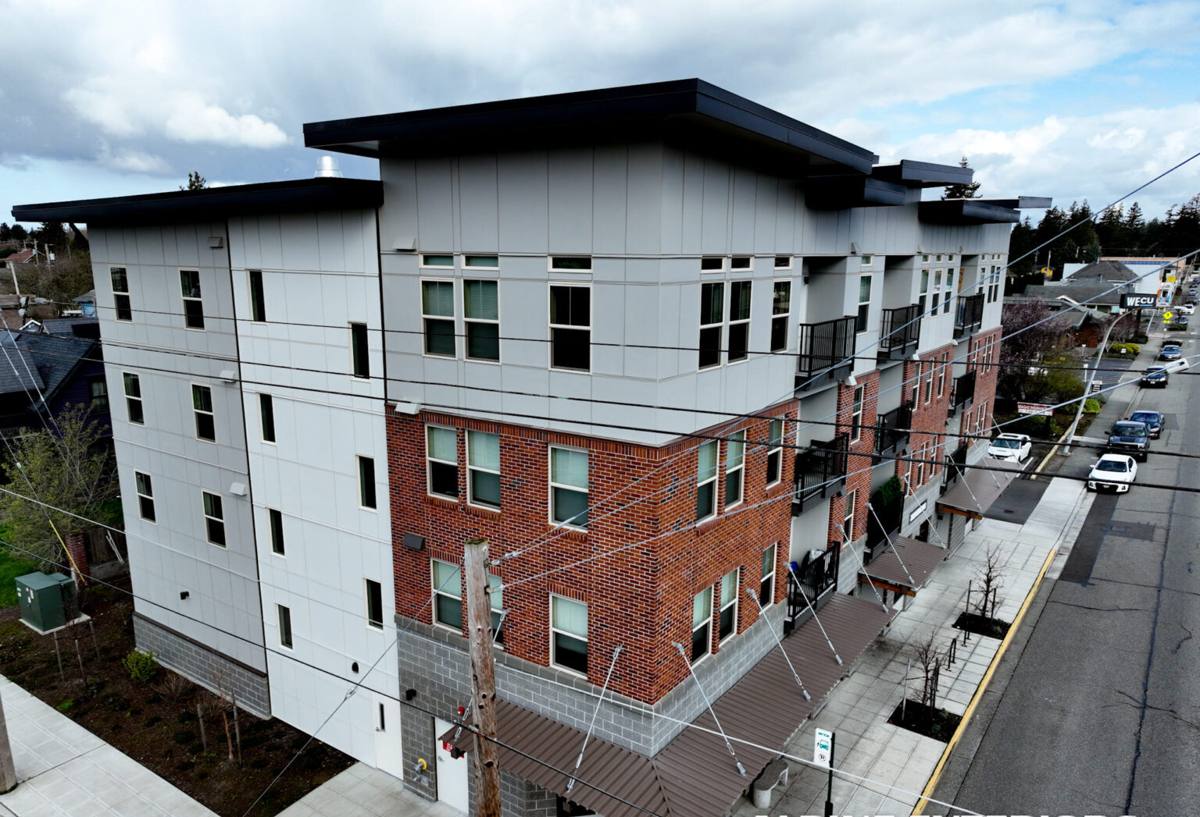
What a Correct Board & Batten Job Requires Here
Material That Doesn't Absorb Water
The board itself has to resist moisture absorption at the core, not just on a painted surface. Wood and engineered wood products rely on their factory coating and field-applied caulk to keep water out of the fiber; once that coating is compromised — by UV, by a missed touch-up, by age — the board underneath starts absorbing water, swelling, and losing paint adhesion. Fiber cement doesn't have that vulnerability because the board itself isn't wood fiber that swells and rots.
Batten Spacing and Fastening That Accounts for Movement
Battens need to be spaced and fastened so the boards underneath can expand and contract with temperature and moisture swings without cracking the caulk line or popping fasteners. Over-fastening, under-spacing, or fastening through both the board and batten in the wrong pattern is a common shortcut that looks fine on install day and fails within a few years.
Weather-Resistive Barrier and Flashing Behind the Siding
Board and batten's job is to shed the water that gets past it, not to be the sole water barrier. That means a correctly lapped weather-resistive barrier, properly integrated window and door flashing, and kick-out flashing at rooflines all have to be right underneath the siding before the first board goes up. This is where most long-term failures actually start — not in the visible siding, but in the water management layer nobody sees once the job is done.
Ground and Roofline Clearance
Given how much moss and standing moisture this area sees, board and batten needs proper clearance from grade, decks, and roof-to-wall intersections so water and debris don't sit against the bottom edge of the siding. A style with more vertical seams needs that clearance detail followed more consistently, not less.
Why We Install Board & Batten in James Hardie, Not Wood or Vinyl
Board and batten is available in several materials, and we get asked about all of them. Here's the honest comparison, and why we standardized on James Hardie fiber cement for every home we side, including in Maple Falls.
| Material | How It Handles This Climate | Long-Term Trade-Off |
|---|---|---|
| Primed wood / spruce | Traditional look, but the fiber itself absorbs water once the coating is breached | Repainting cycle, rot risk at seams and battens, shortest realistic lifespan here |
| Engineered wood (LP SmartSide) | More moisture-resistant than raw wood, but still a wood-strand core | Edge and seam swelling risk if caulking isn't maintained; manufacturer install specs are strict |
| Vinyl board & batten | Won't rot, but the plastic panel moves more with temperature and can look visibly synthetic up close | Impact-prone in cold weather, color fades, doesn't hold caulk or paint the way a solid substrate does |
| James Hardie fiber cement | Non-combustible, dimensionally stable core resists moisture, salt exposure, and moss buildup better than wood-based options | Heavier material and stricter install requirements, but the trade-off pays off in years of low maintenance |
We don't install LP SmartSide, vinyl, Cemplank, Allura, primed spruce, or cedar board and batten. That's not a knock on every homeowner who has one of those products already — it's that after weighing moisture behavior, maintenance burden, and how each performs specifically in salt air and driving rain, James Hardie is the one we're willing to put our name on. The ColorPlus factory finish holds color and resists the fading and chalking that field-painted boards eventually show, and Hardie's HZ product lines are engineered for the moisture and freeze-thaw conditions of climates like the Pacific Northwest rather than a one-size-fits-all national spec.
Our Board & Batten Installation Process
- On-site assessment: We look at your home's exposure — which walls face the prevailing wind and rain, where moss has already established, and where the current water management (flashing, grade, roofline) needs attention before new siding goes up.
- Tear-off and substrate check: Old siding comes off and we inspect the sheathing underneath for hidden moisture damage. This step matters more in board and batten jobs because seam-driven leaks tend to concentrate damage in specific spots rather than spreading evenly.
- Weather-resistive barrier and flashing: A new, correctly lapped barrier goes on, with flashing integrated at every window, door, and roofline intersection before any siding is installed.
- Board and batten installation to Hardie spec: Boards and battens are fastened, spaced, and caulked per James Hardie's published installation requirements — the specification exists because it's what keeps the warranty valid and the assembly weathertight.
- Trim, caulk, and paint line finishing: Corners, trim boards, and the ColorPlus finish are completed and inspected for consistent seams and clean caulk lines, since those details are what determine how well the wall sheds water for the next several decades.
- Final walkthrough: We go over the finished job with you, including what routine homeowner maintenance (if any) looks like going forward.
Why Hiring a Crew That Already Works Maple Falls Matters
Board and batten installation isn't a job you want a crew learning on your house. The margin for error is smaller than with lap siding, and the consequences of a rushed flashing detail or wrong fastener pattern don't show up until a wet season or two later — often as a stain, a soft spot, or moss creeping in at a seam that should have been sealed. A crew that regularly works in and around Lynden and Whatcom County already knows what this climate does to a wall over time, because we see the results of both correct and incorrect installations on homes throughout the area. That local experience shapes decisions on your job before they become problems — where extra flashing attention is worth it, how much ground clearance actually holds up here, and which details can't be shortcut regardless of schedule pressure.
Signs Your Current Siding Is Already Struggling
- Moss or dark streaking concentrated along batten seams or lower wall sections
- Soft or spongy spots when you press on board and batten siding, especially near the bottom edge
- Peeling or bubbling paint clustered around seams rather than spread evenly across the wall
- Visible gaps or cracked caulk lines between boards and battens
- Fastener staining or rust streaks bleeding down the face of the siding
Any one of these on its own isn't necessarily an emergency, but they're worth having looked at before another wet season passes.
What This Typically Involves Cost-Wise
Board and batten pricing depends on the size and complexity of your walls, how much trim and corner work is involved, tear-off condition, and any repairs needed to sheathing or flashing found once the old siding comes off. We don't publish blanket per-square-foot numbers because a straightforward wall and a home with lots of dormers, bump-outs, and trim detail are genuinely different jobs — the only way to give you an honest number is to look at the house.
Get a Free, No-Pressure Estimate
If you're weighing board and batten siding for a home in or near Maple Falls, we're happy to walk the property, point out anything we see, and give you a straightforward estimate — no pressure, no sales script. Use the form below to get started.