 Lynden Siding
 Siding Repair in Laurel: A Different Job Than It Looks Like
Laurel sits in that stretch of Whatcom County between Lynden and Bellingham where the weather doesn't do anything dramatic — it just doesn't let up. Damp air off the Sound, long stretches of drizzle, short winter days, and a growing season for moss and algae that runs most of the year. None of that shows up as a single big storm event. It shows up as slow, cumulative damage: a cracked lap that's been wicking water for two winters, a soft spot behind a downspout, trim that's held onto its paint job but not its shape underneath.
That's the thing about siding repair done right — it's rarely just about the piece of siding that looks bad. The visible crack or stain is usually the last symptom, not the first one. A repair that only replaces what's ugly and ignores what's wet underneath is a repair that fails again in a year or two. We've built our repair process around finding and fixing the actual water problem, not just covering it back up.
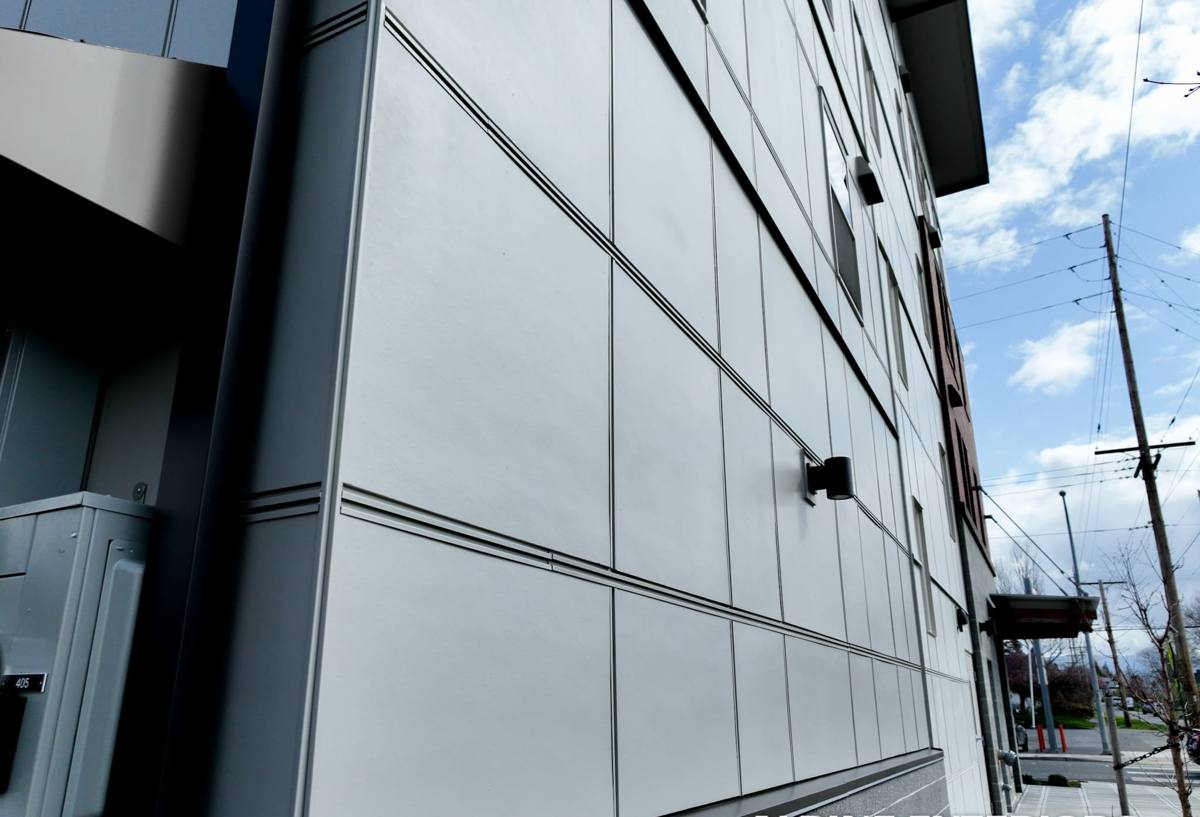
What Whatcom County's Climate Does to Siding Over Time
Every siding material reacts differently to the conditions around Lynden, but the underlying stressors are the same for all of them:
- Driving rain — wind-driven moisture doesn't just hit a wall, it gets pushed sideways and upward under laps, around trim, and into any gap that wasn't sealed or flashed correctly the first time.
- Persistent dampness — long stretches without a real drying window mean moisture that gets behind siding doesn't evaporate quickly. It sits, and wood-based products absorb it.
- Moss and algae — a mild, wet climate is ideal growing conditions almost year-round, especially on north-facing walls and shaded siding near trees, fences, and structures that block sun and airflow.
- Freeze-thaw cycling — Whatcom County winters aren't brutally cold, but they do dip below freezing often enough that trapped water in a crack or seam can freeze, expand, and widen the damage.
None of these are exotic problems. They're standard Pacific Northwest siding stressors — but Laurel's rural, semi-open setting means less shelter from wind-driven rain than a tightly built-up neighborhood might offer, and more shaded, damp microclimates around mature trees and outbuildings where moss gets a head start.
The Repair Calls We See Most Often Around Laurel
Cedar and wood siding
Cedar looks the part but is a soft, absorbent wood. The repairs we see most are rot at butt joints, cupped or split boards from repeated wetting and drying, and paint failure that's a symptom of moisture underneath rather than just an aged finish. By the time cedar shows visible rot, the damage usually extends further than the board itself.
LP SmartSide and other engineered wood products
These are wood-strand products with a resin binder, and their weak point is edge and seam swelling once moisture gets past a compromised seal — often at cut ends, nail penetrations, or caulked joints that have opened up. Once swelling starts, it doesn't reverse; the repair is a replacement of the affected panel, and often the panels around it show early signs of the same issue.
Vinyl siding
Vinyl doesn't rot, but it does crack in cold snaps, warp near heat sources like dryer vents, and pop out of its track from wind or age. Vinyl repairs are usually straightforward panel swaps — the harder part is finding matching material once a color has faded or been discontinued.
James Hardie fiber cement
Hardie siding holds up well against moisture and moss compared to wood-based products, since it's cement-based rather than wood-based. The repair calls we get on Hardie siding are almost always installation-related — caulk joints that failed, panels installed too tight to the ground or a deck, or impact damage — not the material breaking down on its own.
What a Correct Repair Actually Involves
A repair that holds up in this climate has to address water management, not just appearance. That means:
- Finding the actual moisture path. We pull back damaged siding to see where water is actually getting in — often it's a flashing gap, a caulk failure, or a nailing pattern issue well beyond the visible damage.
- Checking the water-resistive barrier and flashing. If the house wrap or flashing behind the siding is torn, missing, or installed backwards, replacing the siding on top of it just resets the clock on the same failure.
- Matching material correctly. Patch repairs need to match not just color but profile, reveal, and thickness — mismatched patches are often more visible than the damage they replaced.
- Re-sealing and re-flashing properly. Every joint, corner, and penetration gets sealed to shed water, not trap it, using materials rated for exterior exposure in a wet climate.
- Addressing the cause, not just the symptom. If moss growth or standing water caused the original damage — poor grading, a plugged gutter, vegetation too close to the wall — we'll flag it, because a repair without fixing the cause is temporary.
When Repair Is the Right Call — and When It Isn't
Not every damaged section needs a full re-side, and we don't push replacement when a repair will genuinely hold. But there's a point where patching stops making sense, and being honest about that point is part of doing this job right.
| Factor | Repair usually makes sense | Replacement usually makes more sense |
|---|---|---|
| Extent of damage | Isolated to one or two wall sections | Recurring damage across multiple elevations |
| Underlying material condition | Rest of the siding is structurally sound | Widespread swelling, rot, or cracking elsewhere |
| Age of existing siding | Siding is younger and otherwise performing well | Siding is near or past its expected service life |
| Cause of damage | One-time event (impact, isolated flashing failure) | Systemic moisture issue built into the original install |
| Material match | Matching material is available and will blend acceptably | Discontinued color/profile makes patching visibly obvious |
When a repair call on cedar, LP, or vinyl siding turns up widespread failure rather than a single bad spot, we'll tell you that plainly — and that's usually the point where we talk about James Hardie fiber cement as the replacement option, not because every job needs to become a sales pitch, but because a homeowner deciding whether to keep patching or start over deserves a straight answer about what's actually holding up long-term in this climate and what isn't.
Why We Point Toward James Hardie When Repair Isn't Enough
We only install James Hardie fiber cement siding — we don't install LP SmartSide, vinyl, cedar, or other fiber cement brands. That's not a marketing line, it's a standard we hold because of what we see in repair calls. Hardie is cement-based rather than wood-based, so it doesn't absorb moisture and swell the way engineered wood products can, and it doesn't feed moss and mildew growth the way bare or aging wood does. Its factory-applied ColorPlus finish is baked on rather than field-painted, which matters in a climate where repainting siding every few years isn't realistic for most homeowners. And Hardie's HZ product lines are engineered for climate zones like ours, with moisture and freeze-thaw performance built into the product rather than left to the installer to compensate for.
None of that means other products are junk — cedar has real appeal, vinyl is inexpensive, engineered wood has its place. But when a homeowner in Laurel is standing in front of a wall that's failed once already, we think they deserve the straight version of why we standardized on one product instead of five.
Our Process for a Laurel Siding Repair
- On-site diagnosis — we look at the damage in context: drainage, grading, sun exposure, nearby vegetation, and how the rest of the wall is holding up.
- Honest scope — you get a clear explanation of what's a true repair versus what's an early warning sign of a bigger issue.
- Material matching — for patch repairs, we source material that matches profile and finish as closely as possible, and we'll tell you upfront if a perfect match isn't realistic.
- Correct water management — flashing, house wrap, and sealant get addressed as part of the repair, not skipped to save a step.
- Cleanup and a straightforward invoice — no surprise add-ons once work has started; anything beyond the original scope gets discussed with you first.
Living with Moss: What Homeowners Can Do Between Repairs
A long moss season doesn't mean moss growth is inevitable damage — it means ongoing maintenance matters more here than in drier climates. A few habits go a long way:
- Keep gutters clear so water sheds off the roof rather than sheeting down the siding face.
- Trim back vegetation and tree limbs that shade siding and block airflow, especially on north- and east-facing walls.
- Rinse visible moss and algae buildup with a gentle wash rather than a high-pressure spray, which can force water behind seams and joints.
- Have caulked joints and trim checked every couple of years — caulk is a maintenance item on any siding material, and it's usually the first thing to fail.
A Quick Checklist Before You Hire a Repair Contractor in Laurel
- Do they inspect what's behind the damaged siding, or just quote replacing the visible piece?
- Will they explain what caused the damage, not just fix the symptom?
- Do they carry current licensing and insurance for exterior work in Washington?
- Can they match your existing material, and will they tell you honestly if they can't?
- Do they know the difference between a one-time repair and a sign you should be planning for a full re-side?
Why Local Experience in Laurel Matters
A repair crew that regularly works Whatcom County knows which wall orientations take the worst of the driving rain, which neighborhoods hold moisture longer because of tree cover or low sun exposure, and what typical siding ages and installation practices look like in homes built in this area over the past several decades. That local pattern recognition is the difference between a repair that gets it right the first time and one that's back on the schedule next winter.
If you've got a section of siding that's cracked, soft, stained, or just not sitting right anymore, we're happy to take a look and give you an honest read on what it needs — whether that's a straightforward patch or a longer conversation about what comes next. Reach out for a free, no-pressure estimate using the form below.