 Lynden Siding
 Why Laurel Homes Need Windows Built for This Climate
Laurel sits in a part of Whatcom County that takes weather seriously. Homes here deal with a marine-influenced climate off the Salish Sea corridor: salt-laden air that corrodes untreated metal hardware, driving rain that finds every gap in a poor seal, and a moss season that can stretch from late fall through spring. None of that is unique to any one house — it's the baseline every window on every home in this area has to survive, year after year.
Windows are one of the more exposed components on a house. They're penetrations in the building envelope, they carry moving hardware, and they sit right where wind-driven rain hits hardest. When a window is installed correctly for this climate, it stays quiet for decades. When it isn't, the problems show up slowly — a little fogging between panes, a draft you can't quite locate, trim that stays damp longer than it should after a storm — and by the time they're obvious, there's often wood damage behind the wall that didn't have to happen.
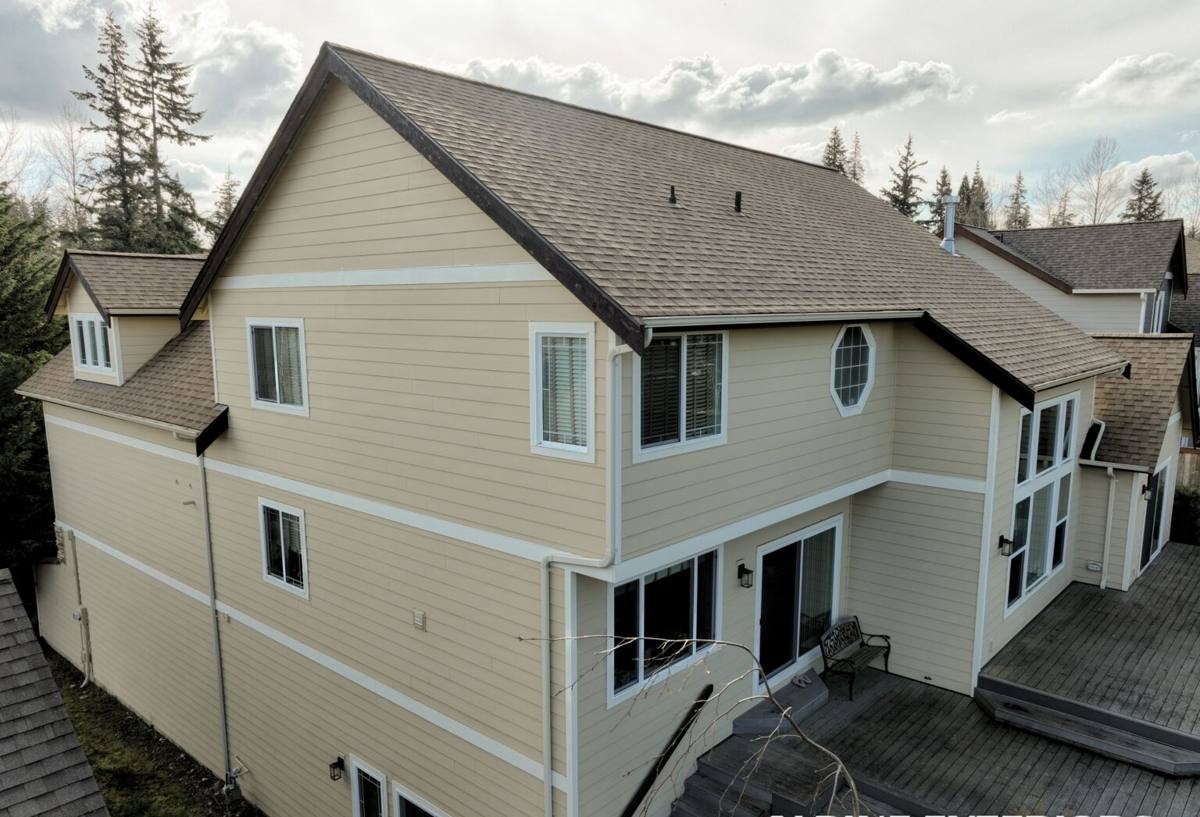
What "Correct" Actually Means for a Whatcom County Window Job
A lot of window problems in this region trace back not to the window unit itself but to how it was flashed and sealed into the wall. Whatcom County's rain isn't just heavy — it's frequently wind-driven, which means water gets pushed sideways into gaps that would stay dry in a calmer climate. Correct installation practice accounts for that directly.
The details that matter most here
- Proper water-resistive barrier integration, so the window's flashing laps correctly with the house wrap — water sheds outward, never behind it
- Sill pan flashing under every window, creating a dedicated drainage path for any water that does get past the exterior seal
- Correctly sequenced flashing tape at the head, jambs, and sill — installed in the right order, not just "somewhere in there"
- Backer rod and quality exterior sealant at the trim line, sized and applied so it can flex with seasonal movement instead of cracking
- Shimming and fastening that keeps the window square and operable, not just visually straight
Skip or rush any one of these steps and the window can look fine for a year or two while moisture works its way into the framing behind the trim. That's a much more expensive repair than the window installation itself.
Choosing Window Materials for Salt Air and Long Wet Seasons
Material choice matters more here than in a drier inland climate. Salt air accelerates corrosion on hardware and fasteners, and constant moisture exposure punishes anything prone to swelling, rot, or coating failure. There's no single "best" window for every home — it depends on your budget, your home's style, and how much upkeep you want to take on.
| Frame Material | Moisture & Salt Air Behavior | Maintenance | Typical Cost Position |
|---|---|---|---|
| Vinyl | Won't rot or corrode; performs well in wet, salt-influenced air | Low — occasional cleaning | Most economical |
| Fiberglass | Excellent dimensional stability, resists moisture and salt exposure very well | Low | Mid to upper range |
| Wood-clad | Interior wood warmth with an exterior cladding shielding it from weather; cladding integrity is critical | Moderate — depends on cladding condition over time | Upper range |
| Aluminum | Prone to corrosion in salt air unless properly coated; conducts cold, prone to condensation | Higher — coating maintenance | Varies |
For most Laurel-area homes, we steer clients toward vinyl or fiberglass for exposed elevations because they hold up to salt air and repeated wet-dry cycling without the coating or corrosion concerns that come with bare aluminum. Wood-clad windows can still be the right call for a home where interior wood trim is part of the design — the key is making sure the cladding and flashing detail are done right, since that's what actually protects the wood underneath.
Glass Packages Worth Considering
Double-pane, low-E, argon-filled units are the practical standard for this climate — they cut down on heat loss during our long wet, cool stretches and reduce condensation risk on the interior glass. Triple-pane is available for homes wanting maximum performance, but for most Laurel homes the added cost doesn't always match the marginal gain over a quality double-pane unit. We'll walk through the actual trade-off for your specific home rather than defaulting to the most expensive option.
Our Installation Process for Laurel Homes
Every home is different, but the sequence we follow doesn't change, because it's built around what actually keeps water out in this climate.
- On-site assessment. We look at existing window condition, framing, current flashing (if any is visible), and how each elevation is exposed to prevailing wind and rain.
- Accurate measurement and product selection. Custom sizing so the unit fits the opening correctly — not a stock size forced into place.
- Removal and opening prep. Old units come out carefully, and we inspect the framing underneath for hidden moisture damage before anything new goes in.
- Flashing and sill pan installation. This is the step that determines whether the window stays dry for the next 20+ years.
- Window installation, shimming, and fastening. Set square, level, and plumb, with proper insulation around the frame.
- Exterior trim, sealant, and finish work. Sealed and finished to match your home's existing exterior.
- Final walkthrough. We test operation, check the seal, and make sure everything is clean before we consider the job done.
Signs Your Current Windows Are Past Their Prime
Homeowners often live with early warning signs for a while before calling anyone, mostly because the symptoms are easy to explain away. Worth checking for:
- Fogging or moisture trapped between panes — the seal has failed and the insulating gas is gone
- Noticeable drafts near the frame, even with the window fully latched
- Difficulty opening, closing, or locking — often a sign of frame movement or warping
- Soft or discolored trim and sill areas, especially on the elevations that take the most weather
- Visible moss or algae growth on sills or trim that keeps coming back no matter how often it's cleaned
- A noticeable rise in heating costs without another clear explanation
Any one of these on its own isn't necessarily an emergency, but a few of them together — especially soft trim paired with a hard-to-operate window — usually means water has already gotten behind the seal.
Energy Performance and Moisture Control Go Together Here
In a climate where windows are wet more months than not, energy efficiency and moisture management aren't separate concerns — they're the same problem viewed from two sides. A tight, well-flashed window keeps conditioned air in and keeps bulk water and humid outside air out. Interior condensation on window glass is often less about the glass itself and more about how much moist air is getting past a poor seal, so a correctly installed, well-sealed window frequently solves both issues at once.
Low-E glass coatings help reduce heat loss through the glass itself, which matters through the long stretches of overcast, cool weather this area gets. It's a modest but real contributor to comfort and heating costs, on top of the bigger factor: whether the window was installed with the right flashing and sealing detail in the first place.
Why It Matters to Hire a Crew That Already Works in Laurel
Window installation isn't identical everywhere. A crew that mostly installs in dry, low-wind climates can do everything "by the book" and still under-detail the flashing for a home that takes wind-driven rain on a regular basis. Working in and around Lynden and the surrounding Whatcom County communities means we're used to building for this specific weather pattern — the salt air, the sustained wet seasons, the moss — not adapting a generic approach after the fact.
That familiarity shows up in small decisions: which elevations get extra attention on flashing detail, which sealants hold up to this level of sustained moisture exposure, and where moss and algae tend to accumulate on a local roofline and trim profile. It's the kind of judgment that comes from doing the work here repeatedly, not from a manual.
Simple Maintenance to Extend the Life of New Windows
A correctly installed window still benefits from basic upkeep, especially in a climate this wet.
- Clean weep holes and tracks a couple of times a year so water can drain as designed
- Rinse pollen, salt residue, and grime off glass and frames periodically — buildup can hide early sealant cracking
- Check exterior caulk and sealant lines annually, particularly after a hard winter, and re-seal any cracked sections promptly
- Keep gutters and downspouts clear so roof runoff isn't sheeting down over window heads
- Trim back vegetation that keeps foliage or moisture pressed against window trim
None of this takes much time, but it's the difference between a window that performs well for its full service life and one that develops preventable problems early.
Get a Straightforward Look at Your Windows
If you're weighing whether it's time to replace windows on your Laurel-area home, or you're planning new construction and want the flashing and material choices done right from the start, we're happy to take a look and give you an honest read on where things stand. There's no pressure and no obligation — just a straight assessment and a clear estimate, using a free form below.