 Lynden Siding
 Roofing Built for Laurel's Corner of Whatcom County
Laurel sits in a part of Whatcom County where the weather doesn't do anything halfway. Winters bring long stretches of driving rain that comes in sideways more often than straight down. Spring and fall stay damp enough, for long enough, that moss gets a real head start on any roof that isn't shedding water and drying out the way it should. And because this whole corner of the county sits close enough to the water that moisture-laden marine air moves through regularly, homes here deal with a slow, steady exposure to salt-tinged moisture that inland regions of the state simply don't see. None of that is dramatic on any single day. It's the accumulation, year after year, that separates a roof that lasts from one that doesn't.
Asphalt shingle roofing is still the right call for the overwhelming majority of Laurel homes — it's proven, it's serviceable, and when it's installed correctly for this climate, it holds up well for decades. The catch is "installed correctly for this climate." A shingle roof put on with generic, one-size-fits-all methods will underperform here. One built with Whatcom County's rain and moss cycle in mind will not.
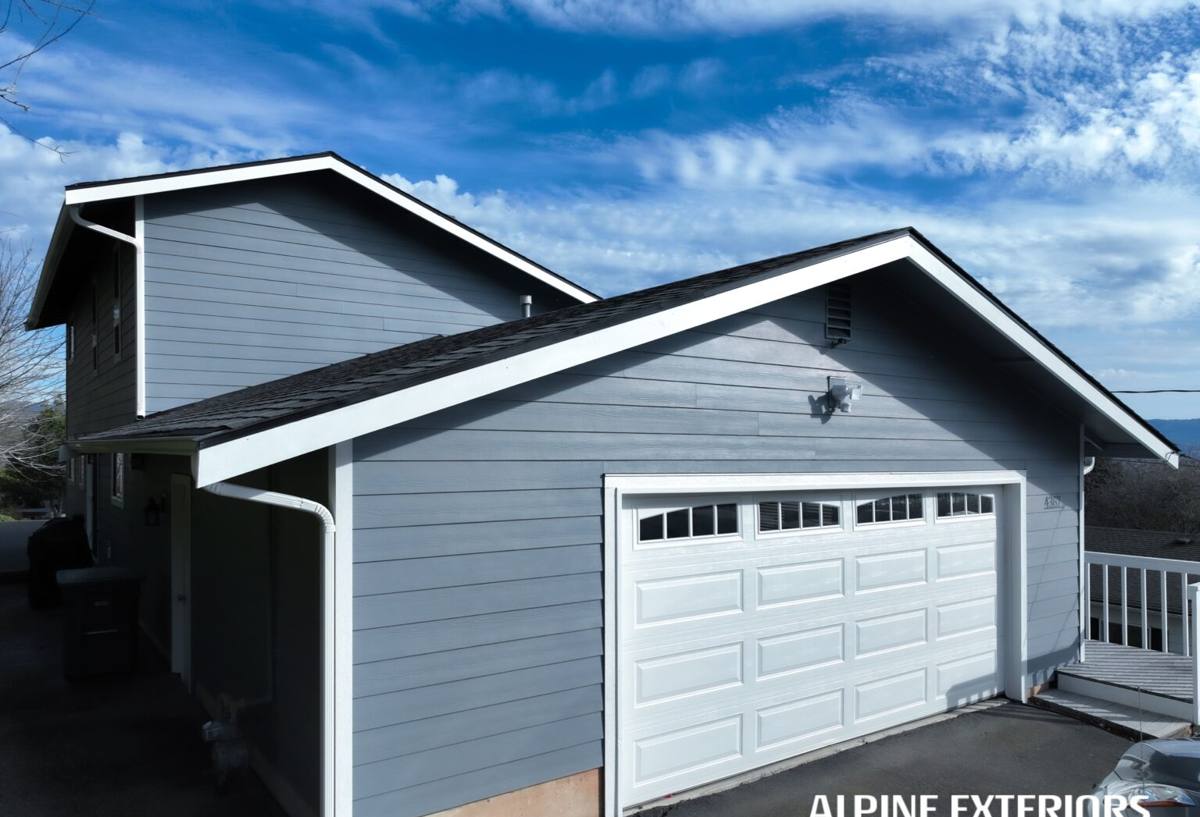
What This Climate Actually Does to a Shingle Roof
Driving Rain and Wind-Driven Moisture
Most asphalt shingle failures we see in this area aren't failures of the shingle itself — they're failures at the seams, edges, and penetrations where wind-driven rain gets pushed somewhere it was never supposed to go. When rain comes in at an angle instead of falling straight down, it can work its way up under shingle tabs, around chimney flashing, and along valleys if those details weren't built with enough margin for error. A roof that would perform fine in a drier, calmer climate can leak here simply because it wasn't detailed for sideways rain.
Moss and Prolonged Dampness
Moss doesn't attack a roof directly, but it changes how the roof behaves. Once moss colonies establish themselves — usually on north-facing slopes, under tree cover, or anywhere shingles stay shaded and damp longer than the rest of the roof — they hold moisture against the shingle surface instead of letting it drain and dry. Over time that trapped moisture lifts shingle edges, degrades the granule surface that protects the asphalt from UV and weather, and creates channels where water can get pushed backward under the shingle course above it. A roof that sheds water quickly and dries out between storms will always outlast one that stays damp.
Salt-Influenced Air
Salt-laden moisture in the air is harder to see the effects of, but it shows up over the years in accelerated corrosion of exposed metal — nail heads, flashing, and fasteners that aren't rated for it. Once a fastener starts to corrode, it loses grip and seal, which is exactly where small leaks start. This is why the metal and fastener choices on a roofing job matter just as much as the shingle brand.
What a Correct Job Looks Like Here
A shingle roof isn't really one product — it's a system of layers and details that all have to work together. In Laurel's climate, a handful of those details matter more than they would somewhere drier and calmer.
- Ice-and-water shield or high-quality synthetic underlayment at eaves, valleys, and around every penetration — the second line of defense when wind-driven rain gets past the shingle surface
- Properly lapped and sealed underlayment across the whole deck, not just the vulnerable spots, so the roof still sheds water even if a shingle is ever damaged
- Corrosion-resistant flashing and fasteners around chimneys, skylights, and wall intersections, sized and installed to handle the salt-influenced moisture in the air here
- Balanced attic ventilation so moisture from inside the home isn't adding to the moisture load the roof is already handling from outside
- Correct nailing pattern and placement — under-driven or misplaced nails are one of the most common causes of early shingle failure, and they're invisible until something goes wrong
- Valleys and transitions built with extra water-shedding capacity, since these are the areas where wind-driven rain concentrates
None of this is exotic. It's disciplined, correct installation that treats the roof as a full water-management system instead of just a layer of shingles nailed to a deck.
Choosing the Right Shingle for a Laurel Home
There's no single "best" shingle for every house — it depends on the roof's exposure, the home's style, and what the homeowner wants to spend on a roof they won't have to think about for a long time. Here's how the common tiers compare for this climate specifically.
| Shingle Type | Typical Lifespan | How It Handles This Climate |
|---|---|---|
| 3-Tab Asphalt | 15–20 years | Lowest upfront cost; thinner profile means less margin against wind-driven rain and moss damage over time |
| Architectural (Laminate) Asphalt | 25–30 years | Heavier, more rigid, better wind resistance and water-shedding — the standard choice for most Laurel re-roofs |
| Impact-Resistant Architectural | 25–30+ years | Same durability benefits as standard architectural, with added resistance to debris and hail impact |
| Algae-Resistant (Streak-Guard) Options | 25–30 years | Copper-infused granules slow moss and algae growth on shaded, damp-prone slopes — worth it on tree-covered lots |
For most Laurel homes, we lean toward architectural shingles with algae-resistant granules, especially on north-facing slopes or lots with mature trees. The cost difference over a basic 3-tab is modest, and it directly addresses the moss issue that's most likely to shorten a roof's useful life in this area.
Signs a Laurel Roof Needs Attention
Most roofing problems don't announce themselves with a dramatic leak — they show up as small signs first, and catching them early is almost always cheaper than waiting.
- Moss visible on the roof surface, especially on shaded or north-facing slopes
- Granules collecting in gutters or at the base of downspouts
- Shingle edges that look curled, cupped, or lifted rather than lying flat
- Dark streaking or staining across large areas of the roof
- Soft spots or sagging when viewed from the ground or attic
- Daylight visible through the roof deck from inside the attic
- Water stains on interior ceilings, especially after a windy rainstorm
- Flashing around chimneys or vents that looks rusted, lifted, or gapped
Any one of these on its own isn't necessarily an emergency, but it's worth having looked at before the next storm season rather than after.
Repair or Full Replacement — How We Help You Decide
Not every roof problem in Laurel means a full tear-off. A localized leak from a single failed flashing detail or a small area of damaged shingles can often be repaired properly and buy the roof more years. But there's a point where patching stops making financial sense and a full replacement becomes the smarter long-term move.
| Factor | Leans Toward Repair | Leans Toward Replacement |
|---|---|---|
| Roof age | Under 15 years | Approaching or past expected shingle lifespan |
| Extent of damage | Isolated to one area or detail | Widespread granule loss, moss, or curling across the roof |
| Leak history | First occurrence, clear single cause | Recurring leaks in different spots |
| Underlying deck condition | Solid, no soft spots | Soft, stained, or damaged decking found on inspection |
| Plans for the home | Short-term ownership, budget-focused | Long-term ownership, resale value matters |
We'll always tell you honestly which side of that line your roof falls on. A repair that's genuinely the right call is a better outcome for everyone than talking a homeowner into a replacement they don't need yet.
How Our Process Works
Every job starts with an actual look at the roof — not a guess from the ground. We check the shingle condition, flashing, ventilation, and, where accessible, the deck underneath before we recommend anything.
- Inspection and honest assessment — what's actually happening on the roof, and whether repair or replacement makes more sense
- Written estimate — clear scope, materials, and pricing with no surprise add-ons buried in the fine print
- Tear-off and deck check (for full replacements) — old material removed, deck inspected for soft or damaged sections before anything new goes down
- Underlayment and flashing installation — the water-management layer that does the real work in this climate, done to the details outlined above
- Shingle installation — correct nailing pattern, proper exposure, and attention to valleys and transitions
- Ventilation check — confirming intake and exhaust airflow is balanced so the new roof isn't fighting trapped moisture from inside the attic
- Final walkthrough — cleanup, magnetic sweep for stray fasteners, and a review of the finished work with the homeowner
Keeping a Laurel Roof Healthy After Installation
A well-installed roof still benefits from basic upkeep in this climate, particularly around moss and gutter drainage. Keeping gutters clear so water actually leaves the roof instead of backing up under the eaves, trimming back tree limbs that shade a roof section and keep it damp, and having moss treated or removed before it spreads all go a long way toward getting the full lifespan out of a shingle roof here. A quick visual check after major windstorms — looking for lifted shingles or debris damage — is worth the five minutes it takes.
Why It Matters to Hire a Crew That Already Works in Laurel
A roofing crew that works this part of Whatcom County regularly already knows which slopes in a given neighborhood tend to hold moss, how far wind-driven rain typically pushes water up under flashing during a bad winter storm, and what fastener and flashing choices actually hold up against the salt-influenced air here over time. That's not something you get from a crew that mostly works somewhere drier, calmer, or further inland — it comes from doing this specific work, in this specific climate, over and over.
If you're seeing early signs of wear, dealing with a leak, or just want an honest opinion on how much life is left in your current roof, we're glad to take a look. Reach out for a free, no-pressure estimate — there's a form below to get started.