 Lynden Siding
 Window Replacement Built for Kendall's Weather, Not a National Average
Kendall sits in the foothills east of Lynden, close enough to the Nooksack River valley and the Mount Baker foothills to catch weather that's a notch wetter and windier than what you'd see in town. Homes out here take on a steady diet of driving rain off the southwest, long stretches of overcast humidity, and the marine-influenced air that moves through Whatcom County and settles into low-lying, tree-shaded lots. That combination is hard on windows in ways that don't show up right away — it shows up five, ten, fifteen years later as soft sills, fogged glass, and frames that won't latch square anymore.
We install windows across the Lynden area, and Kendall properties get a specific kind of attention because of how they're built and where they sit. A lot of the housing stock out here is older farmhouse and ranch-style construction, sometimes with additions built at different times using whatever windows were common when the work was done. That means mismatched frame materials, inconsistent flashing details, and — in more than a few cases — window openings that were never properly integrated with the water-resistive barrier behind the siding to begin with.
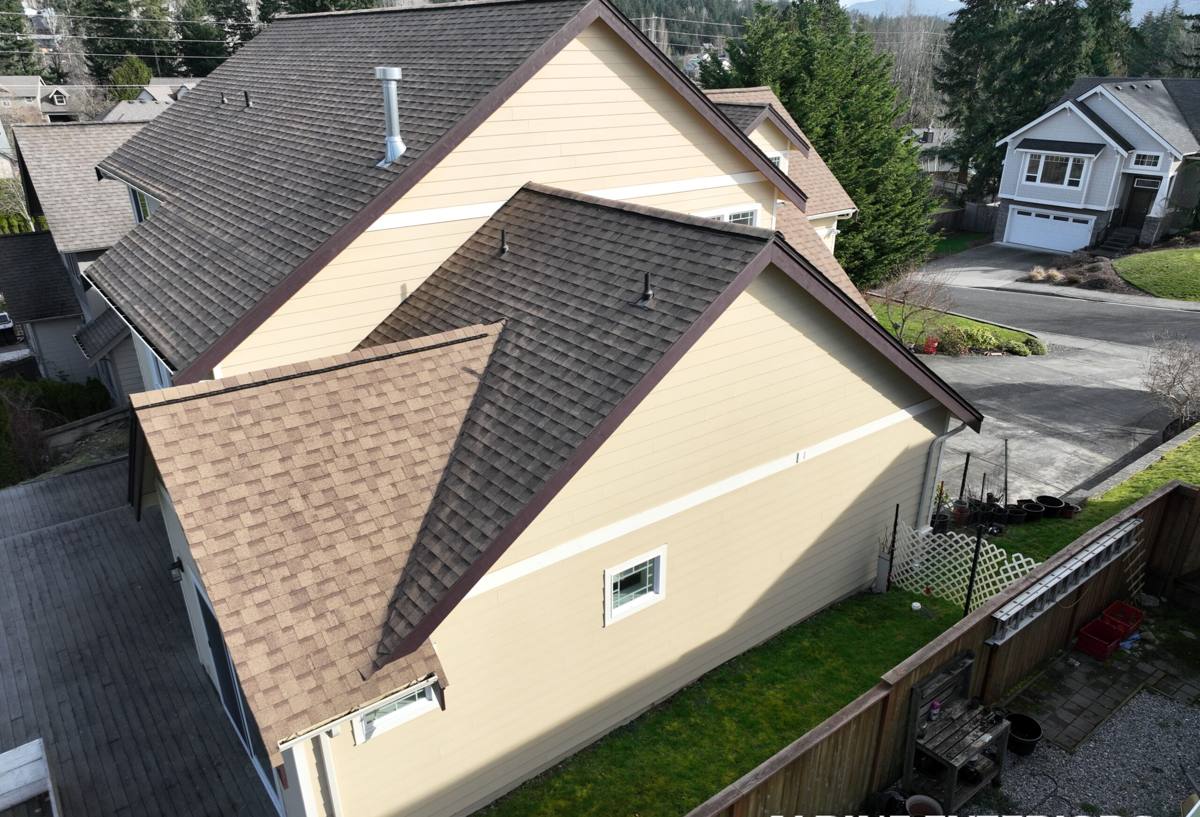
Signs a Kendall Home's Windows Are Past Their Service Life
Window failure in this climate is usually gradual and moisture-driven rather than sudden. The signs to watch for:
- Fogging or a milky haze between panes of double-glazed glass — the seal has failed and the gas fill (or trapped air) is compromised.
- Soft or spongy wood at the sill or lower corners of the frame, often hidden under paint that still looks fine.
- Visible moss or dark green-black staining on the exterior trim or sill, especially on north- and west-facing windows that stay shaded and damp longer.
- Drafts you can feel with a hand near the frame on a windy day, even with the window latched.
- Difficulty opening, closing, or locking — swollen wood or warped vinyl frames binding in the tracks.
- Condensation forming on the inside of the glass regularly through fall and winter, which points to poor seal performance, not just humidity indoors.
Any one of these on its own might not mean a full replacement is due. Several together, especially on windows that are original to the home or older single-pane units with storm windows added later, usually mean the frame and seal system have reached the end of what caulk and weatherstripping can fix.
What Correct Window Replacement Actually Involves
Swapping the sash for a newer unit and calling it done is the fastest way to end up back in the same spot in a few years. A correct replacement in a climate like this one is really a water-management job first and a window-fitting job second. That means:
Opening Inspection Before Anything Goes In
Once the old window is out, we look at what's actually behind it — the sheathing, the framing, and any water-resistive barrier or building paper. In Whatcom County's climate, it's common to find some degree of moisture staining or minor rot around older openings that were never flashed correctly. That gets addressed before the new window goes in, not covered over.
Flashing That Actually Sheds Water
Proper flashing — a sill pan, side flashing that laps correctly over the weather-resistive barrier, and head flashing integrated above the opening — is what keeps driving rain from working its way behind the window and into the wall cavity. This is the step that gets skipped most often on lower-cost jobs, and it's the one that matters most given how much wind-driven rain this area sees.
Air Sealing and Insulation Around the Frame
Gaps around the new frame get sealed and insulated properly, not just stuffed with fiberglass or left to a bead of caulk on the interior trim. A tight, correctly insulated gap is what stops both drafts and the kind of condensation that leads to mold on interior sills.
Exterior Finish Detail
Trim, caulking, and paint or sealant at the exterior are finished to shed water away from the seams, not trap it. On homes with wood trim, this is also where we look at whether the trim itself needs attention before it goes back around a brand-new window.
Choosing a Frame Material for a Kendall Property
There's no single "best" window material — it depends on your home's exposure, your budget, and how much upkeep you want to take on. Here's how the common options hold up under the rain, humidity, and moss pressure typical of this area:
| Frame Material | Moisture Performance | Maintenance | Typical Fit |
|---|---|---|---|
| Vinyl | Won't rot; seams and welds are the main long-term watch point | Low — occasional cleaning | Most homes; best value for straightforward replacements |
| Fiberglass | Very stable in wet/dry cycling; holds paint well if color changes are wanted later | Low to moderate | Homes wanting a higher-end look with vinyl-level durability |
| Wood (clad exterior) | Good if the exterior cladding is intact; interior wood still needs protection from condensation | Higher — exterior clad needs inspection over time | Homes prioritizing a traditional wood interior look |
| Aluminum | Prone to condensation without thermal breaks; not our default recommendation for this climate | Moderate | Rarely the right call for Whatcom County homes without upgrades |
For most Kendall homes, vinyl or fiberglass frames are the practical choice — they don't give moisture a foothold the way untreated or poorly clad wood can, and they hold up to the area's long wet season without the upkeep schedule that wood exteriors demand.
Glass and Performance: What Matters Beyond "Double-Pane"
Almost every replacement window sold today is at least double-glazed, so that's not really the decision point anymore. What matters more in this climate:
- U-factor — how well the window resists heat loss. Lower is better for keeping heating costs down through Whatcom County's long, cool, wet winters.
- Low-E coatings — help manage heat transfer and can reduce interior condensation risk, which matters on windows that face shaded, damp corners of the lot.
- Argon or krypton gas fill — improves insulating performance but depends on a well-manufactured seal to keep working over time; this is part of why we're selective about which product lines we install.
- Weatherstripping and lock hardware quality — a good sash held by weak weatherstripping or a flimsy lock will still let in drafts, regardless of how good the glass package is.
We don't push the most expensive glass package on every job. What we push is matching the window's performance rating to how that specific opening is exposed — a north-facing window in a shaded, damp corner of a Kendall lot has different needs than a sheltered, south-facing one.
How We Approach a Kendall Window Replacement
- On-site assessment. We look at each window individually — exposure, current condition, framing, and any signs of past water intrusion — rather than quoting a flat per-window price without seeing the house.
- Honest scope. If some windows are fine and others need replacing, we'll say so. We're not interested in selling a whole-house job when three windows are the actual problem.
- Removal and opening repair. Old units come out, the opening gets inspected, and any rot or damaged sheathing is repaired before the new window goes in.
- Proper flashing and sealing. Sill pan, flashing laps, air sealing, and insulation are done to the same standard regardless of the window's price point.
- Finish work and cleanup. Interior and exterior trim finished, hardware checked, and the site cleaned up — no half-finished punch list left behind.
Questions Worth Asking Before You Hire Anyone
Window replacement is one of those jobs where the visible result can look identical whether it was done right or done fast. A short checklist worth going through with any contractor bidding the work:
- Will they inspect the opening for rot or moisture damage before installing, or just swap the unit?
- What's their flashing and sill pan approach — can they describe it, not just say "we flash everything"?
- Do they carry current liability insurance and, if required for the scope of work, appropriate licensing?
- Will they give a written scope that lists window-by-window condition and recommendation, or just a lump-sum number?
- Do they warranty their installation labor separately from the manufacturer's product warranty?
Why Local Experience in Kendall Matters
A crew that already works this area knows what to expect before they pull the first window — which orientations tend to have moss and staining, which construction eras around Lynden and Kendall are more likely to have flashing shortcuts, and how much drying time to plan around given the season. That's not something you get from a crew that's only worked drier, more sheltered parts of the region. It also means we're not learning on your house — we've already seen how this area's rain and humidity treat window openings over time, and we build the replacement to hold up to that, not to a generic spec sheet.
If your windows are fogging, drafting, sticking, or just showing their age, we're happy to take a look and give you a straight assessment — no pressure, no upsell on windows that don't need it. Reach out for a free estimate and we'll walk the house with you.