 Lynden Siding
 Window Installation for Kendall Homes, Done by People Who Already Work Out Here
Kendall sits in the foothill country east of Lynden, where the land starts climbing toward the Cascades and the tree cover gets thicker. It's a different pocket of Whatcom County than the flat farmland closer to town, but the weather doesn't care about that distinction. Marine air still pushes through, rain still comes in sideways during winter storms, and the damp shade under all those trees means moss and mildew get a head start on any wood or trim that isn't protected. Windows take the brunt of it, because a window isn't one solid piece — it's a frame, a sash, glass, weatherstripping, and a seal against the wall, and every one of those parts has to be installed correctly or water finds its way in.
This page is about one job in one area: replacing or installing windows for homes in and around Kendall. We're not going to give you a generic rundown of window brands. We're going to walk through what actually matters for a house sitting in this part of the county, what a correct installation looks like, and why the crew doing the work matters as much as the window itself.
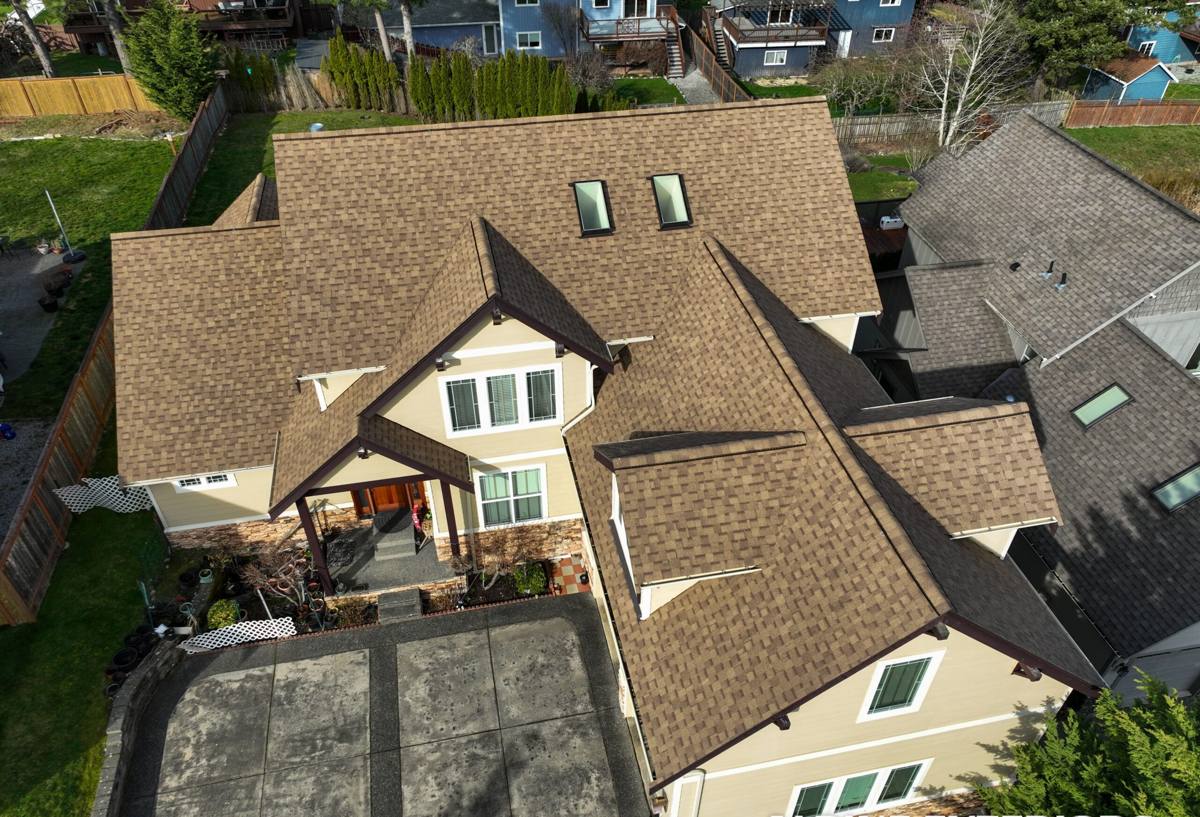
What Kendall's Climate Actually Does to a Window Opening
Whatcom County's marine-influenced climate means long stretches of steady, driving rain rather than short violent storms — and that's actually harder on a window opening than a hard downpour. Water doesn't just hit the glass, it works sideways under wind pressure and sits against the frame for hours or days at a time. Add Kendall's tree cover and you get slower drying times after every rain event, which is exactly the condition moss, algae, and wood rot need to take hold.
- Prolonged dampness: shaded lots dry out slower, so any gap in the seal around a window stays wet longer instead of drying between storms.
- Temperature swings: cold nights and mild days cause condensation on interior glass, which over time can migrate into the frame if the unit isn't sealed and insulated properly.
- Wind-driven rain: exposed or elevated sites catch more sideways rain, putting real pressure on flashing details around the window's top and sides.
- Moss and organic growth: anywhere wood trim or old caulking has softened, moss gets a foothold and holds moisture against the building even longer.
None of this is unique to Kendall, but it's more pronounced here than in more open, sunnier parts of Whatcom County. A window installed without accounting for it might look fine for a year or two before the real problems — soft framing, fogged glass, drafts — start showing up.
What a Correct Window Installation Actually Involves
A window replacement is often sold as a quick swap: pull the old one, drop in the new one, caulk the edges. Done that way, it will leak eventually — usually not the first winter, but within a few years, once the caulk shrinks or the wood beneath it starts to move. A correct installation treats the window opening as a system.
The sill pan and drainage plane
Before a new window ever goes in, the sill — the bottom of the rough opening — needs a sloped, waterproof pan that directs any water that gets past the window back outside, not into the wall cavity. This is one of the most commonly skipped steps in a fast installation, and it's the single biggest reason windows fail from the inside out.
Flashing, top to bottom
Flashing tape or building paper has to be layered correctly — like shingles — so water sheds downward and outward at every layer. The head flashing above the window is especially important in a wind-driven-rain climate, since that's where water pressure is highest during a storm.
Shimming and squaring
A window that isn't shimmed level and square will bind, won't lock tight, and will develop gaps in the weatherstripping over time. This is a slower part of the job, but it's what determines whether the window still operates smoothly five or ten years from now.
Insulation without overpacking
The gap between the window frame and the rough opening needs to be filled with a low-expansion foam or batt insulation — not packed so tight it bows the frame, which throws off the operation of the sash and can crack the seal on an insulated glass unit.
Interior and exterior sealing
Sealant on the outside keeps bulk water out. An air seal on the inside keeps conditioned air in and stops moist interior air from reaching cold surfaces where it condenses. Skipping the interior air seal is a common shortcut that shows up later as condensation between the sash and the frame.
Signs Your Current Windows Are Already Past Due
Most homeowners don't think about their windows until something is visibly wrong. Here's what to look for, especially on a Kendall property where drying time is slower and problems can sit hidden longer:
- Fogging or a permanent haze between the panes of double-pane glass — the seal has failed and the gas fill is gone.
- Soft or spongy trim around the window, especially at the bottom corners.
- Visible moss or dark staining on the sill, casing, or siding directly below a window.
- Drafts you can feel with a hand near the frame on a windy day.
- Difficulty opening, closing, or locking — a sign the frame has shifted out of square.
- Paint that's bubbling or peeling specifically around the window, not the wall in general.
Any one of these on its own isn't an emergency. Several of them together, especially on a north- or west-facing wall that takes the brunt of our weather, usually means it's time to replace rather than patch.
Choosing the Right Window for This Part of the County
There isn't one universally "best" window — the right choice depends on your home's exposure, your budget, and how much upkeep you want to take on. Here's how the common frame materials compare for a Kendall home:
| Frame Material | Moisture Handling | Maintenance | Typical Fit For |
|---|---|---|---|
| Vinyl | Doesn't rot or absorb water; seams need good installation to stay tight | Low — no painting, occasional cleaning | Most Kendall homes; best value for the climate |
| Fiberglass | Very stable, resists warping in temperature swings | Low to moderate | Exposed walls, homes wanting a higher-end feel with low upkeep |
| Wood / wood-clad | Handsome, but exterior wood is vulnerable in constant damp shade | High — regular painting or staining required | Sheltered elevations only, or homeowners committed to upkeep |
| Aluminum | Conducts cold and promotes condensation unless thermally broken | Low | Rarely our recommendation for this climate |
We don't push one brand or material on every job. What we do insist on is matching the material to the exposure — a shaded, damp wall in Kendall's tree cover is not the place for a high-maintenance wood exterior unless you're genuinely willing to keep up with it.
Glass Performance Matters as Much as the Frame
Look for a window with a low U-factor (better insulation) and a solar heat gain coefficient suited to our mostly overcast climate — we don't need to block sun the way a desert climate would, but we do need to stop heat loss on cold, still winter nights. Double-pane with a low-E coating and argon fill is the standard for good reason; it's a solid balance of cost and performance for this region.
How We Approach a Kendall Window Job
- On-site assessment: we look at the existing opening, check for hidden water damage, and note the exposure of each wall before quoting anything.
- Removal: old windows and any compromised trim come out carefully so we can inspect the framing underneath, not just the window itself.
- Framing repair if needed: if we find soft wood or prior water intrusion, we address it before a new window ever goes in — installing a new window into damaged framing just hides the problem.
- Sill pan and flashing: installed in the correct sequence so water always has a path back outside.
- Window set, shimmed, and squared: checked for level and smooth operation before final fastening.
- Insulation and dual sealing: interior air seal and exterior weather seal, done as separate steps, not one bead of caulk doing both jobs.
- Interior and exterior trim finish: matched to your home's existing look, sealed and painted or caulked as appropriate.
- Final walkthrough: we operate every window with you before we consider the job finished.
What Drives the Cost
Every home is different, but these are the main factors that move the price of a window installation up or down:
| Factor | Effect on Cost |
|---|---|
| Frame material (vinyl vs. fiberglass vs. wood-clad) | Vinyl is typically the most economical; fiberglass and wood-clad cost more upfront |
| Number of windows replaced at once | Doing several at once usually lowers the per-window labor cost |
| Hidden framing damage | Rot repair adds cost but is far cheaper to fix now than after it spreads |
| Window size and glass type | Larger units, custom shapes, or upgraded low-E glass add cost |
| Access and elevation | Second-story or hard-to-reach windows take more time and equipment |
| Trim and siding tie-in | Matching existing exterior finish adds a finishing labor step |
We'll walk through these specifics for your home before any work starts, so there are no surprises once the crew shows up.
Why a Crew That Already Works Kendall Makes a Difference
A contractor based somewhere else can install a window that looks correct. The difference with a crew that regularly works this part of Whatcom County is that we've already seen how the local exposure — the tree shade, the extended damp periods, the wind patterns that funnel through the foothills — plays out on real homes over time. We know which details can't be shortcut here, because we've been the ones called back to fix the ones that were. That's not a marketing point, it's just what happens when you work the same area year after year: you learn which corners actually matter and which ones don't.
We also know the practical side of working in Kendall — permitting expectations for the area, typical framing styles found on homes here, and how to schedule around the wetter months so an opening isn't sitting exposed longer than it has to be.
Keeping New Windows Performing Once They're In
A properly installed window still benefits from a little attention:
- Wipe down sills and tracks a couple times a year to keep drainage weep holes clear of debris and moss spores.
- Check exterior caulking annually, especially on shaded or north-facing walls, and touch up any cracking before winter rains set in.
- Keep gutters clear so overflow isn't running down the wall above a window opening.
- If you notice a new draft, sticking sash, or fogging between panes, address it early — these are cheaper fixes when caught early than after the surrounding trim is compromised.
If you're weighing whether it's time to replace windows on a Kendall property, or you just want an honest look at what shape your current ones are in, we're glad to come take a look. The estimate is free, there's no pressure, and you'll get a straight answer about what your home actually needs — use the form below to get started.