 Lynden Siding
 Siding That Has to Work in Two Climates at Once
Aldergrove sits close enough to Lynden that the weather doesn't care which side of the border a house is on. Homes here take the same marine push of moisture off the Georgia Strait and Puget Sound lowlands, the same long stretch of grey, drizzling months, and the same moss growth that spreads across north-facing walls and anything shaded by a fence line or mature fir. Add the fine salt content that rides in on coastal air even this far inland, and you've got an exterior environment that's genuinely hard on siding — not dramatic, just relentless.
We install James Hardie fiber cement exclusively, and Aldergrove is one of the communities just across the line where we regularly work. That matters for a page like this, because the advice here isn't generic. It's shaped by what actually happens to siding on homes in this specific stretch of the Fraser Valley border area — what fails first, what holds up, and what a correctly detailed Hardie installation needs to do differently than it would in a drier inland climate.
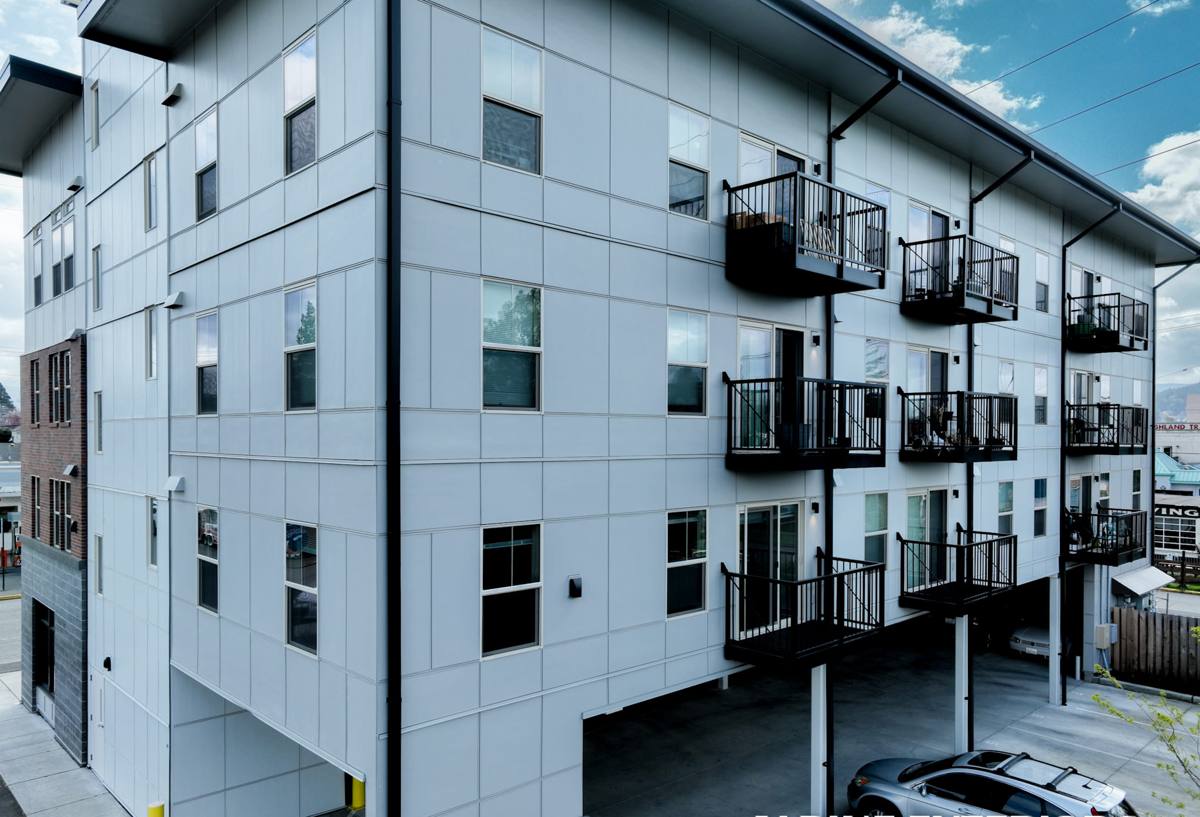
What Aldergrove's Climate Actually Does to Siding
Salt Air, Even Away From the Water
Aldergrove isn't a waterfront community, but it's close enough to the coast that airborne salt still reaches painted and metal surfaces, especially during winter storm systems that push moisture inland. Salt exposure accelerates corrosion on fasteners and trim metal, and it can also affect how well a finish holds up over time if the underlying material and coating aren't built to handle it.
Driving Rain, Not Just Rain
The difference between rain and driving rain matters more than most homeowners realize. Wind-driven rain gets pushed sideways into laps, seams, and butt joints instead of simply running down a wall. A siding system that's watertight in calm conditions can still let moisture in in this area if the flashing details, caulking, and clearances weren't built for wind-driven exposure specifically.
A Moss Season That Runs Most of the Year
Shaded walls, areas under overhangs that stay damp, and anything facing north pick up moss and algae growth for a large part of the year in this climate. Moss holds moisture against a surface long after the rain has stopped, which is exactly the condition that rots wood-based siding and degrades poor-quality coatings. It's a slow, patient kind of damage — the kind that shows up as a maintenance problem years after installation, not a defect you'd catch on day one.
Why James Hardie Fits This Climate
James Hardie fiber cement is engineered specifically to resist the combination of moisture, temperature swings, and biological growth that defines Pacific Northwest weather. A few points matter specifically for Aldergrove-area homes:
- Non-combustible composition — fiber cement doesn't rot, warp, or provide fuel for pests the way wood-based products can, which matters in a damp climate where moisture sits against siding for extended periods.
- ColorPlus factory finish — a baked-on finish applied under controlled conditions holds color and resists fading and moisture intrusion better than field-applied paint, which is relevant given how much of the year this area sees overcast, damp conditions that are tough on job-applied coatings.
- HZ5 engineering — Hardie's HZ5 product line is engineered for climates with freeze-thaw cycles and sustained moisture exposure, which describes this region accurately. Using the correct HZ designation for the zone isn't a minor spec, it's part of how the product is designed to perform.
- Dimensional stability — fiber cement doesn't swell and contract with moisture the way wood or wood-composite products can, which reduces the joint movement that eventually opens gaps for water intrusion.
None of that means Hardie is maintenance-free. It means the base material and finish are engineered to handle this specific set of conditions rather than merely tolerate them.
What a Correct Installation Involves Here
Fiber cement siding's real-world performance depends heavily on installation quality — arguably more than the product choice itself. In a climate like Aldergrove's, a few details separate a siding job that lasts decades from one that develops problems in five to eight years.
Rainscreen and Drainage Plane
A proper rainscreen gap behind the siding lets any moisture that does get past the cladding drain and dry out instead of sitting against the wall assembly. In a climate with this much sustained precipitation, a drainage plane isn't optional detailing, it's the difference between water finding its way out and water finding its way into the sheathing.
Flashing at Every Penetration
Windows, doors, hose bibs, light fixtures, and vents are all places where water looks for a way in, especially under wind-driven rain. Correct flashing — not just caulk — at every one of these penetrations is what actually keeps a wall assembly dry over time. Caulk fails; properly lapped flashing sheds water by design and keeps working after the caulk eventually needs to be redone.
Fastener and Clearance Standards
James Hardie's installation instructions specify fastener type, spacing, and minimum clearances from grade, roof lines, and decks. Those clearances exist specifically to keep the bottom edge of the siding away from splash-back moisture and standing water — a common failure point we see on homes where siding was installed too close to grade or a deck surface.
Caulking and Joint Treatment
Butt joints and trim transitions need to be treated correctly, whether that means factory-mitered corners, back-primed cut edges, or a compatible sealant rated for the application. Cut edges that aren't sealed are one of the more common ways moisture gets into fiber cement siding, and it's an easy detail to miss if a crew is moving fast.
Comparing Siding Options for This Climate
| Factor | James Hardie Fiber Cement | Vinyl Siding | Wood / Engineered Wood |
|---|---|---|---|
| Moisture resistance | Engineered for sustained wet climates (HZ5) | Sheds water but seams and gaps can trap moisture behind panels | Absorbent; vulnerable to rot without diligent maintenance |
| Moss/algae resistance | Non-organic base resists biological growth | Surface can host growth in shaded, damp areas | Organic material is a food source for moss and fungus |
| Salt air performance | Stable finish, non-corrosive base material | Can become brittle and discolor over time | Coatings degrade faster under salt exposure |
| Fire resistance | Non-combustible | Combustible, can melt/deform near heat | Combustible |
| Finish longevity | Factory-baked ColorPlus finish | Color molded in, can fade and chalk | Field-applied paint needs recoating on a cycle |
We install James Hardie only, so this table isn't meant to sell you on a Hardie-vs-everything showdown — it's meant to explain, honestly, why we made that call for homes in this climate specifically.
Our Process for Aldergrove-Area Homes
- On-site assessment — we look at the specific exposure of your property: shade patterns, prevailing wind direction, proximity to grade, existing moisture damage, and any current siding's condition.
- Product and color selection — we walk through Hardie's plank, shingle, and panel options along with the ColorPlus palette, factoring in how each performs against this area's light and moss conditions.
- Written estimate — a clear scope covering tear-off (if applicable), house wrap or rainscreen work, flashing details, and the siding installation itself, with no vague allowances.
- Installation to manufacturer spec — correct fastening, clearances, flashing, and joint treatment, following James Hardie's published installation guidelines for this climate zone.
- Final walkthrough — we go over the finished work with you, including basic care guidance for keeping moss and grime from building up on the finish.
Why a Crew That Already Works This Area Matters
Building codes, permitting expectations, and typical construction details differ between British Columbia and Washington State, even for towns as close together as Aldergrove and Lynden. A crew that regularly crosses that line understands both sets of expectations rather than applying one region's assumptions to the other. Just as important, a crew that's worked on enough homes in this specific pocket of the Fraser Valley border area has already seen how the local combination of salt air, wind-driven rain, and moss plays out on real houses — which north-facing walls need extra attention, which roof lines create runoff problems, and which older homes have moisture issues hiding behind their existing siding before a single new panel goes up.
That local pattern recognition doesn't replace following the manufacturer's installation manual, but it does mean fewer surprises during the job and a better read on what your specific property actually needs.
Signs Your Current Siding May Be Struggling With This Climate
- Persistent moss or dark streaking that returns quickly after cleaning, especially on shaded or north-facing walls
- Soft or spongy spots, particularly near the bottom courses close to grade or deck lines
- Paint that's peeling, bubbling, or chalking well ahead of its expected repaint cycle
- Visible gaps opening at butt joints or trim, a sign of material movement from repeated wet-dry cycling
- Rust staining running down from fasteners or trim, often a salt-air corrosion signal
- Warping or cupping on individual boards, common on wood and engineered wood products in sustained moisture
Any one of these on its own isn't necessarily an emergency, but a few of them together usually mean the wall assembly is taking on more moisture than it should, and it's worth having someone look at it before it turns into a larger repair.
What Homeowners Ask Before Committing
Most Aldergrove-area homeowners we talk to have already dealt with moss, mildew, or peeling paint on a previous siding job, so the questions tend to be practical: how long will this actually last here, what does upkeep look like, and what's different about doing this job right in a climate that stays wet for so much of the year. Those are the right questions to ask any contractor, regardless of which siding product they install.
If you're weighing a siding replacement or repair on an Aldergrove-area home, we're happy to walk the property with you and give you a straight read on what's going on and what it would take to fix it right. Reach out for a free, no-pressure estimate — the form below gets you started.