 Lynden Siding
 Fiber Cement Siding Built for What Acme Homes Actually Deal With
Acme is a quieter, more rural corner of Whatcom County than the towns clustered closer to the water, but its homes still sit squarely inside the same weather system that shapes exterior work across this part of Washington. Marine air moves inland across the whole county, driving rain doesn't fall straight down here any more than it does anywhere else in the region, and a long, damp moss season settles in on shaded and tree-lined walls for most of the year. Wooded lots are more common out this way, which changes how a wall dries out after a storm compared to a home sitting in open farmland closer to town.
We install James Hardie fiber cement siding exclusively, and this page is specifically about what that material needs to do for an Acme property, what a correctly installed job actually involves, and why it's worth working with a crew that already covers this area rather than one bidding it as an unfamiliar stop.
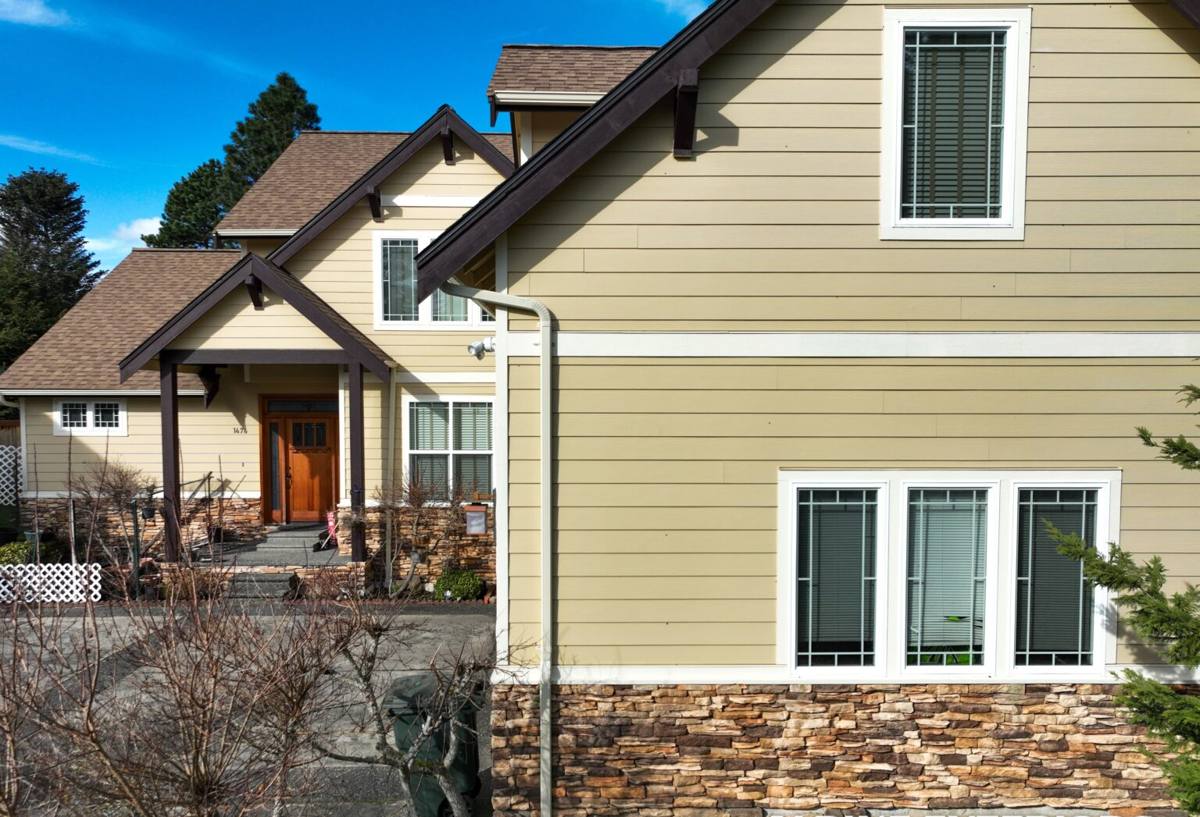
What Acme's Climate Puts a Siding System Through
Salt Air, Even Out Here
It's easy to assume salt exposure is a coastal problem and nothing more, but marine air drifts across the whole of Whatcom County, not just the shoreline towns. Over years, that salt-laden air accelerates corrosion on exposed fasteners, lower-grade trim hardware, and any finish that isn't built to shrug it off. It's a slower process out at Acme than it is right on the water, but it's steady, and it adds up over the life of a siding job.
Driving Rain That Doesn't Fall Straight Down
Storms moving through this region push rain sideways into wall assemblies more often than they let it fall straight down, and that pattern holds whether a home sits in open country or tucked against tree cover. Wind-driven rain finds gaps at loose seams, poorly sealed trim, and under-flashed penetrations far more readily than a calm, straight-down rain ever would. A siding system that isn't detailed to handle that sideways load ends up with water working in behind the cladding, often long before it's visible from the outside.
A Moss Season That Barely Breaks
Between the region's persistent dampness and the tree cover common on rural Acme lots, shaded and north-facing walls can stay damp for most of the year. That's exactly the condition moss and algae need to take hold, and a siding surface that's even slightly porous, or that holds moisture against the substrate instead of shedding it, becomes a growth surface over time. It's more than a cosmetic problem — sustained organic growth traps moisture directly against the wall, and that's the kind of condition that leads to hidden rot if it isn't cleaned or corrected.
Wooded Lots Change the Equation
A lot of Acme properties sit closer to tree lines than homes in more open parts of the county, and that changes how individual walls behave. A wall that catches afternoon sun dries out fine; a wall shaded by trees for most of the day may barely dry between rain events. We look at each wall on its own terms rather than assuming a single climate profile applies evenly across the whole house.
Why Fiber Cement Is the Right Call for a Property Like This
Vinyl, engineered wood, and painted wood siding all have a place in the broader market, and other contractors install them competently. But each carries a real trade-off in a climate with this much sustained moisture and a moss season that barely lets up. Vinyl relies on loose, overlapping seams rather than a sealed surface, which gives wind-driven rain an entry point. Engineered wood siding uses a wood-strand core that's more sensitive to moisture at cut edges and fastener points than a cement-based product. Painted wood needs ongoing maintenance to keep ahead of rot, and that upkeep cost is easy to underestimate at the buying stage.
Fiber cement doesn't share those weak points. It's made from cement, sand, and cellulose fiber, pressed into a dense board that doesn't swell, warp, or feed moisture into the wall assembly the way those other materials can. That's the baseline reason we standardized on it, and it's a better match for a shaded, tree-lined Acme lot than for a dry, open climate somewhere else.
What James Hardie Specifically Brings to an Acme Home
- Climate-engineered HZ5 formulation: Hardie builds different product formulations for different climate zones, and HZ5 is engineered for regions with sustained moisture exposure and freeze-thaw cycling — a real match for this part of Whatcom County.
- Factory-applied ColorPlus finish: The color is baked on under controlled factory conditions rather than brushed on in the field, so it holds up against fading, chalking, and moisture far longer than typical site-applied paint.
- Non-combustible core: Fiber cement doesn't feed a fire the way wood-based siding can, which matters for both household safety and how insurers evaluate a home's exterior.
- Dimensional stability: The board doesn't swell, cup, or warp through repeated wet-season moisture cycles the way engineered wood can.
- A strong, transferable warranty: Hardie's warranty structure is one of the more solid ones in the industry, provided the installation follows the manufacturer's published specifications.
We don't install LP SmartSide, vinyl siding, Cemplank, Allura, primed spruce, or cedar. That's a professional standard, not a sales position — we'd rather install one system exceptionally well than spread that expertise across several products and hope each one holds up equally well on a property like this.
What a Correct Installation Actually Involves
The material only gets an Acme home halfway there. The rest comes down to installation detail, and this is where a lot of siding jobs quietly fall short even when the product itself is a good one.
Clearance and Drainage
Siding needs correct clearance from grade, decking, and roof lines so it isn't wicking moisture up from wet ground — a real consideration on lower-lying or tree-shaded lots where the ground stays damp longer between storms.
Flashing and Water-Resistive Barrier
Every window, door, and penetration needs flashing that actually directs water out and down, backed by a proper house wrap underneath the siding. Caulk is a detail, not a strategy — it shouldn't be doing the job that flashing is supposed to do.
Fastening and Joints
Fastener placement and spacing need to follow Hardie's published specifications, and joints should be lapped and sealed correctly rather than simply butted together. This is the detail that most often separates a fiber cement installation that lasts thirty-plus years from one that shows cracking or finish failure at the seams within the first few winters.
Cost Factors on an Acme Siding Project
Every property is different, and a real number only comes from an on-site look, but these are the factors that most often move the price on a job out this way:
| Factor | Why It Matters Here |
|---|---|
| Existing siding removal | Tear-off adds labor, and hidden moisture damage underneath older siding sometimes surfaces only once it's off |
| Home size and wall complexity | More gables, dormers, and trim detail mean more cutting, flashing, and finish work |
| Lot access and tree cover | Wooded, rural lots can mean tighter staging and scaffolding access than an open in-town property |
| Moisture or rot repair needed | Sheathing repair behind failed siding adds real cost, and it's better to find and fix it than to side over it |
| Product line and profile | Lap siding, panel, and shingle-style Hardie products carry different material and labor costs |
How Our Process Works
- Inspection and estimate: We walk the property, check current siding condition wall by wall, look for signs of trapped moisture, and account for sun, shade, and tree exposure before pricing the job.
- Prep and tear-off: Old siding comes off cleanly, and we inspect the sheathing underneath before anything new goes up — this is where hidden problems get caught rather than covered over.
- Installation to spec: House wrap, flashing, fastening pattern, and joint treatment all follow Hardie's published installation requirements, not a shortcut version of them.
- Final walk-through: We go over the finished work with the homeowner, confirm everything meets spec, and make sure warranty registration is handled correctly.
Why a Crew That Already Works Acme Matters
A contractor who treats Acme as an unfamiliar stop between bigger jobs elsewhere is more likely to miss the details that matter on a property like this — how a wooded, rural lot dries differently than an open one, how far salt-laden air actually reaches inland, and what Whatcom County's permitting process expects for exterior work. We work across this county regularly, Acme included, and we bring the same standards and the same attention to site-specific exposure to a job out here as we would anywhere else in our service area. That familiarity shows up in smaller ways too — knowing to check a shaded north wall more carefully, or recognizing when a tree-lined lot needs extra attention to drainage before siding ever goes up.
Signs Your Acme Home's Siding Needs a Closer Look
- Soft spots, staining, or gaps at seams and corners
- Persistent moss, algae, or dark staining on shaded or north-facing walls
- Cracked, buckled, or warped panels, especially after a hard winter
- Trim or flashing around windows and doors that looks separated or deteriorated
- Peeling or chalking finish that no longer sheds water cleanly
- Rising energy bills with no other clear explanation
If any of that sounds familiar, or you're simply planning ahead for a siding project on an Acme property, we're glad to take a straightforward look and put together a free, no-pressure estimate — just fill out the form below.