 Lynden Siding
 Abbotsford, BC Sits in the Same Wet Coastal Climate We Build For
Abbotsford is a short drive north of Lynden, on the other side of the border in the Fraser Valley, but the weather doesn't change much crossing that line. Salt-tinged air moving in off the Strait of Georgia and the Fraser River delta, long stretches of driving rain through fall and winter, and a moss season that can hang on for most of the year on shaded walls are the same pressures we deal with on job sites throughout Whatcom County. A siding system that isn't built and installed for that specific mix of conditions tends to show it within a handful of years, whether the house sits in Lynden or a few miles north in Abbotsford.
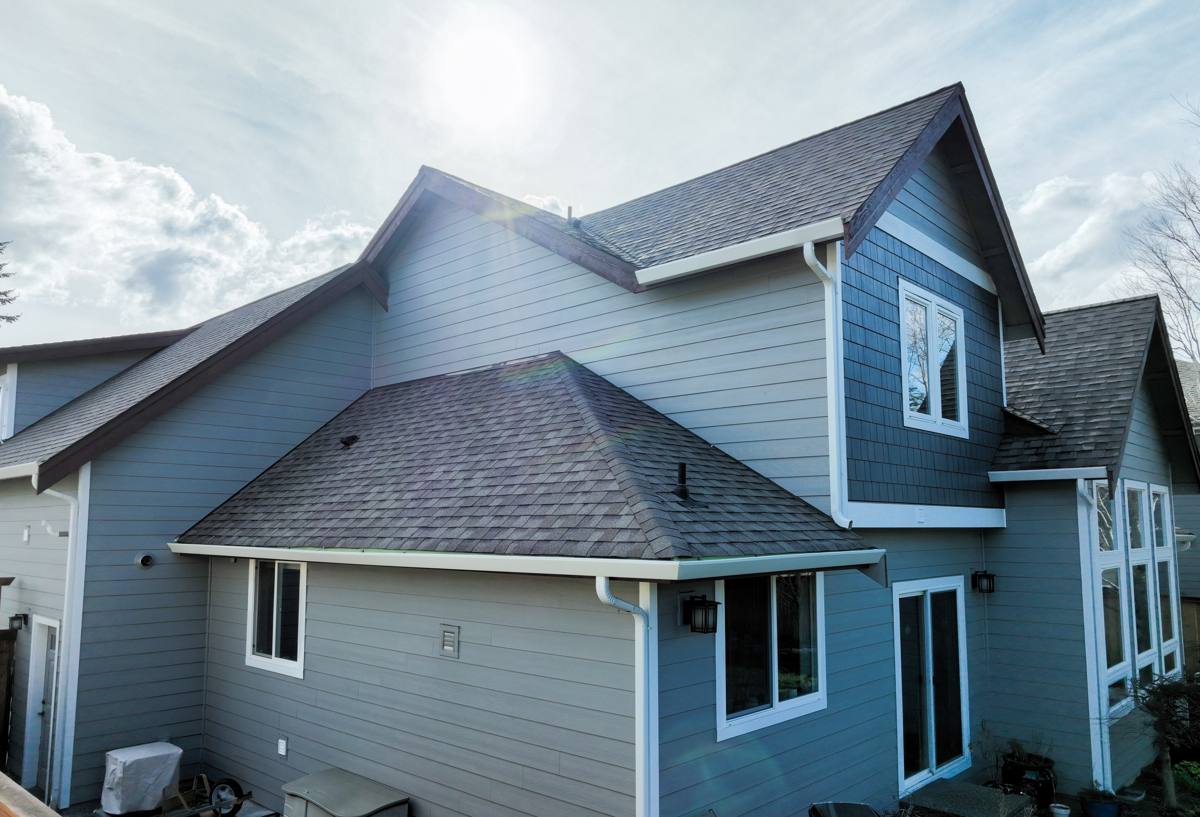
We're based in Lynden, close enough to the border that Abbotsford has been part of our regular working area for a long time, not a market we occasionally bid into. On siding, we install James Hardie fiber cement exclusively. That's not a marketing position, it's a professional standard we settled on after years of seeing what this coastal climate does to different siding materials over time. This page covers what Abbotsford homes specifically need from their siding, what a correct fiber cement installation actually involves, and how our process works for a project on this side of the border.
What This Climate Does to a Wall Over Time
Salt Air and Slow Corrosion
Abbotsford isn't a beachfront community, but marine air still moves inland across the Fraser Valley and reaches most residential lots in the area. Over years, that salt-laden air accelerates corrosion in fasteners, flashing, and lower-grade trim hardware, and it breaks down cheaper paint finishes faster than homeowners expect. It's a slow process, which is exactly why it gets overlooked until a wall's finish or hardware is already compromised.
Wind-Driven Rain
Rain in this region rarely falls straight down. It gets pushed sideways by wind off the valley and delta, driving moisture into lap joints, trim seams, and any gap in a wall assembly that wasn't detailed correctly. That's a heavier load on a siding system's water management than annual rainfall totals suggest, and it's where a lot of siding problems actually start, regardless of which material is on the wall.
A Long Moss and Mildew Season
Mild temperatures, consistent moisture, and plenty of shaded lots add up to a moss and mildew season that can run close to year-round on north-facing and tree-sheltered walls. Any siding surface that holds moisture against the substrate, rather than shedding it, becomes a growth surface over time. It tends to show up first on the walls a homeowner sees least often.
Why James Hardie Fiber Cement Is Our Standard for This Climate
James Hardie siding is a cement-based composite, portland cement, sand, and cellulose fiber, formed into planks and cured. The core material is inorganic, so it doesn't absorb and swell with repeated wet-season moisture cycling the way wood-based products can, and it doesn't offer an organic food source for fungus or insects. Most of what we install carries Hardie's factory-applied ColorPlus finish, a baked-on coating applied under controlled plant conditions rather than brushed on in the field after the siding is up.
- The inorganic core resists warping, cupping, and swelling under the kind of sustained moisture cycling Abbotsford sees most of the year.
- It's non-combustible, which matters for both household safety and insurance underwriting conversations.
- Hardie's HZ5 product line is engineered specifically for regions with significant moisture exposure and freeze-thaw cycling, a close match for the Fraser Valley and northern Whatcom County alike.
- The factory-cured ColorPlus finish holds up to salt air and UV exposure longer than a field-applied paint film, particularly at seams and cut edges where a coating is thinnest.
We don't install LP SmartSide, vinyl, primed spruce, cedar, or other fiber cement brands. That's a deliberate call based on what we've seen hold up on tear-offs and service calls in this exact climate, not a claim that every alternative product fails. Wood-based and vinyl products can perform fine under ideal conditions with disciplined maintenance. Our decision is about the margin for error we're willing to install our name behind, given what sustained coastal moisture does to a wall over twenty or thirty years.
What a Correct Fiber Cement Installation Actually Involves
Material choice is only half the equation. Fiber cement performs the way it's designed to only when the installation details are followed exactly, and those details are also where a lot of otherwise-good jobs go wrong.
Clearances and Water Management
Hardie siding needs specific clearance from grade, roofing, and decks so water has somewhere to go instead of wicking up into the bottom edge of the siding. House wrap, window flashing, and every wall penetration need to be integrated correctly with the siding, because in this climate most siding failures trace back to water getting behind the cladding, not through the panel itself.
Fastening and Joint Detail
Fiber cement is heavier than vinyl or engineered wood and requires the correct fastener type, spacing, and embedment depth, along with proper lapping at every joint. Rushed or incorrect fastening is one of the more common ways a well-specified material ends up underperforming on an actual house, especially on lower-bid jobs where install time gets compressed.
Caulking and Field Cuts
Every field cut needs to be sealed to spec, and joints need the right caulk applied correctly rather than smeared on as an afterthought. Skipping this step is invisible on install day and becomes visible two or three wet seasons later.
Fiber Cement vs. Other Common Siding Options
| Factor | James Hardie Fiber Cement | Vinyl | Engineered Wood / Untreated Wood |
|---|---|---|---|
| Core material | Cement, sand, cellulose fiber (inorganic) | PVC plastic | Wood fiber, treated or untreated |
| Moisture response | Dimensionally stable; doesn't swell or warp | Doesn't absorb water, but can warp or crack in temperature swings | Wood-based core is moisture-sensitive, especially at cut edges |
| Combustibility | Non-combustible | Combustible; can melt or deform near heat sources | Combustible |
| Finish longevity | Factory-baked ColorPlus finish available | Color molded through material, but can fade and chalk over time | Depends heavily on ongoing paint maintenance |
| Performance in salt air and driving rain | Strong; built for this exposure | Adequate, but seams and fastener slots can loosen over time | Weaker unless maintenance is kept up on schedule |
None of these products are inherently disqualified from a general siding market. The comparison that matters for an Abbotsford homeowner is how each one behaves under this specific climate's sustained moisture load, not which one looks best on a spec sheet in a dry-climate market.
Our Process for an Abbotsford, BC Project
Working across the border adds a logistics step, but it doesn't change how we approach the job itself.
- Site visit and assessment. We walk the property, look at wall orientation, existing siding condition, and any signs of moisture damage before quoting anything.
- Straight estimate. You get a written scope and price based on what we actually saw on your house, not a generic per-square rate.
- Scheduling and material staging. We plan crew and material logistics for the trip north ahead of time so a border crossing doesn't turn into schedule slippage on your project.
- Tear-off and substrate check. Removing the old siding is when hidden moisture damage to sheathing or framing usually turns up, and it gets addressed before anything new goes on.
- House wrap, flashing, and fiber cement installation. Water management details get the same attention as the visible finish work.
- Walk-through and cleanup. We go over the finished job with you before we call it done.
Why a Crew That Already Works Abbotsford, BC Matters
A contractor bidding a one-off job across the border, without a routine of doing it, tends to underprice the logistics or skip details they'd normally catch on home turf. Because Abbotsford has been part of our regular working area, the border crossing, material staging, and scheduling around it are things we've already worked out, not variables we're solving for the first time on your project. We're also seeing the same climate on both sides of that line, which means the flashing, clearance, and fastening details we build in for Abbotsford homes come from the same working knowledge we apply on Lynden and Whatcom County job sites, not a generic install spec pulled off a manufacturer's data sheet.
That local repetition also matters after the job is done. If a warranty question or a maintenance issue comes up years later, it's a call to a crew that's still working this area regularly, not one that bid a single job and moved on.
Cost Factors for a Fiber Cement Re-Side
| Factor | What It Affects | Why It Matters Here |
|---|---|---|
| Material selection | Upfront cost per square | Fiber cement costs more upfront than vinyl; the gap narrows over the siding's service life |
| Tear-off vs. overlay | Labor scope and substrate access | Tear-off is the only way to catch moisture damage hidden under older siding |
| Substrate condition | Repair costs before new siding goes on | Years of trapped moisture behind failing siding can rot sheathing and framing |
| Home complexity | Labor time and trim detail | More corners, dormers, and trim mean more joints exposed to wind-driven rain |
| Finish selection | Long-term maintenance cost | Factory ColorPlus finishes outlast field-applied paint against salt air and UV |
Exact numbers depend on the specific house and its current condition, which is why we walk the property before quoting a price rather than working off a flat rate.
Signs a Home's Siding Is Falling Behind This Climate
- Visible warping, cupping, or soft spots, especially near the bottom courses or around windows and doors.
- Paint that's peeling or bubbling rather than just fading evenly.
- Moss or mildew building up on north-facing or tree-shaded walls faster than it used to.
- Gaps opening at seams, corners, or trim boards.
- Rust streaking from fasteners or trim hardware.
- A musty smell or soft drywall on an interior wall that backs onto exterior siding.
Any one of these on its own isn't necessarily an emergency, but they're worth having looked at before the next wet season adds to the damage.
Get a Free, No-Pressure Estimate
If you're weighing siding options for an Abbotsford, BC home, we're glad to come take a look, walk you through what we're actually seeing on your walls, and give you a straight answer about what we'd recommend and why. Reach out using the form below to schedule a free estimate, no pressure and no upsell script.