 Lynden Siding
 Windows in Deming Take a Different Kind of Beating
Deming sits in a part of Whatcom County where the weather doesn't let up for long. Between the driving rain off the Sound, the humidity that settles into the foothills, and a moss season that can stretch from fall into spring, window assemblies here work harder than they do in drier parts of the state. A window that's a perfect fit for a house in eastern Washington can be the wrong choice for a house a few miles outside Lynden — the moisture load alone changes what "correct installation" means.
Most window failures we see in this area aren't about the glass. They're about what happens around the glass: flashing that was never properly lapped, sealant used in place of real weatherproofing, or a nailing fin installed against bare sheathing with no drainage plane behind it. Water finds those gaps eventually, and in a climate that stays wet for months at a time, "eventually" doesn't take long.
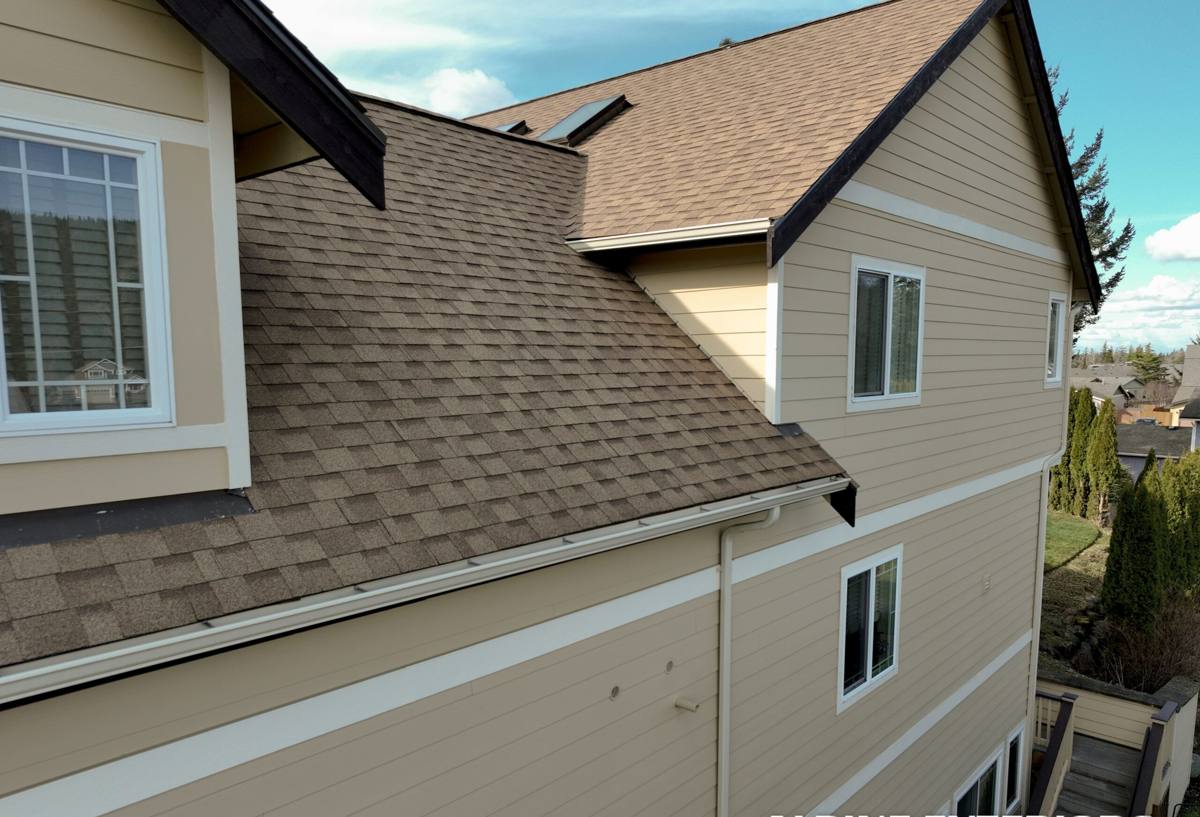
What Correct Window Installation Actually Involves
A window installation is really a small waterproofing project with a window in the middle of it. Done right, every layer works together to keep water moving out and down, never in and behind.
The Sequence That Matters
- Rough opening checked for square, level, and proper dimensions before the old window ever comes out
- Sill pan flashing installed to catch and direct any water that gets past the window itself
- Housewrap or weather-resistive barrier integrated with the flashing in the correct shingle-lap order — not just caulked over
- Window set, shimmed, and fastened per the manufacturer's specific instructions (not a generic method applied to every brand)
- Head flashing installed last, over the top nailing fin, so water is shed outward at every course
- Interior and exterior sealed with the right sealant for the substrate — foam backer rod and low-expansion foam, not just a bead of caulk
Skip or shortcut any one of those steps and the window can look fine for a year or two before the damage starts showing up as soft trim, peeling paint, or a musty smell in the wall cavity below the sill.
Old Windows, New Windows, and What's Underneath
Replacing a window in an older Deming-area home almost always means removing more than the window itself. Old sheathing can be soft from years of minor leaks nobody noticed. Old flashing tape, if there was any, may have failed decades ago. Part of doing this job right is opening things up enough to see what's actually behind the trim before deciding it's ready for a new window — not assuming the wall is fine because the drywall inside looks okay.
Our Process for Deming-Area Homes
We approach every window job the same way, whether it's one window or a whole house:
1. On-Site Assessment
We look at the existing windows, the flashing (or lack of it), and the condition of the framing and sheathing around each opening. We'll tell you honestly if a window needs full replacement, or if a repair or re-flash will hold for now.
2. Product Selection Based on the Opening, Not Just the Budget
We walk through frame material, glass packages, and performance ratings that make sense for this climate and this specific wall — sun exposure, wind exposure, and how sheltered or exposed the opening is all factor in.
3. Removal and Structural Check
Old windows come out carefully so we can inspect the rough opening. Any soft or water-damaged framing gets addressed before a new window goes in — installing a new window over compromised framing just hides the problem for a while.
4. Flashing and Weatherproofing
Sill pan, housewrap integration, and head flashing get installed in the correct order, every time. This is the step that determines whether the window lasts 25 years or 10.
5. Final Fit, Seal, and Walkthrough
We set the window, check operation, seal interior and exterior properly, and walk the finished work with you before we consider the job done.
Signs Your Deming Home's Windows Are Due for Replacement
Not every window problem means full replacement, but these are the signs worth taking seriously in a climate like ours:
- Fogging or moisture between the panes — the seal has failed and the insulated glass unit needs replacing
- Soft or discolored trim and sill wood, especially on the sides that face prevailing wind and rain
- Visible gaps, drafts, or daylight around the frame when the window is closed
- Windows that are difficult to open, close, or lock — a sign the frame has shifted or warped
- Moss or dark staining building up on the sill or the wall just below it
- A noticeable jump in heating costs with no other explanation
Frame Material Comparison for This Climate
There's no single "best" window material — the right choice depends on your home's exposure, your maintenance preference, and your budget. Here's how the common options stack up for a wet, moss-prone climate like Whatcom County's:
| Material | Moisture Performance | Maintenance | Typical Lifespan |
|---|---|---|---|
| Vinyl | Good — won't rot, handles moisture well | Low — occasional cleaning | 20–30 years |
| Fiberglass | Excellent — very stable in wet/dry cycling | Low | 30+ years |
| Aluminum-clad wood | Good exterior protection, wood core still needs care | Moderate — watch for cladding seams | 20–30 years with upkeep |
| Solid wood | Requires diligent upkeep in wet climates | High — regular painting/sealing | Varies widely with maintenance |
We'll tell you plainly if a product isn't a good match for a given opening. A wood window on a south-facing wall with heavy rain exposure and no overhang, for example, is going to demand a maintenance schedule most homeowners don't want to keep up with — that's a trade-off we'd rather explain up front than let you discover in year eight.
What Drives Cost
Every window job is different, but the same handful of factors usually explain most of the price difference between jobs:
| Factor | Why It Matters |
|---|---|
| Frame material and glass package | Fiberglass and higher-performance glass cost more upfront than standard vinyl |
| Condition of the existing opening | Rotted framing or sheathing found during removal adds repair work |
| Number and size of openings | Larger and more numerous windows mean more material and labor |
| Access and story height | Second-story or hard-to-reach windows take longer and may need staging |
| Full-frame vs. insert replacement | Full-frame replacement (removing down to the framing) costs more than an insert but fixes underlying flashing problems inserts can't |
We give straightforward, itemized estimates so you can see what you're actually paying for — not just a bottom-line number.
Why It Matters That We Already Work in Deming
A crew that installs windows across a wide service area learns general best practices. A crew that works Deming and the surrounding Lynden area regularly learns the specifics — which wall orientations take the worst weather, how the local moss and moisture patterns behave on different siding types, and what tends to fail first on homes of a certain age in this area. That local pattern recognition shows up in small decisions during a job: where to add extra flashing attention, which openings deserve a closer look at the framing before anything gets sealed up.
It also means we're not disappearing after the invoice clears. If a question comes up a year or two after installation, you're calling a crew that's still working in the neighborhood, not chasing down a company that only passed through once.
Permits, Codes, and Warranty Basics
Window replacement in Whatcom County may or may not require a permit depending on the scope of the work — a straightforward like-for-like replacement is often exempt, while a full-frame replacement that alters the rough opening or structural elements typically is not. We'll tell you upfront if your project needs one and handle that conversation with you rather than leaving you to figure it out.
On warranty, understand there are two separate coverages: the manufacturer's warranty on the window unit itself (glass seal failure, hardware defects) and our workmanship warranty on the installation. Ask any contractor to spell out both in writing before work starts — a great product warranty doesn't help you if the installation around it was the actual problem.
Ready to Talk About Your Windows?
If your Deming-area windows are drafty, fogged, hard to operate, or just old enough that you're wondering, we're happy to take a look and give you a straight answer — replace, repair, or leave alone for now. Use the form below to request a free, no-pressure estimate, and we'll walk the property with you and talk through what actually makes sense for your home.